Alloy Wheel Refurbishment in Dubai: Kerb Damage Costs

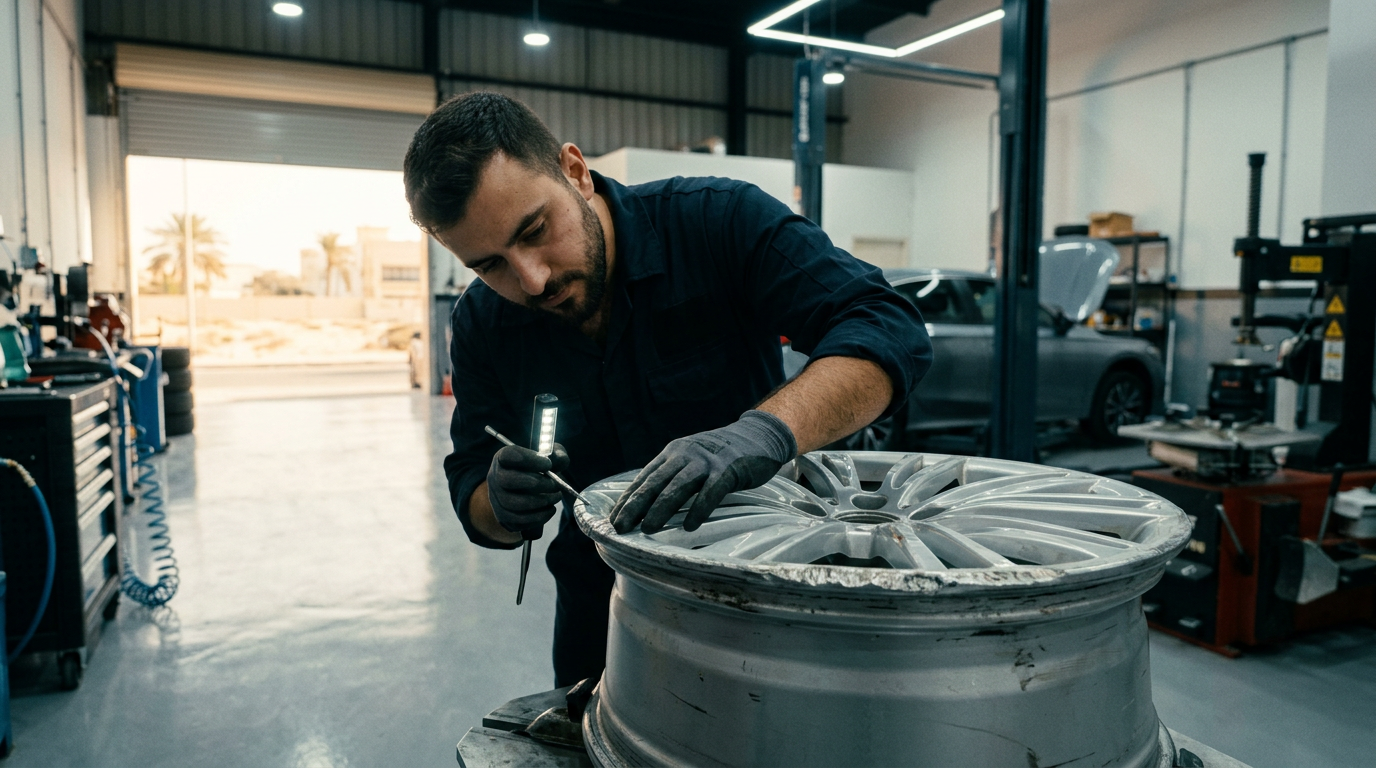
Kerb damage to alloy wheels is one of the most common cosmetic and structural issues faced by drivers in Dubai. Refurbishment involves stripping, repairing, repainting and lacquering the damaged wheel to restore its original finish. Depending on severity, the process can fix scuffs, scratches, chips and even minor bends. Typical Dubai market costs range from AED 150 to AED 600 per wheel, with full sets and specialist finishes at the higher end.
What Kerb Damage Actually Does to an Alloy Wheel
When an alloy wheel strikes a kerb, the impact damages the outer rim—usually the front face and edge. The visible result is scraped paint, exposed bare metal, and sometimes gouges or small chips. On harder impacts, the wheel can bend slightly, causing vibration or steering pull.
Dubai's combination of tight parking spaces, high kerbs in older areas of Al Quoz and Deira, and the distraction of navigating roundabouts means kerb damage is frequent. Multi-storey car parks with narrow ramps are another common culprit. The damage isn't just cosmetic: exposed alloy corrodes faster in humid coastal air, and bent rims compromise tyre sealing and balance.
What Wheel Refurbishment Can and Cannot Fix
Refurbishment is effective for surface and light structural damage. Here's what can typically be repaired:
- Scuffs and scratches on the wheel face and rim edge
- Paint chips and peeling lacquer
- Light kerb rash (gouges up to 2-3 mm deep)
- Minor bends in the rim lip (straightened on a specialist machine)
- Corrosion and oxidation from exposed alloy
- Colour changes or custom finishes (powder coat, diamond cut, satin)
Refurbishment cannot fix cracks, severe structural bends (more than 5 mm), or wheels that have been welded previously. Cracked wheels must be replaced for safety—no reputable workshop will repair a cracked alloy, as failure at speed can cause tyre blowout and loss of control.
The Refurbishment Process Step by Step
Professional wheel refurbishment follows a structured sequence. The wheel is removed from the vehicle and the tyre dismounted. Initial inspection checks for cracks and measures any bend using a run-out gauge.
If the wheel is bent, it's mounted on a hydraulic straightening machine. Controlled pressure is applied to the deformed section until the rim returns to within factory tolerance (typically ±1 mm). This step is skipped if the wheel is only cosmetically damaged.
Next, the wheel is stripped. Chemical paint stripper or media blasting (glass bead or aluminium oxide) removes all old paint, lacquer and corrosion. The bare alloy is then sanded to smooth out scratches and kerb rash. Deep gouges are filled with specialist alloy filler and sanded flush.
The wheel is cleaned, masked if necessary, and primed. Paint is applied in multiple thin coats—either colour-matched to the original or a custom shade. For diamond-cut finishes, the face is machined on a CNC lathe to create the polished look, then lacquered. Finally, multiple layers of clear lacquer are applied and cured, giving a gloss finish that resists UV and corrosion.
The tyre is refitted, the wheel is balanced, and it's ready to reinstall. The entire process takes one to three days depending on workshop workload and whether all four wheels are being done together.
Typical Dubai Market Price Ranges for Wheel Refurbishment
Costs vary by wheel size, damage severity, and finish type. The table below shows typical market ranges across Dubai independent workshops and specialist wheel refurbishers as of 2026. These are not JAD Garage prices, but general market guidance.
| Service | Typical Market Range (AED per wheel) |
|---|---|
| Light kerb scuff (paint only, no straightening) | 150 – 250 |
| Moderate damage (straightening + repaint, 17–19 inch) | 250 – 400 |
| Heavy damage (deep gouges, 20+ inch) | 400 – 600 |
| Diamond-cut finish refurbishment | 350 – 600 |
| Powder coat colour change | 300 – 500 |
| Full set of four (discount usually applied) | 800 – 2,000 |
Luxury and performance brands such as Porsche, Ferrari, Lamborghini and McLaren often have larger, more complex wheels (20 to 22 inches, multi-spoke designs, forged alloy) that sit at the higher end. Bentley and Rolls-Royce wheels with intricate finishes can exceed AED 600 per wheel for full refurbishment.
When to Refurbish vs Replace
Refurbishment makes financial sense when the wheel is structurally sound and the damage is cosmetic or involves a repairable bend. Replacement is necessary if the wheel is cracked, heavily corroded through, or bent beyond straightening limits.
For vehicles still under manufacturer warranty or lease, check the return condition requirements. Some lease agreements in the UAE specify that wheels must be free from kerb damage or the lessee will be charged. Refurbishing before return is usually cheaper than the penalty.
If you're preparing a car for sale, refurbished wheels significantly improve first impressions and can add AED 1,000 to AED 3,000 to resale value, especially on luxury and sports models.
How Long Refurbished Wheels Last in Dubai
A properly refurbished wheel with high-quality lacquer should last three to five years before the finish degrades. Dubai's intense UV exposure (up to 50°C surface temperatures in summer) and coastal humidity accelerate lacquer breakdown, especially on exposed parking.
Wheels that are garaged or covered last longer. Regular washing removes corrosive brake dust and road salt (used on some highways and in cooler months). Avoid high-pressure washers aimed directly at the wheel rim edge, as this can chip fresh lacquer in the first few weeks after refurbishment.
Choosing a Refurbishment Specialist
Not all tyre shops offer true refurbishment—many provide touch-up paint or filler that lasts a few months. Look for workshops with dedicated wheel straightening machines, media blasting cabinets, spray booths and CNC lathes for diamond-cut finishes.
Ask to see before-and-after examples, and confirm whether the price includes tyre removal, balancing and refitting. Some specialists offer mobile collection and delivery within Dubai, which is convenient if you're refurbishing all four wheels and don't want to drive on a space-saver spare.
For European marques—Audi, BMW, Mercedes-Benz, Volkswagen, Volvo, Peugeot, Renault—independent specialists with paint-matching databases will deliver results indistinguishable from factory finish. The same applies to supercars and classic models, where originality matters.
Insurance and Wheel Damage
Comprehensive motor insurance in the UAE typically covers kerb damage only if it's part of a broader incident (collision, accident). Kerb rash from parking is considered wear and tear, not an insured event, so refurbishment cost is out of pocket.
Some premium policies include cosmetic cover or alloy wheel insurance as an add-on. Check your policy schedule or call your insurer. If you have a no-claims discount you want to protect, paying for refurbishment yourself (AED 150 to AED 600 per wheel) is usually cheaper than claiming and losing the discount.
Preventing Future Kerb Damage
Parking sensors and cameras help, but spatial awareness is key. When parallel parking, turn the steering wheel slowly and check your mirrors for kerb proximity. In tight car parks, take an extra few seconds to position the vehicle before committing.
If your wheels are already refurbished or new, consider alloy wheel rim protectors—flexible rubber or plastic strips that fit into the rim edge groove. They're not invisible, but they absorb minor kerb contact and can be replaced cheaply. They're popular on Range Rover, Aston Martin and other high-value vehicles in Dubai.
Wheel Refurbishment and Tyre Services in Al Quoz
JAD Garage offers professional wheel inspection, straightening and tyre services at our Al Quoz 4 workshop. We work with trusted refurbishment specialists across Dubai and can arrange collection, repair and delivery. Call +971 56 355 6113 or visit us Monday to Saturday, 09:00–19:00.
Frequently asked questions