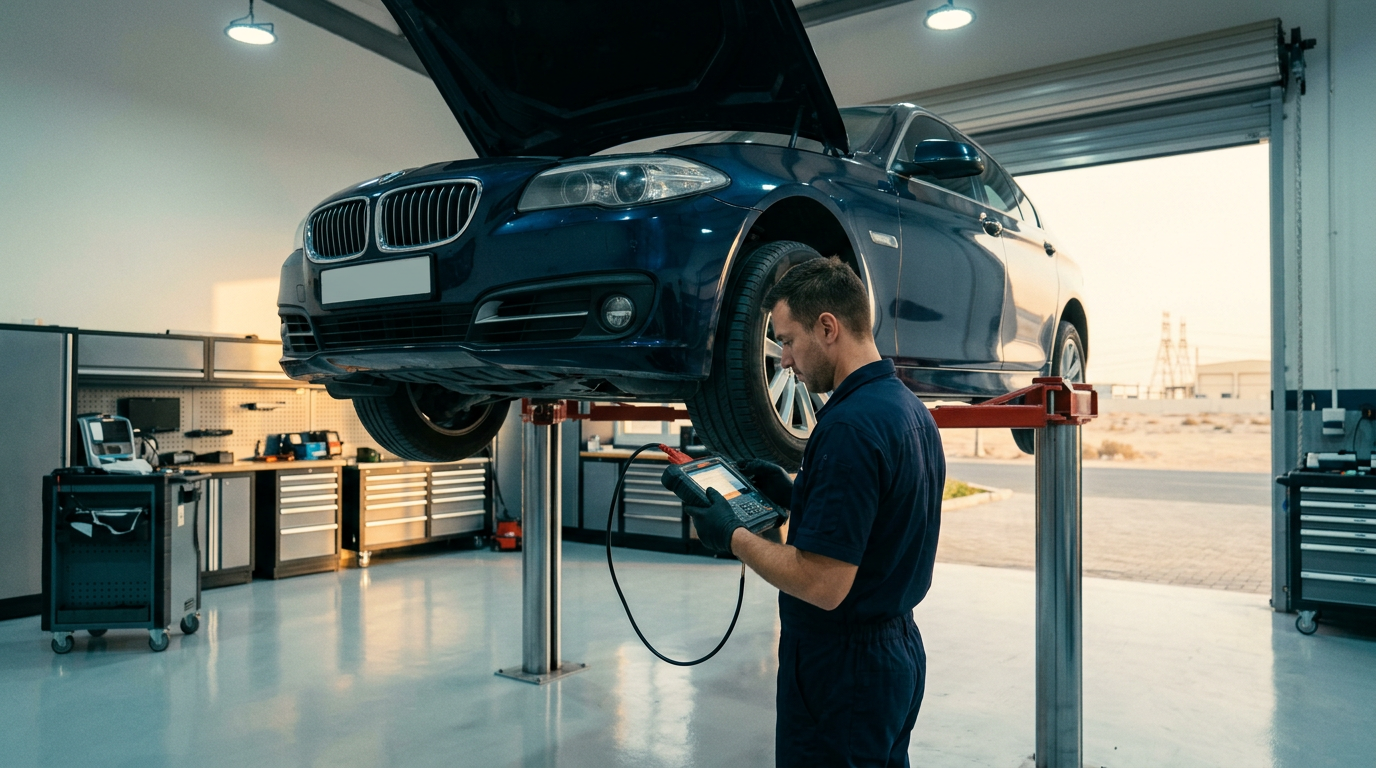

ABS Warning Light: Sensor, Ring or Module?

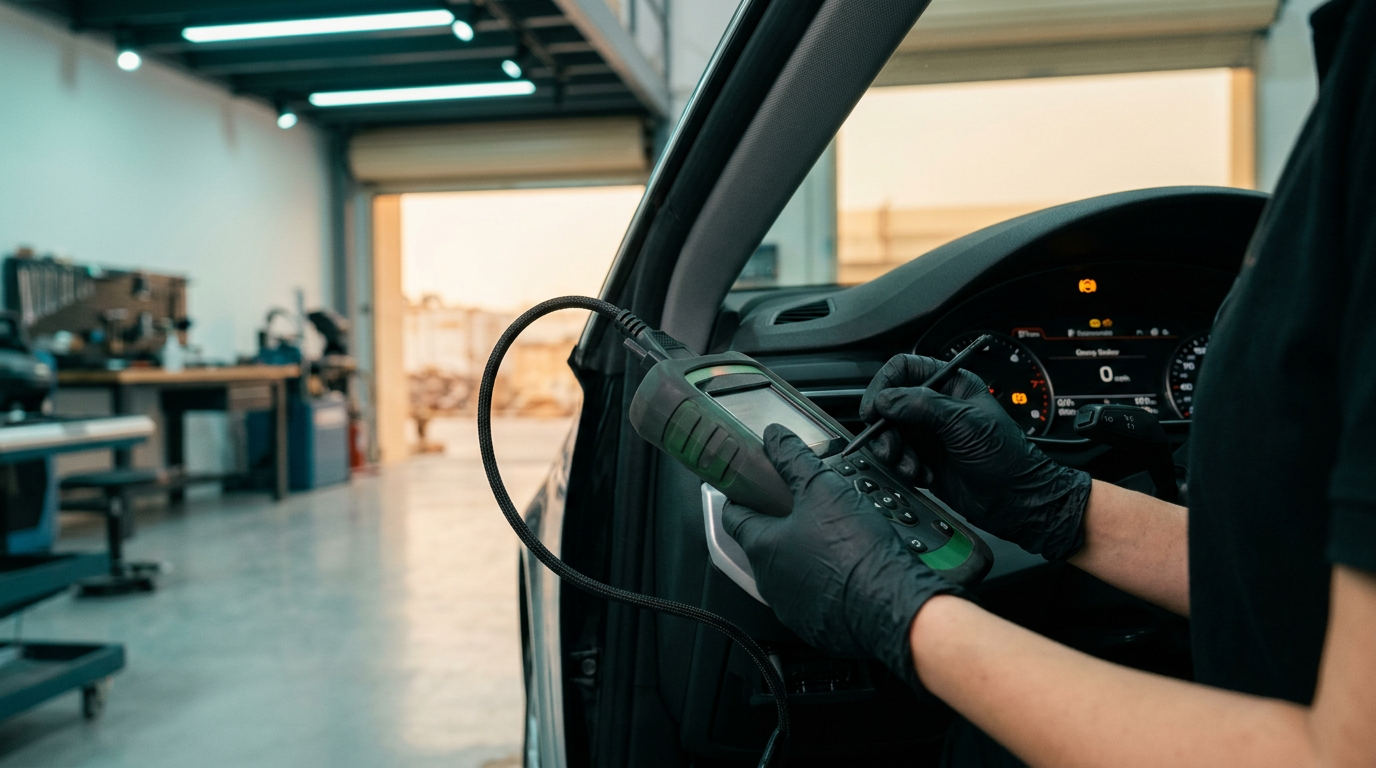
When the ABS warning light illuminates on your dashboard, the fault typically stems from one of three components: a wheel speed sensor (most common), a corroded or damaged tone ring, or the ABS control module itself. Dubai's fine sand, extreme heat and humidity accelerate sensor contamination and connector corrosion, making accurate diagnosis essential before replacing parts.
What ABS Does and Why the Light Matters
The anti lock braking system prevents your wheels from locking during hard braking, maintaining steering control even when you apply maximum brake pressure. Without ABS, a wheel that locks loses all grip and slides, making the vehicle unsteerable—a dangerous scenario in Dubai's high-speed highway traffic or during emergency stops on Sheikh Zayed Road.
The system works by monitoring the rotational speed of each wheel through speed sensors. When the ABS control module detects a wheel about to lock (rotating significantly slower than the others), it rapidly modulates brake pressure to that wheel—pulsing the brakes up to 15 times per second. This cadence is faster than any human could achieve by pumping the brake pedal manually.
Modern vehicles integrate ABS with traction control and electronic stability systems, so a fault in the anti lock brake system often disables these secondary safety features as well. The warning light—usually amber and labelled "ABS"—tells you the system has detected an internal fault and switched to conventional braking. Your brakes will still work, but you've lost the anti-lock function.
Common Symptoms Alongside the ABS Light
The warning light rarely appears in isolation. Drivers in Dubai typically notice:
- ABS light stays on constantly after ignition (normal for 2-3 seconds during self-test, abnormal if it remains)
- Light illuminates intermittently, especially over bumps or at certain speeds
- Traction control or stability control lights also active
- Brake pedal feels different—either softer or with unusual pulsing even during gentle stops
- Speedometer erratic or non-functional (shares speed sensor data on some vehicles)
- Increased brake dust or uneven pad wear on one wheel
If the red BRAKE light illuminates alongside the amber ABS light, stop driving immediately—this combination indicates a critical fault in the main braking system, not just the anti lock function.
Three Main Causes: Sensor, Ring or Module
| Symptom | Most Likely Cause | Second Possibility |
|---|---|---|
| Light on constantly from cold start | Failed wheel speed sensor | ABS module fault |
| Light appears only when driving, clears after restart | Intermittent sensor or corroded connector | Damaged tone ring |
| Light on after wheel/brake work | Disconnected sensor or damaged tone ring | Incorrect sensor air gap |
| Light plus speedometer failure | Rear wheel speed sensor (if speed derived from ABS) | Instrument cluster fault |
| Light plus multiple system warnings | ABS control module or CAN bus fault | Low battery voltage |
Wheel Speed Sensors (Most Common)
Each wheel has a magnetic or Hall-effect sensor that reads the rotation of a toothed ring. These sensors are exposed to road spray, sand and heat—particularly harsh in Dubai where fine dust penetrates wheel wells and summer temperatures reach 50°C. Sensor failures account for roughly 70-80% of ABS warning light cases.
Contamination from metallic brake dust is especially common on the rear wheel sensors of European performance cars and EVs with regenerative braking. The magnetic tip attracts ferrous particles, which interfere with the signal. Corrosion at the electrical connector—accelerated by humidity in coastal areas of Dubai—is the second most frequent sensor issue.
Tone Rings (Reluctor Rings)
The tone ring is a toothed wheel that the sensor reads. On older vehicles it's a separate steel ring pressed onto the hub or driveshaft; on modern cars it's often integrated into the wheel bearing seal as a multi-pole magnetic encoder. Damage occurs during wheel bearing replacement, from road debris impact, or from corrosion that pits the teeth and disrupts the sensor signal.
Integrated tone rings cannot be replaced separately—you must change the entire wheel bearing assembly, which significantly increases repair cost on brands like BMW, Audi and Mercedes-Benz.
ABS Control Module
The module contains the hydraulic valve block and electronic control unit. Internal faults are less common but do occur, particularly on vehicles over eight years old or those with water ingress. Modules on Range Rover and some Jaguar models have known issues with internal corrosion of the valve body, while early Porsche Cayenne and Volkswagen Touareg models suffered solder joint failures in the control board.
Module diagnosis requires live data analysis and often component-level testing, as fault codes may point to sensors when the module's signal processing circuit has actually failed.
How a Workshop Diagnoses the Fault
Proper ABS diagnosis follows a structured process using manufacturer-grade diagnostic equipment—guessing or swapping parts wastes money and rarely solves intermittent faults.
1. Scan for Fault Codes
A diagnostic scan retrieves stored codes from the ABS module. Common codes include:
- C0035-C0050 range: Wheel speed sensor circuit faults (open, short, erratic signal)
- C0060-C0069: Sensor signal comparison faults (one wheel reading implausible vs others)
- C1095 or similar: ABS hydraulic pump motor fault
- C1233 or U-codes: Module internal fault or communication errors
The code identifies which wheel or circuit has the fault but not always the root cause. A "left front wheel speed sensor" code could mean a failed sensor, corroded connector, broken wire or damaged tone ring.
2. Live Data Analysis
With the vehicle on a lift and wheels spinning, the technician monitors live speed sensor signals. Each sensor should produce a clean AC waveform with frequency proportional to wheel speed. The scan tool displays this as a Hz reading or voltage pattern.
A faulty sensor shows zero output, erratic spikes, or amplitude much lower than the other three wheels. If all four sensors read correctly during the test, the fault is intermittent—likely a corroded connector that fails under vibration or temperature change.
3. Visual and Physical Inspection
The technician inspects each sensor and its connector for:
- Metallic debris clinging to the magnetic sensor tip
- Damaged or chafed wiring (common where harnesses pass near suspension components)
- Corrosion inside the connector—green or white deposits on the pins
- Physical damage to the sensor body from road debris
- Correct air gap between sensor and tone ring (typically 0.5-1.5 mm)
For tone ring inspection, the wheel is removed and the ring examined for missing teeth, cracks, rust pitting or runout (wobble). On vehicles with integrated encoder rings, the technician checks for play in the wheel bearing—a worn bearing allows the ring to move away from the sensor, creating an intermittent signal.
4. Resistance and Voltage Testing
Using a multimeter, the technician measures sensor resistance (typically 800-1400 ohms for passive sensors) and checks for short circuits to ground. Active sensors require a voltage supply test—usually 5V or 12V from the module. If supply voltage is missing, the fault lies in the module or wiring, not the sensor itself.
5. Module Function Tests
If sensors and wiring test good, the diagnostic tool runs actuator tests—commanding the ABS pump and solenoid valves to operate. The technician listens for the pump motor and feels for valve clicks. Failure to activate, unusual noise or weak pressure generation points to internal module failure.
Advanced diagnostics may include brake pressure sensor readings and comparison tests during a controlled brake application, but this requires specialized equipment and a safe test area.
What Each Repair Involves
Wheel Speed Sensor Replacement
Straightforward on most vehicles: raise the car, remove the wheel, disconnect the sensor connector and unbolt the sensor from the hub or knuckle. Sensors on the rear axle sometimes require removing undertray panels or exhaust heat shields for access.
On some Audi and Volkswagen models, the front sensor passes through the steering knuckle and can seize due to corrosion—extraction may require heating or drilling out the old unit. The replacement sensor is secured, the connector cleaned with electrical contact spray, and the system cleared of fault codes. A test drive confirms proper operation.
Typical Dubai market rates for sensor replacement range from AED 400-800 per wheel including parts and labour, depending on vehicle make and sensor location. Porsche, Maserati and Bentley sensors cost more due to OEM part pricing.
Tone Ring or Wheel Bearing Replacement
If the tone ring is separate, it's pressed off the hub and a new one pressed on—requires a hydraulic press and careful alignment. Integrated rings require full wheel bearing replacement: the hub assembly is unbolted, the old bearing pressed out of the knuckle, and a new bearing with integral encoder ring pressed in.
This is a more involved repair, often requiring special tools to avoid damaging the new bearing during installation. On vehicles with complex rear suspension—many BMW and Mercedes-Benz models—the job may require removing control arms or subframe components for access. Wheel alignment should be checked afterward if any suspension fasteners were loosened.
Market rates for bearing replacement typically range from AED 800-1,800 per wheel including parts and labour, higher for performance and luxury brands. If both rear bearings show wear, replacing both during one visit saves on duplicate labour.
ABS Module Replacement or Repair
Module replacement involves bleeding the entire brake system, as the unit contains hydraulic valves. The module is unbolted from its mounting bracket (often in the engine bay or under the car near the master cylinder), brake lines disconnected, and the new or remanufactured unit installed. All brake lines must be bled in the correct sequence, often requiring a scan tool to cycle the ABS valves during the bleeding process.
Some specialists offer module repair—opening the unit and replacing failed solder joints, capacitors or relays. This costs less than a new module but requires specialized electronics knowledge and is not available for all vehicle types. ECU programming or coding may be required after module replacement to marry the unit to the vehicle's VIN and configure it for the specific brake system.
Module replacement in Dubai typically costs AED 2,500-6,000 including parts, labour and bleeding, depending on module complexity and whether OEM or remanufactured units are used. High-performance vehicles like Ferrari, Lamborghini and McLaren may exceed this range due to integrated systems and programming requirements.
Prevention and Maintenance in Dubai Conditions
ABS systems are generally maintenance-free, but Dubai's environment accelerates wear. During routine brake service, ask the technician to clean sensor tips and apply dielectric grease to connectors—this simple step prevents many sensor faults. If you drive in sandy areas or off-road, more frequent cleaning is worthwhile.
Flush brake fluid every two years as specified in most service schedules. Old fluid absorbs moisture, which corrodes internal ABS components and lowers the boiling point—critical for safety during hard braking. See our guide on major versus minor service intervals for more on fluid maintenance.
If you hear grinding or feel vibration from a wheel bearing, address it promptly. A failing bearing damages the integrated tone ring, turning a AED 1,200 bearing job into a AED 1,800 bearing-plus-sensor repair. For more on brake system warning signs, read our article on what your brakes are telling you.
Can You Drive With the ABS Light On?
Yes, but you've lost anti-lock functionality. Your brakes still work in the conventional sense—pressing the pedal applies friction to the discs—but if you brake hard enough to lock a wheel, you'll lose steering control. In Dubai's mix of high-speed highways and stop-start city traffic, that's a significant safety compromise.
If the light comes on, avoid aggressive driving and hard braking until you can have the system diagnosed. Don't ignore it for weeks—an intermittent sensor fault can worsen into a failed bearing or damaged tone ring, increasing repair cost. The system should be checked before your next RTA vehicle test, as an illuminated ABS light is a potential fail point for safety systems inspection.
For electric vehicles like Polestar or MG EVs, ABS faults may also affect regenerative braking calibration, reducing efficiency and range. Prompt diagnosis is especially important for vehicles under warranty—see our article on independent servicing and UAE warranty rights.
ABS Light On? Get Expert Diagnosis in Al Quoz
JAD Garage in Al Quoz 4 uses manufacturer-grade diagnostic equipment to pinpoint ABS faults quickly—sensor, ring or module. Call +971 56 355 6113 or visit Warehouse No.1, Street 8 for accurate diagnosis and transparent repair, Monday to Saturday 09:00-19:00.
Frequently asked questions