
Cheap Car Repair Shops in Dubai: 9 Red Flags

Low prices at car repair shops in Dubai can signal genuine efficiency or dangerous shortcuts. Red flags include refusing diagnostic scans, no written estimates, missing service records, generic "universal" parts for European marques, cash-only policies, inability to show equipment calibration logs, vague technician answers, pressure to approve work immediately, and no clear comeback process. Reliable workshops balance cost with transparency, OEM-grade diagnostics, and documented history.
Why Price Alone Is a Poor Selection Criterion
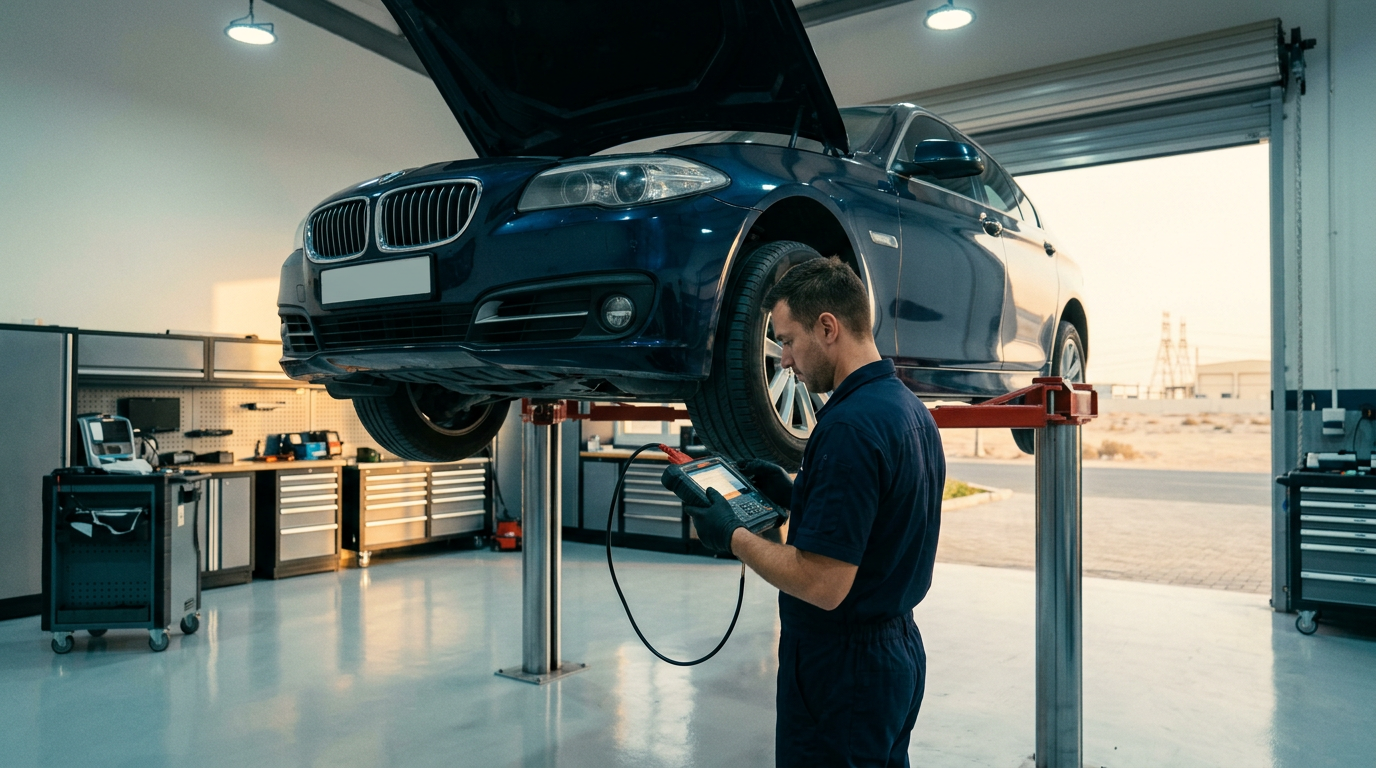
Dubai's car repair market spans from manufacturer service centres charging premium rates to backstreet garages quoting half the price for identical job descriptions. The difference rarely lies in labour alone. A diagnostic scan on a 2022 BMW 5 Series requires factory-level software subscriptions costing thousands of dirhams annually, calibrated lift equipment, and technicians trained to interpret fault codes in context. A workshop that quotes 400 AED for a job another charges 1,200 AED for has either found remarkable efficiencies or is skipping steps that matter.
Heat, sand, and humidity in the UAE accelerate wear on suspension bushings, brake components, and cooling systems. Cheap fixes that ignore root causes—topping up coolant without pressure-testing the system, for example—leave you stranded on Sheikh Zayed Road three weeks later. The true cost is downtime, recovery fees, and compounded damage.
Red Flag 1: No Manufacturer-Grade Diagnostic Equipment
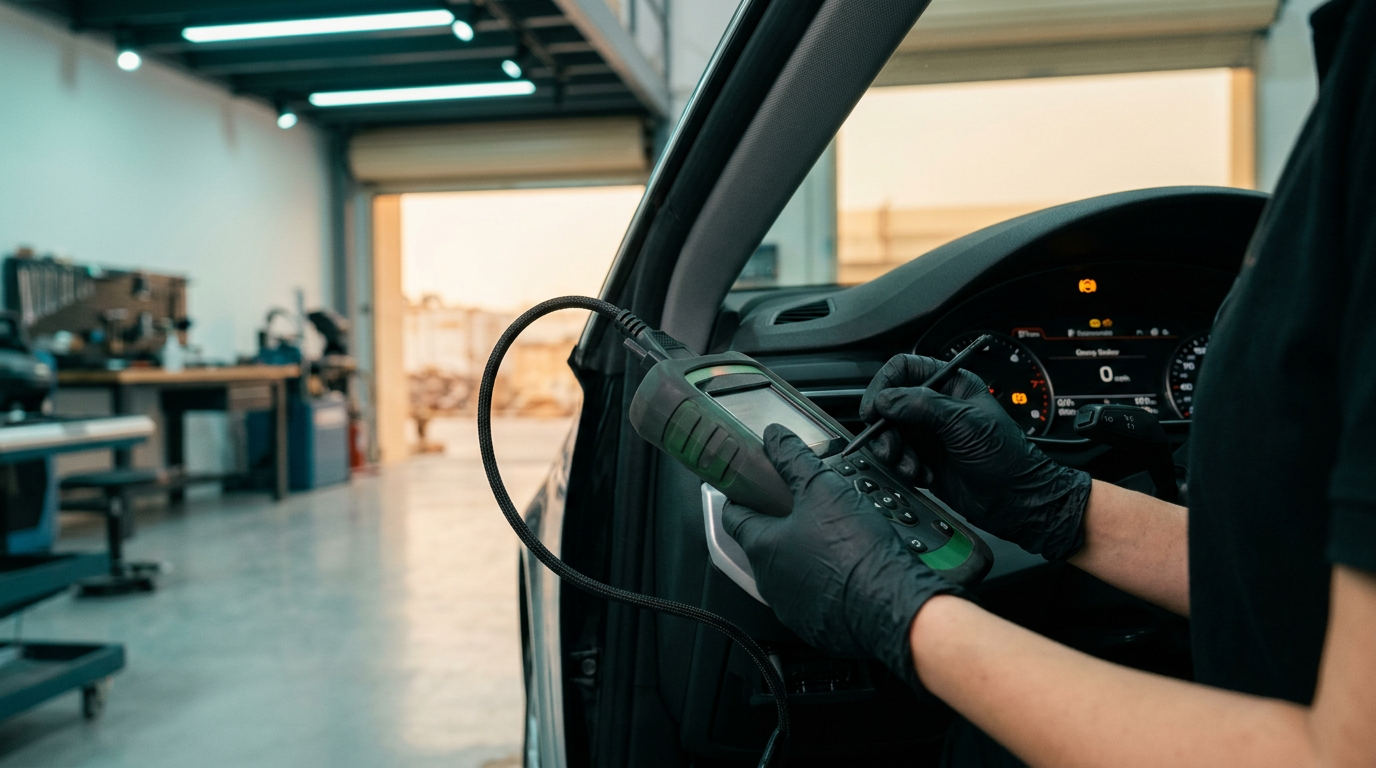
A generic OBD-II scanner reads basic engine codes. It will not access the air-suspension module on a Range Rover, the hybrid battery management system on a Polestar, or the adaptive damper calibration on a Porsche Cayenne. If the workshop cannot demonstrate brand-specific diagnostic capability—whether through proprietary tools or professional third-party platforms—they are guessing, not diagnosing.
Ask to see the scan tool connect to your car's modules. A legitimate European or EV specialist will show live data streams, module software versions, and adaptation values. Workshops that wave you away or insist "we know the problem already" are gambling with your vehicle.
Red Flag 2: Verbal Estimates and No Written Breakdown
Reputable car repair shops in Dubai provide itemised written estimates before work begins: part numbers, labour hours, and a total. Verbal quotes that balloon at collection time—"we found another issue"—are a classic bait-and-switch. UAE consumer protection regulations require transparency, but enforcement depends on documentation you can produce.
Insist on a signed, dated estimate with part specifications (OEM, OE-equivalent, or aftermarket grade) and a validity period. If the garage refuses, walk away.
Red Flag 3: No Service History Records or Digital Documentation
Modern vehicle maintenance relies on cumulative history: when the transmission fluid was last changed, whether the suspension bushings were replaced or merely inspected, which brake pads were fitted. Workshops that hand you a generic invoice with "service completed" and no detail make future diagnostics harder and obscure patterns of recurring faults.
Professional garages maintain digital service records, tag parts with fitment dates, and provide photographs of worn components. This documentation proves invaluable during pre-purchase inspections or warranty claims if you later sell the car.
Red Flag 4: Insistence on "Universal" or Unbranded Parts for European Cars
A Audi Q7 air suspension compressor is not interchangeable with a generic aftermarket unit designed for a dozen models. European marques engineer tight tolerances; using pattern parts without equivalent specifications leads to premature failure, fault codes, and sometimes safety risks. Cheap garages push universal parts because margins are higher and they lack access to OEM or OE-equivalent supply chains.
Ask for part provenance: brand name, part number, and warranty terms. Established suppliers like Bosch, Sachs, or Lemförder for wear items are acceptable OE-equivalent alternatives. Anonymous boxes labelled "Made for Audi" are not.
Red Flag 5: Cash-Only Payment and No VAT Invoice
Legitimate businesses in Dubai are VAT-registered and provide tax invoices. Cash-only policies often signal under-the-table operations that avoid regulatory oversight, carry no liability insurance, and leave you without recourse if work fails. Corporate and fleet customers require auditable invoices; the same standard should apply to private owners.
Payment flexibility—card, bank transfer, or digital wallets—also indicates a workshop confident enough in its service quality to leave a paper trail.
Red Flag 6: Unable to Show Equipment Calibration or Update Logs
Wheel alignment machines, AC refrigerant recovery units, and brake fluid testers require periodic calibration to deliver accurate results. Diagnostic software needs annual subscriptions to access the latest fault-code libraries and ECU updates. Workshops that cannot produce calibration certificates or software update logs are operating with outdated or inaccurate tools.
This matters acutely for ECU programming, ADAS camera calibration after windscreen replacement, and hybrid battery diagnostics. Incorrect calibration can trigger fault codes, fail RTA testing, or compromise safety systems.
Red Flag 7: Vague or Defensive Answers to Technical Questions
You do not need to be a mechanic to ask basic questions: "Which brake fluid grade will you use?" "Is the oil specification BMW LL-04?" "Will you reset the service indicator after the work?" A confident, experienced technician answers plainly. Evasive or irritated responses—"Don't worry, we know what we're doing"—suggest either poor training or an attempt to obscure shortcuts.
Transparency is a hallmark of quality. Workshops that explain their process, show you the old parts, and discuss options (OEM vs OE-equivalent, for instance) treat you as a partner, not a transaction.
Red Flag 8: Pressure to Approve Additional Work on the Spot
Discovering additional faults during a service is common—a leaking shock absorber noticed during a brake job, for example. Ethical workshops photograph the issue, explain the risk of deferring repair, and give you time to decide. High-pressure tactics—"We can't let you drive away like this" or "This price is only valid today"—are designed to panic you into unnecessary spend.
Ask for images, a separate written quote, and a clear explanation of what happens if you defer the work. A safety-critical issue (brake line corrosion, for instance) deserves urgency, but most discoveries can wait for a second opinion.
Red Flag 9: No Clear Comeback or Warranty Process
Parts fail. Even OEM components occasionally have manufacturing defects. The difference between a reliable garage and a risky one is how they handle comebacks. Workshops that go silent after you collect the car, refuse to inspect a recurring fault, or charge again for the same issue are not standing behind their work.
Before committing, ask: "What is your warranty on parts and labour? If this issue returns in two weeks, what is the process?" Expect at least 30 days on labour and pass-through of manufacturer part warranties (typically 12 months). Get it in writing.
How to Compare Car Repair Shops in Dubai by Selection Criteria
Rather than chase the lowest quote, evaluate workshops across the factors that predict reliability and value. The table below outlines typical differences across Dubai's service landscape.
| Criterion | Main-Dealer Service Centres | Independent Marque Specialists | Multi-Brand Chain Garages | Backstreet Workshops |
|---|---|---|---|---|
| Diagnostic Equipment | Factory tooling, live technical support | Professional third-party or factory-level scan tools | Generic OBD-II, limited module access | Basic code readers, no brand-specific capability |
| Parts Sourcing | OEM only | OEM or OE-equivalent (Bosch, Sachs, etc.) | Mix of OE and budget aftermarket | Unbranded or pattern parts |
| Service Records | Digital history, linked to VIN | Digital logs, photographs, detailed invoices | Basic invoices, limited detail | Handwritten receipts or none |
| Typical Cost Range (minor service, 4-cyl petrol) | 800–1,400 AED | 500–900 AED | 400–700 AED | 250–500 AED |
| Warranty on Labour | 12 months | 30–90 days | 14–30 days | Verbal or none |
| Turnaround Time | Booking required, 1–3 days | Same or next day for routine work | Same day common | Often same day |
This comparison is illustrative of typical market offerings in Dubai; always verify current capabilities, pricing, and policies directly with each workshop before committing.
What to Do Before Choosing a Car Repair Shop
- Request a facility tour: look for organised tool storage, clean work bays, and visible diagnostic equipment.
- Ask which brands they specialise in—Mercedes-Benz, Volkswagen, Ferrari—and how many of that marque they service monthly.
- Check whether they maintain corporate or fleet accounts; repeat business from commercial clients signals reliability.
- Verify they can handle your specific needs: bodywork, electrical diagnostics, or engine rebuild capability if you own a high-performance or classic vehicle.
- Read the estimate carefully before signing; ambiguous line items like "miscellaneous parts" are a warning.
- Confirm the workshop's location and hours suit your schedule—workshops in Al Quoz, for instance, are central but can be busy mid-week.
Disclosure
This guide is published by JAD Garage, an independent European and EV car specialist located in Al Quoz 4, Dubai. While we have drawn on two decades of industry experience to outline common red flags and selection criteria, we encourage every reader to verify current services, pricing, and policies directly with any workshop you are considering. The market evolves, and due diligence protects your investment.
European & EV Diagnostics You Can Trust
JAD Garage in Al Quoz 4 combines manufacturer-grade diagnostic equipment with transparent pricing and detailed service records. Whether you drive a Porsche, Lamborghini, or Polestar, our team provides honest assessments and OEM-grade solutions. Call +971 56 355 6113 or WhatsApp to discuss your requirements.
Frequently asked questions