
Can You Drive With a Faulty Gearbox? Risks and Costs

You should not drive with a faulty gearbox except to reach the nearest safe location or workshop. Continuing to drive risks catastrophic transmission failure, damage to the engine and driveline, complete loss of power while moving, and repair costs that can escalate from AED 3,000 to over AED 25,000 depending on the severity of damage.
What Happens When You Drive With a Faulty Gearbox
A gearbox—also called a transmission—transfers power from your engine to the wheels. When it fails, the vehicle loses its ability to change gears smoothly or at all. Driving with gearbox problems accelerates internal wear because damaged components grind against each other without proper lubrication or engagement.
In Dubai's stop-start traffic and summer heat reaching 50°C, a struggling transmission works even harder. Overheating transmission fluid loses its viscosity and protective properties, leading to metal-on-metal contact inside the gearbox. What starts as a minor issue—a worn solenoid or low fluid—can destroy clutch packs, planetary gears, or valve bodies within days of continued driving.
Automatic transmissions are particularly vulnerable. If the gearbox overheats or loses hydraulic pressure, it may suddenly disengage while you're on Sheikh Zayed Road, leaving you stranded in fast-moving traffic with no power to the wheels.
Warning Signs Your Gearbox Is Failing
Recognising the early signs of gearbox problems can prevent a roadside breakdown and limit repair costs. Pay attention to these symptoms:
- Gear slipping: the car shifts out of gear unexpectedly or the engine revs without corresponding acceleration.
- Delayed engagement: a pause of two or more seconds when shifting from Park to Drive or Reverse.
- Grinding or clunking noises: especially when changing gears, indicating worn synchronisers or damaged clutch plates.
- Burning smell: overheated transmission fluid smells acrid and indicates the gearbox is running too hot.
- Fluid leaks: red or brown fluid pooling under the car, often from worn seals or a damaged pan.
- Dashboard warning lights: a check engine or transmission warning light triggered by fault codes stored in the ECU.
- Rough or jerky shifts: harsh engagement between gears instead of smooth transitions.
If you notice any of these signs, reduce driving immediately and arrange a diagnostic inspection to identify the root cause before the damage spreads.
How Long Can You Drive With a Damaged Gearbox?
There is no safe distance. The answer depends entirely on the type and severity of the fault. A minor issue like low transmission fluid might allow you to drive a few kilometres to a workshop at low speed. A slipping clutch or failing torque converter can destroy the gearbox within minutes of highway driving.
If the gearbox is slipping, making loud grinding noises, or refusing to engage certain gears, stop driving. Continuing will likely cause complete failure, leaving you immobile and facing a full transmission replacement instead of a repairable fix.
In Dubai's summer heat, even a moderately damaged gearbox can overheat within 10–15 minutes of city driving. High ambient temperatures reduce the cooling efficiency of transmission fluid, and stop-start traffic on roads like Al Khail or Hessa Street keeps the gearbox under constant load without airflow to dissipate heat.
Risks of Driving With Gearbox Problems
Driving with a faulty transmission exposes you to several serious risks:
Complete Transmission Failure
A damaged gearbox can seize entirely, leaving you stranded. In extreme cases, internal components can shatter, sending metal fragments through the transmission fluid and destroying every moving part inside. What could have been a AED 4,000–7,000 repair for a solenoid or clutch pack becomes a AED 15,000–25,000 replacement for a remanufactured or new gearbox.
Engine and Driveline Damage
When the gearbox fails to disengage properly, the engine can over-rev or stall suddenly. This places stress on engine mounts, the flywheel, and the crankshaft. In all-wheel-drive vehicles like an Audi Quattro or Range Rover, a failed gearbox can damage the transfer case and differentials, multiplying repair costs.
Loss of Vehicle Control
If the gearbox disengages while driving, you lose engine braking and the ability to accelerate out of danger. On a busy motorway or roundabout, this is a safety hazard for you and other road users. You'll need to pull over immediately using only your brakes, which can overheat if the vehicle is heavy or the road is steep.
Escalating Repair Costs
Every kilometre driven with a faulty gearbox spreads contamination through the system. Burnt transmission fluid carries metal particles that score valve bodies, clog filters, and damage pumps. A simple fluid change and seal replacement can turn into a full teardown and rebuild.
The Role of Transmission Fluid in Gearbox Health
Transmission fluid is the lifeblood of any gearbox. It lubricates moving parts, cools the system, and provides the hydraulic pressure needed to engage gears in automatic transmissions. When fluid levels drop or the fluid degrades, the gearbox cannot function correctly.
In Dubai's extreme heat, transmission fluid oxidises faster than in cooler climates. Manufacturers typically recommend fluid changes every 60,000–100,000 km, but in the UAE, intervals of 40,000–60,000 km are more appropriate for vehicles driven in heavy traffic or towing conditions. Dark, burnt-smelling fluid is a clear sign the gearbox has been running hot and needs immediate attention.
Low fluid levels—often caused by leaks from worn seals, a cracked pan, or damaged cooler lines—starve the transmission of lubrication and hydraulic pressure. This leads to slipping gears, delayed shifts, and eventual failure. Regular checks of fluid level and condition are part of essential preventative maintenance.
What to Do If You Suspect Gearbox Issues
If you notice any warning signs of gearbox problems, take these steps immediately:
- Reduce speed and avoid highways: drive gently at low speeds to minimise stress on the transmission.
- Check transmission fluid: if your vehicle has a dipstick, check the level and colour. Top up if low, but understand this is a temporary measure.
- Avoid towing or heavy loads: extra weight increases transmission load and accelerates damage.
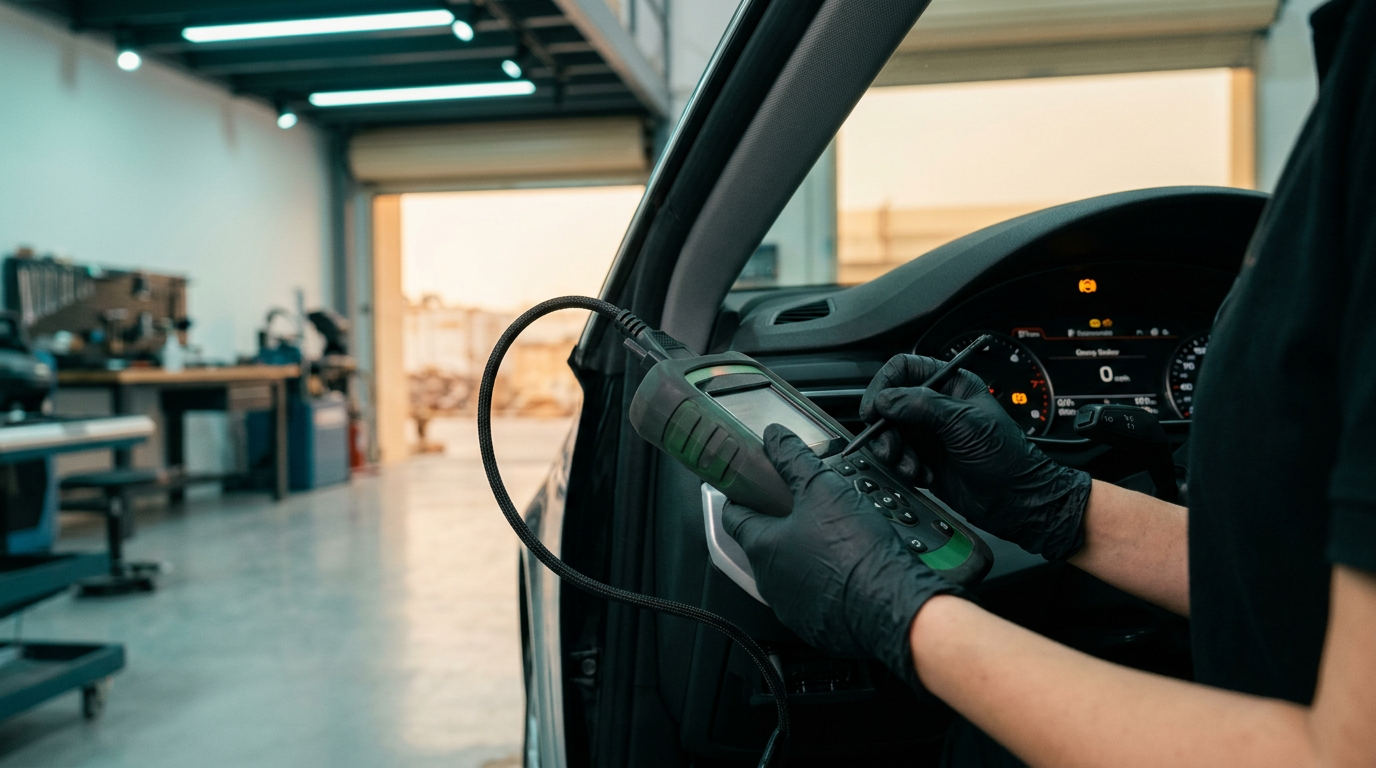
- Book a diagnostic scan: modern gearboxes store fault codes that pinpoint the issue. A professional diagnostic scan can identify failing solenoids, sensors, or mechanical faults before they cause total failure.
- Arrange recovery if necessary: if the car won't move, is making violent noises, or you're far from a workshop, call for recovery rather than risk driving. Learn more in our guide on car recovery in Dubai.
Do not ignore gearbox symptoms hoping they will resolve on their own. Transmission problems always worsen with time and driving.
Repair or Replacement: What to Expect
The cost and complexity of gearbox repairs vary widely depending on the fault and vehicle type. Minor issues like replacing a transmission fluid pressure sensor or solenoid pack typically cost AED 1,500–4,000 in the Dubai market. A full rebuild of an automatic gearbox for a BMW or Mercedes-Benz can range from AED 12,000 to AED 20,000, while a dual-clutch transmission (DSG or PDK) rebuild may exceed AED 18,000 due to the precision components involved.
For high-performance or specialist vehicles like a Porsche, Maserati, or Ferrari, genuine parts and specialist knowledge are essential. Independent workshops with manufacturer-grade diagnostic equipment can often perform repairs at more competitive rates than main agents while maintaining the same quality standards. Always ask for a detailed inspection report and itemised quote before authorising work.
If you're buying a used car, gearbox condition should be a priority during a pre-purchase inspection. A test drive and fluid analysis can reveal hidden transmission issues that sellers may not disclose.
Gearbox Maintenance to Prevent Problems
Preventative maintenance is the best defence against costly transmission failures. Follow these practices:
- Change transmission fluid at the intervals recommended for UAE driving conditions, typically every 40,000–60,000 km.
- Inspect for leaks during every service and replace worn seals promptly.
- Allow the engine and gearbox to warm up for 30–60 seconds before driving, especially in cooler months.
- Avoid aggressive launches, hard braking, and rapid gear changes that stress the transmission.
- Service the gearbox filter and pan gasket during fluid changes to remove contaminants.
- Monitor dashboard warning lights and address fault codes immediately with a diagnostic scan.
For vehicles with complex transmissions—such as dual-clutch systems in Volkswagen, Audi, and Porsche models—specialist knowledge and software are required for proper service and calibration. Our article on Audi Quattro and DSG maintenance covers these systems in detail.
Gearbox Issues in Electric Vehicles
Electric vehicles typically use single-speed transmissions without the complexity of multi-gear automatic or manual gearboxes. However, EVs are not immune to drivetrain problems. Worn bearings, failing reduction gears, or issues with the drive unit can still occur, especially in high-mileage or poorly maintained vehicles.
If you own an EV like a Polestar or MG, unusual noises, vibrations, or loss of power should be investigated immediately. Learn more in our guide on EV maintenance costs in the UAE.
Driving with a faulty gearbox is never worth the risk. The potential for catastrophic failure, escalating repair bills, and safety hazards far outweigh any short-term convenience. If you suspect transmission problems, have your vehicle inspected by a qualified technician as soon as possible.
Gearbox Problems? Get a Professional Diagnosis in Al Quoz
If your car is showing signs of transmission trouble, don't risk further damage. JAD Garage in Al Quoz 4 offers manufacturer-grade diagnostics and transmission services for European and EV vehicles. Call +971 56 355 6113 to book your inspection.
Frequently asked questions