
Car Won't Start in the Heat: Battery, Starter or Fuel?

When your car won't start in Dubai's extreme heat, the most common culprits are a dead or weak battery (especially after 2–3 years), a failing starter motor, or a clogged fuel filter. High ambient temperatures—often reaching 50°C—accelerate battery degradation and put extra strain on electrical and fuel delivery systems. Diagnosing the exact cause requires checking battery voltage, listening for starter clicks, and confirming fuel pressure.
Why Dubai Heat Makes Starting Problems Worse
Dubai's summer temperatures don't just make interiors unbearable—they create a hostile environment for every starting system in your car. Under-bonnet temperatures regularly exceed 70°C when parked in direct sun, and even overnight lows in July and August hover around 30°C, giving batteries and electronics no chance to cool.
Heat accelerates the chemical reactions inside lead-acid batteries, which sounds helpful but actually increases internal corrosion and evaporates electrolyte faster. A battery rated for five years in Europe often fails within three in the UAE. Short city trips around Dubai, Sharjah and Abu Dhabi compound the problem: the alternator never gets enough run-time to fully recharge the battery after each engine start, leaving it in a constant state of partial discharge.
Fuel systems also suffer. Modern returnless fuel systems run hotter, and heat-soaked fuel pumps work harder to maintain pressure. Starters draw maximum current in high temperatures, and worn brushes or solenoids fail faster when everything is already operating at thermal limits.
Dead Battery: The Most Common Reason a Car Won't Start
If you turn the key (or press the start button) and hear absolutely nothing, or just a single click, you almost certainly have a dead battery. Dashboard lights may flicker weakly or not illuminate at all. This is the leading cause of no-start calls across Dubai, especially after a car has sat unused for a few days in airport parking or during travel.
How to Confirm It's the Battery
- Interior lights are dim or won't turn on
- Dashboard warning lights are weak or absent
- No sound at all when you try to start, or a single loud click
- Battery is older than three years (check the manufacture date stamp)
- Corrosion visible on terminals (white or blue-green powder)
You can test battery voltage with a multimeter: a healthy battery at rest shows 12.6V or higher. Below 12.4V means it's partially discharged; below 12V and it won't reliably start the engine. After a jump start, the voltage should rise to 13.8–14.4V with the engine running, confirming the alternator is charging.
Jump-starting will get you moving, but if the battery is genuinely worn out, you'll face the same problem within hours or days. Professional battery services include load testing to determine whether the battery can still hold charge or needs replacement.
Starter Motor Issues: Clicks But Won't Crank
If you hear rapid clicking when you try to start the car, or a single heavy clunk followed by silence, the starter motor or its solenoid is likely at fault. The starter is an electric motor that physically turns the engine over until combustion takes over. In Dubai's heat, starter windings, brushes and solenoid contacts wear faster, and any existing wear turns into outright failure when the system is heat-soaked.
Symptoms of Starter Failure
- Repeated clicking sound (solenoid engaging but starter not turning)
- Single clunk, then nothing (seized starter or failed solenoid)
- Intermittent starting—works fine when cool, fails when hot
- Grinding noise during cranking (damaged starter gear or flywheel)
Sometimes the issue is not the starter itself but corroded or loose connections at the battery terminals or starter solenoid. A diagnostic service will measure voltage drop across the starter circuit and pinpoint whether the motor, solenoid or wiring is to blame.
Starter replacement on European marques such as BMW, Audi and Mercedes-Benz can be labour-intensive if the unit sits under the intake manifold or behind the engine, but it's a permanent fix. Temporary jump-starts won't help if the starter motor itself has failed.
Fuel System Problems: Cranks But Won't Fire
If the engine turns over normally—strong, consistent cranking—but never catches and runs, you're looking at fuel delivery or ignition. You'll hear the starter motor working, the engine spinning, but no combustion. Fuel issues are less common than battery or starter faults but become more likely in older cars or those with neglected maintenance.
Common Fuel-Related Causes
- Clogged fuel filter: restricts flow, especially under load; often overlooked because many cars no longer list it as a service item
- Failed fuel pump: you should hear a brief whirring sound from the rear of the car for two seconds when you turn the ignition on; silence means the pump may be dead
- Empty tank: fuel gauges can fail, and running completely dry can damage the pump
- Contaminated fuel: rare but possible, particularly if you've filled at an unfamiliar station
Dubai's heat accelerates fuel evaporation in older systems and can vapour-lock carburetted or early-injection engines, though this is uncommon in anything built after 2000. A clogged fuel filter is more typical: it may allow idling but starve the engine under cranking load. Filters are inexpensive, but many modern cars integrate them into the fuel pump assembly inside the tank, making replacement more involved.
Professional engine services include fuel pressure testing and injector diagnostics to confirm whether fuel is reaching the cylinders at the correct pressure and spray pattern.
Ignition System and Electrical Faults
If the engine cranks but won't start and you've ruled out fuel, the ignition system is next. Spark plugs, ignition coils and the ignition switch itself can all fail, though coil and plug issues usually trigger a check-engine light and rough running before a total no-start.
One often-missed cause: the immobiliser or key fob. Modern European cars use encrypted transponders, and a flat key-fob battery or immobiliser glitch will prevent the ECU from enabling the fuel pump and ignition. Try the spare key, or hold the fob against the start button if your car has that feature—many models have an emergency backup reader.
Electrical gremlins—corroded grounds, damaged wiring harness connectors, or failed relays—are harder to diagnose without proper equipment. Electrical and electronics specialists use circuit testing and live data scanning to trace faults that don't show obvious symptoms.
How to Safely Jump-Start Your Car
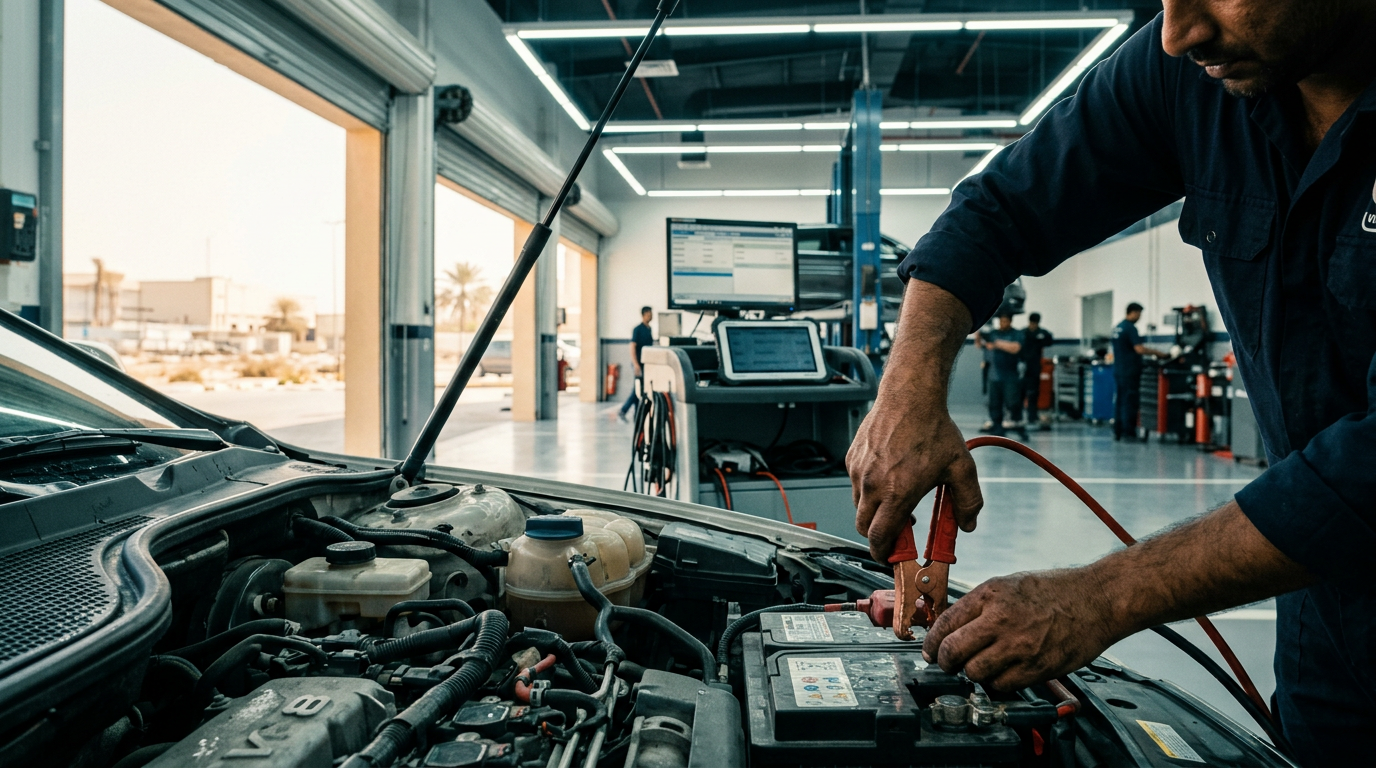
If you're stranded with a dead battery and have jumper cables or a portable jump pack, follow this sequence to avoid damage:
- Connect the red (positive) clamp to the dead battery's positive terminal
- Connect the other red clamp to the donor battery's positive terminal
- Connect the black (negative) clamp to the donor battery's negative terminal
- Connect the final black clamp to an unpainted metal surface on the dead car's engine block—not the battery terminal—to avoid sparks near hydrogen gas
- Start the donor car and let it run for two minutes
- Attempt to start the dead car; if it doesn't fire after 10 seconds, wait and try again
- Once started, remove clamps in reverse order
Let the engine run for at least 20 minutes to recharge the battery, and avoid turning on high electrical loads (AC, stereo, heated seats) immediately. If the car won't hold the jump or dies again within a day, the battery or alternator has failed and needs replacement.
Many Dubai residents prefer to call a professional jump start service rather than risk incorrect connections, especially on modern cars with sensitive electronics and stop-start systems.
Preventive Maintenance to Avoid Starting Issues
Most no-start scenarios in Dubai are preventable with routine checks:
- Replace the battery every three years, even if it seems fine—heat damage is cumulative
- Clean battery terminals every six months and apply protective spray
- Drive for at least 20 minutes once a week to keep the battery charged
- Use a trickle charger if the car sits unused for more than a week
- Replace fuel filters per manufacturer schedule (typically every 40,000–60,000 km if external)
- Include starter and alternator testing in annual inspections
Regular general maintenance catches wear before it becomes failure. European and EV models—Volvo, Polestar, Porsche, Land Rover—benefit especially from specialist attention, as their electrical systems and start-stop technology place higher demands on batteries and starters.
When to Call for Professional Help
If you've jumped the car and it starts but the problem recurs, or if the engine cranks strongly but won't fire, it's time for professional diagnostics. Guessing costs more in the long run—replacing parts that aren't faulty or ignoring an underlying fault that damages other components.
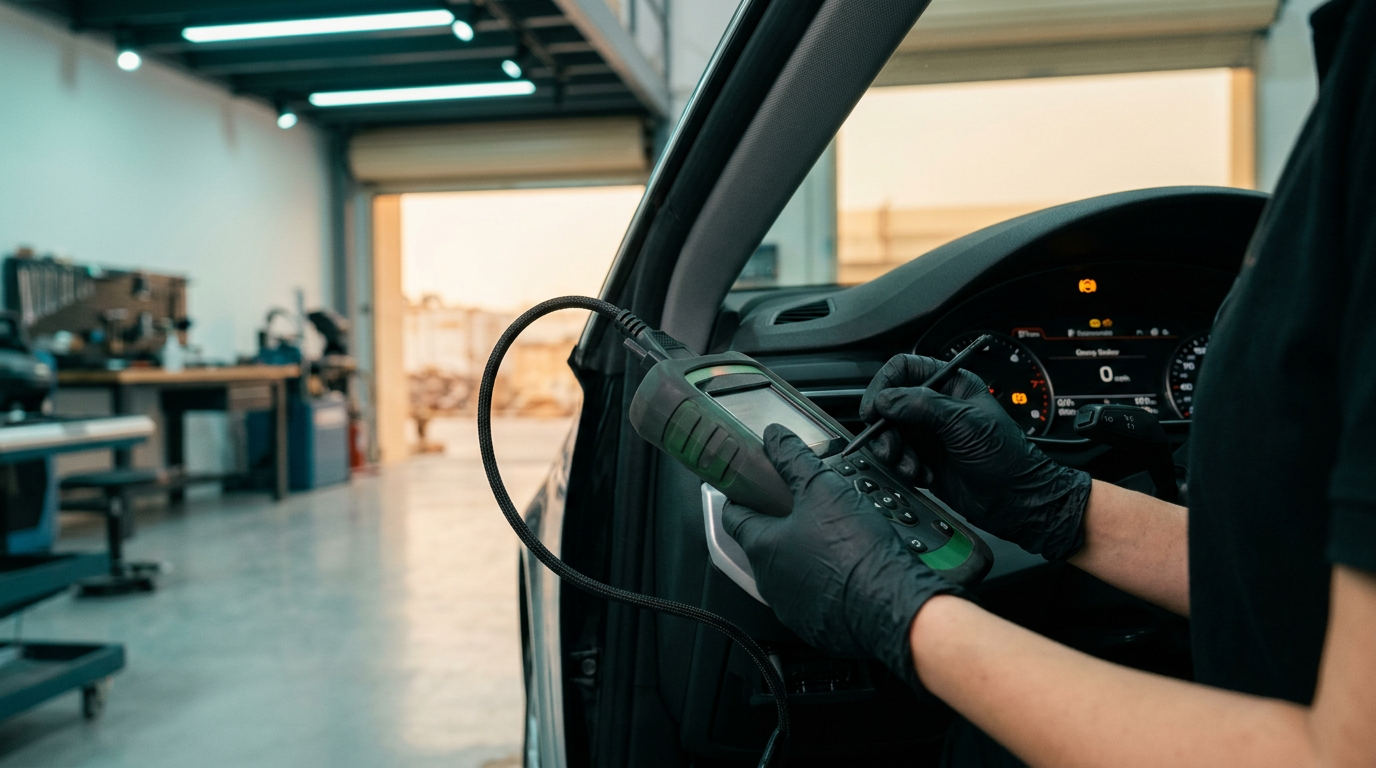
Manufacturer-grade diagnostic equipment reads live sensor data, stored fault codes and system status that generic OBD readers miss. Independent specialists with this equipment and 20+ years of experience on European marques can pinpoint faults in one visit, whether it's a failing alternator, a parasitic battery drain, a faulty crankshaft sensor, or a failed fuel pump.
If you're dealing with intermittent starting issues—works fine in the morning, fails in the afternoon heat—that's a clear sign of a heat-related component on the edge of failure. Catching it early avoids being stranded in stop-start traffic on Sheikh Zayed Road or in a sun-baked car park in Sharjah.
What to Do Right Now If Your Car Won't Start
First, try the simple checks: is the gear selector fully in Park (or Neutral on a manual)? Is the steering lock engaged? Is the key fob battery dead? These account for a surprising number of no-start calls.
If those are fine, attempt a jump start or call for roadside assistance. Once the car is running, drive directly to a workshop for testing—don't assume the problem is solved. A jump start is a diagnostic clue, not a repair.
For persistent or unclear faults, specialist car repair equipped with European diagnostic tools will save you time and money compared to trial-and-error part replacement.
Car Won't Start? We'll Diagnose It Fast
Whether it's your battery, starter or fuel system, JAD Garage in Al Quoz 4 has the diagnostic tools and experience to pinpoint the fault and get you back on the road. Call +971 56 355 6113 or visit us Monday to Saturday, 09:00–19:00.
Frequently asked questions