EV Road Trip Abu Dhabi–Dubai–Fujairah: Charging Plan


Planning an electric vehicle road trip from Abu Dhabi through Dubai to Fujairah requires understanding charging station locations, power levels, and realistic range calculations in UAE heat. Most modern EVs with 400+ km WLTP range can complete the 300 km round trip with one DC fast charging stop, but summer temperatures above 45°C reduce battery efficiency by 15–20%, making a charging plan essential for stress-free travel.
Understanding Charging Levels for Road Trip Planning
Public charging stations work by converting AC grid power to DC current that charges your vehicle's battery, or by delivering DC power directly. The charging level determines how quickly you'll add range during your trip.
Level 1 charging uses standard 220V household outlets and delivers 2–3 kW of power, adding roughly 10–15 km of range per hour. This equipment is impractical for road trips but useful for overnight parking at hotels.
Level 2 charging stations operate at 7–22 kW and are the most common public charging solution in Dubai shopping malls and parking facilities. A Level 2 charger adds approximately 30–80 km of range per hour depending on the vehicle's onboard charger capacity. Most European electric vehicles support 11 kW AC charging as standard, with models like the Porsche Taycan and Audi e-tron GT offering 22 kW.
DC fast chargers bypass the vehicle's onboard AC-to-DC converter and deliver 50–350 kW directly to the battery. These stations work with CCS (Combined Charging System) or CHAdeMO connectors and can add 200+ km of range in 20–30 minutes. DC fast charging is the backbone of long-distance EV travel.
| Charging Level | Power Output | Range Added per Hour | Typical Use Case |
|---|---|---|---|
| Level 1 (AC) | 2–3 kW | 10–15 km | Emergency, overnight hotel |
| Level 2 (AC) | 7–22 kW | 30–80 km | Shopping, dining, work parking |
| DC Fast | 50–350 kW | 200–500 km | Road trips, quick top-ups |
The Abu Dhabi–Dubai–Fujairah Route: Distance and Energy Requirements
The direct route from Abu Dhabi (Corniche area) to Fujairah via Dubai covers approximately 280 km one way. Taking Sheikh Mohammed bin Zayed Road (E311) through Dubai and then the E102 through Sharjah to Fujairah, you'll face three distinct driving conditions:
- Abu Dhabi to Dubai (130 km): Highway cruising at 120–140 km/h, moderate energy consumption
- Dubai to Sharjah (25 km): Stop-start urban traffic, higher consumption due to frequent acceleration
- Sharjah to Fujairah (125 km): Mountain roads with elevation changes up to 600 metres, variable consumption
A typical mid-size electric vehicle like the BMW iX3 or Mercedes-Benz EQC consumes 18–22 kWh per 100 km under ideal conditions. In summer heat with AC running continuously, expect 23–27 kWh per 100 km. For the full 280 km journey, budget 65–75 kWh of usable battery capacity.
Key Charging Station Locations Along the Route
Public charging stations are strategically positioned along this corridor, though density varies significantly. DEWA (Dubai Electricity and Water Authority) operates the largest network in Dubai, while ADNOC and other providers service Abu Dhabi and the Northern Emirates.
Abu Dhabi Starting Points
Begin your trip with a full charge. If you don't have home charging equipment, several public charging stations near Abu Dhabi Corniche and Yas Island offer DC fast charging at 50–150 kW. Starting with 100% charge in a vehicle with 400 km WLTP range gives you approximately 320–350 km of real-world summer range.
Dubai Charging Hub Options
Dubai offers the densest concentration of vehicle charging stations in the UAE. Major malls—Dubai Mall, Mall of the Emirates, City Centre Deira—have Level 2 chargers in parking areas. For faster turnaround, DEWA's DC fast chargers at ENOC and EPPCO petrol stations along Sheikh Zayed Road deliver 50 kW, adding 150 km of range in 30 minutes.
If you're stopping in Al Quoz for EV servicing or diagnostic services, several charging stations within 5 km can top up your battery while your vehicle is inspected.
Fujairah and Return Considerations
Fujairah has fewer public charging stations than Dubai or Abu Dhabi. The main options are Level 2 chargers at Fujairah Mall and select hotels. Plan to charge in Sharjah or Dubai on your return journey rather than relying on Fujairah infrastructure.
Practical Charging Plan: Three Scenarios
Your charging strategy depends on your vehicle's battery capacity and your comfort level with range margins.
Scenario 1: Long-Range EV (500+ km WLTP)
Vehicles like the Tesla Model S Long Range, Mercedes-Benz EQS, or BMW iX xDrive50 can complete the round trip without charging if you start at 100%. Leave Abu Dhabi with full charge, drive to Fujairah, and return with 20–30% remaining. This eliminates charging stops but requires confidence in your vehicle's energy consumption patterns.
Scenario 2: Mid-Range EV (400–500 km WLTP)
Most European electric vehicles fall into this category: Audi e-tron, Jaguar I-PACE, Polestar 2, Volvo XC40 Recharge. Plan one DC fast charging stop in Dubai on the outbound or return leg. Charge to 80% (optimal for fast charging speed) at a 50+ kW station, which takes 30–40 minutes and provides enough buffer for the full journey.
Scenario 3: Shorter-Range EV (300–400 km WLTP)
Older EVs or smaller models like the MINI Electric or MG ZS EV require two charging stops: one in Dubai going east, and another in Sharjah or Dubai returning west. Use DC fast chargers and charge to 80% each time. Total charging time adds 60–90 minutes to your journey.
Pre-Trip Checklist for EV Road Trips
- Verify your vehicle's real-world range in current weather conditions—WLTP figures are optimistic
- Download charging network apps (DEWA EV Green Charger, Charge&Go, others) and register payment methods before departure
- Check battery health and electrical systems if your EV is over three years old
- Inspect tyre pressure—underinflated tyres increase energy consumption by 3–5%
- Plan charging stops at locations with amenities (food, restrooms) to make wait time productive
- Carry your vehicle's charging cable for Level 2 stations; DC fast chargers have tethered cables
- Note that AC system efficiency significantly impacts range—set cabin temperature to 23–24°C rather than maximum cooling
- Allow 20% battery buffer for unexpected detours or traffic that increases consumption
How Temperature Affects Charging Speed and Range
UAE summer heat presents unique challenges for electric vehicles. Battery management systems throttle both charging speed and power output when pack temperature exceeds 40°C to prevent degradation. A battery that accepts 150 kW at 25°C may only accept 80–100 kW at 45°C, extending charging time.
Precondition your battery before fast charging by driving at highway speed for 15–20 minutes. This brings the pack to optimal temperature and maximizes charging speed. Many vehicles with navigation systems automatically precondition when you route to a charging station.
Range loss in heat comes from two sources: cabin cooling (consuming 2–4 kW continuously) and reduced battery efficiency. The combined effect typically reduces advertised range by 15–20% when ambient temperature exceeds 45°C. Factor this into your charging plan, especially for the return journey when batteries are warmest.
What to Do If You're Running Low on Charge
If your predicted range drops below 50 km and the nearest charging station is further, take immediate action:
- Reduce speed to 80–90 km/h—energy consumption drops significantly below 100 km/h
- Increase AC temperature to 25–26°C or switch to ventilation only
- Disable non-essential electrical loads (heated seats, high-beam lights, audio system at high volume)
- Use the vehicle's Eco or Range mode if available, which limits power output and optimizes energy use
- Contact roadside assistance or a garage like JAD Garage that understands EV systems before you're completely stranded
Finding Charging Stations: Apps and Tools
Several tools help locate electric vehicle charging stations across the UAE. The DEWA EV Green Charger app shows all DEWA-operated stations in Dubai with real-time availability. PlugShare is a community-driven platform covering public charging stations across all emirates, with user reviews and photos.
Google Maps and Apple Maps now display charging station locations, though information accuracy varies. Cross-reference with dedicated EV apps for station status—nothing worse than arriving at an out-of-service charger with 10% battery remaining.
For corporate fleets or business vehicle management, establish charging accounts with major providers in advance to streamline payment and track energy costs across multiple vehicles.
Residential and Commercial Charging Solutions
While public charging stations work for occasional trips, daily EV use in Dubai benefits enormously from home or business charging equipment. A Level 2 charger installed in your villa or apartment parking space delivers a full charge overnight, eliminating range anxiety for routine driving.
Installation requires DEWA approval, an electrical load assessment, and proper equipment rated for UAE heat. Typical residential installations use 7 kW chargers, while commercial parking facilities often deploy multiple 11–22 kW units. The upfront investment (typically AED 3,000–8,000 for equipment and installation) pays back through convenience and reduced reliance on public infrastructure.
Businesses with company vehicle fleets should consider workplace charging as an employee benefit and operational necessity, especially for roles requiring daily driving across Dubai and the Northern Emirates.
EV Systems Check Before Your Road Trip
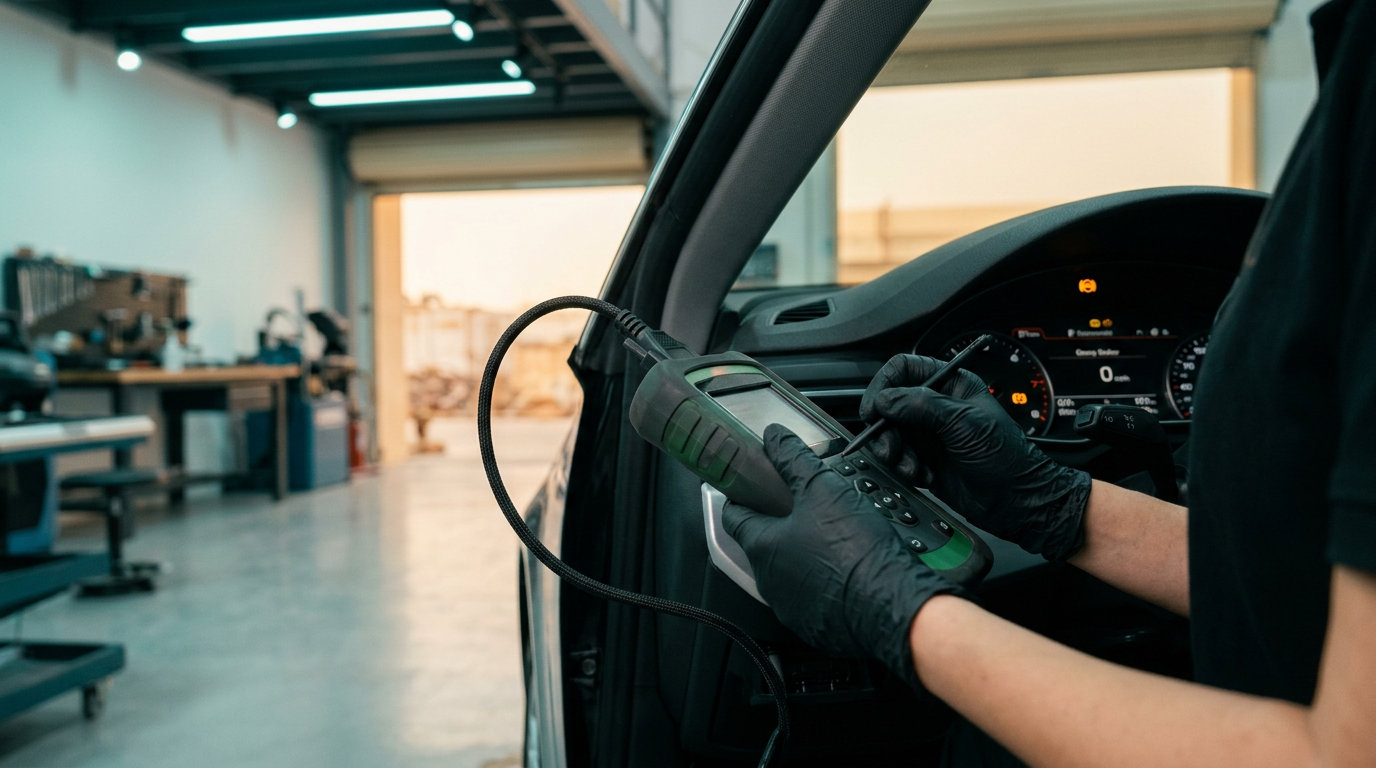
Before any long journey, have your electric vehicle's battery, cooling system, and electrical components inspected by specialists who understand EV architecture. JAD Garage in Al Quoz 4 offers comprehensive EV diagnostics and maintenance. Call +971 56 355 6113 to book your pre-trip inspection.
Frequently asked questions