
Exporting a Car From Dubai: Export Certificate and De-Registration

Exporting a car from Dubai involves obtaining an export certificate from RTA, cancelling your vehicle registration, clearing Dubai Customs, settling all outstanding fines, and surrendering your license plate. The process takes 3–7 working days if all documents are in order, and costs between AED 420–650 in official fees depending on the emirate of registration and whether you use a typing centre.
1. Confirm Eligibility and Settle All Outstanding Obligations
Before you begin the export process, verify that your vehicle is eligible for export and that all financial and legal obligations are cleared. The RTA will not issue an export certificate if any of the following are outstanding:
- Traffic fines in Dubai or any other emirate (check via the RTA Dubai app, dubai.ae portal, or Ministry of Interior app)
- Salik toll account balance or pending charges
- Outstanding finance or bank loan (you will need a clearance letter from the bank)
- Active insurance policy (cancel or obtain a no-objection letter from your insurer)
- Expired vehicle registration (you may need to renew before export, or apply for a temporary movement permit if the Mulkiya has lapsed)
If your car is financed, contact your bank to request a loan settlement letter and clearance certificate. This document confirms that the vehicle is free from any mortgage or lien and can take 3–5 working days to issue. Without it, RTA will not proceed with de-registration.
2. Obtain a Vehicle Technical Inspection Report
An up-to-date vehicle inspection report is required for the export certificate application. If your Mulkiya renewal inspection is still valid (within the past 30 days), you can use that report. Otherwise, visit any RTA-approved testing centre—Tasjeel, Wasel, ADNOC, or Shamil—and request an inspection specifically for export purposes.
The inspection fee is typically AED 170–220 depending on the centre and vehicle type. Inform the inspector that the report is for export; they will issue a pass certificate even if minor advisories are noted, as long as the vehicle meets basic roadworthiness and the vehicle identification number matches your registration documents.
Common rejection reasons at this stage include mismatched VIN due to previous bodywork, missing or incorrect emission compliance labels on European imports, or structural modifications not reflected in the registration. If you've had significant bodywork and paint or engine modifications, ensure all changes were recorded with RTA during the original registration or transfer.
3. Apply for the RTA Export Certificate
With your inspection report in hand, visit an RTA customer happiness centre or use a registered typing centre in Al Quoz, Deira, or near the port. You will need:
- Original vehicle registration card (Mulkiya)
- Original Emirates ID of the registered owner
- Valid passport copy of the owner (or trade license if the vehicle is registered to a company—see corporate accounts and fleet services for business-owned vehicles)
- Vehicle inspection pass certificate (valid within 30 days)
- Bank clearance letter (if applicable)
- Insurance cancellation or no-objection letter
- Original number plates (front and rear)
The RTA service counter will verify all documents, check for outstanding fines across the UAE, and process the export certificate application. The official RTA fee for an export certificate as of early 2025 is AED 220, plus AED 35 for knowledge and innovation fees. Typing centres typically charge an additional AED 150–200 for document preparation and submission. Confirm current fees on the RTA Dubai portal before your visit, as tariffs are reviewed annually.
If you are exporting to a GCC country (Saudi Arabia, Kuwait, Oman, Bahrain, or Qatar), the process is slightly different: you will apply for a temporary export permit valid for 3–6 months rather than full de-registration, allowing you to drive the vehicle across the border. For all other destinations, full de-registration and containerised shipping is required.
4. Cancel Your Vehicle Registration (De-Registration)
Once the export certificate is issued, RTA will cancel your vehicle registration in their system. You must physically surrender both license plates at the same appointment. The plates will be destroyed, and you will receive a de-registration slip confirming that the vehicle is no longer registered in Dubai and cannot be driven on UAE roads.
From this point, the vehicle must be transported on a flatbed or trailer to the port or Customs facility. Driving a de-registered vehicle on public roads incurs a fine of AED 500 and possible impoundment. Arrange for a recovery service or tow truck in advance if your vehicle is not already at the export facility.
If your vehicle is a high-value model—Porsche, Maserati, Bentley, Lamborghini, or similar—ensure it has been inspected and documented for condition before transport. A pre-purchase inspection report can serve as a baseline for insurance claims if damage occurs during shipping.
5. Clear Dubai Customs and Obtain Export Documentation
Take your export certificate, de-registration slip, passport, and Emirates ID to Dubai Customs at Jebel Ali Port (for sea freight) or Al Awir (for land transport to Oman). You will need to declare the vehicle for export and provide:
- RTA export certificate
- Original vehicle title or de-registration slip
- Commercial invoice or bill of sale (if selling to a buyer abroad)
- Shipping bill of lading or freight booking confirmation
- Passport and Emirates ID of the exporter
Dubai Customs will inspect the vehicle identification number and verify that it matches all documents. The Customs officer will seal the container or issue a release note for roll-on/roll-off (RoRo) shipping. There is no export duty on personal vehicles leaving the UAE, but you must pay any applicable port handling fees—typically AED 200–400 depending on the shipping method and terminal.
If you are exporting a classic or sports car, consider arranging enclosed container shipping to protect the vehicle from salt air and humidity during the voyage. Standard open RoRo shipping exposes the car to the elements for 2–4 weeks, which can accelerate corrosion on older European models like Alfa Romeo, Jaguar, or Aston Martin.
6. Notify Salik and Request Account Closure or Refund
After de-registration, log in to your Salik account via the Salik app or website and request account closure. If you have a positive balance, you can request a refund to your registered bank account or Mastercard. Refunds are processed within 10–15 working days.
If you forget this step, your Salik account will remain open and any automatic top-up linked to your credit card will continue. Close the account before you leave the UAE to avoid unnecessary charges.
7. Cancel or Transfer Your Insurance Policy
Contact your motor insurance provider to cancel the policy effective from the date of de-registration. Most insurers will refund the unused portion of your annual premium on a pro-rata basis, minus an administration fee of AED 100–200. Request a formal cancellation certificate for your records.
If you own multiple vehicles or plan to purchase another car in Dubai, ask whether the insurer can transfer the no-claims discount to a new policy. Some providers allow this within 30 days of cancellation.
Common Mistakes That Cause Rejection or Delays
Many export applications are delayed or rejected due to easily avoidable errors:
- Outstanding fines in other emirates: RTA Dubai can see fines from Abu Dhabi, Sharjah, and Ajman, but processing delays sometimes mean recent fines don't appear immediately. Always check the Ministry of Interior portal 48 hours before applying.
- Expired insurance: Even if you plan to cancel the policy, it must be active on the day you apply for the export certificate. Renew for one month if necessary.
- Bank clearance letter delays: If your vehicle is financed, start the loan settlement process at least two weeks before your intended export date. Some banks require the vehicle to be physically inspected before issuing clearance.
- Mismatched VIN: If your car has had chassis repair or a replacement VIN plate, the number on the vehicle must exactly match the Mulkiya. Any discrepancy will trigger a fraud investigation and a 30-day hold.
- Driving the vehicle after de-registration: Once the plates are surrendered, the car is legally a non-motor vehicle and must be transported on a trailer. Police will fine and impound any de-registered vehicle found on the road.
Exporting from Abu Dhabi, Sharjah, or Other Emirates
If your vehicle is registered in Abu Dhabi, the process is similar but handled through Abu Dhabi Police Vehicle Licensing Department rather than RTA. Fees are slightly lower—around AED 350 total—and you can complete the entire process at the Mussafah or Mafraq licensing centres. For Sharjah, visit Sharjah Police Traffic and Licensing Department in Al Ramaqia.
The inspection, Customs clearance, and shipping steps are identical regardless of the emirate of registration. If you are moving between emirates rather than exporting internationally, see our guide on selling a car between emirates for the transfer process.
What Happens If You Don't De-Register Before Leaving the UAE?
If you leave the UAE without cancelling your vehicle registration, the Mulkiya will expire and you will incur daily fines once the grace period ends (see Mulkiya renewal grace period and fines). The vehicle will eventually be flagged as abandoned, towed to a police yard, and auctioned after 90 days. You will remain liable for all fines, storage fees, and auction costs even if you are no longer in the country, and these debts can prevent you from returning to the UAE or renewing your visa in future.
Always complete the full de-registration process before you leave, even if you plan to return. It takes less than a week and protects you from mounting penalties.
Pre-Export Inspection and Maintenance
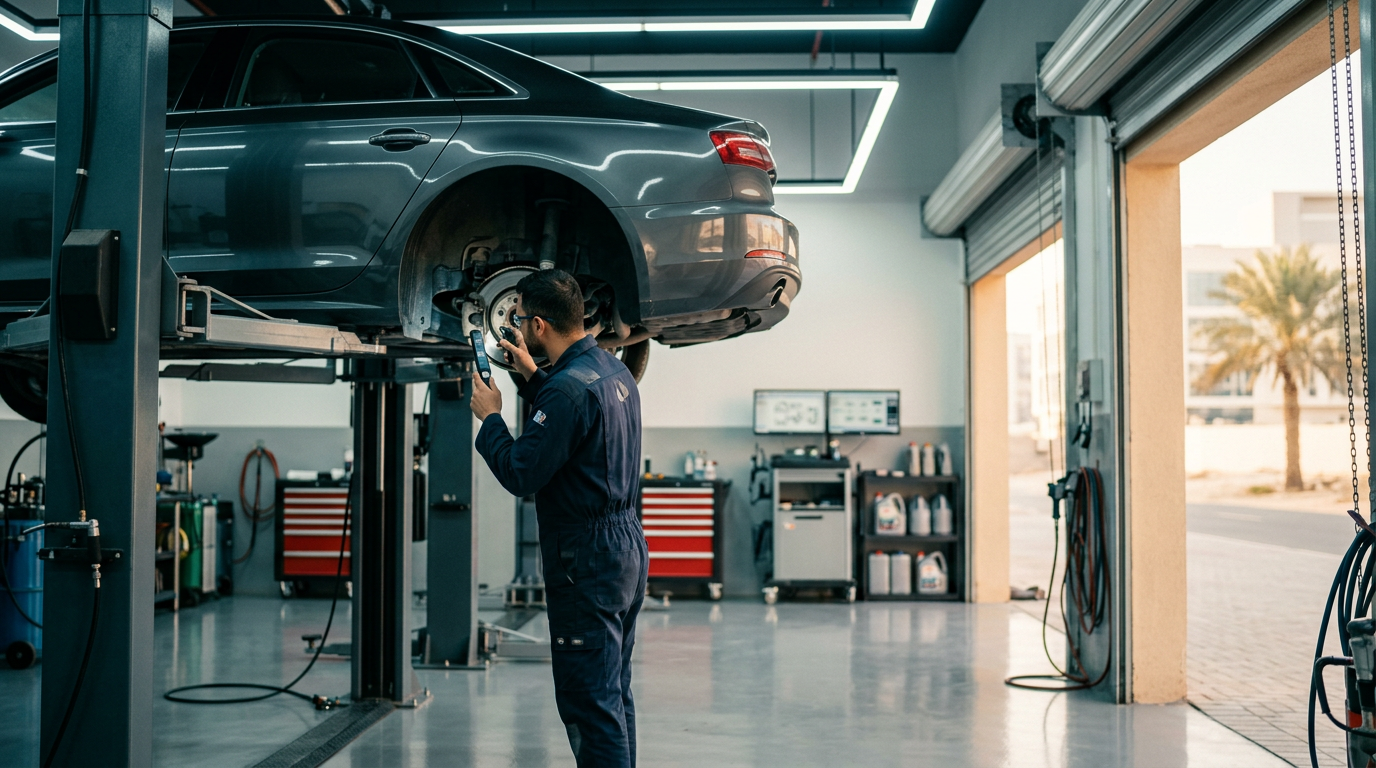
Before shipping your vehicle internationally, consider a final general maintenance check to ensure it arrives in good condition. Long sea voyages and storage in humid container environments can reveal latent issues with batteries, tires, and brake systems. A pre-export inspection at an independent workshop will identify any problems that might worsen during transport.
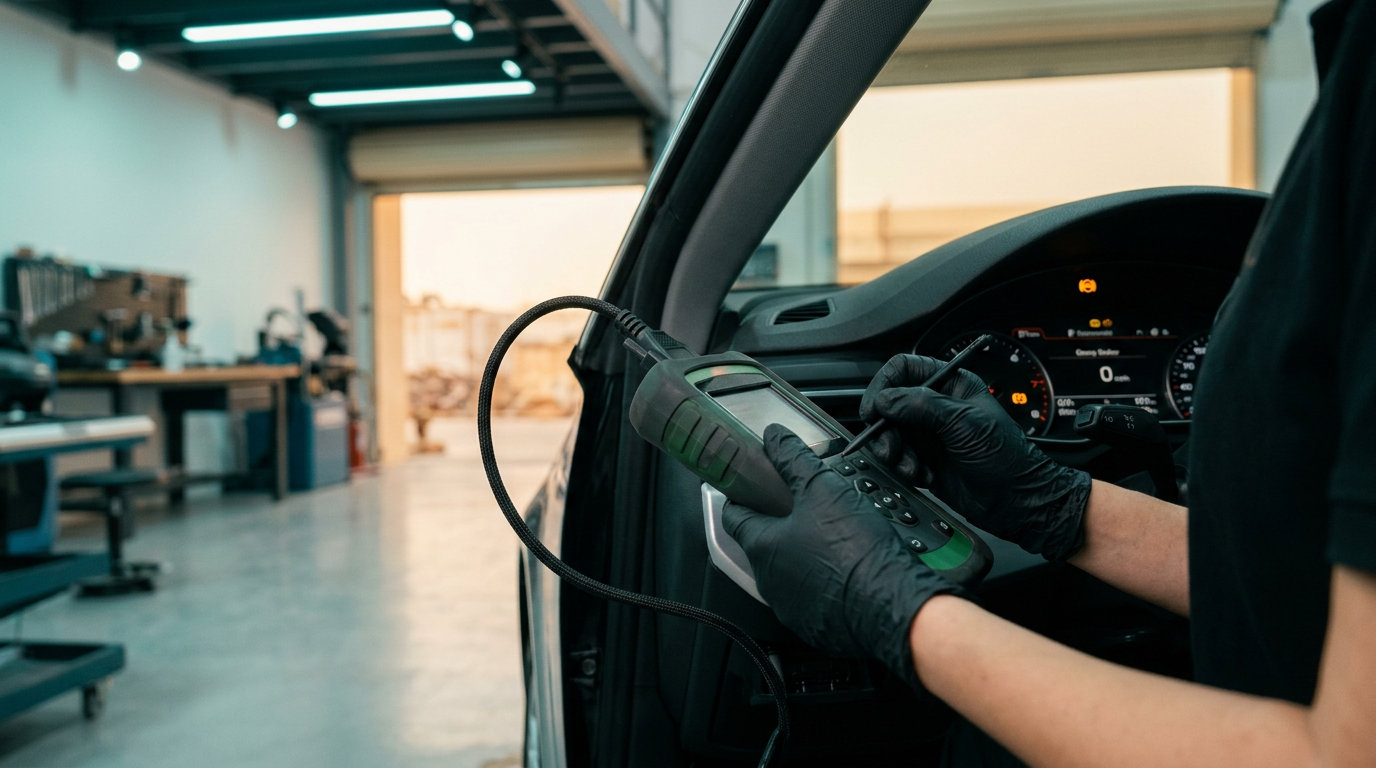
For European marques—BMW, Mercedes-Benz, Audi, Volkswagen, Volvo, Peugeot, Citroën, and Renault—ensure that all diagnostic fault codes are cleared and that fluids are topped up. Shipping companies will not accept vehicles with leaking fluids or low tire pressure.
Pre-Export Inspection and Maintenance in Al Quoz
Planning to export your European or luxury vehicle? JAD Garage in Al Quoz 4 offers pre-export inspections, fluid top-ups, and diagnostic checks to ensure your car is shipment-ready. Call +971 56 355 6113 or visit us Monday–Saturday, 09:00–19:00.
Frequently asked questions