
How to Check a Used Car Before Buying in the UAE

Before buying a used car in the UAE, verify its accident and ownership history online using the chassis number, inspect the bodywork for resprays and panel gaps, check the engine bay for leaks and corrosion, test-drive for gearbox and suspension issues, and arrange a professional pre-purchase inspection to uncover hidden faults that can cost thousands later.
Why Used Car Checks Matter in the UAE
The UAE's second hand vehicle market is large and fast-moving. Cars change hands frequently, and not all sellers disclose accident history, flood damage, or mechanical faults. A vehicle that looks immaculate under showroom lights may hide serious issues: resprayed panels after a major collision, a gearbox on the edge of failure, or a chassis number that doesn't match registration documents.
Dubai's climate adds another layer of risk. Stop-start traffic, fine sand ingress, and summer heat above 45°C accelerate wear on cooling systems, air conditioning, and seals. A car that's been poorly maintained in these conditions can develop expensive faults that only surface after purchase. Thorough checks before buying protect you from inheriting someone else's problem and give you negotiating power when faults are found.
Step 1: Verify Vehicle History Online
Start your inspection before you even see the car. The UAE offers several official channels to check a vehicle's background using its chassis number or plate number.
RTA and Police History Checks
Dubai Police and RTA systems let you verify accident records, outstanding fines, mortgage status, and whether the car has been reported stolen. You'll need the chassis number (VIN), which should match the registration card exactly. Our detailed guide on chassis number and VIN checks in the UAE explains how to access these services and what each report reveals.
Request the seller's registration card (Mulkiya) and cross-check the chassis number stamped on the car itself—usually on the dashboard visible through the windscreen, on the driver's door pillar, and under the bonnet. Mismatched numbers are an immediate red flag for cloning or tampering.
Insurance Claim History
Some insurance companies in the UAE maintain shared databases of claims. While not always publicly accessible, asking the seller for a letter from their insurer confirming no major claims in the past three years can reveal accident history that didn't involve police reports. Be wary if the seller refuses or delays this request.
Service History and Mileage Verification
Genuine service records from a garage or main agent—stamped, dated, and showing consistent mileage progression—are strong evidence of proper care. Gaps longer than 12 months or sudden mileage jumps suggest neglect or odometer tampering. For European brands and EVs, general maintenance intervals are typically every 10,000–15,000 km or annually, whichever comes first.
Step 2: Physical Inspection Checklist
Inspect the car in daylight, ideally outdoors where natural light reveals paint defects and panel misalignment. Bring a torch, a magnet (to detect body filler), and someone who knows cars if you're not confident.
Exterior and Bodywork
- Paint and panels: Look for colour mismatches between panels, orange-peel texture (sign of respray), and uneven panel gaps. Run your hand along seams—overspray or rough edges indicate bodywork and paint repairs.
- Shut lines and doors: Open and close all doors, bonnet, and boot. They should align perfectly and close with a solid thunk. Misalignment suggests frame damage from an accident.
- Tyres: Check tread depth (legal minimum 1.6 mm, but 3 mm is safer for wet roads), uneven wear (indicates suspension or alignment issues), and that all four tyres match in brand and age. Cracked sidewalls are common in UAE heat. Read more about tyre services and replacement intervals.
- Glass and lights: Inspect windscreen for cracks (can fail RTA inspection). Check all lights function, including indicators and brake lights.
Engine Bay
A clean engine bay is fine, but one that's been steam-cleaned immediately before viewing may hide leaks. Look for:
- Oil leaks: Dark stains under the engine, on the undertray, or around gaskets. Small seeps are common on older cars, but active drips are expensive to fix.
- Coolant condition: Open the expansion tank (engine cold only). Coolant should be brightly coloured, not brown or oily. Rusty or milky coolant suggests head gasket failure or corrosion.
- Battery and terminals: Check for corrosion (white or green deposits). A weak or new battery may indicate electrical drain or recent jump-starts. Battery services are inexpensive, but recurring failures point to deeper electrical faults.
- Hoses and belts: Squeeze hoses—they should be firm, not soft or brittle. Cracked belts need replacement.
Interior Condition
- Seats and trim: Excessive wear, torn leather, or faded plastics suggest high mileage or sun damage. Check that all seat adjustments and electric functions work.
- Dashboard warning lights: Turn the ignition to position II (engine off). All warning lights should illuminate briefly, then extinguish when the engine starts. Lights that stay on—especially ABS, airbag, or engine management—indicate faults that need diagnostic services to decode.
- Air conditioning: Essential in Dubai. Set the AC to maximum cold and check that it blows ice-cold within 30 seconds. Weak cooling or strange smells suggest refrigerant leaks or compressor failure. Our article on why car AC runs but doesn't cool explains common faults.
- Electronics: Test every switch: windows, mirrors, infotainment, parking sensors, cameras. Electrical gremlins are common in older luxury cars and expensive to trace.
Step 3: Test Drive
A static inspection misses dynamic faults. Insist on a test drive of at least 15–20 minutes, covering city streets, highway speeds, and rough surfaces.
What to Listen and Feel For
- Engine start: Should fire immediately without hesitation, smoke, or rattles. Blue smoke indicates burning oil (worn rings or turbo), white smoke suggests coolant entering cylinders.
- Transmission: Automatic gearboxes should shift smoothly without jerks, delays, or slipping. Manual gearboxes should engage cleanly without crunching. Hesitation or shuddering can mean imminent transmission service or rebuild—often AED 8,000–20,000 for European cars.
- Steering and suspension: The car should track straight without pulling. Clunks over bumps, excessive body roll, or vague steering suggest worn suspension and steering components.
- Brakes: Should bite progressively without squealing, grinding, or vibration. Pulsing through the pedal indicates warped discs. Brake service is routine, but if the seller hasn't addressed obvious issues, question what else has been neglected.
- Warning lights during driving: Watch the dashboard. Intermittent lights, especially check engine or gearbox warnings, point to faults that may not trigger a code when stationary.
Step 4: Professional Pre-Purchase Inspection
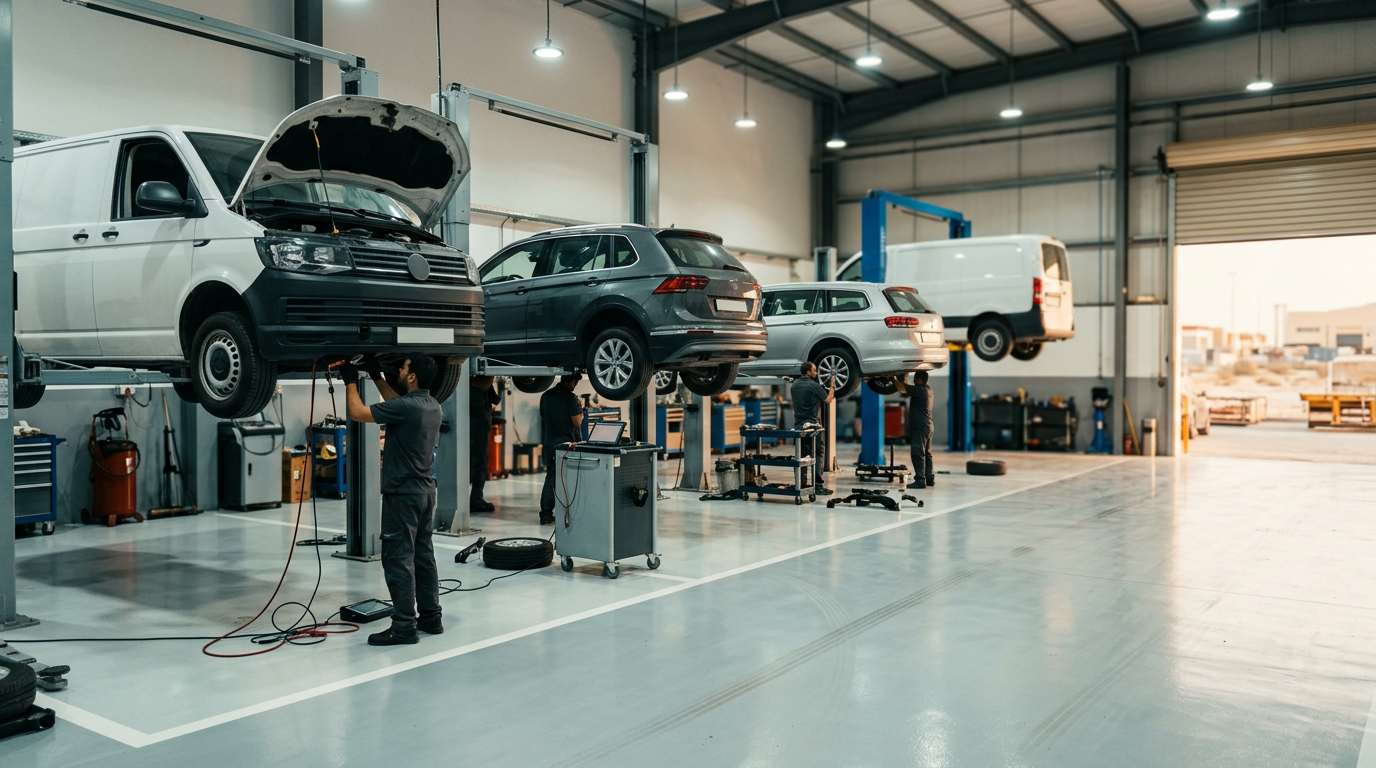
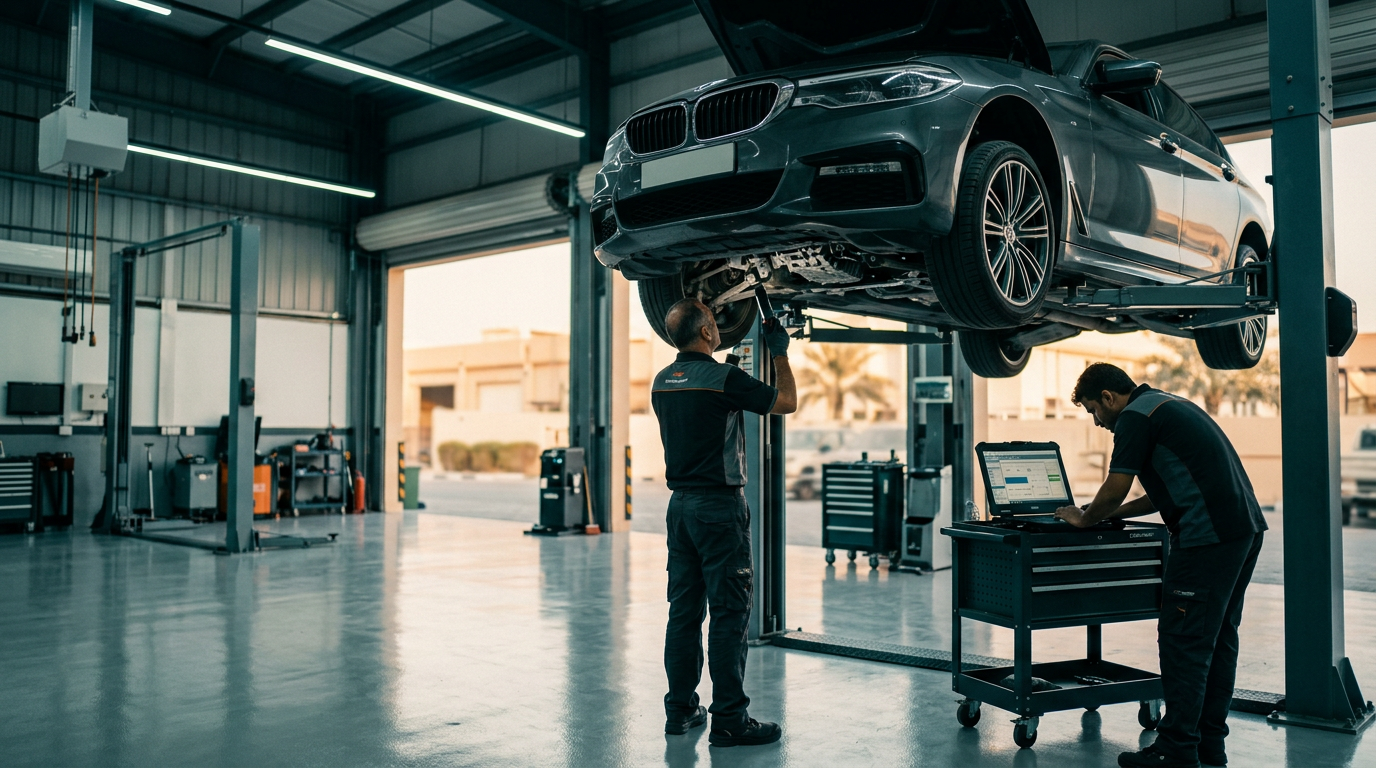
Even if you're mechanically confident, a professional inspection by an independent workshop uncovers hidden faults that aren't obvious during a test drive. A comprehensive pre-purchase inspection includes:
- Lift inspection of the underside for rust, leaks, accident damage, and suspension wear
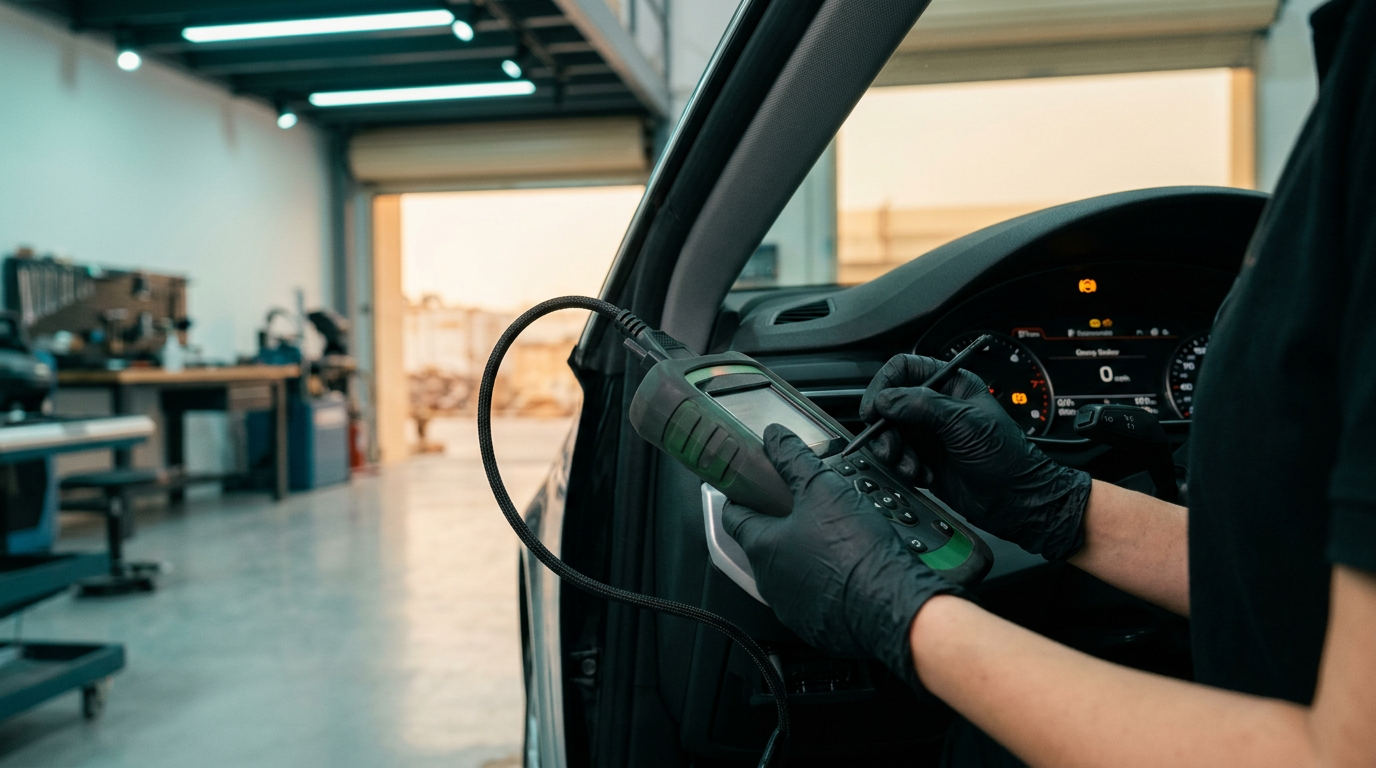
- Computerised diagnostics to read fault codes from all control modules
- Compression or leak-down test to assess engine condition
- Brake and suspension measurement against manufacturer specifications
- Fluid analysis and contamination checks
Typical market rates for pre-purchase inspections in Dubai range from AED 300 to AED 800 depending on vehicle complexity. For high-value or specialist vehicles—Porsche, Maserati, Range Rover—the cost is negligible compared to the repair bills you might avoid. Our article on used luxury cars in Dubai details the most expensive faults that inspections catch.
Legal and Registration Checks
Before handing over money, verify these UAE-specific legal requirements:
- Valid registration (Mulkiya): Must be current. Driving with an expired Mulkiya incurs fines; see fines for expired Mulkiya.
- No outstanding fines: Check via the RTA or police app. You inherit unpaid fines when you register the car in your name.
- Mortgage clearance: If the car is financed, the seller must provide a bank clearance letter before transfer.
- Export eligibility: If you plan to export, confirm the car meets your destination country's age and emissions rules.
Common Red Flags and Deal-Breakers
Walk away if you encounter:
- Seller refuses history checks, test drive, or independent inspection
- Chassis number doesn't match registration or is tampered with
- Fresh undercoating or paint in the engine bay (hides leaks or rust)
- Multiple airbag or ABS warning lights that can't be explained
- Flood damage signs: musty smell, water stains under carpets, corrosion in unusual places
- Major accident history without proper repair documentation
Negotiating Based on Inspection Findings
Faults discovered during inspection are leverage. If the car needs new tyres (AED 1,200–2,500 for a set), brake pads and discs (AED 1,500–4,000), or AC compressor replacement (AED 2,500–5,000), deduct these costs from the asking price or request the seller fixes them before sale. For specialist brands like BMW, Audi, or Mercedes-Benz, parts and labour are higher than mainstream brands, so factor this into your offer.
Final Checks Before Payment
On the day of transfer:
- Re-inspect the car to ensure it's the same vehicle and condition
- Verify all keys, service books, and accessories are present
- Complete the RTA transfer process with the seller present
- Arrange insurance before driving away—it's illegal to drive uninsured in the UAE
Understanding car insurance and garage choice helps you select cover that allows you to use trusted independent workshops for future servicing and repairs.
Buying a used car in the UAE doesn't have to be a gamble. Methodical checks, professional inspection, and attention to detail turn what could be an expensive mistake into a confident, informed purchase.
Pre-Purchase Inspection in Al Quoz
Planning to buy a used car? JAD Garage in Al Quoz 4 offers comprehensive pre-purchase inspections using manufacturer-grade diagnostics to uncover hidden faults before you commit. Call +971 56 355 6113 to book your inspection.
Frequently asked questions