
Most Common Car Electrical Problems and How They're Diagnosed

The most common car electrical problems include dead or weak batteries, failing alternators, faulty starter motors, blown fuses, corroded wiring connections, and failing ignition coils or spark plugs. These issues are diagnosed using multimeters, battery load testers, scan tools, and systematic circuit testing to isolate faults in the vehicle electrical system.
Modern cars rely on complex electrical systems to control everything from engine management and lighting to infotainment and climate control. In Dubai's extreme heat—where cabin temperatures can exceed 70°C and underbonnet zones reach similar extremes—electrical components face accelerated wear. Short city trips, stop-start traffic, and long periods parked in the sun all stress the battery and charging system, making electrical issues one of the most frequent reasons cars fail to start or exhibit intermittent faults.
Why Electrical Problems Are So Common in Dubai
Heat is the enemy of electronics. Battery electrolyte evaporates faster, solder joints expand and contract, and plastic insulation on wiring becomes brittle. Fine sand ingress can corrode connectors, and humidity near the coast accelerates oxidation on terminals. Many European cars—BMW, Audi, Mercedes-Benz, Volkswagen, Porsche—have densely packed engine bays that trap heat, compounding the problem.
Add to that the UAE's driving patterns: air conditioning running at maximum load, short trips that never fully recharge the battery, and cars left parked for weeks while owners travel. These conditions mean that even a three-year-old battery may fail prematurely, and alternators work harder than in temperate climates.
Dead or Weak Battery
A flat battery is the single most common car electrical problem. Symptoms include slow cranking, dim interior lights, clicking when you turn the key, or complete electrical failure. In Dubai, lead-acid batteries typically last 2–4 years, shorter than the 4–6 years seen in cooler regions.
How It's Diagnosed
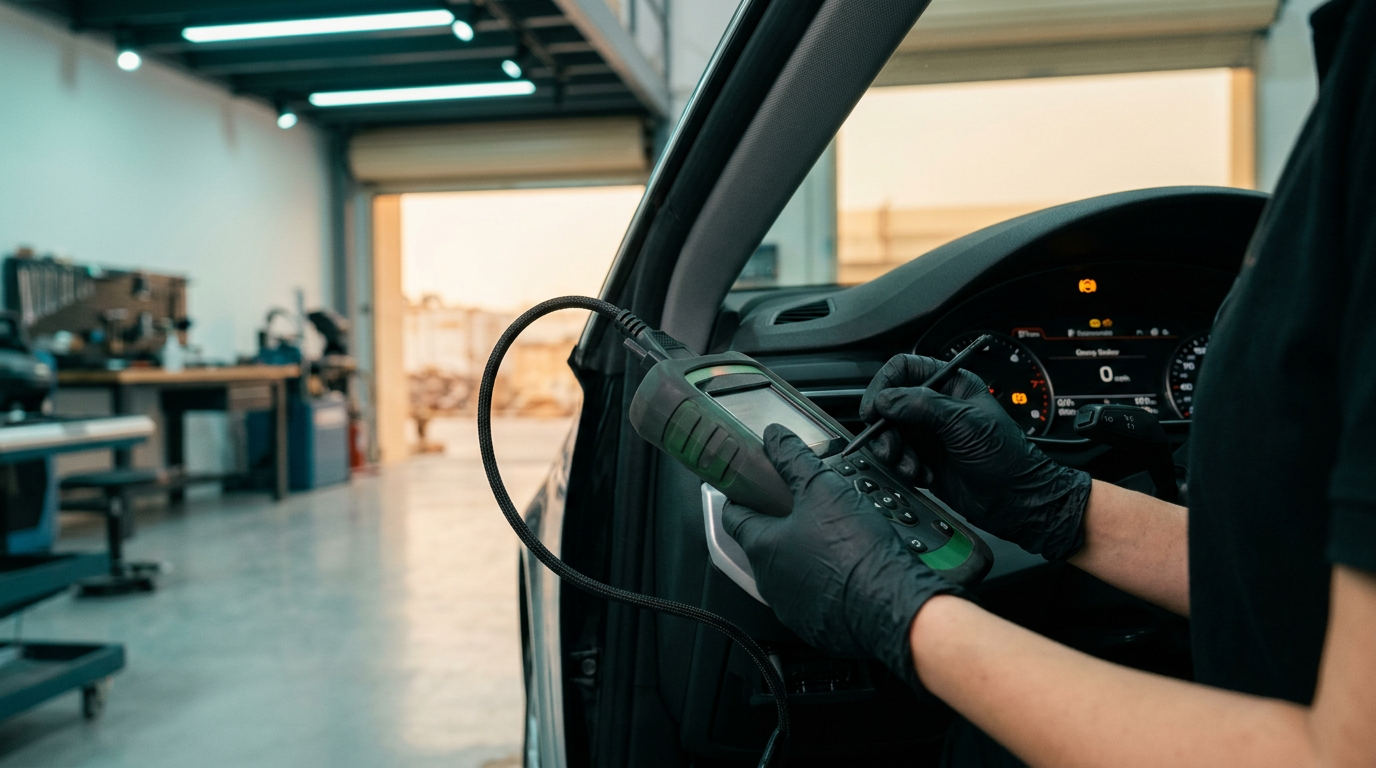
Technicians use a digital battery tester to measure voltage (should be 12.4–12.7 V when rested), cold-cranking amps, and internal resistance. A load test simulates engine-start demand to reveal weak cells. If voltage drops below 9.6 V under load, the battery is failing. Corrosion on terminals is cleaned and checked—white or blue-green powder around clamps indicates poor contact and voltage drop.
If the battery is less than two years old and fails, the root cause is often elsewhere: a parasitic drain (something drawing current when the car is off), a failing alternator, or a fault in the charging circuit. Battery services include testing the entire charging system, not just swapping the battery.
Failing Alternator
The alternator recharges the battery and powers electrical systems while the engine runs. When it fails, the battery light illuminates on the dashboard, headlights dim at idle, or the car dies after a few kilometres running on battery alone.
Diagnosis Process
With the engine running, voltage at the battery terminals should read 13.8–14.4 V. If it's below 13 V, the alternator isn't charging. Technicians check the serpentine belt for slippage or wear, inspect the alternator connector for corrosion, and use an oscilloscope to examine the alternator's AC ripple—excessive ripple indicates failing diodes inside the alternator.
High-output alternators in luxury and performance cars (Maserati, Range Rover, Aston Martin) are especially sensitive to heat. Replacement alternators should match OEM specifications; undersized units will fail quickly under Dubai's electrical loads.
Starter Motor Issues
If you hear a single loud click or a rapid clicking sound when turning the key, the starter motor or its solenoid may be faulty. Sometimes the engine cranks slowly or not at all, even with a good battery.
Testing the Starter Circuit
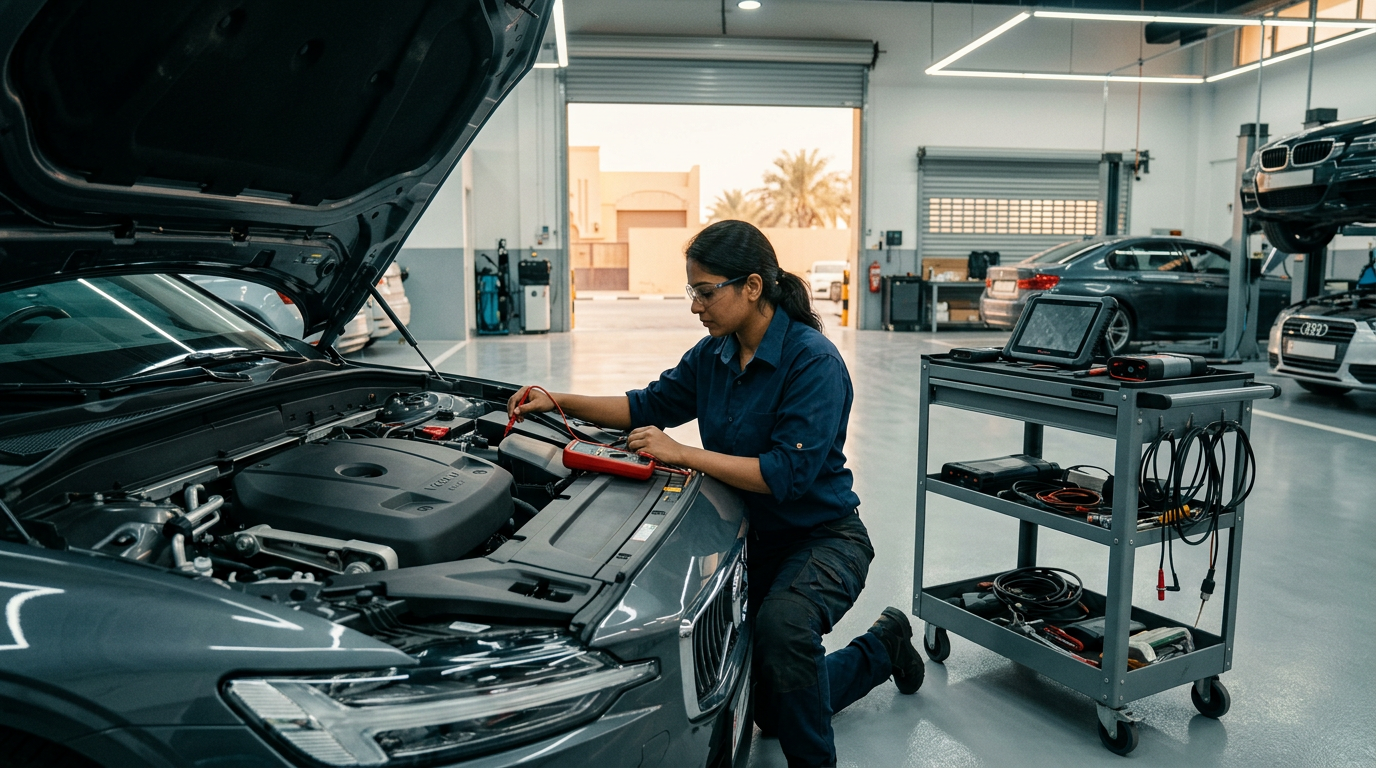
A multimeter checks voltage at the starter solenoid trigger wire when the key is turned—if 12 V is present but the starter doesn't engage, the solenoid or motor is defective. A voltage drop test across battery cables and ground straps reveals poor connections. Starter motors draw 100–300 A during cranking, so even slight resistance in cables or corroded ground points causes failure.
In high-compression engines or turbocharged European models, worn starter motors struggle in the heat. Rebuild or replacement is usually more reliable than temporary fixes.
Blown Fuses and Relays
Fuses protect circuits from overload. A blown fuse means something in that circuit drew too much current—a short, a failing component, or water ingress. Common symptoms: one headlight out, power windows not working, fuel pump not priming, or infotainment dead.
Systematic Fuse Diagnosis
Technicians refer to the fuse box diagram (usually on the fuse box cover or in the owner's manual) and use a test light or multimeter to check continuity. If a fuse blows immediately after replacement, there's a short circuit downstream. This requires tracing the wiring with a circuit tester, inspecting for chafed insulation, pinched wires, or failed modules.
Relays—electromechanical switches—can also fail, especially in high-heat environments. Swapping a suspect relay with an identical one elsewhere in the fuse box is a quick field test.
Wiring Problems and Corrosion
Corroded connectors and damaged wiring cause intermittent electrical issues: lights that flicker, sensors that give false readings, or systems that work only when you wiggle a connector. Rodents chewing wiring is less common in urban Dubai but can occur in cars parked near greenery or waste areas.
Finding Hidden Wiring Faults
Visual inspection under good lighting reveals cracked insulation, green corrosion on copper, or melted plastic from overheating. Technicians use a wiring diagram and a multimeter to test continuity and resistance in suspect circuits. An oscilloscope can detect voltage spikes or noise that indicate poor grounds or failing sensors.
European cars often use complex multi-pin connectors; a single corroded pin can disable an entire module. Cleaning with electronic contact cleaner and applying dielectric grease prevents recurrence. Electrical and electronics work requires patience and methodical testing—guessing leads to expensive misdiagnosis.
Ignition Coils and Spark Plugs
Misfires, rough idle, poor acceleration, and the check engine light are classic signs of failing ignition coils or fouled spark plugs. Modern direct-injection engines have individual coils per cylinder, and one failing coil will trigger a misfire code.
Diagnosing Ignition System Faults
Diagnostic services begin with a scan tool that reads misfire codes (P0300–P0308 range). Swapping coils between cylinders confirms whether the misfire follows the coil. Spark plugs are inspected for carbon buildup, oil fouling, or electrode wear. In Dubai's stop-start traffic, plugs can foul faster, especially in turbocharged engines running rich during short trips.
Ignition coil resistance is tested with a multimeter; values outside the manufacturer's range indicate failure. Replacing spark plugs at the recommended interval—typically 40,000–100,000 km depending on plug type—prevents misfires and maintains fuel economy. Engine services often include plug and coil inspection as part of scheduled maintenance.
Intermittent Electrical Faults
These are the most frustrating: a fault that comes and goes, leaving no trace when you reach the workshop. Common causes include loose connectors that move with vibration, heat-sensitive components that fail when hot and recover when cool, or failing control modules with intermittent internal shorts.
Advanced Diagnostic Techniques
Technicians use data loggers and scan tools to record live sensor data during a test drive, capturing anomalies that don't trigger a stored code. Thermal cameras identify hot spots in wiring or modules. Wiggle tests—gently moving connectors and harnesses while monitoring voltage—can provoke intermittent faults.
For complex issues in high-end models (Ferrari, Lamborghini, Bentley, Rolls-Royce), manufacturer-grade diagnostic equipment accesses proprietary modules and runs guided fault-finding routines. ECU programming tools can also reflash modules to fix known software bugs that cause electrical gremlins.
Electrical System Maintenance
Preventive care reduces the risk of electrical problems:
- Inspect and clean battery terminals every six months; apply anti-corrosion spray
- Check alternator belt tension and condition at each service
- Test battery voltage and charging system annually, or before summer
- Replace spark plugs and inspect ignition coils per the service schedule
- Use a battery maintainer if the car sits unused for more than two weeks
- Address dashboard warning lights promptly—small faults escalate
For cars used in fleet services or corporate accounts, regular electrical system checks prevent breakdowns and downtime. General maintenance packages often include battery and alternator testing as standard.
When to Seek Professional Diagnosis
If your car won't start, if warning lights appear, or if you notice flickering lights, strange smells, or intermittent faults, professional diagnosis is essential. Modern vehicle electrical systems are networked; a fault in one module can affect others, and incorrect repairs can cause expensive damage.
Workshops with manufacturer-grade equipment and experience in European and EV platforms can diagnose faults faster and more accurately than trial-and-error part swapping. Diagnostic services using factory-level scan tools access live data, adaptation values, and coding that generic code readers cannot reach.
For electric and hybrid vehicles—Polestar, MINI Electric, plug-in hybrids from Volvo or BMW—high-voltage electrical systems require specialist knowledge and insulated tools. Even low-voltage faults in EVs can affect range and charging, so early diagnosis is critical.
If you're buying a used car, a pre-purchase inspection should include a full electrical system check: battery health, alternator output, scan for stored fault codes, and inspection of wiring and connectors. Many used cars in Dubai have hidden electrical issues from previous accident repairs or flood damage.
Understanding common car electrical problems helps you recognise symptoms early and avoid being stranded. In Dubai's demanding climate, proactive testing and quality repairs keep your car reliable and safe.
Electrical Fault? Get Expert Diagnosis in Al Quoz
From battery testing to complex wiring faults, JAD Garage in Al Quoz 4 uses manufacturer-grade diagnostic tools to pinpoint electrical problems fast. Call +971 56 355 6113 or visit us Monday to Saturday, 09:00–19:00.
Frequently asked questions