

OEM vs Aftermarket Parts: When Each Makes Sense

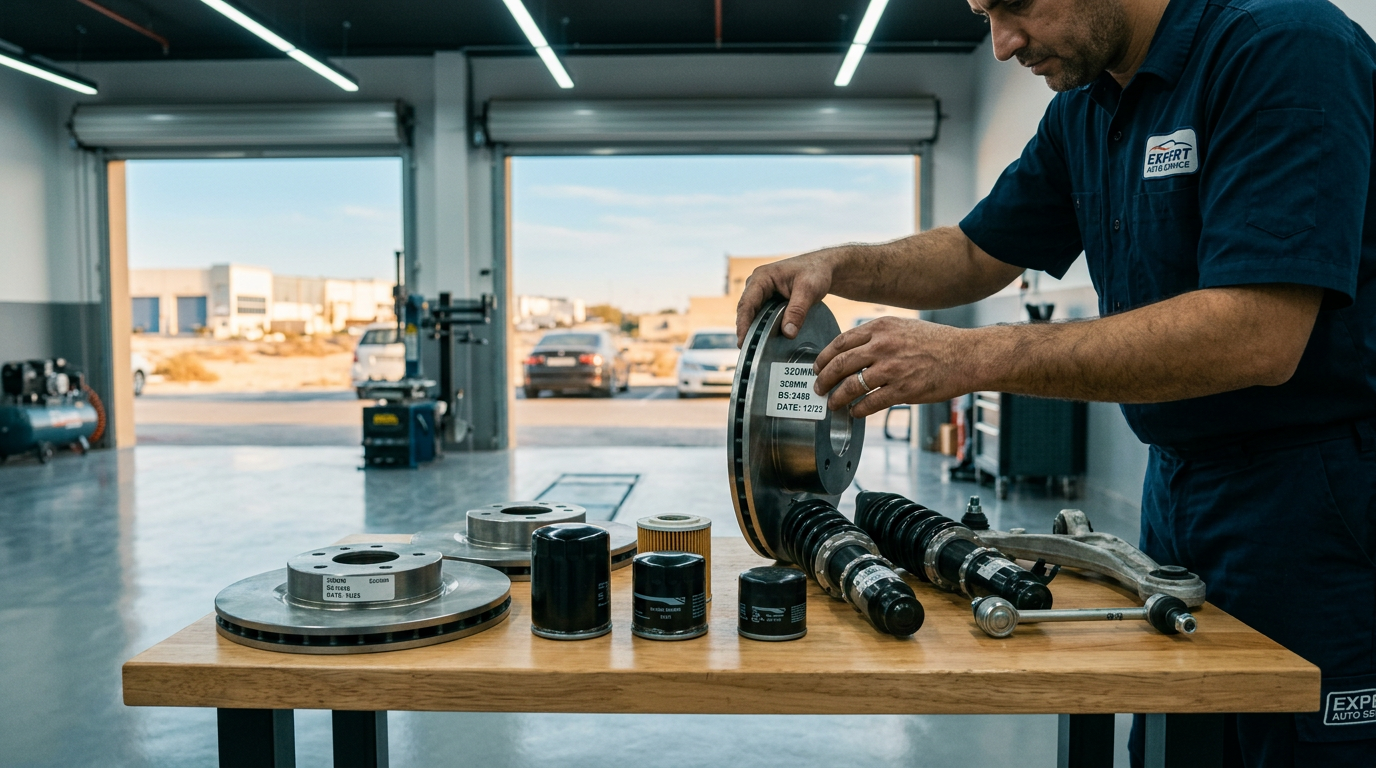
OEM parts are manufactured by or for the original equipment manufacturer and match factory specifications exactly, while aftermarket parts are produced by third-party companies and vary widely in quality and price. Neither is universally better: OEM parts guarantee fitment and consistency, while quality aftermarket parts often deliver equivalent performance at lower cost, especially for routine maintenance and older vehicles.
What OEM Actually Means
The term "original equipment manufacturer" refers to the company that built your car or the suppliers contracted to produce components to the manufacturer's exact specifications. When you buy an OEM part, you're getting a component identical to what was installed on the assembly line—same materials, same tolerances, same part number.
For a BMW or Mercedes-Benz, OEM parts carry the manufacturer's branding and come with traceability. They're designed to integrate seamlessly with the vehicle's systems, from sensor calibration to software protocols. This matters particularly for complex electrical and electronics components or ECU programming where compatibility is non-negotiable.
In Dubai's market, OEM parts are typically sourced through the manufacturer's regional distribution network. Lead times can range from same-day availability for common service items to several weeks for specialized components on European models.
Understanding the Aftermarket Parts Landscape
Aftermarket parts encompass everything manufactured by companies other than the original equipment manufacturer. This category spans an enormous quality spectrum—from budget copies that barely meet minimum standards to premium alternatives engineered by specialists who focus exclusively on specific components.
Quality aftermarket parts often come from the same factories that supply OEM components, simply packaged differently and sold without the manufacturer's markup. Brands like Bosch, Brembo, Bilstein, and Mahle produce aftermarket components that meet or exceed original specifications for many European vehicles.
At the lower end, generic aftermarket parts may use inferior materials, looser manufacturing tolerances, or simplified designs that reduce cost but also reduce longevity. For vehicles operating in UAE conditions—temperatures reaching 50°C, fine dust infiltration, and stop-start city driving—material quality directly affects component lifespan.
Quality and Performance: Where the Difference Actually Matters
For certain components, OEM parts offer measurable advantages. Brake system components benefit from precise friction coefficients calibrated to the vehicle's ABS and stability control algorithms. Sensors and electronic modules require exact communication protocols to avoid fault codes or degraded performance.
Premium aftermarket parts frequently match OEM quality in these areas. A Brembo brake disc for a Porsche or Bilstein shock absorber for a Range Rover will perform identically to the original part—sometimes with improvements based on years of field data.
The performance gap widens with economy aftermarket parts. A generic oil filter may lack the bypass valve quality of an OEM unit, risking oil starvation during cold starts. A budget alternator might use lower-grade bearings that fail prematurely in Dubai's heat. For engine services and critical drivetrain components, the risk often outweighs the savings.
Cost Comparison in the Dubai Market
OEM parts typically carry a 30-60% premium over quality aftermarket alternatives in the UAE market. For routine maintenance items—oil change filters, brake pads, batteries—this difference adds up quickly over the vehicle's life.
A set of OEM brake pads for a Audi A4 might cost AED 800-1,200, while equivalent Textar or ATE pads run AED 500-700. OEM suspension control arms can reach AED 1,500-2,500 each, versus AED 800-1,200 for Lemförder or Meyle alternatives that share the same engineering.
For specialty vehicles—supercars, classic cars, or limited-production models—aftermarket options may not exist or may require extensive validation. The cost equation shifts when OEM is the only reliable choice.
Warranty Considerations in the UAE
A common misconception is that using aftermarket parts automatically voids your vehicle warranty. UAE consumer protection regulations and manufacturer warranty terms generally allow aftermarket parts, provided the part itself didn't cause the failure. The burden of proof lies with the manufacturer to demonstrate causation.
That said, using OEM parts for warranty-period repairs eliminates any potential dispute. If a new Volkswagen develops a transmission issue during the warranty period, OEM fluid and filters ensure the manufacturer cannot attribute the problem to non-approved maintenance.
For vehicles outside warranty coverage, the calculus changes entirely. A ten-year-old Jaguar or Maserati benefits more from cost-effective quality aftermarket parts than from OEM components that may themselves be superseded or improved by third-party manufacturers. Our article on warranty and independent servicing covers this in detail.
When OEM Parts Make the Most Sense
Several scenarios clearly favor original equipment manufacturer parts:
- Vehicles under manufacturer warranty: Eliminates any dispute over coverage and maintains complete service documentation
- Safety-critical electronic systems: ABS modules, airbag components, steering angle sensors require exact calibration and communication protocols
- Engine internals and timing components: Pistons, camshafts, timing chains where tolerance stacking could cause catastrophic failure
- Hybrid and EV high-voltage systems: Battery modules, inverters, charging components where third-party options are rare and validation is critical
- Specialty performance vehicles: Ferrari, Lamborghini, McLaren where aftermarket availability is limited and resale value depends on originality
- Body panels and exterior trim: Fitment gaps and paint matching issues make aftermarket body parts risky for bodywork repairs
For diagnostic services that identify complex electrical faults, OEM replacement parts often include updated software or design revisions that address known issues—information not always available to aftermarket manufacturers.
When Quality Aftermarket Parts Are the Smarter Choice
Quality aftermarket parts deliver excellent value in these situations:
- Routine maintenance on out-of-warranty vehicles: Oil filters, air filters, spark plugs, wiper blades where specifications are straightforward
- Wear items with frequent replacement cycles: Brake pads and discs, tires, bushings where premium aftermarket brands offer proven performance
- Upgraded components: Performance brake kits, sport suspension, exhaust systems where aftermarket specialists exceed OEM specifications
- Older vehicles with discontinued parts: Classic car service often relies on aftermarket reproduction parts when originals are unavailable
- High-mileage fleet vehicles: Fleet services benefit from cost-effective parts that reduce total ownership costs without compromising safety
- Common European models: Volkswagen, Audi, BMW where aftermarket competition has driven quality up and prices down
Common Misconceptions About OEM and Aftermarket Parts
Several myths persist in automotive forums and owner groups. Aftermarket parts do not automatically void warranties—only if they directly cause a failure. OEM parts are not always superior quality—many are produced by the same suppliers who sell aftermarket versions.
The belief that only OEM parts fit correctly ignores the reality that quality aftermarket manufacturers use the same CAD data and reverse-engineering to ensure proper fitment. Conversely, assuming all aftermarket parts are equivalent ignores the vast quality differences between premium and budget suppliers.
For electric vehicles, the assumption that only manufacturer parts work with the high-voltage system is partially true—battery cells and BMS modules require OEM replacement, but conventional components like AC compressors, brake systems, and suspension parts have excellent aftermarket alternatives.
Making the Right Choice for Your Vehicle
The decision between OEM and aftermarket parts should consider vehicle age, usage, component criticality, and budget. A practical approach: use OEM parts for complex electronic systems, engine internals, and warranty-period repairs. Choose quality aftermarket parts from established manufacturers for routine maintenance, wear items, and out-of-warranty repairs.
For luxury car service or sports car maintenance, work with a facility that has access to both OEM and premium aftermarket suppliers and can recommend the appropriate choice based on the specific component and application. A pre-purchase inspection can also reveal whether previous repairs used appropriate parts.
Vehicle history matters too. If you're considering a used European car, our guide on reading service history explains how to identify quality maintenance regardless of parts origin.
Need Advice on Parts for Your European or EV Car?
JAD Garage in Al Quoz 4 stocks both OEM and premium aftermarket parts for European and electric vehicles. Our technicians can recommend the right option based on your car's age, usage, and budget. Call +971 56 355 6113 or visit us Monday to Saturday, 09:00–19:00.
Frequently asked questions