
Paint Correction, PPF and Ceramic Coating in Dubai: What Protects What

Paint protection film (PPF) is a thick, self-healing urethane layer that physically shields car paint from rock chips, scratches and abrasion. Ceramic coating is a chemical nano-coating that bonds to paint, providing hydrophobic protection, UV resistance and easier cleaning but minimal impact resistance. In Dubai's environment of high UV, sand and highway debris, PPF defends against physical damage while ceramic coating maintains gloss and simplifies maintenance—they're often applied together for complete protection.
What Paint Protection Film (PPF) Actually Does
Paint protection film is a transparent thermoplastic urethane film, typically 150 to 250 microns thick, applied directly to painted surfaces. It acts as a sacrificial barrier that absorbs impacts from stone chips, sand blasting on Sheikh Zayed Road, and minor parking scuffs that would otherwise penetrate clear coat and expose base paint.
Modern PPF includes self-healing top coats that use heat (from the sun or warm water) to erase light scratches and swirl marks. In Dubai's summer temperatures reaching 50°C, this self-healing property activates naturally when the vehicle is parked outdoors. The film is optically clear and doesn't yellow when quality brands are used, maintaining the original paint colour underneath.
PPF is typically applied to high-impact zones: front bumper, bonnet, front wings, door edges, mirror caps, door handles and rear arches. Full-body wraps are common on supercars and luxury vehicles where preserving factory paint condition is critical for resale value.
What PPF Protects Against
- Rock chips and gravel impacts from highway driving
- Sand and dust abrasion during shamal winds
- Light scratches from car washes, brushes and accidental contact
- Bird droppings and tree sap etching (prevents direct contact with paint)
- Minor parking lot scuffs and door dings
- UV-induced clear coat fading (quality films include UV inhibitors)
PPF does not protect against deep gouges, keying, or impacts strong enough to dent metal. It's also not a substitute for proper bodywork and paint repair if the underlying surface is already damaged.
What Ceramic Coating Actually Does
Ceramic coating is a liquid polymer containing silicon dioxide (SiO2) or similar compounds that chemically bonds to paint at a molecular level. Once cured, it forms a hard, hydrophobic layer typically 2 to 5 microns thick—far thinner than PPF but significantly harder than factory clear coat.
The primary benefit is surface protection: water, dirt, and contaminants bead up and roll off rather than bonding to the paint. This makes washing easier and reduces the risk of swirl marks during cleaning. In Dubai's dusty environment, a ceramic-coated vehicle stays cleaner longer and requires less aggressive washing, which reduces paint wear over time.
Ceramic coatings also provide chemical resistance against bird droppings, tree sap, road tar, and the high mineral content in UAE tap water that causes white spotting. UV inhibitors in quality coatings slow oxidation and fading, which is particularly important for dark-coloured vehicles exposed to year-round intense sunlight.
What Ceramic Coating Does Not Do
Ceramic coating is not impact protection. It will not prevent rock chips, scratches from abrasive contact, or any form of physical damage. The hardness rating (often marketed as 9H) refers to pencil hardness, not impact resistance—it makes the surface more resistant to light marring and chemical etching, but a stone at 120 km/h will still chip through ceramic coating and paint alike.
Ceramic coatings are also not permanent. Professional-grade products last between two and five years depending on maintenance, exposure and product quality. They require proper preparation (often including paint correction to remove existing swirls and scratches) and correct application in controlled temperature and humidity, which is why DIY results rarely match professional work.
PPF vs Ceramic Coating: Direct Comparison
| Aspect | Paint Protection Film (PPF) | Ceramic Coating |
|---|---|---|
| Thickness | 150–250 microns (physical layer) | 2–5 microns (chemical bond) |
| Impact protection | Yes – absorbs chips and scratches | No – minimal physical protection |
| Self-healing | Yes – light scratches disappear with heat | No |
| Hydrophobic effect | Moderate (some films have coatings) | Excellent – strong water and dirt repellency |
| UV protection | Yes – blocks UV from reaching paint | Yes – slows oxidation and fading |
| Longevity | 5–10 years with care | 2–5 years, requires reapplication |
| Maintenance | Regular wash, avoid harsh chemicals | pH-neutral wash, occasional booster spray |
| Cost range (Dubai market) | AED 3,000–15,000+ depending on coverage | AED 1,500–5,000 depending on product tier |
Durability and Longevity in Dubai Conditions
Dubai's climate accelerates wear on both protection types. Summer heat, UV intensity, sand, and humidity all play a role.
Quality PPF lasts five to ten years in the UAE when maintained properly. Heat can cause cheaper films to yellow, bubble or lift at edges, especially if applied incorrectly or if the vehicle is stored outdoors year-round. Premium brands resist yellowing and maintain clarity even under extreme sun exposure. Edges should be inspected annually, and any lifting should be addressed quickly to prevent dirt ingress and further peeling.
Ceramic coatings degrade faster in harsh conditions. Constant dust, high temperatures, and frequent washing reduce longevity. A professional coating might last three to four years with diligent maintenance, but neglect—such as using harsh detergents or automatic car washes with stiff brushes—can strip the coating within a year. Booster sprays or top-up treatments every six to twelve months help extend the life of the base coating.
Combining PPF and Ceramic Coating
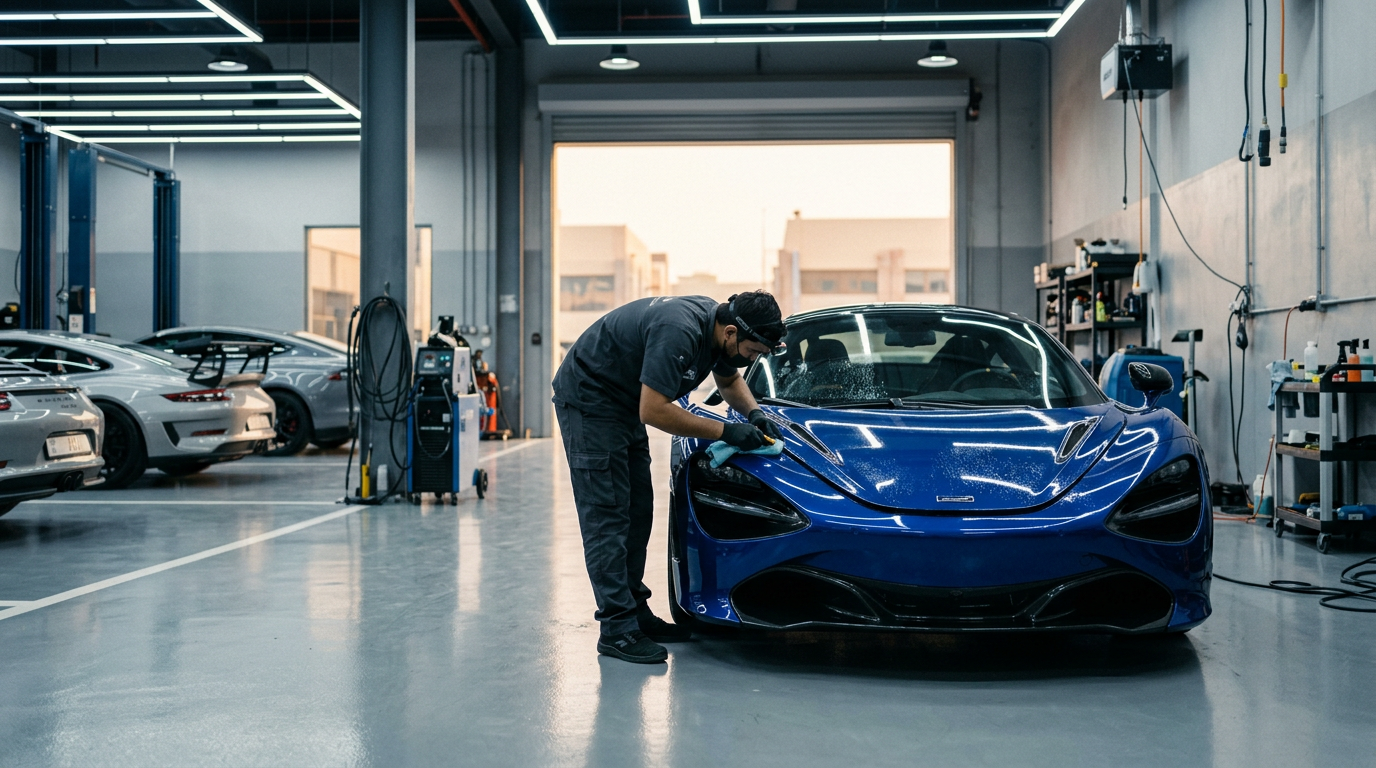
Many owners apply ceramic coating over PPF to gain the benefits of both: physical impact protection from the film and enhanced hydrophobic properties, gloss and easier cleaning from the coating. This combination is especially popular on Porsche, Ferrari, Lamborghini, and McLaren models where paint preservation is a priority.
When layering, the PPF is applied first, allowed to cure fully (usually 24 to 48 hours), then the ceramic coating is applied on top of the film. This ensures the coating bonds to the film surface, adding gloss and making the PPF easier to clean. Some PPF products come pre-coated, but aftermarket ceramic application offers more control over product choice and longevity.
The combined approach does increase upfront cost, but it maximizes long-term protection and minimizes maintenance effort—particularly valuable for sports cars and classic cars that see limited use and need to stay in showroom condition.
Which Option Suits Your Vehicle and Driving in Dubai?
If your driving involves frequent highway trips—Dubai to Abu Dhabi, Sharjah commutes, or weekend drives to Hatta—PPF on at least the front end is the practical choice. The volume of trucks, construction vehicles and loose gravel on UAE roads makes rock chips almost inevitable without physical protection.
If your car is garaged, driven mostly in the city at lower speeds, and you prioritize ease of cleaning and maintaining gloss, ceramic coating alone may be sufficient. It's also the more budget-conscious option and can be applied to the entire vehicle for comprehensive coverage.
For Bentley, Rolls-Royce, Aston Martin and similar marques where paint condition directly impacts resale value, full PPF with ceramic top coat is the standard approach. The same applies to limited-edition or bespoke paint finishes that are expensive or impossible to replicate.
Electric vehicles such as Polestar and Audi e-tron models benefit equally from protection—paint is paint, regardless of powertrain. Owners of BMW, Mercedes-Benz, and Volvo models often opt for partial PPF (front end) plus full ceramic coating as a balanced, cost-effective solution.
Maintenance Requirements
PPF requires regular washing with pH-neutral soap and soft microfiber or foam. Avoid automatic car washes with rotating brushes, which can lift edges or scratch the film surface. Pressure washers are safe if kept at a reasonable distance and angle. Inspect edges every few months, especially around curves and seams, for any signs of lifting or dirt accumulation.
Ceramic coatings need pH-neutral wash products—avoid alkaline or acidic cleaners that break down the coating. Hand washing or touchless methods are preferred. Use a ceramic booster spray every month or two to maintain hydrophobic properties. Avoid parking under trees where sap and bird droppings sit for extended periods, as even ceramic coatings can be etched if contaminants aren't removed promptly.
Both products benefit from covered parking or indoor storage. While they're designed to withstand sun and heat, reducing direct UV exposure extends their lifespan and keeps the vehicle looking newer for longer.
Cost Considerations in the Dubai Market
Typical market pricing for PPF in Dubai ranges from AED 3,000 for a basic front-end package (bumper, partial bonnet, headlights) to AED 15,000 or more for full-body coverage on larger vehicles. Premium self-healing films and complex installation (curves, intricate body lines) increase cost. Removal and replacement after five to seven years adds to the long-term expense.
Ceramic coating costs range from AED 1,500 for entry-level products on small cars to AED 5,000 for top-tier multi-layer systems on large SUVs or supercars. Paint correction (polishing to remove existing scratches and swirls) is often required before application and can add AED 1,000 to AED 3,000 depending on paint condition.
When budgeting, consider longevity and reapplication. PPF is more expensive upfront but lasts longer. Ceramic coating is more affordable initially but requires reapplication every few years. Combined, the investment is higher but delivers the most comprehensive protection and lowest maintenance effort over the vehicle's life.
Paint Correction: The Foundation for Both
Before applying PPF or ceramic coating, the paint surface must be in optimal condition. Paint correction involves machine polishing to remove swirl marks, light scratches, water spots and oxidation. This step is critical because both PPF and ceramic coating lock in the current state of the paint—if you apply them over scratched or swirled paint, those imperfections remain visible and protected.
Professional bodywork and paint specialists assess paint thickness with a gauge to ensure there's enough clear coat for safe polishing. Over-polishing or repeated correction can thin clear coat to the point where it fails, especially on older vehicles or those that have been resprayed. For Jaguar, Range Rover, and Maserati models with softer paint, this step requires extra care and experience.
Protect Your Car's Paint the Right Way in Al Quoz
Whether you need advice on paint protection film, ceramic coating, or paint correction before application, JAD Garage in Al Quoz 4 works with trusted specialists to guide you through the options. Call +971 56 355 6113 to discuss what suits your vehicle and driving in Dubai.
Frequently asked questions