
Sand, Dust and Filters: How UAE Conditions Change Service Intervals

In the UAE, car service intervals are typically 30–50 percent shorter than temperate-climate schedules. Dubai's fine sand, 50°C summer heat, high humidity and stop-start city traffic all accelerate filter clogging, oil degradation and fluid evaporation. Most manufacturers recommend 5,000–10,000 km oil changes here versus 15,000 km elsewhere, and air and cabin filters often need replacement every 10,000–15,000 km instead of 30,000 km.
Why UAE Driving Conditions Demand More Frequent Service
The combination of environmental and operational stresses in the Emirates creates what engineers call "severe duty" or "harsh conditions." Three factors dominate:
- Fine desert sand: Particles smaller than 50 microns penetrate air intakes, cabin vents and even gearbox breathers, clogging filters and acting as an abrasive inside the engine if the air filter is saturated.
- Extreme heat: Ambient temperatures above 45°C cause engine oil to thin, oxidise faster and lose viscosity, while coolant, brake fluid and power-steering fluid evaporate or degrade more quickly.
- Stop-start urban traffic: Short trips in Dubai, Sharjah and Abu Dhabi prevent the engine from reaching full operating temperature, allowing moisture and fuel contaminants to accumulate in the oil rather than evaporating.
These conditions mean that a European service schedule—often 15,000–20,000 km between oil changes—can leave a car under-maintained in the UAE. Most manufacturers publish a separate "severe" or "Middle East" schedule in the owner's manual, and following it is essential to preserve engine health and resale value.
Major vs Minor Service: What Changes in the UAE
Service centres in Dubai typically distinguish between minor and major intervals, but the content and frequency shift compared to cooler climates.
Minor Service (Every 5,000–10,000 km or 6 Months)
A minor service in UAE conditions usually includes:
- Engine oil and filter change
- Top-up of coolant, brake fluid, washer fluid
- Visual inspection of belts, hoses and battery terminals
- Tyre pressure check and rotation
- Brake pad thickness measurement
Because engine oil degrades faster in heat, even synthetic 5W-30 or 5W-40 should be changed every 5,000–7,500 km for naturally aspirated engines and every 5,000 km for turbocharged units. High-performance and luxury car models from brands like Audi, BMW and Mercedes-Benz often specify even tighter intervals when driven in the Gulf.
Major Service (Every 20,000–30,000 km or 12 Months)
A major service adds:
- Air filter and cabin filter replacement
- Spark plug inspection or replacement (petrol engines)
- Brake fluid flush (every 24 months)
- Coolant system check or flush
- Transmission fluid inspection (or change for DSG, CVT, older automatics)
- Fuel filter replacement (diesel engines)
- Suspension and steering component check
In practice, air and cabin filters may need replacement at every major service—or even sooner if you park outdoors or drive on unpaved roads. A clogged air filter reduces power and fuel economy, while a saturated cabin filter allows dust and allergens into the interior.
How Often Should You Change Engine Oil in Dubai?
The single most important maintenance task is the oil change. Engine oil in UAE conditions faces:
- Thermal stress: Oil temperature can exceed 120°C in traffic, accelerating oxidation and additive depletion.
- Dust ingestion: Even trace amounts of sand act as an abrasive, increasing wear on pistons, bearings and camshafts.
- Moisture contamination: Short trips prevent full warm-up, so water vapour and fuel dilution accumulate in the sump.
As a result, the typical Dubai car service interval for oil is 5,000–7,500 km or six months, whichever comes first. Turbocharged engines, sports cars and supercars from Porsche, Ferrari or Lamborghini may require changes every 5,000 km, especially if driven hard on track days or in desert conditions.
Always use the viscosity and specification (e.g. API SN, ACEA C3) listed in your owner's manual. Switching to a high-quality synthetic oil with strong thermal stability—such as 5W-40 instead of 5W-30—can offer extra protection in extreme heat, but confirm compatibility with your engine first.
Air and Cabin Filters: The Frontline Against Sand
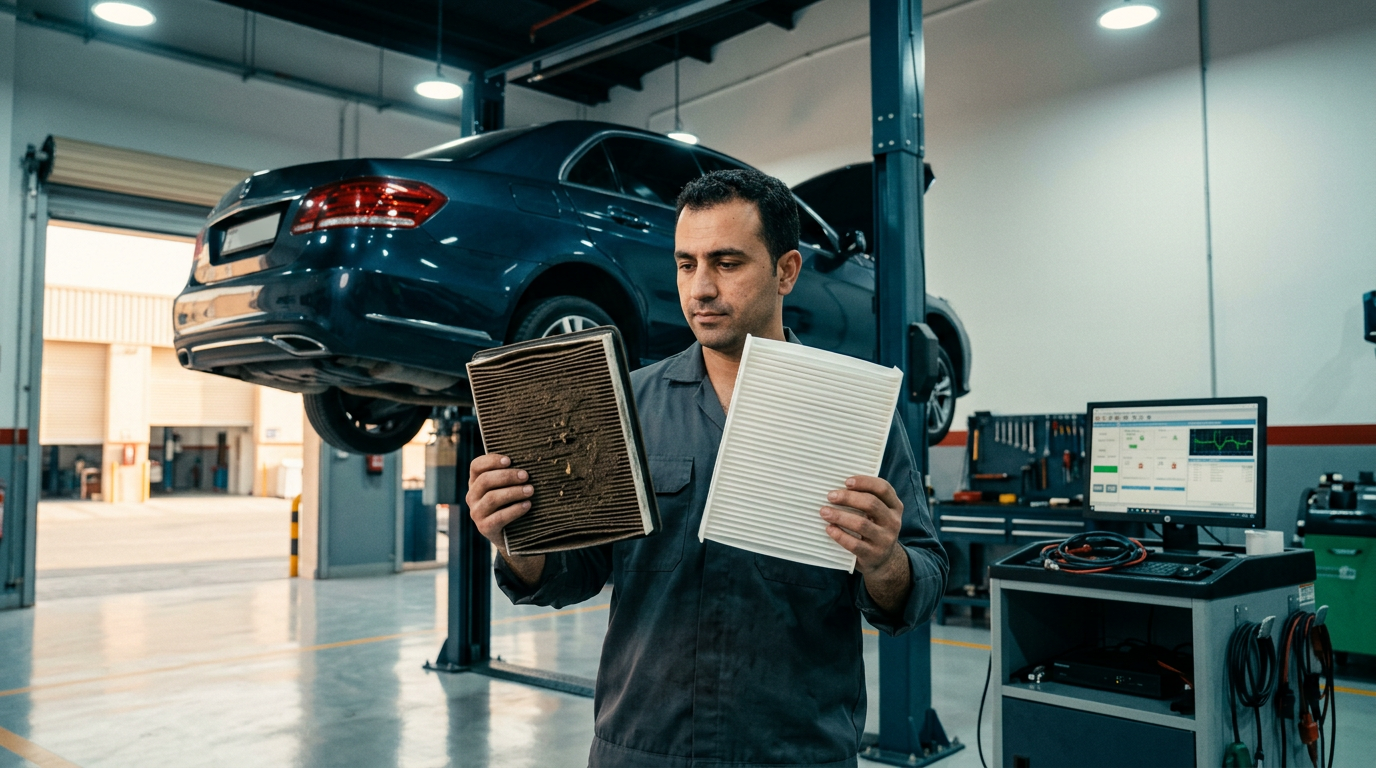
Filters are your car's first defence against the UAE's fine desert dust. The engine air filter prevents particles from entering the combustion chamber, while the cabin filter protects occupants and the AC evaporator.
In temperate climates, air filters last 30,000–50,000 km. In Dubai, expect to replace them every 10,000–15,000 km or annually. If you notice reduced AC airflow, musty odours or a drop in throttle response, inspect both filters immediately. A severely clogged air filter can trigger the check-engine light and increase fuel consumption by 10–15 percent.
For detailed guidance, see our article on cabin and air filter replacement intervals in dusty climates.
Other Fluids and Components Affected by Heat and Dust
Coolant
Coolant degrades faster in high heat, losing its ability to prevent corrosion and cavitation. Most manufacturers recommend a flush every 40,000–60,000 km or every two years, but inspection at every major service is wise. Low coolant or a failing thermostat can lead to overheating, especially in summer traffic.
Brake Fluid
Brake fluid is hygroscopic—it absorbs moisture from the air. High humidity in coastal areas like Dubai and Sharjah accelerates this process, lowering the boiling point and reducing braking performance. Flush brake fluid every 24 months regardless of mileage.
Transmission Fluid
Automatic gearboxes, CVTs and dual-clutch units (DSG, PDK) generate significant heat. While some manufacturers claim "lifetime" fluid, independent workshops and enthusiasts recommend changes every 60,000–80,000 km in the UAE. For more on DSG maintenance, read our guide to Volkswagen DSG gearbox service intervals.
Battery
Heat is the enemy of lead-acid batteries. A battery that lasts five years in Europe may fail after three in Dubai. Check voltage and load-test the battery at every service, and replace proactively if it's older than three years. See our breakdown of car battery replacement costs in the UAE.
Service Intervals for Luxury and High-Performance Cars
Premium European brands often have tighter service schedules and model-specific requirements. For example:
- BMW: Condition-based servicing (CBS) calculates intervals based on driving style, but UAE owners should follow the "harsh conditions" ceiling of 10,000 km. See our article on BMW service intervals and CBS.
- Mercedes-Benz: ASSYST PLUS adjusts intervals, but Service A is typically due at 10,000 km and Service B at 20,000 km in the UAE. Read the full Mercedes-Benz service schedule guide.
- Audi: Quattro models with Haldex or Torsen differentials require additional driveline fluid changes. Our Audi Quattro maintenance guide covers the details.
- Porsche: 911 and Cayenne models have specific concerns like IMS bearings and PDK service. See what Porsche owners should watch.
For British marques like Aston Martin, Jaguar and Range Rover, annual service regardless of mileage is often mandatory to preserve vehicle history. Consult our Aston Martin service guide or Range Rover common problems article for model-specific advice.
Consequences of Skipping or Delaying Service
Deferring a car service in Dubai can lead to:
- Engine wear: Contaminated oil loses lubricity, causing premature bearing and camshaft damage.
- Overheating: Old coolant or a clogged radiator can trigger head-gasket failure, especially in aluminium engines.
- Reduced fuel economy: Clogged air filters and dirty injectors increase consumption by 10–20 percent.
- Failed RTA inspection: Worn brakes, low tyre tread or a check-engine light will prevent Mulkiya renewal.
- Lower resale value: A patchy service history deters buyers and reduces trade-in offers by 10–15 percent.
Regular maintenance is not just about reliability—it's an investment in the vehicle's long-term value and your safety on UAE roads.
Planning Your Car Maintenance Schedule in the UAE
To stay on top of service intervals:
- Consult your owner's manual for the "severe" or "Middle East" schedule.
- Set calendar reminders every six months or 5,000 km, whichever comes first.
- Keep a digital or paper log of all services, including dates, mileage and parts replaced.
- Inspect air and cabin filters visually every few months—hold them up to light; if little light passes through, replace them.
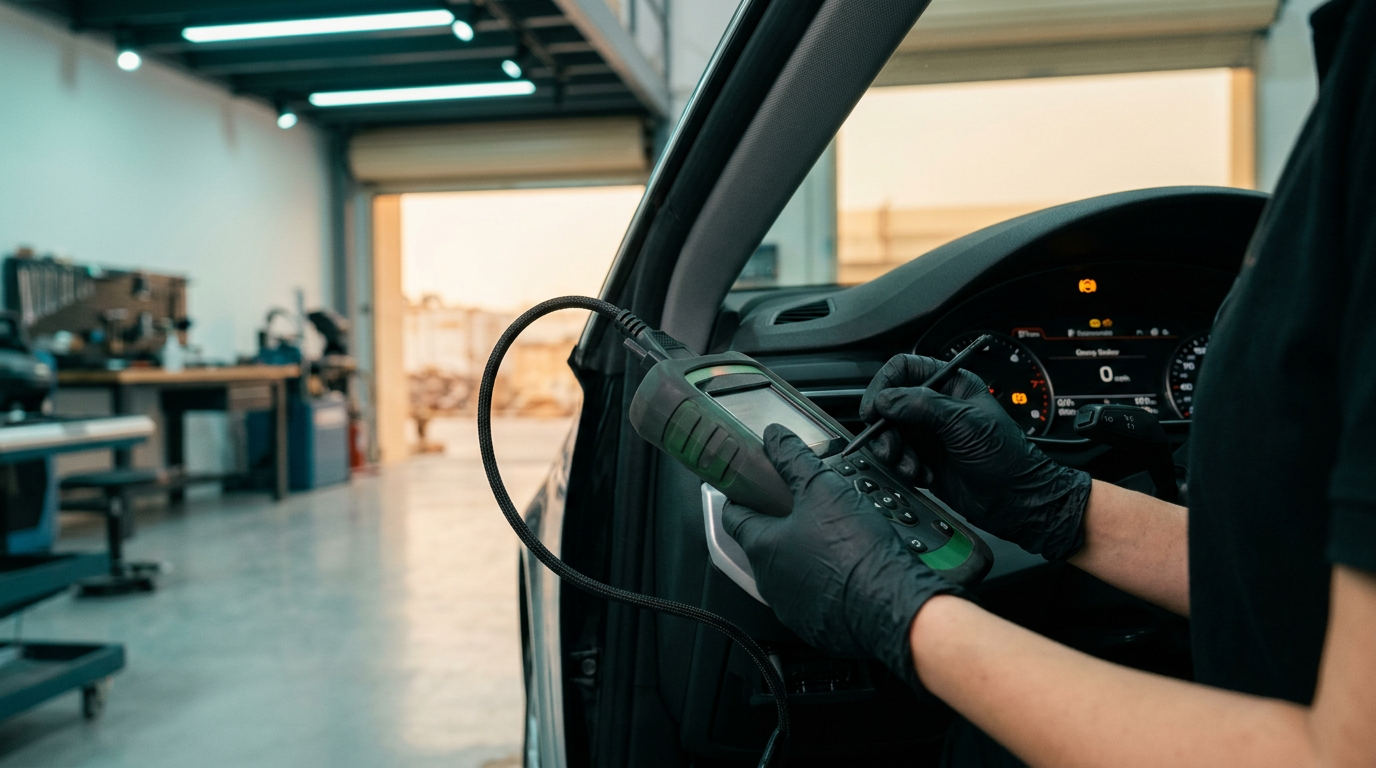
- Use a diagnostic scan at each service to catch fault codes early.
For fleet operators or corporate accounts, a preventive maintenance schedule based on telematics data can reduce downtime and repair costs significantly.
If you're unsure whether a used car has been properly maintained, a pre-purchase inspection will reveal service history gaps, fluid condition and hidden wear before you commit to a purchase.
Keep your car running smoothly in Dubai's demanding climate with a maintenance schedule tailored to UAE conditions. JAD Garage in Al Quoz 4 offers comprehensive service for European and EV models, using manufacturer-grade diagnostics and OEM-quality parts. Call +971 56 355 6113 or visit us Monday to Saturday, 09:00–19:00, to book your next oil change, filter replacement or general maintenance check.
Service Your Car on a UAE-Specific Schedule
JAD Garage in Al Quoz 4 tailors maintenance intervals to Dubai's heat, sand and traffic. Book your next oil change, filter replacement or full inspection by calling +971 56 355 6113—open Monday to Saturday, 09:00–19:00.
Frequently asked questions