Signs You Need a Battery vs an Alternator


If your engine cranks slowly or dashboard lights dim while driving, you're likely facing an alternator problem. If the engine won't crank at all and electronics are dead when parked, it's usually the battery. The alternator recharges the battery and powers the vehicle electrical system while the engine runs; the battery starts the engine and supplies power when stationary.
What a Car Alternator Does
The car alternator is the heart of your vehicle's charging system. While the engine runs, the alternator converts mechanical energy from the crankshaft into alternating current, which is then converted to direct current to power every electrical component—from headlights and air conditioning to the ECU and infotainment. It simultaneously recharges the car battery so you can start the internal combustion engine next time.
Inside the alternator, a rotor spins within a stator, generating alternating current. A voltage regulator ensures output stays between 13.5 and 14.5 volts, preventing overcharge or undercharge. When this system fails, your battery drains faster than it can replenish, and eventually the engine will stall because modern fuel injection and ignition systems require stable electrical power.
European brands like BMW, Audi, Mercedes-Benz, and Porsche use intelligent alternators that adjust output based on load and battery state. Toyota and Ford hybrids use a different architecture altogether, with high-voltage traction batteries and DC-DC converters replacing or supplementing traditional alternators. Understanding your model's architecture matters when diagnosing electrical system faults.
Signs of a Failing Alternator
Alternator problems reveal themselves while the vehicle is running, because that's when the alternator should be doing its job. Notice warning signs that appear during a drive rather than at startup:
- Dashboard battery warning light: illuminates while driving, indicating charging system fault
- Dimming headlights: lights grow noticeably dimmer at idle or when electrical load increases (AC, rear demister, heated seats)
- Flickering interior lights: dome lights and instrument cluster brightness fluctuate
- Electrical accessories failing: power windows slow down, infotainment reboots, or AC blower weakens
- Whining or grinding noise: worn alternator bearings produce a high-pitched whine that increases with engine speed
- Burning rubber smell: slipping serpentine belt trying to turn a seized alternator pulley
- Engine stalls while driving: once battery voltage drops too low, fuel pump and ignition can no longer function
In Dubai's heat—cabin temperatures exceeding 50°C in summer—alternators work harder to power climate control systems. Increased electrical load accelerates wear on the voltage regulator and diodes. Stop-start traffic also means more idling, where alternator output is lowest but electrical demand remains high.
Signs of a Bad Battery
A car battery that's reached the end of its service life shows symptoms at startup or when the engine is off, not while driving. Key differences from alternator issues:
- Slow engine cranking: starter motor turns over sluggishly, especially on first start of the day
- Click but no crank: you hear a single click from the starter solenoid but engine won't turn
- No power when parked: after the car sits overnight, interior lights are dim or dead before you start the engine
- Swollen battery case: heat causes internal plates to warp and the plastic case to bulge
- Corrosion on terminals: white or blue-green crusty deposits around battery posts
- Age over three years: in UAE heat, most batteries fail between three and four years regardless of brand
Short-trip city driving in Dubai means the alternator never fully recharges the battery. If your daily commute is under 15 minutes, the battery spends more time discharging (cranking the engine, powering electronics while parked) than charging. Over months, this chronic undercharge sulfates the lead plates and reduces capacity.
How to Test Which Component Has Failed
Professional diagnostic services use a battery tester and multimeter to isolate the fault, but you can perform basic checks:
Voltage test with engine off: a healthy battery reads 12.4–12.7 volts. Below 12.0 volts indicates a discharged or failing battery. This test alone doesn't tell you why the battery is low.
Voltage test with engine running: at idle, voltage should rise to 13.5–14.5 volts if the alternator and voltage regulator are working. If voltage stays below 13.0 or climbs above 15.0, the alternator or regulator has failed. If voltage is normal but the battery was dead, the battery itself is likely the culprit.
Load test: specialist equipment applies a heavy load (half the battery's cold-cranking amps) for 15 seconds. Voltage should not drop below 9.6 volts. A battery that fails load testing must be replaced even if it holds a surface charge.
Alternator output test: with the engine running at 2,000 rpm and all electrical accessories on (headlights, AC, heated seats), voltage should remain above 13.0 volts. If it sags, the alternator cannot meet demand.
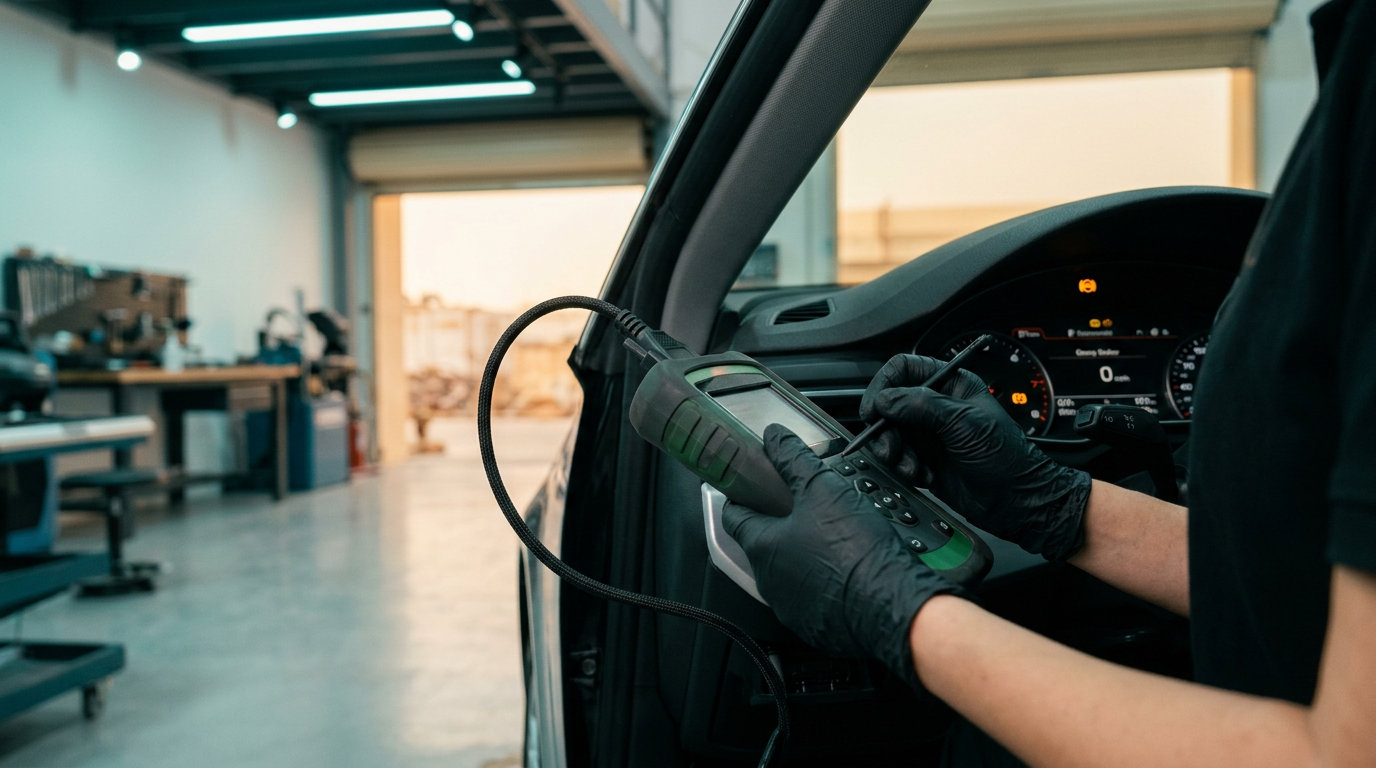
Manufacturer-grade diagnostic equipment reads alternator duty cycle and battery management system data through the OBD-II port, revealing intermittent faults that a simple multimeter will miss. Brands like GM, Ford, and European marques log charging system errors in the ECU long before a dashboard warning light appears.
Common Causes of Alternator Problems
Modern alternators are reliable, but several factors shorten their lifespan:
Worn bearings: fine sand and dust in UAE air infiltrate the alternator, grinding down bearing surfaces. This is the most common failure mode in Dubai.
Failed voltage regulator: heat degrades the solid-state regulator, causing overcharge (boiling the battery) or undercharge (draining it).
Damaged diodes: the rectifier bridge contains six diodes that convert AC to DC. If one or more fail, alternator output drops by a third or more, and you may hear a pulsing whine through the audio system.
Slipping or broken serpentine belt: oil leaks or worn belt tensioners allow the belt to slip, so the alternator pulley doesn't spin at the correct speed. A snapped belt stops the alternator entirely and usually overheats the engine within minutes because the water pump also stops.
Corroded connections: loose or oxidized battery terminals and alternator wiring create resistance, making the alternator work harder and generating false fault codes.
When to Replace the Alternator vs the Battery
If voltage tests confirm the alternator is charging correctly (13.5–14.5V while running) but the battery fails a load test or is over three years old in Dubai heat, replace the battery. Fitting a new battery will immediately resolve slow cranking and electrical issues at startup.
If the alternator is not maintaining voltage while the engine runs, or if the battery warning light is on and voltage drops when you switch on headlights or AC, the alternator must be replaced or rebuilt. Installing a new alternator without addressing a failed battery is false economy—the old battery will fail within weeks and may damage the new alternator with excessive load.
In many cases, both components have reached end of life simultaneously. A failing alternator forces the battery to deep-discharge repeatedly, warping the plates. Conversely, a battery with a shorted cell can overwork the alternator, burning out the voltage regulator. Experienced technicians at an electrical and electronics service center will test both and recommend replacement together when wear is evident.
Typical Market Costs in Dubai
Alternator and battery replacement costs vary by vehicle model, part specification, and labour complexity. The table below shows typical market ranges across Dubai workshops—not specific to any single provider:
| Component | Part Type | Market Range (AED) | Notes |
|---|---|---|---|
| Battery (sedan/hatchback) | OEM or equivalent | 350 – 700 | Capacity 45–70 Ah, includes installation |
| Battery (SUV/luxury) | OEM or AGM | 700 – 1,400 | AGM or EFB for start-stop systems |
| Alternator (mainstream) | Remanufactured | 600 – 1,200 | Ford, Toyota, Renault, Peugeot |
| Alternator (mainstream) | New OEM | 1,200 – 2,000 | Includes labour, 1–2 hours |
| Alternator (luxury/performance) | OEM | 2,000 – 4,500 | BMW, Mercedes, Audi, Porsche; intelligent alternators |
| Serpentine belt | OEM | 150 – 400 | Often replaced with alternator |
| Belt tensioner | OEM | 200 – 600 | Recommended if over 80,000 km |
Luxury and performance models from Maserati, Bentley, or Lamborghini often require alternator removal from underneath or after removing the front bumper, adding 1–2 hours labour. Hybrid and plug-in models may need ECU programming after alternator replacement to recalibrate the battery management system.
Preventing Alternator and Battery Failure
Regular general maintenance extends the life of both components. Have the charging system tested every 12 months or 15,000 km as part of a service interval. Clean battery terminals annually to ensure good conductivity. Replace the serpentine belt and tensioner at manufacturer intervals—typically 60,000–100,000 km for European cars.
If you make frequent short trips in Dubai traffic, take a 20-minute highway drive once a week to allow the alternator to fully recharge the battery. For cars parked outdoors in direct sun, a solar-powered trickle charger can offset parasitic drain from alarm systems and keep the battery topped up.
Avoid adding high-draw aftermarket accessories (amplifiers, driving lights, winches) without uprating the alternator. The electrical system is sized for factory equipment; exceeding design capacity overworks the alternator and drains the battery even while driving.
Frequently Asked Questions
Can a bad alternator damage a new battery? Yes. If the voltage regulator fails and allows overcharge above 15 volts, it will boil the electrolyte and warp the battery plates within days. Conversely, undercharge from a weak alternator will sulfate a new battery and reduce its lifespan to months instead of years.
Will my car run with a dead alternator? It will run on battery power alone until voltage drops below roughly 10 volts, at which point fuel injectors and ignition coils stop functioning. Depending on battery condition and electrical load, you might drive 20 minutes to two hours before the engine stalls. Do not attempt this—tow the vehicle to avoid being stranded.
Why does my battery keep dying in Dubai heat? High temperatures accelerate the chemical reaction inside lead-acid batteries, increasing self-discharge and evaporating electrolyte. Batteries that last five years in temperate climates often fail within three years in the UAE. Short trips and stop-start traffic prevent full recharge, compounding heat damage.
How long does an alternator last in the UAE? Typical lifespan is 80,000–150,000 km, but fine dust and heat reduce this. Vehicles driven in sandy or dusty conditions (off-road, construction sites, or near building works) may see alternator bearing failure as early as 60,000 km. Regular inspection during servicing catches early wear.
Do electric and hybrid cars have alternators? Pure electric vehicles do not; they use DC-DC converters to step down high-voltage traction battery power to charge the 12V accessory battery. Hybrids like Toyota and Ford models use a similar system or a smaller alternator. Plug-in hybrids often charge the 12V battery from the high-voltage pack, eliminating the traditional belt-driven alternator entirely.
Related reading: ABS Warning Light: Sensor, Ring or Module?.
Alternator or Battery? We'll Diagnose It Accurately
Unsure whether your electrical fault is the alternator, battery, or something else? JAD Garage in Al Quoz 4 uses manufacturer-grade diagnostic equipment to pinpoint the issue and recommend the right repair. Call +971 56 355 6113 or visit us Monday to Saturday, 09:00–19:00.
Frequently asked questions