Tyre Puncture Repair in Dubai: Plug, Patch or Replace

A tyre puncture can often be repaired safely with a plug or patch if the damage is in the tread, smaller than 6 mm, and the sidewall is intact. Punctures in the sidewall, shoulder, or multiple holes close together require full tyre replacement. Workshops inspect puncture location, size, angle, and internal liner condition before choosing plug, combination patch-plug, or advising replacement based on safety standards.
When a Puncture Can Be Repaired vs. Must Be Replaced
Not every flat tire needs replacement. International tyre safety standards—followed by reputable workshops in Dubai—allow repair only when specific conditions are met. The puncture must be located in the central three-quarters of the tread (the contact patch), measure 6 mm or less in diameter, and the internal liner must show no damage from driving while deflated.
Sidewall punctures, shoulder damage, or holes larger than 6 mm cannot be safely repaired. The sidewall flexes constantly under load, and any repair there will fail unpredictably, particularly dangerous at highway speeds on the E11 or Sheikh Zayed Road. Similarly, tyres driven flat for any distance—even a few hundred metres—often suffer internal structural damage invisible from outside, making repair unsafe even if the puncture itself looks minor.
Run-flat tyres present a special case. Most manufacturers specify that run-flats cannot be repaired after a puncture, regardless of location or size, because internal damage from supporting vehicle weight without air pressure is difficult to assess reliably. Check the vehicle handbook or tyre sidewall markings (RFT, ROF, SSR, or ZP codes) before assuming repair is possible.
Three Repair Methods: Plug, Patch and Combination
Dubai workshops typically offer three tyre puncture repair approaches, each suited to different damage types and use cases:
- String plug (external only): A rubber cord coated in adhesive, inserted from outside through the puncture hole. Quick, requires no tyre removal, but considered a temporary fix by most safety standards because it does not seal the inner liner.
- Patch (internal): A rubber patch bonded to the inside liner after roughening the surface and applying vulcanising cement. Requires tyre removal and mounting, seals the liner, but does not fill the puncture channel through the tread.
- Combination patch-plug (mushroom plug): A single-piece unit with a plug stem that fills the puncture and a patch bonded to the inner liner. Considered the most durable and only method meeting industry standards for permanent repair.
Many roadside and quick-service outlets in Al Quoz and Industrial Area use string plugs because they take five minutes and require no specialised equipment. They will hold air and can get you home or to a proper workshop, but they are not designed for long-term use, especially in the UAE heat where tyre temperatures regularly exceed 70°C on summer asphalt. Internal pressure and temperature cycling can cause plugs to leak or dislodge over time.
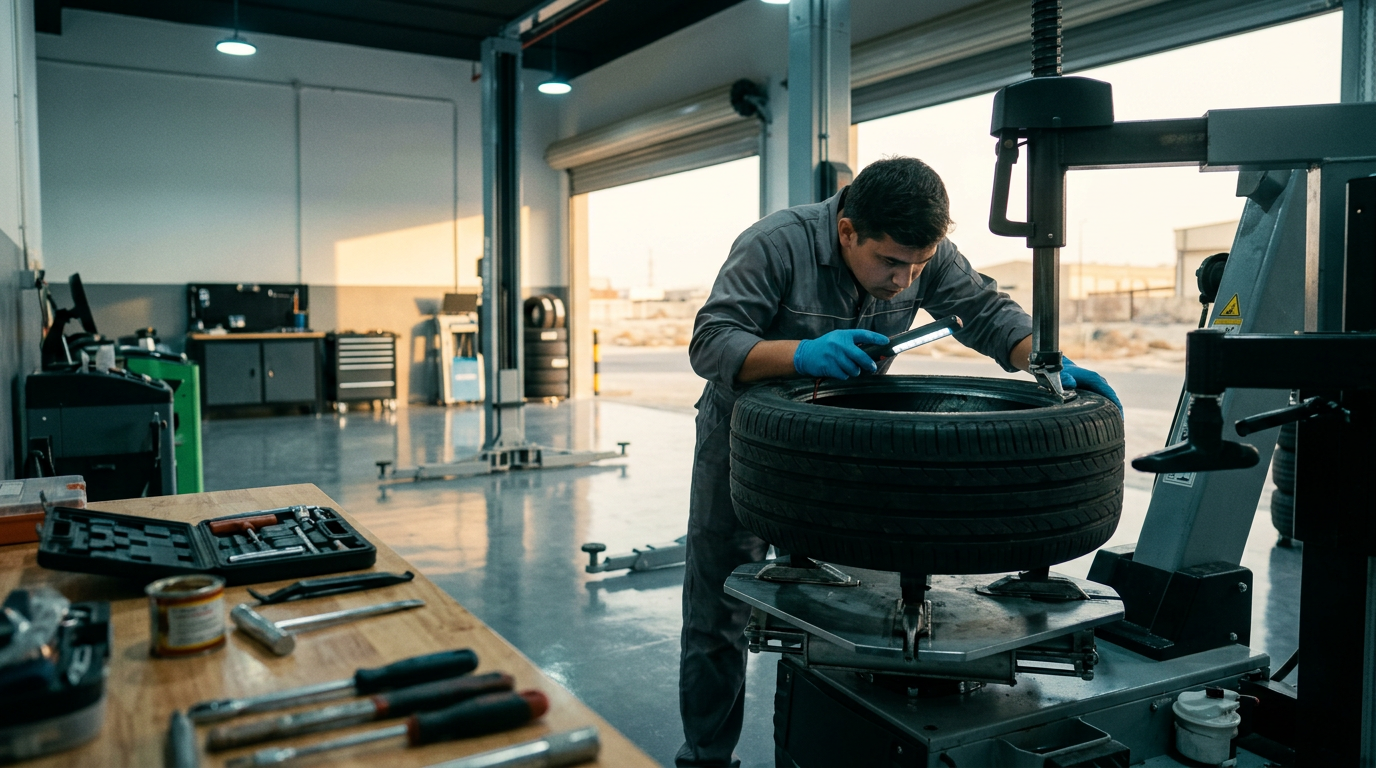
A proper combination repair requires the tyre to be removed from the wheel rim, inspected inside, the puncture channel reamed and cleaned, and the mushroom plug pulled through from inside and cemented. The process takes 30–45 minutes per tyre but results in a repair that can last the remaining life of the tyre if done correctly.
How a Workshop Confirms Whether Repair Is Safe
Before committing to any repair, a competent tire service workshop will conduct a systematic inspection:
External visual check: The technician examines tread depth (minimum 1.6 mm legal limit in the UAE, but 3 mm recommended for wet-weather safety), looks for bulges, cracks, uneven wear, and counts any previous repairs. Two repairs within 40 cm of each other, or more than two repairs total, typically mean replacement is safer.
Puncture location and size measurement: Using a probe or calliper, the technician measures hole diameter and checks whether it falls within the repairable zone. Damage within 25 mm of the sidewall is usually rejected for repair.
Water bath or soap test: The tyre is submerged or sprayed with soapy water while inflated to reveal air leaks. Sometimes a puncture that looks singular from outside is actually two close holes, or a nail has torn the tread, making repair unsafe.
Internal inspection: After removing the tyre from the rim, the inside liner is checked for cracks, delamination, or heat damage. If the vehicle was driven on a flat tyre, the liner often shows circumferential cracks or rubber dust—signs the structure is compromised.
Angle and depth assessment: A nail or screw that entered at a steep angle may have damaged the steel belts or sidewall structure even if the hole itself is in the tread. The technician traces the puncture path to ensure only rubber is affected.
| Symptom / Damage Type | Can Be Repaired? | Typical Action |
|---|---|---|
| Single nail hole in centre tread, ≤6 mm, tyre not driven flat | Yes | Combination patch-plug from inside |
| Puncture in sidewall or shoulder (outer 25 mm) | No | Replace tyre |
| Hole >6 mm or irregular tear | No | Replace tyre |
| Two punctures within 40 cm of each other | No | Replace tyre |
| Run-flat tyre with any puncture | Usually no (check manufacturer) | Replace tyre |
| Tyre driven flat, internal liner cracked or dusty | No | Replace tyre |
Repair Kits and Temporary Solutions
Many modern vehicles—especially European brands like BMW, Audi, and Mercedes-Benz—no longer ship with a spare wheel. Instead, they include a tyre repair kit: a canister of sealant and a 12V compressor. These kits inject liquid sealant through the valve stem, coating the inside of the tyre and plugging small holes as the tyre rotates.
Temporary sealant kits work reasonably well for punctures up to 4 mm in the tread and can get you to a workshop, but they have important limitations. The sealant makes proper repair much harder because it coats the inner liner, preventing patch adhesion. Many workshops will refuse to repair a tyre treated with sealant, or charge extra for cleaning. Sealant also damages the tyre pressure sensor (TPMS) if it enters the valve, adding replacement cost.
If you use a repair kit, drive directly to a tire service centre and inform the technician. Do not exceed 80 km/h, and expect that the tyre may need replacement rather than repair once inspected. Keep a portable compressor and plug kit in the vehicle as a backup, especially if you travel outside Dubai where roadside assistance response times are longer.
Cost and Longevity of Each Repair Type
Typical Dubai market ranges for tyre puncture repair vary by method and location. A roadside string plug usually costs AED 30–50 and takes minutes. An internal patch or combination repair at an established workshop in Al Quoz ranges from AED 50–100 per tyre, including removal, inspection, repair, balancing, and refitting. Full tyre replacement depends on size and brand, but budget tyres for common sedans start around AED 200–300, while premium or performance rubber for vehicles like a Porsche or Range Rover can exceed AED 800–1,200 per corner.
A properly executed combination patch-plug repair can last the remaining tread life of the tyre—often 20,000–40,000 km—without issue, provided the tyre is regularly inspected and maintained at correct pressure. String plugs may hold for weeks or months but are more prone to slow leaks, especially as the tyre heats up in summer. If you plan to keep the vehicle or drive at highway speeds regularly, invest in the internal repair rather than the quick external fix.
Special Considerations for EVs, SUVs and Performance Tyres
Electric vehicles like the Polestar 2 or MG ZS EV place higher loads on tyres due to battery weight, and many use low-profile or reinforced tyres with stiffer sidewalls. These tyres are more expensive to replace but can often be repaired using the same standards as conventional tyres, provided the puncture is in the tread and the internal structure is sound. Some EV-specific tyres have foam liners for noise reduction; these can still be repaired, but the foam may need trimming or replacement around the patch area.
Large SUVs and trucks—common in Dubai—often run higher tyre pressures (40–50 psi) and carry heavier loads. Puncture repairs on these vehicles must account for the additional stress. Workshops may refuse to repair tyres on vehicles used for off-road driving or heavy towing if there is any doubt about internal damage, because failure under load poses greater risk.
Performance and sports car tyres—such as those on a Ferrari, Lamborghini, or McLaren—often have speed ratings of Y (300 km/h) or higher. Manufacturers and insurers may void coverage or liability if a repaired tyre is used at high speed, even if the repair was technically sound. If you track the car or regularly drive above 200 km/h, replacement is the safer choice.
Preventative Checks and When to Replace Anyway
Even if a puncture is repairable, consider replacement if the tyre is near the end of its service life. Tyres older than five years (check the DOT date code on the sidewall) or with tread depth below 3 mm will need replacing soon regardless, and spending AED 80 on a repair makes less sense than investing in a new tyre that will last another two years.
Dubai's road conditions—sharp construction debris on Sheikh Mohammed Bin Zayed Road, metal fragments in industrial zones like Al Quoz, and occasional gravel on slip roads—mean punctures are common. Regular tyre pressure checks (at least monthly, or before long trips) help catch slow leaks early, before driving on under-inflated tyres causes internal damage that rules out repair. General maintenance visits are a good opportunity to rotate tyres and inspect for embedded objects before they penetrate fully.
If you run a fleet or corporate vehicle program, establish a policy: external plugs only for emergency roadside use, with mandatory internal inspection and proper repair or replacement within 48 hours. This minimises downtime and liability while keeping vehicles safe.
Finding Reliable Tyre Repair in Al Quoz
Al Quoz is home to dozens of tyre shops, from single-bay roadside operations to well-equipped independents with Hunter alignment systems and nitrogen fill. Look for workshops that remove the tyre from the rim for every repair, use combination patch-plugs as standard, and provide a written record of the repair including puncture location and date. A good tire service centre will also check wheel balance after repair—essential for smooth highway driving—and inspect the other three tyres for embedded debris or uneven wear that might indicate suspension or alignment issues.
Independent specialists with experience in European and EV brands understand the specific requirements of low-profile, reinforced, and foam-lined tyres, and stock or can source OEM and premium alternative tyres quickly. They also integrate tyre work with broader diagnostic services, so if a puncture is accompanied by unusual wear patterns, they can investigate alignment, brake drag, or suspension faults during the same visit.
Puncture Repair Done Right in Al Quoz
JAD Garage in Al Quoz 4 uses combination patch-plug repairs as standard, with full internal inspection and wheel balancing included. Call +971 56 355 6113 or visit Warehouse No.1, Street 8 for safe, long-lasting tyre repairs on European and EV vehicles.
Frequently asked questions