UAE EV Charging Infrastructure Statistics 2026

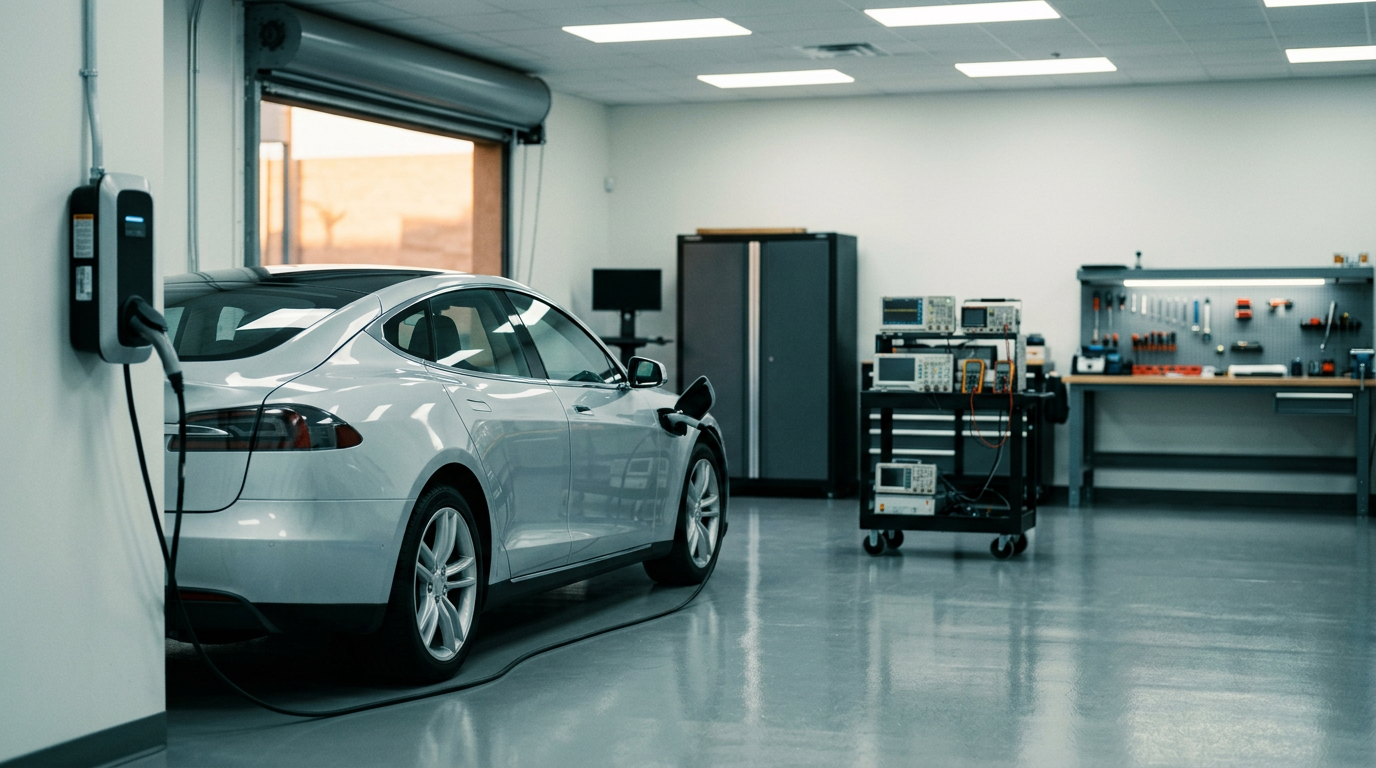
The UAE's public electric vehicle charging network reached over 900 public charging stations by mid-2025 according to the Dubai Electricity and Water Authority (DEWA) and UAE Ministry of Energy & Infrastructure announcements. This infrastructure spans Dubai, Abu Dhabi, Sharjah and the Northern Emirates, with a mix of Level 2 AC chargers and DC fast chargers operated by DEWA's EV Green Charger programme, ADNOC Distribution, and private networks including Emarat and Voltrun.
National EV Charging Network Size and Growth
DEWA reported in 2024 that it operates more than 500 public EV Green Charger stations across Dubai, making it the largest single operator in the emirate. The UAE Ministry of Energy & Infrastructure announced in late 2024 that the country's total public charging infrastructure exceeded 900 points nationwide, a figure that includes ADNOC's network of approximately 200 fast-charging stations along highways and urban centres, as well as private operators. This represents growth from fewer than 300 public charging points recorded in 2021, reflecting a compound annual expansion aligned with the UAE's target of 42,000 electric vehicles on the road by 2030.
Abu Dhabi has invested heavily in highway fast-charging corridors, with ADNOC Distribution installing DC fast chargers capable of delivering 50–150 kW at service stations along the E11 and E311 routes. Sharjah and the Northern Emirates are catching up, with Sharjah Electricity, Water and Gas Authority (SEWA) announcing plans in 2024 to install 100 additional public charging points by 2026.
Types of EV Chargers in the UAE
Public charging stations in the UAE fall into three categories, each with distinct charge times and use cases:
- Level 1 Chargers (AC, 120V): Rare in public infrastructure; typically home-use only in the United States. Not deployed in the UAE public network.
- Level 2 Chargers (AC, 240V, 7–22 kW): The most common public charger type in Dubai. DEWA's EV Green Charger stations predominantly use 7 kW and 11 kW AC units. A standard electric vehicle with a 60 kWh battery will gain approximately 30–40 km of range per hour of charging at 7 kW, or 50–70 km per hour at 11 kW, based on workshop observations of vehicles serviced in Dubai conditions.
- DC Fast Chargers (50–350 kW): Installed by ADNOC, Emarat and some DEWA locations. A 50 kW DC fast charger can add 150–200 km of range in 30 minutes for most mid-sized EVs, while 150 kW+ units can deliver 80% charge in 20–30 minutes for models such as the Porsche Taycan or Audi e-tron.
DEWA EV Green Charger Tariff and Billing
DEWA introduced a time-of-use tariff structure for its EV Green Charger network in 2023. As of 2024, the standard rate is AED 0.29 per kWh during off-peak hours (midnight to 06:00) and AED 0.47 per kWh during peak hours (noon to 18:00), according to DEWA's published tariff schedule. A full 60 kWh charge during off-peak costs approximately AED 17.40, while the same charge during peak hours costs around AED 28.20. Users register via the DEWA app or EV Green Charger app, link a credit card, and billing is automatic per session. Detailed registration steps and cost breakdowns are covered in our guide to DEWA EV Green Charger: Registration, Cost per kWh and Rules.
Public Charging Station Locations in Dubai
DEWA has concentrated EV charging stations in high-traffic and residential areas. As of 2024, the largest clusters are found in:
- Dubai Mall and surrounding Downtown Dubai (15+ stations)
- Dubai Marina and JBR (12+ stations)
- Business Bay and DIFC (10+ stations)
- Dubai International Airport and Al Maktoum International (8+ stations)
- RTA public parking facilities across Jumeirah, Al Barsha and Al Quoz
ADNOC service stations with fast chargers are located on Sheikh Zayed Road (E11), Emirates Road (E611) and Al Khail Road. The DEWA and RTA apps both include live maps of available charging points, connector types (Type 2 AC, CCS, CHAdeMO) and real-time availability status.
Regional Context: Charging Infrastructure in California and San Diego
For context, California—the United States' largest EV market—had approximately 14,000 public charging stations as of 2023 according to the California Energy Commission, with San Diego County hosting over 1,000 stations including Level 2 and DC fast chargers. San Diego's network emphasises a mix of city-owned public charging at municipal lots, private fast-charging hubs operated by Electrify America and EVgo, and workplace charging for business fleets. The UAE's density per capita is lower, but growth rates are comparable: both regions saw public charging infrastructure roughly triple between 2020 and 2024.
The primary difference is billing: San Diego stations often charge by the minute or per session, while UAE operators bill per kWh. Connector standards also differ—North America is transitioning to the Tesla-originated NACS standard, whereas the UAE has standardised on European Type 2 (AC) and CCS Combo 2 (DC) connectors, aligning with the majority of European electric vehicle models sold here.
Business and Fleet Charging Solutions
Corporate and fleet operators in Dubai increasingly install on-site Level 2 chargers to support fleet services and employee vehicle charging. DEWA offers a commercial EV Green Charger programme for businesses, with installation support and bulk tariff options. Companies operating luxury or high-performance EVs—such as Tesla, BMW iX, Mercedes-Benz EQS or Polestar—benefit from predictable energy costs and reduced reliance on public fast chargers, which can accelerate battery degradation if used exclusively. Our corporate accounts service includes fleet charging audits and maintenance scheduling for electric and hybrid fleets.
How to Locate and Use Public EV Charging Stations
Several tools help Dubai residents find nearby charging points:
- DEWA EV Green Charger App: Real-time map, reservation, billing and session history for DEWA stations.
- RTA Dubai Drive App: Includes public parking and RTA-managed charging locations.
- PlugShare: Crowdsourced global database with user reviews, photos and availability updates; covers DEWA, ADNOC and private networks.
- Manufacturer Apps: Tesla navigation, Audi e-tron route planner and BMW Charging integrate UAE public networks into in-car systems.
To use a public station, park in the designated EV bay, plug in the correct connector (Type 2 for AC, CCS for DC), authenticate via app or RFID card, and start the session. Most Level 2 chargers allow up to four hours; DC fast chargers typically limit sessions to 60 minutes to encourage turnover.
Maintenance Considerations for EVs Using Public Charging
Frequent use of DC fast chargers—particularly in Dubai's summer heat, where ambient temperatures exceed 45°C—can accelerate lithium-ion battery degradation. High charge rates generate heat, and the battery thermal management system works harder to maintain safe cell temperatures. Workshop observations on European EVs such as the Audi e-tron, Jaguar I-PACE and Porsche Taycan show that vehicles charged predominantly via Level 2 at home or work exhibit 3–5% less capacity fade over three years compared to those relying on fast charging multiple times per week.
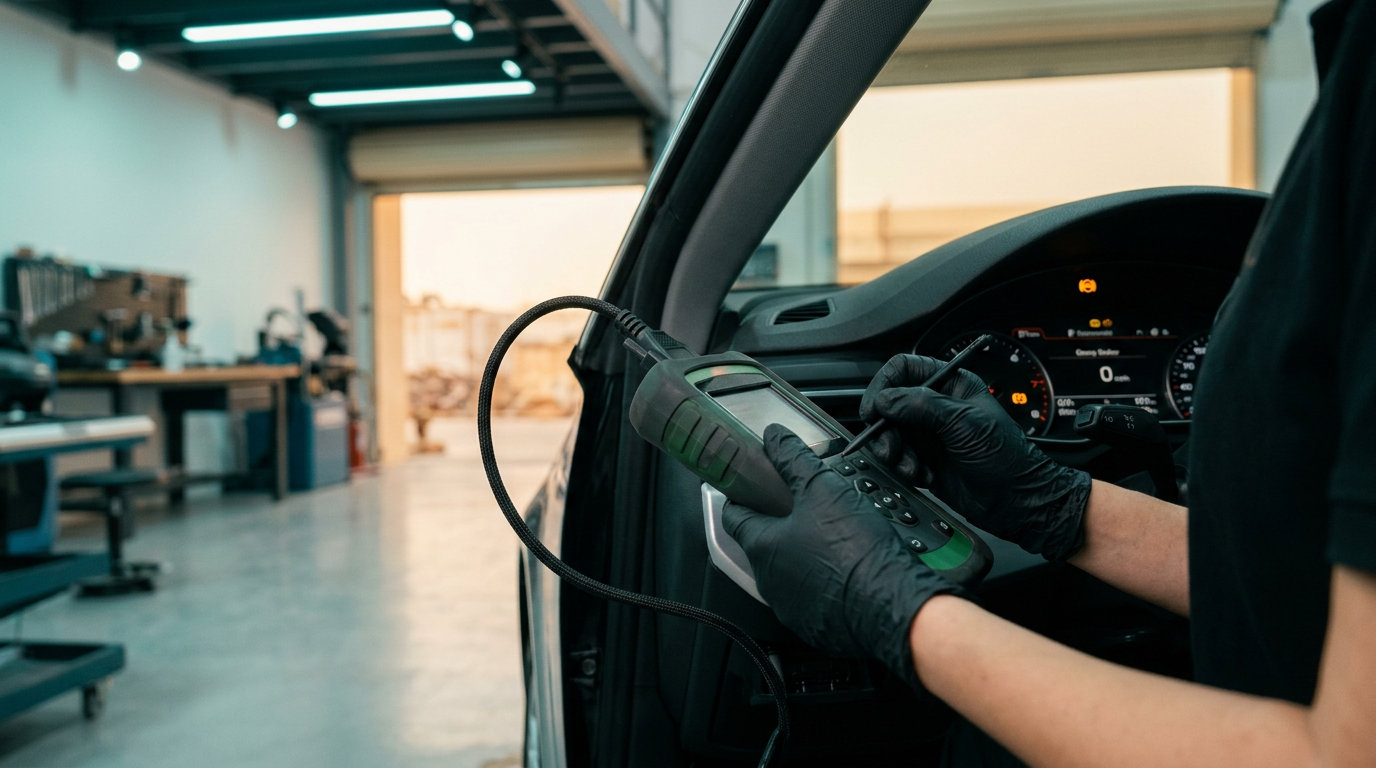
Regular battery services and diagnostic services can monitor state-of-health metrics and coolant system integrity. Our electrical and electronics service covers onboard charger diagnostics, charging port faults and battery management system error codes common in high-mileage EVs. For buyers considering a used EV, a pre-purchase inspection includes battery health assessment and charge cycle history review where accessible via the vehicle's service records.
UAE EV Charging Infrastructure: 2026 Outlook
The UAE Ministry of Energy & Infrastructure's EV roadmap targets 1,500 public charging stations by 2026 and 5,000 by 2030. DEWA has committed to expanding coverage into outer residential areas such as Dubai South, Dubai Silicon Oasis and Al Warsan, with a focus on 22 kW Level 2 chargers to reduce charge times. ADNOC is rolling out ultra-fast 350 kW chargers at flagship locations, compatible with next-generation models like the Porsche Taycan Turbo S and upcoming Mercedes-Benz EQG.
Private operators are also entering the market: Voltrun announced 50 new fast-charging hubs in 2024, and Emarat plans to retrofit 30 existing petrol stations with DC chargers by mid-2026. This competitive landscape is expected to drive down per-kWh costs and improve service reliability, mirroring trends seen in California and Europe.
| Operator | Stations (2025) | Charger Types | Coverage |
|---|---|---|---|
| DEWA EV Green Charger | 500+ | 7–22 kW AC, some 50 kW DC | Dubai metro, malls, public parking |
| ADNOC Distribution | ~200 | 50–150 kW DC fast | Highways, urban service stations |
| Emarat / Voltrun | ~100 | 50–150 kW DC, 22 kW AC | Dubai, Sharjah, Northern Emirates |
| SEWA (Sharjah) | ~50 (target 150 by 2026) | 11–22 kW AC | Sharjah city, residential areas |
| Private / Workplace | ~150 | 7–22 kW AC | Corporate parks, hotels, residential towers |
Comparing UAE and International Standards
The UAE has adopted European charging standards, aligning with the dominant import market. Type 2 (IEC 62196) is the universal AC connector, and CCS Combo 2 is the standard for DC fast charging. CHAdeMO, common in older Japanese EVs, is supported at some ADNOC and DEWA locations but is being phased out. In contrast, the United States is consolidating around the North American Charging Standard (NACS), with major automakers committing to Tesla's connector design from 2025 onward. This divergence means that vehicles imported from North America to the UAE may require adapter cables or connector retrofits, a service covered under our electrical and electronics offering.
Residential and Home Charging Options
While public charging stations are expanding, the majority of EV owners in Dubai charge at home. DEWA's Home EV Charger installation service provides turnkey 7 kW or 11 kW wall-box units for villas and townhouses, with installation costs typically ranging from AED 2,000 to AED 4,000 depending on electrical panel upgrades. Apartment residents face more challenges: building management approval is required, and shared parking infrastructure is still limited. The Dubai Municipality issued guidelines in 2023 encouraging developers to pre-wire 10% of parking bays for EV charging in new residential projects.
Home charging is significantly cheaper than public fast charging: a full 60 kWh charge at the standard residential tariff (approximately AED 0.32 per kWh in 2024) costs around AED 19.20, compared to AED 28–35 at public fast chargers during peak hours. For owners of high-performance EVs such as the Porsche Taycan or Audi e-tron GT, home charging also reduces battery stress and extends service intervals for cooling system components.
Understanding the UAE's evolving EV charging infrastructure helps owners of electric and hybrid vehicles plan routes, manage costs and maintain battery health in Dubai's demanding climate. Whether you drive a Tesla, BMW iX, Mercedes-Benz EQS or Polestar 2, regular diagnostics and electrical system checks ensure charging reliability and long-term performance. For independent EV service and diagnostics in Dubai, JAD Garage in Al Quoz 4 offers manufacturer-grade equipment and specialist support for European and electric vehicles. Call +971 56 355 6113 to book an inspection or discuss fleet charging strategies.
EV Diagnostics and Electrical Services in Al Quoz
JAD Garage in Al Quoz 4 provides specialist diagnostics, battery health checks and electrical system services for European and electric vehicles. Call +971 56 355 6113 to schedule an EV inspection or discuss charging system faults.
Frequently asked questions