
7 Symptoms of a Failing Automatic Gearbox

A failing automatic transmission shows seven key symptoms: slipping gears during acceleration, delayed engagement when shifting into drive or reverse, unusual whining or grinding noises, visible transmission fluid leaks, a lit check engine light, burning smells from overheated fluid, and rough or jerky shifting. Early detection prevents catastrophic failure and expensive replacements.
1. Slipping Gears During Acceleration
When your automatic transmission slips, the engine revs higher than normal but the vehicle doesn't accelerate proportionally. You might feel the car surge forward then hesitate, or notice the tachometer needle jump without a corresponding increase in speed. This happens when worn clutch packs inside the transmission can't maintain proper grip, or when transmission fluid pressure drops below the threshold needed to engage gears firmly.
In Dubai's stop-start traffic, slipping becomes especially noticeable during merges onto Sheikh Zayed Road or when accelerating from traffic lights. The transmission hunts between gears, creating a sensation that the car is momentarily losing power. Low or degraded transmission fluid causes many slipping cases, but internal wear to friction materials—accelerated by heat—also plays a major role.
If you notice slipping, check your transmission fluid level and condition immediately. Dark, burnt-smelling fluid indicates overheating and oxidation. Fresh automatic transmission fluid is typically bright red or amber; brown or black fluid has broken down and lost its lubricating properties.
2. Delayed Engagement When Shifting
Delayed engagement means a noticeable pause—sometimes two to three seconds—between moving the gear selector into drive or reverse and feeling the transmission actually engage. You'll hear the engine running, but the car won't move until the delay passes, then it may engage with a clunk or jolt.
This symptom often points to low fluid pressure within the transmission's hydraulic system, worn valve body components, or failing solenoids that control fluid flow. In older European models—BMW, Audi, Mercedes-Benz—the Mechatronic unit (the integrated electro-hydraulic control module) can develop internal faults that cause delayed shifts.
Dubai's extreme heat, reaching 50°C in summer months from June through September, accelerates wear on seals and electronic components inside transmissions. A delay that starts as one second in January may stretch to three seconds by July as heat degrades seals and thins fluid viscosity.
3. Unusual Noises: Whining, Grinding or Clunking
Healthy automatic transmissions operate almost silently. When you hear whining, buzzing, grinding or clunking sounds, internal components are wearing or failing:
- Whining or buzzing: Often caused by a failing transmission fluid pump, low fluid level, or worn planetary gear sets. The pitch may change with engine speed.
- Grinding: Indicates damaged gear teeth or clutch plates that can't engage smoothly. This is a serious problem requiring immediate attention.
- Clunking: Heard when shifting between park, reverse, and drive, suggesting worn motor mounts, a failing torque converter, or excessive play in the drivetrain.
- Humming at speed: May point to worn bearings inside the transmission or differential.
Don't ignore new noises. What begins as a faint whine can escalate to complete transmission failure within weeks, especially under the thermal stress of UAE driving conditions. Professional diagnostics can pinpoint the source before damage spreads to other components.
4. Transmission Fluid Leaks
Transmission fluid leaks appear as red, pink, or dark brown puddles under the centre or front of your vehicle. Unlike engine oil, which is amber or black, automatic transmission fluid has a distinct reddish tint when fresh and turns brown as it ages.
Common leak points include the transmission pan gasket, output shaft seals, cooler lines, and the torque converter seal. Even small leaks matter: automatic transmissions hold between 6 and 12 litres of fluid depending on the model, and losing just one litre can cause shifting problems and slipping.
Check your driveway or parking spot regularly. If you spot a leak, check the fluid level using the dipstick (if equipped) or have a technician measure it. Many modern European cars—particularly Audi, BMW, and Mercedes-Benz models from the past decade—have sealed transmissions without dipsticks, requiring diagnostic equipment to check fluid level accurately.
Leaks accelerate in Dubai heat as seals harden and crack. A small seep in March can become a significant leak by July. Addressing leaks early prevents low fluid levels that lead to expensive internal damage.
5. Check Engine Light or Transmission Warning Light
Modern vehicles monitor transmission performance continuously through dozens of sensors. When the engine control unit or transmission computer detects a problem—abnormal pressure, temperature, slipping, incorrect gear ratios—it stores a diagnostic trouble code and illuminates the check engine light or a dedicated transmission warning symbol on your dashboard.
Common transmission-related codes include those for shift solenoids, pressure sensors, torque converter clutch malfunctions, and gear ratio errors. The check engine light doesn't always mean catastrophic failure; it might indicate a failing sensor or minor electrical fault that's inexpensive to repair.
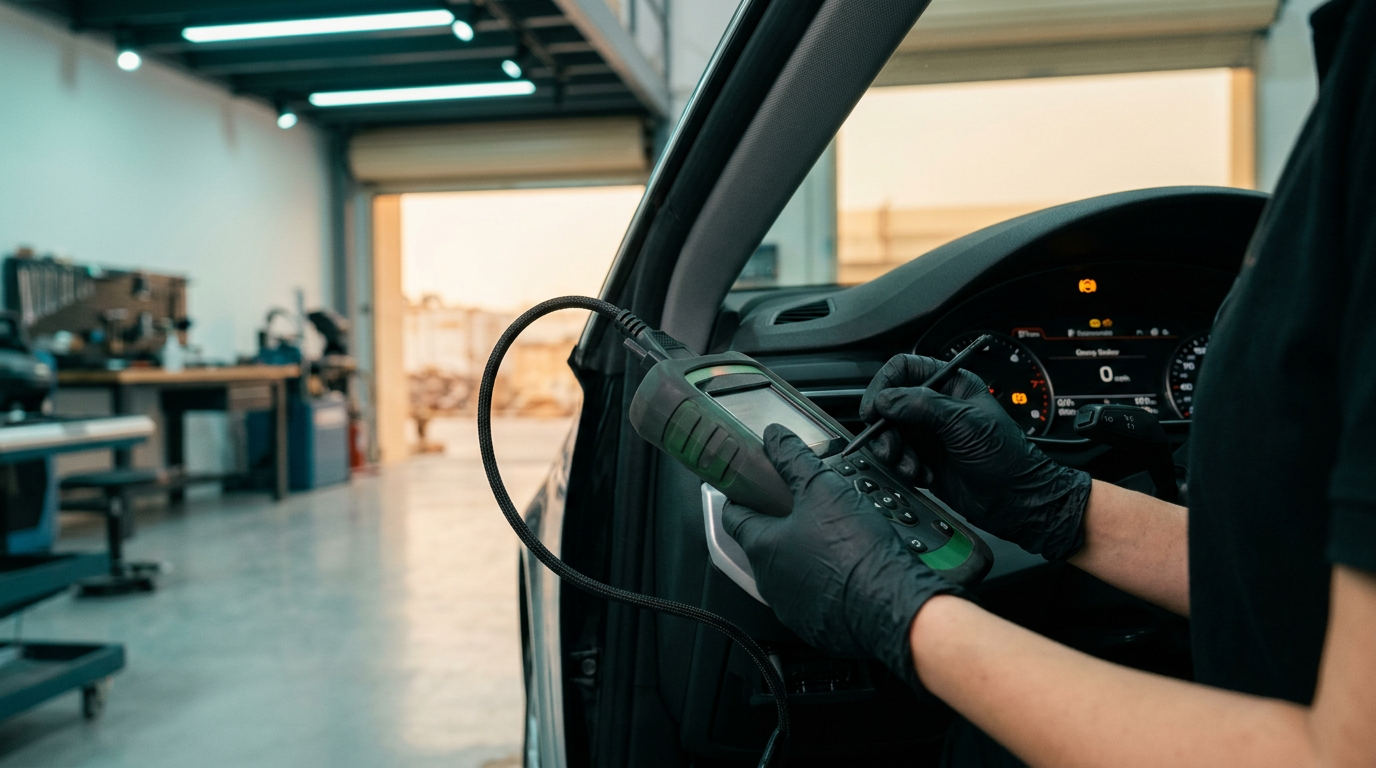
Never ignore a lit warning light. Have the codes read with manufacturer-grade diagnostic equipment that can access transmission-specific data. Generic code readers from parts stores often miss transmission controller codes entirely. Early diagnosis of a solenoid fault, for example, costs a fraction of the repair bill for a transmission damaged by continuing to drive with that fault.
6. Burning Smell From the Transmission
A burning smell—distinct from the usual hot engine odour—indicates overheating transmission fluid or friction material. Automatic transmission fluid serves as both lubricant and hydraulic fluid; when it overheats beyond roughly 120°C, it oxidises rapidly, loses viscosity, and develops a burnt, acrid smell.
Causes include low fluid level (which reduces cooling capacity), a clogged transmission filter restricting flow, a failing transmission cooler, or excessive slipping that generates heat faster than the system can dissipate it. Towing, driving in deep sand, or prolonged stop-start traffic in Dubai summer heat all push transmission temperatures higher.
If you smell burning, pull over safely and let the vehicle cool. Check the fluid level and colour. Burnt fluid appears very dark and smells harsh, unlike the mild petroleum scent of fresh fluid. Continuing to drive with overheated fluid causes permanent damage to clutches, seals, and valve bodies. Overheated transmissions often need not just fluid changes but internal component replacement.
7. Rough, Jerky or Harsh Shifting
Smooth shifts are a hallmark of a healthy automatic transmission. When shifts become harsh, jerky, or accompanied by a noticeable jolt, the transmission is struggling to modulate hydraulic pressure or engage clutch packs smoothly.
Rough shifting has several causes: degraded transmission fluid that's lost its friction-modifying additives, worn clutch packs, failing shift solenoids, or software issues in the transmission control module. In some Volkswagen and Audi DSG dual-clutch transmissions, harsh shifts can result from Mechatronic faults or clutch wear that requires adaptation reset or replacement.
Pay attention to when rough shifts occur. Shifts that are harsh only when cold suggest thickened fluid or tight clearances that normalise at operating temperature. Shifts that worsen when hot point to fluid breakdown or components expanding beyond specification. Either pattern warrants inspection.
How to Differentiate Fluid Problems From Transmission Failure
Not every transmission symptom means you need a rebuild. Many issues stem from maintenance neglect—specifically old, low, or contaminated transmission fluid. Here's how to tell the difference:
Fluid-related symptoms (often reversible with service):
- Symptoms improve slightly after the vehicle warms up
- Fluid is dark brown or black and smells burnt
- Fluid level is low (check with engine running, transmission in park, on level ground)
- Shifting is sluggish but not accompanied by slipping or grinding noises
- No metal particles visible in the fluid
Mechanical failure symptoms (require component repair or replacement):
- Slipping that persists regardless of temperature
- Grinding, clunking or loud whining noises
- Metal shavings or debris in the transmission fluid or pan
- Transmission won't engage any gear
- Fluid is correct level but symptoms continue
Even if symptoms seem fluid-related, have a technician inspect the transmission. A transmission fluid change on a unit with heavy internal wear can sometimes dislodge debris and worsen problems. Professional assessment determines whether a service will help or if internal repairs are needed first.
Can Transmission Problems Be Prevented?
Regular maintenance significantly extends automatic transmission life, especially in Dubai's harsh environment. Follow these practices:
- Change transmission fluid at manufacturer intervals, typically every 60,000 to 80,000 km for conventional automatics, or every 40,000 to 60,000 km for dual-clutch transmissions. Heat accelerates fluid degradation here.
- Inspect fluid condition annually even if you haven't reached the mileage interval. Dark fluid means it's time for a change.
- Address leaks immediately to maintain proper fluid level.
- Avoid aggressive driving habits like sudden acceleration from stops or holding the car on hills using throttle instead of brakes, which generates excess heat.
- Service the transmission cooler and check cooler lines for leaks or damage during routine maintenance.
- If towing or driving in sand, consider shortening service intervals by 20-30% due to increased thermal stress.
Many European manufacturers specify "lifetime" transmission fluid, but that assumes moderate climates and ideal driving conditions. In UAE heat and traffic, fluid breaks down faster. Changing fluid every 60,000 km prevents most premature wear issues. For detailed maintenance schedules suited to Dubai conditions, see our guide on European car service intervals.
When to Seek Professional Transmission Repair
Seek professional diagnosis immediately if you experience:
- Any slipping, especially under load or acceleration
- Delays longer than one second when engaging drive or reverse
- New or worsening noises from the transmission area
- Visible fluid leaks or a sudden drop in fluid level
- A lit check engine light accompanied by shifting problems
- Burning smells during or after driving
- Harsh shifts that appear suddenly or worsen over days
Transmission problems rarely improve on their own and almost always worsen with continued driving. What might be a €500-800 solenoid replacement can become a €3,000-5,000 rebuild if internal components are damaged by driving with low fluid or overheating. Early intervention saves money and prevents being stranded.
Modern transmissions are complex assemblies with electronic controls, hydraulic circuits, and mechanical components that require manufacturer-grade diagnostic tools to assess properly. Guessing at repairs wastes time and money. For context on typical repair costs in the UAE market, our article on gearbox repair versus replacement provides detailed guidance. If you're considering a used vehicle and want to avoid buying one with hidden transmission problems, a pre-purchase inspection can identify issues before you commit.
Understanding these seven symptoms helps you catch transmission problems early, when repairs are simpler and less expensive. In Dubai's climate, transmissions work harder than in temperate regions, making vigilance and maintenance even more critical. Check your fluid regularly, address small issues promptly, and don't ignore warning signs.
Transmission Acting Up? Get Expert Diagnosis in Al Quoz
If you're experiencing any of these transmission symptoms, don't wait for complete failure. JAD Garage in Al Quoz 4 uses manufacturer-grade diagnostics to identify transmission problems accurately. Call +971 56 355 6113 to book your inspection.
Frequently asked questions