ADNOC Vehicle Inspection: Locations, Timings and What They Check


ADNOC vehicle inspection centres conduct the mandatory annual test required to renew vehicle registration in Dubai and the Northern Emirates. The inspection covers brakes, suspension, lights, emissions, tyres and structural safety. Most centres operate Saturday to Thursday, 07:00–22:00, with some Friday and 24-hour locations. Results upload directly to the RTA system, and your vehicle must pass before Tasjeel or an RTA kiosk will issue renewed registration.
Where to Find ADNOC Inspection Centres in Dubai
ADNOC Distribution runs the largest network of vehicle testing stations in Dubai and the Northern Emirates. The most frequently used Dubai locations include:
- Al Awir: Near Dragon Mart, 24 hours, seven days a week
- Al Quoz 3: Sheikh Zayed Road service road, Saturday–Thursday 07:00–22:00
- Ras Al Khor: Near the wildlife sanctuary roundabout, Saturday–Thursday 07:00–22:00
- Jebel Ali: Jebel Ali Industrial Area, Saturday–Thursday 07:00–22:00, Friday 14:00–22:00
- Nad Al Hamar: Oud Metha area, Saturday–Thursday 07:00–22:00
Sharjah, Ajman, Umm Al Quwain, Ras Al Khaimah and Fujairah each have multiple ADNOC testing stations. The full list with maps is published on the ADNOC Distribution website and inside the RTA Dubai app under "Testing Centres." Queues are shortest early morning and after 20:00; avoid Thursday evenings and the final week of any month when expiries cluster.
Inspection Timings and Queue Management
Most ADNOC testing lanes operate Saturday to Thursday, 07:00–22:00. The Al Awir 24-hour station is the only round-the-clock option in Dubai. Friday hours are limited—Jebel Ali opens 14:00–22:00, but many stations remain closed. Inspection takes 15–20 minutes once your vehicle enters the bay, but wait times range from 10 minutes during off-peak to over an hour on Thursday evenings or month-end.
No advance booking system exists; arrival is first-come, first-served. Bring your original registration card (vehicle licence), Emirates ID and, if the registered owner is not present, a signed letter of authorisation. Payment is by card or cash at the station: the test fee at time of writing is AED 170 for light vehicles under 3.5 tonnes, but confirm on the RTA portal as tariffs occasionally change.
What ADNOC Vehicle Inspection Actually Checks
The test follows a standardised RTA checklist covering safety, emissions and structural integrity. Inspectors use roller dynamometers, headlamp aim equipment and emissions analysers. The process is automated with minimal discretion—each parameter either passes or fails against published thresholds.
Brake Performance
Front and rear axles roll onto a dynamometer that measures braking force and balance. The system checks that each wheel delivers adequate stopping power and that left-right imbalance stays below 30 per cent. Worn pads, seized callipers or contaminated discs trigger immediate failure. Handbrake force is tested separately; many vehicles fail because the cable has stretched or the rear callipers need adjustment.
Lights and Electrical
Headlamps, indicators, brake lights, reverse lights, fog lamps and number-plate illumination are checked for operation and correct colour. Headlamp aim is measured on an optical bench—beam patterns that dazzle oncoming drivers or point too low both fail. Aftermarket HID or LED bulbs in halogen housings often cause rejection because the beam scatter exceeds limits. Dashboard warning lights must extinguish after engine start; a persistent ABS, airbag or engine management light is an automatic fail.
Suspension and Steering
The inspector drives the vehicle onto shaker plates that reveal play in ball joints, tie-rod ends, bushings and shock absorbers. Excessive movement, knocking sounds or visible fluid leaks result in failure. Steering wheel play is checked manually; more than one inch of free movement before the wheels respond indicates worn components. Suspension & Steering faults are among the most common rejection reasons, especially in vehicles over five years old driven on rough roads or speed bumps at speed.
Tyres and Wheels
Tread depth must exceed 1.6 mm across the central three-quarters of the tyre. Inspectors use a gauge; any tyre below the limit fails the entire vehicle. Sidewall damage, bulges, exposed cords or mismatched sizes also trigger rejection. Wheel balance is not tested, but missing wheel nuts, cracked rims or incorrect offset that causes tyre rub will fail. Dubai's heat accelerates tyre aging—even tyres with legal tread may fail if sidewall cracking is severe. Tyre age and replacement intervals matter as much as tread depth in the UAE climate.
Emissions Testing
Petrol engines undergo a two-speed idle test measuring carbon monoxide (CO) and hydrocarbons (HC). Limits tighten with model year: pre-2008 vehicles allow higher emissions than newer models. Diesel vehicles are tested for smoke opacity using a free-acceleration snap test. A failing emissions result usually points to a worn catalytic converter, faulty oxygen sensors, fouled spark plugs or an engine running too rich. Diagnostic Services can identify the root cause before you arrive at the test station, saving a second trip and retest fee.
Body and Glass
Inspectors check for structural damage, rust perforation, insecure bumpers and non-compliant modifications. Windscreen cracks longer than a credit card or within the driver's primary vision zone fail. Tinted windows must allow at least 50 per cent visible light transmission on front side windows and the windscreen; aftermarket film darker than this limit is a common fail point. Accident damage that affects crumple zones or chassis rails requires Bodywork & Paint repair and often a structural integrity certificate before the vehicle will pass.
Common Reasons for Rejection and How to Avoid Them
RTA data shows that brake imbalance, worn tyres, headlamp aim and emissions account for the majority of first-time failures. Many rejections are avoidable with a pre-inspection check one to two weeks before your registration expiry.
- Brake imbalance: Often caused by a single sticking calliper or a collapsed brake hose. Brake Services should include a road test and visual inspection of pad wear and calliper movement.
- Worn tyres: Measure tread depth at home with a 1 dirham coin (the silver border is approximately 1.6 mm). If tread sits flush with the coin edge, replacement is due. Tire Services include alignment and balancing to extend new tyre life.
- Headlamp aim: Incorrect aim results from suspension sag, load changes or bulb replacement without re-aiming. Independent workshops with beam-setting equipment can adjust aim to RTA specifications.
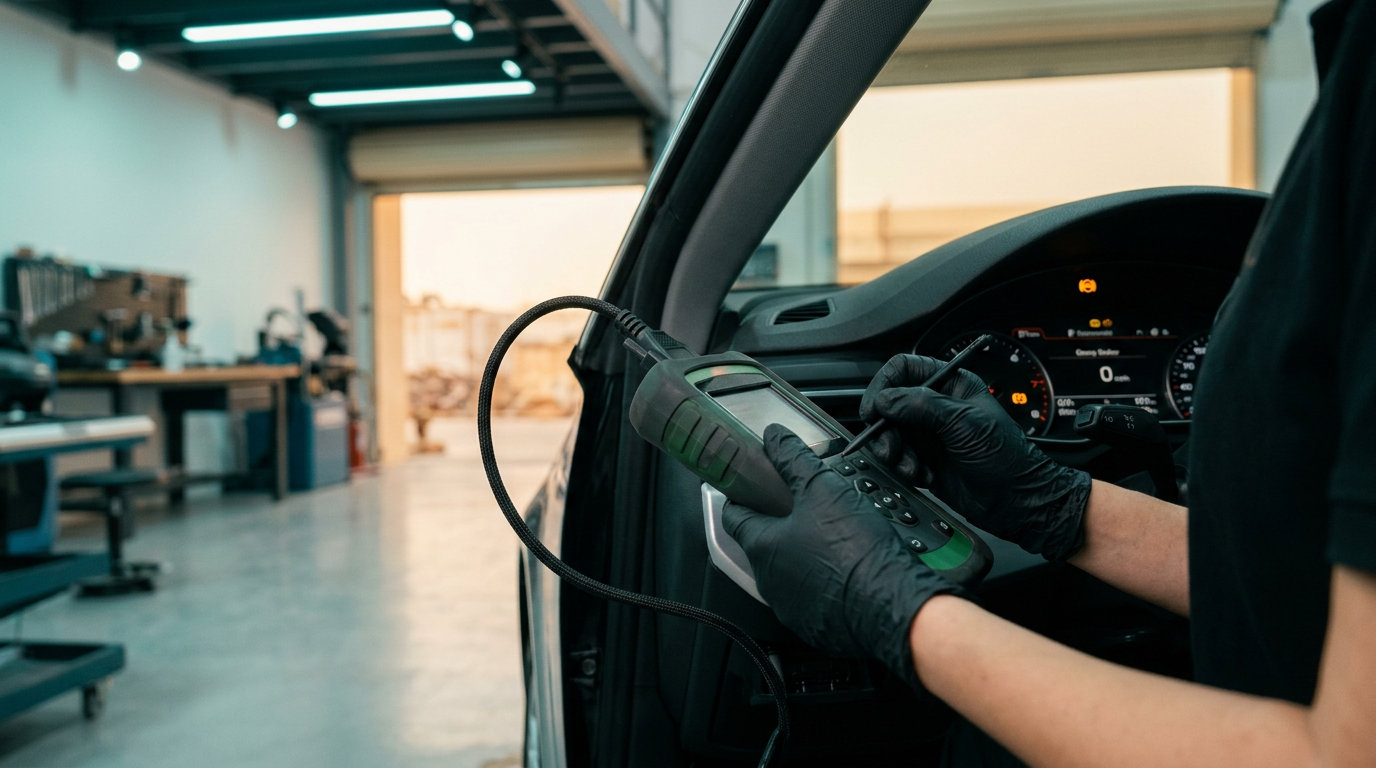
- Dashboard warning lights: An illuminated check engine, ABS or airbag light requires Diagnostic Services to read fault codes and clear the underlying issue. Simply clearing the code without repair will cause the light to return, and the inspector will fail the vehicle.
- Emissions: Regular Oil Change intervals, clean air filters and functioning oxygen sensors keep emissions within limits. Vehicles that fail emissions often need a combination of spark plugs, ignition coils and a catalytic converter health check.
What Happens After You Pass (or Fail)
Pass results upload to the RTA system within minutes. You receive a printed certificate valid for 30 days, during which you must complete registration renewal at a Tasjeel centre, RTA customer service centre or an accredited typing office. If you fail, the report lists each defect by code and description. You have 30 days to repair the faults and return for a retest, which costs AED 85 (light vehicles) and covers only the items that previously failed.
Some owners attempt multiple retests at different ADNOC stations hoping for a lenient inspector—this rarely works because the equipment, not the inspector, determines most pass/fail outcomes. Fixing the underlying problem is faster and cheaper than repeated retest fees and the risk of driving on an expired registration, which carries a AED 500 fine plus AED 25 per day black points accumulate if stopped by police.
Pre-Inspection Health Checks: Why They Save Time and Money
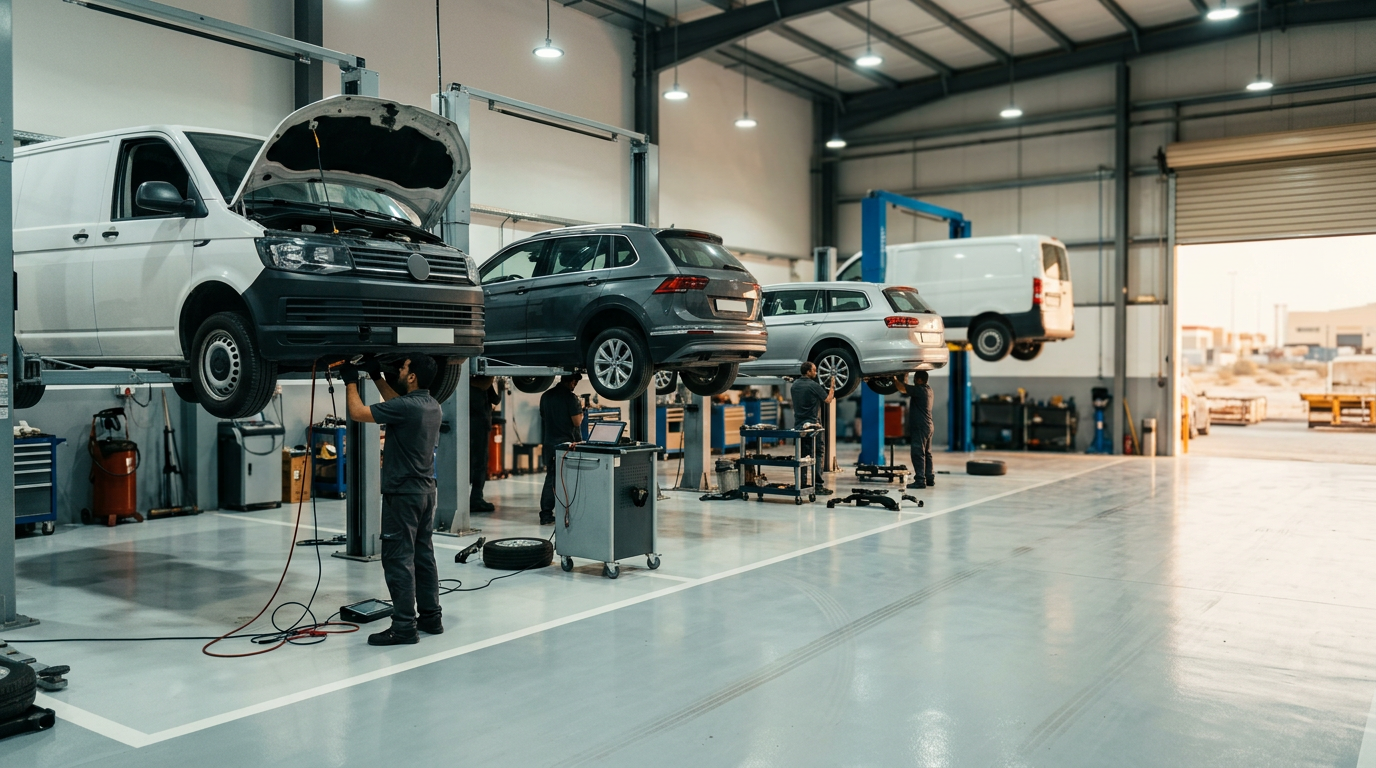
A pre-inspection service at an independent workshop identifies problems before the ADNOC test. The check mirrors the RTA inspection sequence: brake balance on a rolling road, headlamp aim, suspension play, tyre condition, emissions readiness and dashboard warnings. Workshops with manufacturer-grade diagnostic equipment can interrogate control modules for pending fault codes that have not yet triggered a dashboard light but will cause the engine management system to fail readiness monitors during the emissions test.
Pre-Purchase Inspection services use the same systematic approach and are especially valuable for used vehicles with unknown service history or BMW, Mercedes-Benz, Audi and other European marques where age-related electrical faults are common. Luxury Car Repair & Maintenance specialists understand the nuances of adaptive headlamps, electronic parking brakes and air suspension that can trip up a generic workshop unfamiliar with the systems.
ADNOC Inspection for Modified, Classic and Imported Vehicles
Modified vehicles face stricter scrutiny. Lifted suspensions, non-standard exhausts, engine swaps and body kits require prior RTA approval documented on the registration card. Inspectors cross-reference modifications against the vehicle file; unapproved changes result in immediate failure and a requirement to restore the vehicle to original specification or obtain retrospective approval, which is rarely granted.
Classic Car Repair & Maintenance clients often encounter issues with outdated lighting technology and emissions equipment that no longer functions. Vehicles over 30 years old may qualify for exemptions on certain emissions limits, but the exemption must appear on the registration record. Imported vehicles re-registered from other GCC states sometimes carry modifications legal in the origin country but non-compliant in the UAE—resolving these discrepancies before the first Dubai test avoids complications.
Electric and Hybrid Vehicle Inspection Differences
Battery electric vehicles skip the emissions test but undergo all other checks. Hybrid vehicles are tested on petrol-engine emissions during the charge-sustaining mode; the inspector will run the engine until the battery depletes enough to force petrol operation. Polestar, Volvo plug-in hybrids and other PHEV models sometimes fail because the 12-volt auxiliary battery is weak—even though the high-voltage traction battery is healthy—and the engine will not start reliably for the emissions test. Battery Services for EVs and hybrids include both high-voltage and 12-volt system health checks.
Brake wear on EVs is often uneven because regenerative braking does most of the work, leaving the mechanical brakes lightly used and prone to surface corrosion that causes imbalance on the rollers. Polestar and Volvo EV maintenance schedules recommend periodic hard braking to clean the discs, but many owners skip this, resulting in test failures.
Related reading: Vehicle Inspection in Dubai: ADNOC, Tasjeel and Wasel Compared.
Pre-Inspection Check Before Your ADNOC Test
JAD Garage in Al Quoz 4 offers comprehensive pre-inspection diagnostics covering brakes, emissions readiness, suspension, lights and dashboard warnings. Our equipment mirrors RTA test procedures, so you know the outcome before you queue. Call +971 56 355 6113 or visit us at Warehouse No.1, Street 8, Al Quoz 4.
Frequently asked questions