
How Often Should Tyres Be Replaced in the UAE? The Age Rule

In the UAE, car tyres should be replaced every 5 to 6 years maximum, even if tread depth appears adequate. Heat, UV exposure, and humidity degrade rubber compounds faster than in cooler climates, making age a critical safety factor alongside tread wear. Most manufacturers, including Michelin, Continental, Bridgestone, and Pirelli, recommend replacement after 6 years from the manufacture date, and many specify 10 years as an absolute maximum—but Dubai's extreme conditions accelerate that timeline significantly.
Why Tyre Age Matters More in the UAE
Rubber is an organic material that oxidises and hardens over time. In Dubai, where ambient temperatures exceed 50°C in summer and road surface temperatures can reach 70°C, this chemical breakdown happens much faster. Even tyres with good tread depth can develop invisible internal damage: sidewall cracking, loss of elasticity, and weakened steel belts. These changes reduce grip, increase stopping distances, and raise the risk of sudden blowouts, particularly at highway speeds or during emergency braking.
The DOT code stamped on every tyre sidewall tells you when it was made. The last four digits represent the week and year of manufacture—for example, "2319" means the 23rd week of 2019. If your tyres are approaching or past five years old, replacement should be a priority regardless of visual condition. Many drivers in the UAE focus solely on tread depth and overlook age, but heat-induced degradation is often invisible until failure occurs.
Tread Depth: The Legal and Safety Minimum
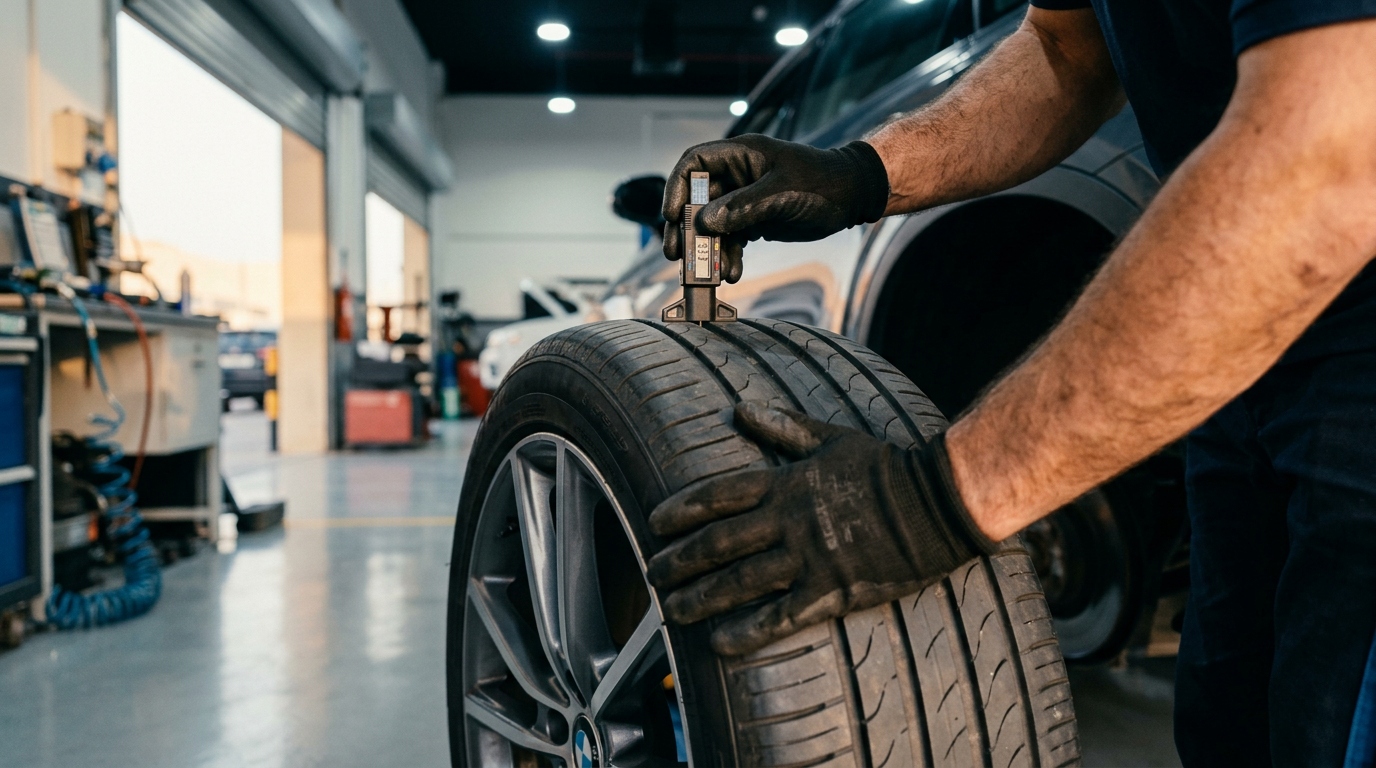
While age is critical, tread depth remains the most visible indicator of tyre wear. RTA regulations in Dubai require a minimum tread depth of 1.6 mm across the central three-quarters of the tyre. Driving with tyres below this limit will result in a failed vehicle inspection during your annual registration renewal. However, safety experts recommend replacing tyres once tread reaches 3 mm, especially in wet conditions or for high-performance vehicles.
To check tread depth, use a simple tread depth gauge (available at any automotive shop) or insert a 1 dirham coin into the tread grooves. If the silver outer band is fully visible, your tread is likely below 3 mm. Most modern tyres also feature built-in tread wear indicators—small raised bars in the grooves that become flush with the tread surface when replacement is due.
- New tyre: 7–9 mm tread depth (varies by brand and model)
- Replace at: 3 mm for safety, 1.6 mm legal minimum in UAE
- Check frequency: Monthly visual inspection, measure every 5,000 km
- Uneven wear: Indicates alignment, suspension, or tyre pressure issues
Heat, Driving Conditions, and Accelerated Wear
Dubai's climate and driving patterns create a uniquely harsh environment for tyres. Stop-start traffic in the city generates heat in the tyre carcass, while highway speeds on the Sheikh Zayed Road or Abu Dhabi road amplify stress. Fine sand acts as an abrasive, gradually wearing tread and infiltrating valve stems. High humidity near the coast accelerates corrosion of steel belts inside the tyre structure.
Short trips—common for school runs, supermarket visits, and errands—prevent tyres from reaching optimal operating temperature, which can lead to uneven wear and reduced compound performance. Underinflation is another silent killer: tyres lose approximately 1 PSI per month naturally, and heat exacerbates this. An underinflated tyre flexes excessively, generating more heat and wearing the outer edges faster. Regular tyre pressure checks—at least monthly and before long drives—are essential.
If you drive a high-performance vehicle such as a Porsche, Lamborghini, or McLaren, tyre wear accelerates further due to softer compounds designed for grip. Sports tyres may need replacement every 15,000–25,000 km, well before the age limit. For everyday European sedans and SUVs—BMW, Audi, Mercedes-Benz, Volvo—expect 40,000–60,000 km under normal driving, but always prioritise the 5-6 year age rule.
Warning Signs That Tyres Need Immediate Replacement
Beyond age and tread depth, several visual and performance indicators demand urgent attention. Inspect your tyres regularly for these signs:
- Cracks or cuts: Visible on sidewalls or tread, indicating UV and heat damage
- Bulges or blisters: Internal structural failure, high blowout risk
- Vibration or noise: Unusual humming or shaking at speed, often from uneven wear or separation
- Punctures in sidewall: Cannot be safely repaired, replacement required
- Exposed cords or fabric: Immediate safety hazard, do not drive
- Uneven tread wear: One side worn more than the other, check wheel alignment and suspension
If you notice any of these symptoms, schedule an inspection immediately. Continuing to drive on damaged tyres significantly increases the risk of a blowout, especially at highway speeds or in the extreme heat of a UAE summer afternoon.
Maintenance Tips to Extend Tyre Life in Dubai
While heat and age are unavoidable, proper maintenance can help you reach the upper end of the tyre lifespan safely:
- Check pressure monthly: Use the manufacturer's recommended PSI (found on the door jamb sticker), check when tyres are cold
- Rotate every 10,000 km: Promotes even wear, especially important for front-wheel-drive vehicles
- Maintain correct wheel alignment: Misalignment causes rapid, uneven wear and poor handling
- Avoid overloading: Exceeding your vehicle's load rating increases tyre stress and heat
- Park in shade: Whenever possible, protect tyres from direct UV exposure
- Inspect before long trips: Check for damage, pressure, and tread before highway driving
- Replace valve caps: Prevents sand and dust from damaging valve stems
Regular general maintenance appointments provide an opportunity for a professional to inspect tyres alongside other critical systems. Mechanics can spot early signs of wear or damage that might be missed during a casual visual check, and they can advise on rotation schedules tailored to your driving patterns.
Choosing Replacement Tyres: OEM vs Alternatives
When the time comes to replace car tyres in the UAE, you'll face a choice between original equipment manufacturer (OEM) tyres and premium alternatives. OEM tyres are the exact specification fitted by the vehicle manufacturer—brands like Michelin, Pirelli, Continental, or Bridgestone in sizes and compounds matched to your car's performance characteristics. They offer guaranteed compatibility and often the best balance of comfort, noise, and handling for your specific model.
Premium alternative tyres from the same top-tier brands can offer similar performance at a range of price points, typically between AED 300 and AED 1,200 per tyre depending on size and specification. For a Range Rover or Bentley, expect the higher end; for a Volkswagen or Peugeot, the mid-range. Always match the load and speed ratings to your vehicle's requirements, and consider UAE-specific factors: some tyres perform better in extreme heat, while others prioritise wet grip for occasional rain.
Avoid budget or unknown brands, particularly for high-performance or heavy vehicles. The small initial saving is not worth the compromise in safety, longevity, or handling. If you're unsure which tyres suit your car and driving style, consult a specialist with experience in European and performance vehicles.
RTA Inspection and Tyre Requirements
During your annual vehicle registration renewal, RTA-approved testing centres inspect tyre condition as part of the safety check. Tyres must meet the 1.6 mm minimum tread depth, show no structural damage (cuts, bulges, exposed cords), and be free from excessive cracking. Mismatched tyres on the same axle or incorrect size fitment will also result in a failed inspection.
If your tyres are close to the legal limit or show visible age-related damage, replace them before your inspection appointment to avoid delays and repeat fees. Many drivers wait until the last minute, only to discover that worn tyres prevent registration renewal and require urgent replacement. Planning ahead—checking tyre condition at least a month before your registration expires—saves time and stress.
For fleet services or corporate accounts managing multiple vehicles, a proactive tyre replacement schedule based on age and mileage ensures compliance and reduces downtime. Keeping detailed service records, including DOT codes and replacement dates, simplifies fleet management and supports Mulkiya renewal processes.
When to Replace Tyres: A Summary Checklist
Use this checklist to determine when your car tyres need replacement in Dubai:
- Age: 5-6 years from manufacture date (check DOT code), regardless of tread
- Tread depth: Below 3 mm (safety), 1.6 mm (legal minimum)
- Visible damage: Cracks, cuts, bulges, exposed cords
- Uneven wear: One side significantly more worn, indicating alignment or suspension issues
- Performance change: Increased road noise, vibration, or longer stopping distances
- Puncture location: Sidewall damage cannot be repaired
If any of these criteria are met, schedule a tyre service appointment. Delaying replacement compromises safety, increases the risk of roadside breakdown, and may result in a failed RTA inspection. Tyres are your only contact with the road—investing in timely replacement is investing in your safety and that of your passengers.
Special Considerations for Electric Vehicles
If you drive an electric vehicle—Polestar, Audi e-tron, or other EVs—tyre wear patterns differ from conventional cars. The instant torque of electric motors accelerates tread wear, particularly on the driven axle, while the additional weight of battery packs increases load on all four tyres. EV brakes and tyres wear differently, and many manufacturers specify EV-optimised tyres with reinforced sidewalls and low rolling resistance compounds.
Despite potentially faster wear, the same age rule applies: replace EV tyres after 5-6 years in the UAE climate, even if tread depth remains acceptable. The heat and UV exposure affect EV tyres just as severely, and the additional weight makes structural integrity even more critical. Regular rotation and pressure checks are especially important for EVs to maximise tyre life and maintain the efficiency that impacts your driving range.
Tyre Inspection and Replacement in Al Quoz
Not sure if your tyres are due for replacement? JAD Garage in Al Quoz 4 offers comprehensive tyre inspections, tread depth measurement, and expert advice on replacement timing for all European and EV models. Call +971 56 355 6113 or visit us Monday to Saturday, 09:00–19:00.
Frequently asked questions