Car Battery Failure Rates in Gulf Climates: The Data

Car batteries in Gulf climates fail at approximately two to three times the rate seen in temperate regions, with most automotive batteries in Dubai lasting 18 to 30 months compared to 48 to 60 months in Europe or the United States. This accelerated degradation is driven primarily by sustained high ambient temperatures—often exceeding 50°C in summer—which speed up the chemical reactions inside lead-acid and AGM batteries, increase water loss through evaporation, and warp internal components. Workshop observations across Dubai show that battery-related breakdowns peak between June and September, and that vehicles driven primarily for short city trips experience the highest failure rates.
Published Data on Battery Life in Hot Climates
While comprehensive public statistics specifically for Dubai are limited, regional and international studies provide clear evidence of temperature's impact on automotive battery longevity. The UAE Ministry of Energy & Infrastructure reported in 2022 that ambient temperatures in the UAE regularly exceed 45°C during summer months, with surface temperatures in parking areas reaching 70°C. These conditions directly affect vehicle components, including batteries.
Research published by the United States Department of Energy indicates that for every 8°C increase above 25°C, the rate of chemical reaction inside a lead-acid battery approximately doubles. This means a car battery operating at 50°C—typical under-bonnet temperature in a parked Dubai vehicle in July—ages roughly four times faster than one at 25°C. The same study found that high heat accelerates grid corrosion, the primary failure mode in flooded and AGM automotive batteries.
Data from the International Energy Agency (IEA) in 2023 noted that battery thermal management is a critical factor in electric vehicle adoption in Gulf Cooperation Council countries, with lithium-ion cells also showing measurably shorter cycle life when operated continuously above 40°C without active cooling.
How Gulf Heat Accelerates Battery Failure
Several mechanisms combine to shorten car battery lifespan in Dubai and similar climates:
- Electrolyte evaporation: In traditional flooded lead-acid batteries, high temperatures cause water in the sulfuric acid electrolyte to evaporate faster, exposing the lead plates and accelerating sulfation.
- Grid corrosion: The positive lead-dioxide plates corrode more rapidly at elevated temperatures, reducing capacity and eventually causing open circuits.
- Case warping: Plastic battery cases can deform in extreme heat, leading to internal short circuits or leaks.
- Self-discharge: All batteries self-discharge faster when hot; a battery that loses 5% charge per month at 20°C may lose 15% per month at 50°C.
- Increased cycling stress: Stop-start traffic and short trips common in Dubai mean the alternator has less time to fully recharge the battery, and repeated shallow discharge cycles compound heat-related damage.
Workshop Observations from Dubai Conditions
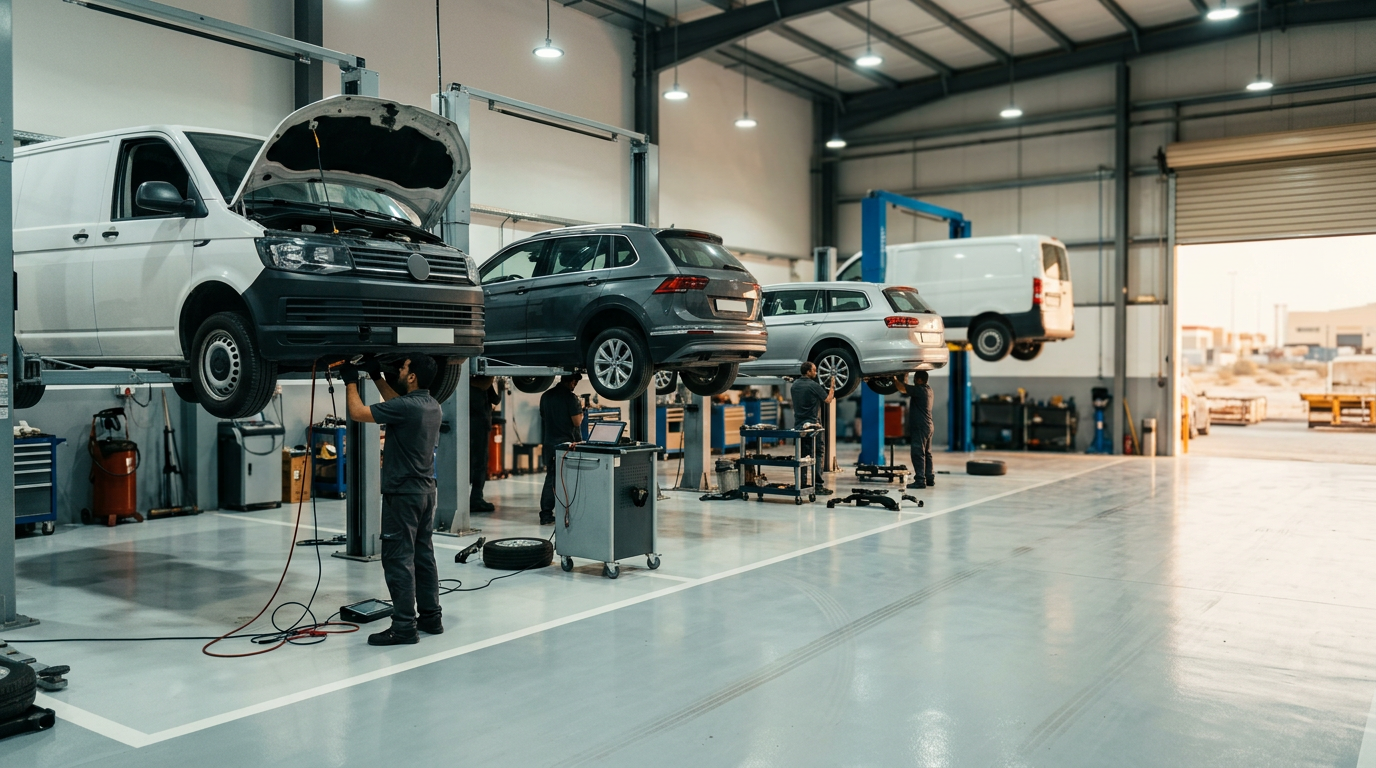
Independent workshops in Al Quoz and other service hubs report consistent patterns in battery services and failures. The majority of car batteries brought in for testing show measurably reduced cold cranking amps (CCA)—the standard measure of starting power—well before the vehicle fails to start. A new 12-volt automotive battery typically delivers 600 to 800 CCA depending on the vehicle, but in Dubai conditions, capacity often drops below 400 CCA within 18 months, especially in vehicles parked outdoors without shade.
Batteries in BMW, Audi, and Mercedes-Benz models with start-stop systems and high electrical loads (navigation, multiple screens, advanced driver assistance) show faster degradation if the battery type is not matched to the system. Many European vehicles require AGM (absorbent glass mat) batteries, which tolerate deep cycling better than standard flooded batteries but still suffer accelerated aging in heat.
Workshops also observe that vehicles used primarily for short city commutes—under 10 kilometers per trip—rarely allow the alternator to fully recharge the battery, leaving it in a partial state of charge. Combined with heat, this leads to hard sulfation, a condition where lead sulfate crystals grow large and permanent, reducing capacity irreversibly.
Comparative Failure Rates by Battery Type
| Battery Type | Typical Lifespan (Temperate Climate) | Observed Lifespan (Dubai Conditions) | Key Failure Mode in Heat |
|---|---|---|---|
| Flooded Lead-Acid | 4–5 years | 18–24 months | Electrolyte evaporation, sulfation |
| AGM Automotive Battery | 5–6 years | 24–36 months | Grid corrosion, thermal runaway |
| EFB (Enhanced Flooded) | 4–5 years | 20–30 months | Plate degradation, water loss |
| Lithium (12V Automotive) | 8–10 years | 4–6 years (estimated) | Capacity fade, thermal stress |
Note: Lifespans are workshop observations from vehicles serviced in Dubai and do not represent manufacturer warranty periods or guarantees.
Signs Your Car Battery Is Failing in Gulf Heat
Recognizing early symptoms can prevent being stranded. Common indicators include:
- Slow engine cranking, especially after the car has been parked in the sun
- Dashboard warning lights (battery or charging system)
- Dimming headlights or interior lights when the engine is idling
- Swollen or bloated battery case
- Corrosion around terminals (white or blue-green deposits)
- Age over 18 months in Dubai conditions, even if the car still starts
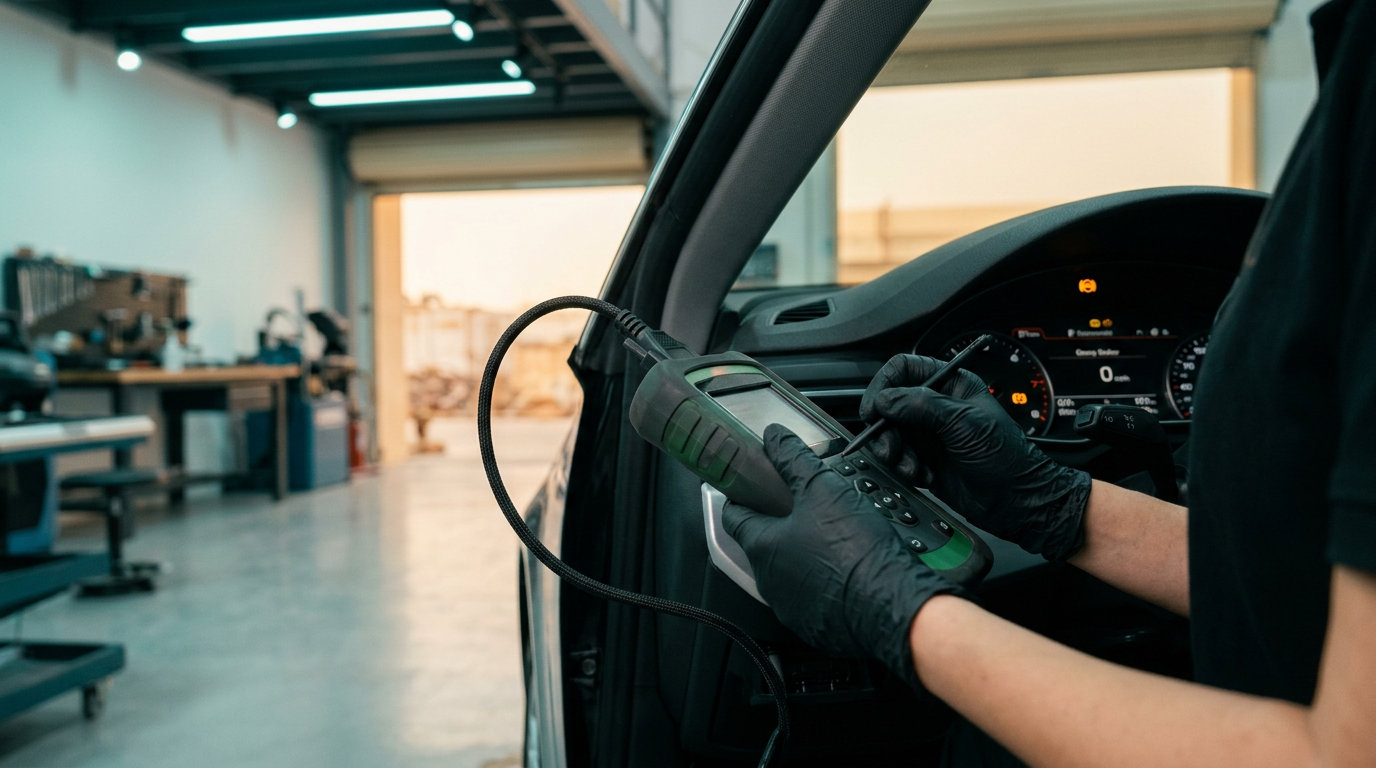
If you notice any of these signs, a diagnostic service can measure the battery's state of charge, CCA, and internal resistance to determine whether replacement is imminent. Many breakdowns occur not from a sudden failure but from a battery that has gradually lost capacity and finally cannot deliver enough current on a particularly hot day or after several short trips.
Testing and Replacement Considerations
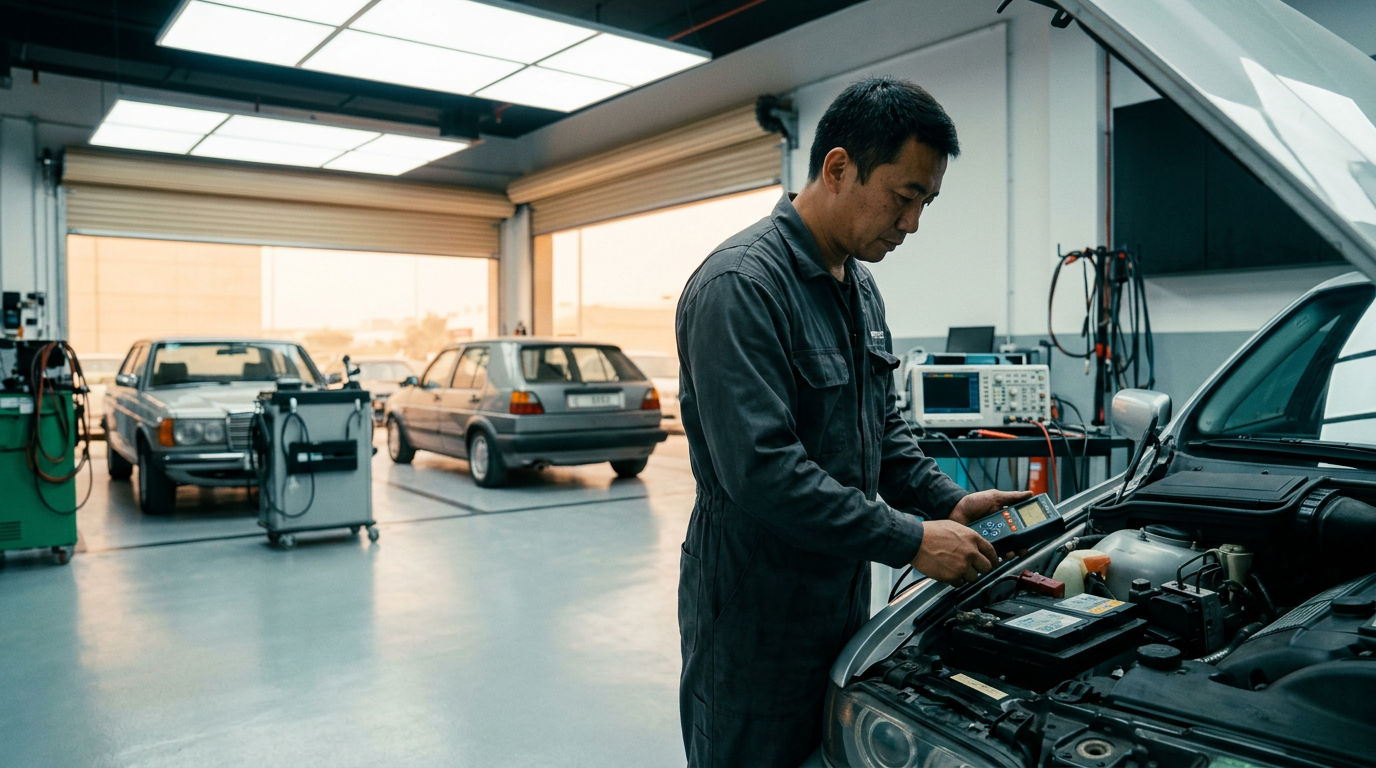
Professional battery testing uses a conductance or load tester to measure CCA and compare it to the battery's rated specification. A battery delivering less than 50% of its rated CCA is considered failed, even if the car still starts under light load. In Dubai, it is common practice to test batteries every 12 months, especially before summer.
When replacing a car battery, matching the correct BCI group size (the physical dimensions and terminal layout standardized by the Battery Council International) and the correct technology (flooded, AGM, EFB) is essential. Installing a standard flooded battery in a vehicle designed for AGM can lead to premature failure and may cause issues with start-stop systems or regenerative braking in hybrids. Choosing the right battery brand for UAE heat is covered in detail elsewhere.
Price ranges in the Dubai market for automotive batteries typically span from AED 250 for a basic flooded battery in a small sedan to AED 1,200 for a high-capacity AGM battery in a luxury or performance vehicle. Premium brands with higher heat tolerance and longer pro-rata warranties are common in the independent workshop channel.
Battery Maintenance to Extend Life in Dubai
While no maintenance can fully overcome the effects of extreme heat, several practices can help:
- Park in covered or shaded areas whenever possible to reduce under-bonnet temperatures.
- Keep battery terminals clean and apply a thin layer of dielectric grease to prevent corrosion.
- Drive longer trips occasionally (at least 20–30 minutes) to allow the alternator to fully recharge the battery.
- Have the charging system tested during routine general maintenance to ensure the alternator voltage is within specification (typically 13.8–14.4 volts).
- If the vehicle will be parked for extended periods, consider a trickle charger or battery maintainer to prevent deep discharge.
For vehicles with start-stop systems, ensure the battery management system is reset after replacement using manufacturer-grade diagnostic equipment; failure to do so can result in incorrect charging profiles and premature battery death.
Implications for Electric and Hybrid Vehicles
Electric vehicles and plug-in hybrids use large lithium-ion traction batteries, which also suffer from heat-related degradation, though the mechanisms differ from 12-volt automotive batteries. High ambient temperatures accelerate lithium plating, electrolyte decomposition, and solid-electrolyte interphase (SEI) layer growth, all of which reduce capacity and increase internal resistance over time.
Most modern EVs, including models from Polestar, Audi (e-tron), and Jaguar (I-PACE), incorporate active thermal management—liquid cooling or heating—to keep battery packs within an optimal 20–30°C range. However, frequent fast charging in Dubai's summer heat can still push cell temperatures above 40°C, shortening long-term cycle life. Workshop data from EVs serviced in the UAE suggest that battery capacity retention after three years is typically 85–92%, compared to 90–95% in cooler climates, though this varies significantly by make, model, and usage pattern.
Even EVs have a conventional 12-volt automotive battery (usually AGM or lithium) to power accessories and control systems, and these are subject to the same heat-related failures as in combustion-engine vehicles. Electrical and electronics diagnostics for EVs should include regular 12-volt battery health checks.
When to Replace vs Recharge
A common question is whether a dead car battery can simply be recharged or must be replaced. If the battery is less than 12 months old and has gone flat due to a known cause—such as leaving lights on or an extended period without driving—recharging may restore full function. However, if the battery is over 18 months old in Dubai conditions, or if it has been deeply discharged multiple times, internal damage (sulfation, grid corrosion) is likely permanent, and replacement is the safer option.
Testing is the only reliable way to distinguish between a recoverable discharge and a failed cell. Understanding whether the issue is the battery or the alternator can save both time and money, as replacing a good battery when the alternator is faulty will only result in another breakdown.
Conclusion: Plan for Shorter Service Life
Car battery failure rates in Gulf climates are measurably higher than in temperate regions, driven by the combined effects of extreme heat, short-trip driving, and high electrical loads. While published regional data are sparse, international research and consistent workshop observations confirm that most automotive batteries in Dubai require replacement every 18 to 30 months. Regular testing, appropriate battery selection (especially AGM for start-stop vehicles), and proactive replacement before total failure are the most effective strategies to avoid inconvenient breakdowns.
For owners of Porsche, Range Rover, BMW, and other European marques, using OEM-specification batteries and ensuring correct battery registration during replacement are critical to maintaining vehicle electronics and longevity. Independent workshops equipped with the right diagnostic tools can provide the same quality of battery service and testing as franchise networks, often with faster turnaround and transparent pricing.
Battery Testing & Replacement in Al Quoz
JAD Garage in Al Quoz 4 offers comprehensive battery diagnostics, testing, and replacement using OEM and premium alternative parts. Call +971 56 355 6113 or visit us Monday to Saturday, 09:00–19:00, for professional service backed by manufacturer-grade equipment.
Frequently asked questions