
Car Recovery in Abu Dhabi vs Dubai: Rules and Costs


Car recovery in Abu Dhabi and Dubai operates under similar UAE federal traffic law, but each emirate enforces its own municipal towing regulations, impound procedures and roadside assistance coverage zones. Abu Dhabi's larger desert expanse and island communities like Yas Island and Saadiyat Island demand longer response times, while Dubai's denser urban grid in Bur Dubai and Al Quoz enables faster professional recovery services. Typical market rates range from AED 200 to AED 800 depending on vehicle type, distance and time of day.
How Car Recovery Services Work in Both Emirates
Professional car recovery encompasses breakdown towing, roadside assistance, tyre changes, battery jump-starts, fuel delivery and basement pullout from underground car parks. In both Abu Dhabi and Dubai, licensed recovery operators use flatbed trucks for sports cars, wheel-lift systems for standard sedans and heavy-duty rigs for SUVs and luxury vehicles. The process begins with a call or WhatsApp message describing your location, vehicle type and issue.
Once dispatched, the recovery team typically arrives within 30 to 60 minutes in urban areas like Mohammed Bin Zayed City or Khalifa City in Abu Dhabi, and 20 to 45 minutes in central Dubai zones. Desert breakdowns—common on the E11 between emirates or off-road near Liwa—can extend response time to 90 minutes or more depending on coordinates and terrain.
After arrival, the team assesses whether a roadside repair is feasible or full towing is required. Simple fixes like a flat tyre or dead battery are often resolved on-site. If towing is necessary, the vehicle is secured and transported to your chosen workshop or home. For European marques such as BMW, Audi, Mercedes-Benz or Porsche, specialist facilities like JAD Garage in Al Quoz 4 are frequently requested destinations to ensure manufacturer-grade diagnostic services and proper car repair procedures.
Key Differences Between Abu Dhabi and Dubai Recovery Rules
Municipal Towing and Impound
Abu Dhabi Police and Dubai Police each operate their own impound yards and municipal towing contracts. In Abu Dhabi, vehicles parked illegally or abandoned on major roads like the Corniche or near Yas Island are towed to Abu Dhabi Municipality yards, with release fees starting around AED 500 plus daily storage. Dubai's impound system charges similar base fees but applies stricter penalties for repeat offences and vehicles blocking emergency lanes.
Private recovery services in both cities are prohibited from moving accident vehicles until police clearance is obtained. If your car is involved in a collision, the RTA or Abu Dhabi Police must issue a release before any towing company can transport it to a workshop for bodywork and paint repairs.
Coverage Zones and Response Times
Dubai's compact geography—roughly 35 km from north to south along Sheikh Zayed Road—means most recovery teams can reach Bur Dubai, Al Quoz or Jumeirah within 30 minutes. Abu Dhabi spans a much larger area, including island communities like Saadiyat Island and Yas Island, industrial zones in Musaffah and residential suburbs in Khalifa City. Recovery services based in central Abu Dhabi may quote 45 to 90 minutes for outlying areas, and desert callouts beyond the city limits often incur distance surcharges.
Desert and Off-Road Recovery
Abu Dhabi's proximity to vast desert terrain means recovery operators there are more commonly equipped for sand extractions and dune rescues. Specialist teams use sand ladders, winches and deflation kits to free vehicles stuck in soft sand. Dubai-based services also offer desert recovery, but most operators subcontract to Abu Dhabi or Al Ain teams for deep-desert incidents. If you regularly drive off-road in a Land Rover or modified SUV, confirm that your recovery provider carries the right equipment and insurance for desert terrain.
Types of Roadside Assistance and Recovery Services
- Flatbed towing: Essential for low-clearance sports cars like Ferrari, Lamborghini or McLaren to prevent undercarriage damage.
- Wheel-lift towing: Standard method for sedans and hatchbacks; front or rear wheels lifted, opposite end rolls.
- Basement pullout: Specialised winching from underground car parks with low ceilings, common in Dubai Marina and Abu Dhabi's newer towers.
- Battery jump-start: On-site boost for dead batteries; the team may recommend a battery services check if the cell is weak.
- Tyre change: Fitting your spare wheel roadside; if the spare is also flat, towing to a tyre services centre is necessary.
- Fuel delivery: Emergency petrol or diesel drop-off, typically 5–10 litres to reach the nearest station.
- Lockout assistance: Gaining entry when keys are locked inside; most teams carry slim-jim tools or can call a locksmith.
For European vehicles, always verify that the recovery team understands electronic parking brakes, air suspension transport modes and battery-disconnect procedures. Incorrect towing can trigger fault codes that require ECU programming or electrical and electronics diagnostics to clear.
Typical Market Costs for Car Recovery in Abu Dhabi and Dubai
Prices vary by vehicle class, distance, time of day and service type. The table below shows typical market ranges across Dubai and Abu Dhabi as of 2025; these are not JAD Garage prices but reflect what most licensed operators charge.
| Service Type | Sedan / Hatchback (AED) | SUV / Luxury (AED) | Sports Car / Supercar (AED) |
|---|---|---|---|
| Roadside assistance (battery, tyre) | 150 – 250 | 200 – 300 | 250 – 400 |
| Local towing (up to 20 km) | 200 – 350 | 300 – 500 | 500 – 800 |
| Inter-emirate towing (Abu Dhabi ↔ Dubai) | 500 – 700 | 700 – 1,000 | 1,000 – 1,500 |
| Basement pullout | 300 – 450 | 400 – 600 | 600 – 900 |
| Desert recovery (per hour) | 400 – 600 | 600 – 900 | 900 – 1,200 |
Night surcharges (22:00–06:00) typically add 20–30 per cent, and public holidays may incur an additional AED 100–200 call-out fee. Always request a quote that specifies vehicle type, pickup location and destination before authorising the service.
What to Ask Before You Call a Recovery Service
Speed and professionalism matter when you're stranded in 50°C heat or blocking traffic on Sheikh Zayed Road. Before committing to a provider, confirm the following:
- Response time: Ask for an estimated arrival window based on your exact location.
- Equipment type: Flatbed for low sports cars, wheel-lift for standard vehicles, winch for basement or sand extraction.
- Insurance and licensing: Verify the operator holds valid UAE commercial vehicle insurance and municipal permits.
- Destination flexibility: Ensure they can tow to your preferred workshop, not just a pre-arranged panel shop.
- Payment methods: Most accept cash and card; some invoice corporate accounts or fleet services clients.
If your vehicle is a high-value European or electric model—such as a Porsche Taycan, Audi e-tron or Polestar—request confirmation that the team is trained in EV safety and transport protocols. Incorrect lifting points or battery-disconnect errors can cause expensive damage that voids manufacturer guidelines.
24/7 Availability and Emergency Contacts
Most professional recovery services in Abu Dhabi and Dubai operate around the clock, including Fridays and public holidays. WhatsApp is widely used for sharing live location pins, photos of the breakdown and vehicle registration details. Keep your insurance policy number and car registration card (Mulkiya) accessible; some insurers include complimentary towing within their comprehensive cover, though mileage limits and approved-provider lists often apply.
For breakdowns in remote areas—such as the road to Liwa or the Hatta mountain route—ensure your phone has signal or carry a portable hotspot. GPS coordinates sent via WhatsApp significantly speed up dispatch in the desert, where street names and landmarks are sparse.
After Recovery: Choosing the Right Workshop
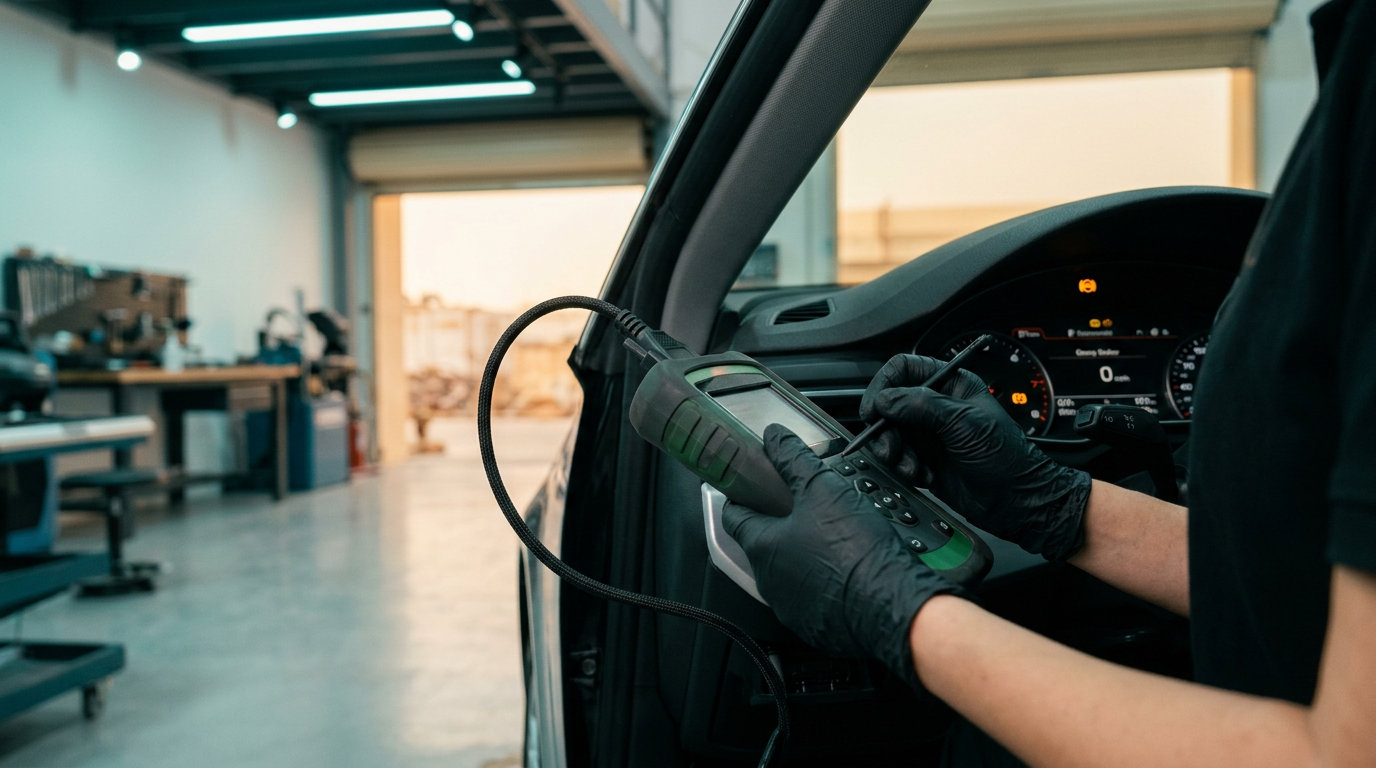
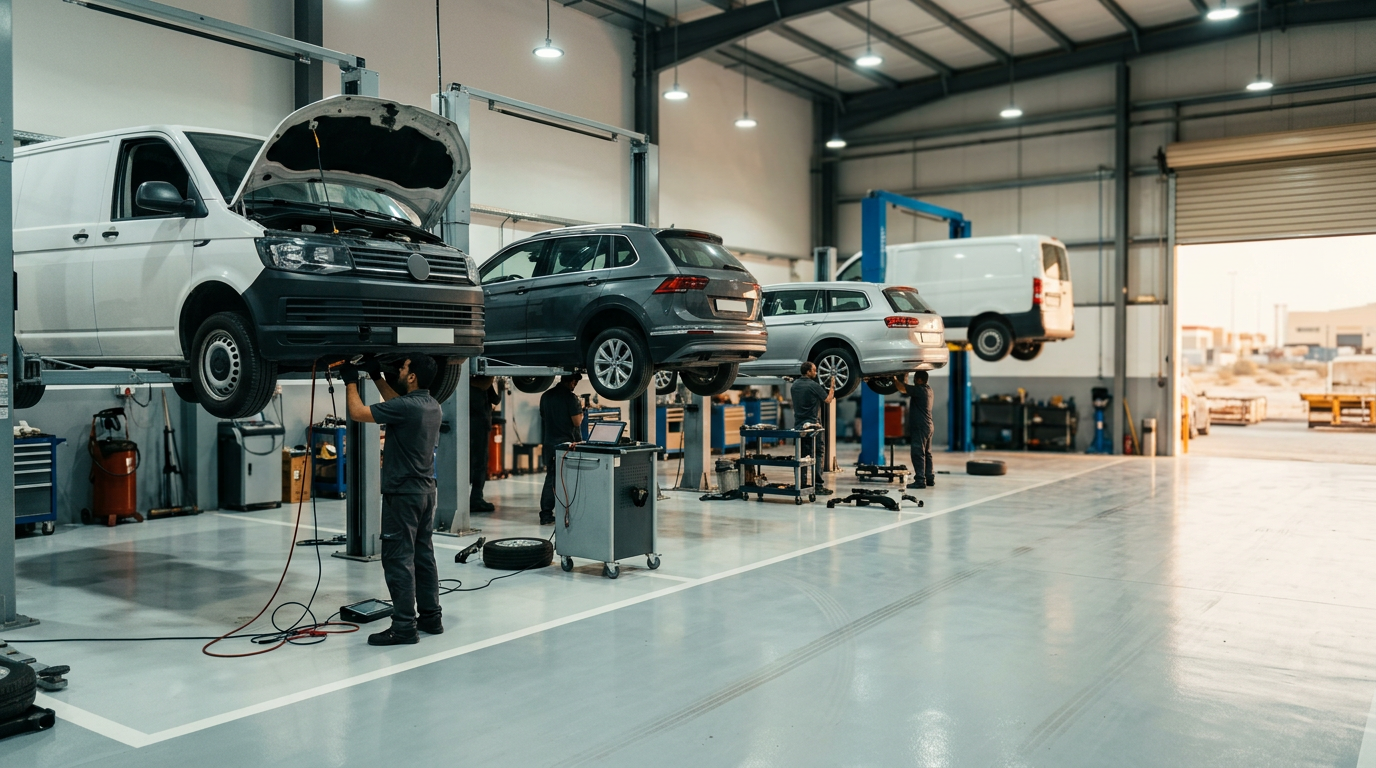
Once your car is safely transported, selecting a workshop equipped for your vehicle's make is critical. European marques like BMW, Mercedes-Benz, Audi, Volkswagen and Volvo require manufacturer-grade diagnostic tools to read fault codes, perform ECU programming and reset service intervals. Independent specialists with OEM-equivalent equipment offer the same technical capability at more transparent pricing.
For routine post-recovery checks—battery services, tyre services, suspension and steering inspection or general maintenance—choose a facility that maintains detailed service records and sources genuine or premium alternative parts. This approach ensures reliability in Dubai's heat and stop-start traffic without unnecessary dealer markups.
When to Use Recovery vs Roadside Repair
Not every breakdown requires a tow truck. Professional roadside assistance teams can often resolve common issues on-site:
- Dead battery: Jump-start and drive to a workshop for testing and replacement if needed.
- Flat tyre: Swap to the spare and continue; book a tyre services appointment to repair or replace the damaged wheel.
- Overheating: Top up coolant and identify the leak; if the engine won't restart, towing is necessary to prevent head-gasket damage.
- Key fob failure: Replace the coin-cell battery in the fob; if the immobiliser is triggered, diagnostic services are required.
More complex faults—check-engine lights, transmission warnings, ABS or airbag errors—demand workshop-level diagnostics. If you see a warning symbol or hear unusual noises, avoid driving further and request a tow to prevent secondary damage. For guidance on warning lights, read our article on check engine light on in Dubai.
Corporate and Fleet Recovery Contracts
Businesses operating vehicle fleets in Abu Dhabi and Dubai often negotiate annual recovery contracts with fixed call-out fees and priority response. Corporate accounts benefit from consolidated invoicing, dedicated account managers and service-level agreements that guarantee maximum response times. For companies running European or EV fleets—Volkswagen Transporter vans, BMW 5 Series or Polestar 2 electric cars—partnering with a specialist workshop that offers both recovery coordination and scheduled maintenance simplifies fleet management and reduces downtime.
Related reading: Car Towing Service in Dubai: What to Expect When You Break Down.
Need Expert Service After Recovery in Dubai?
JAD Garage in Al Quoz 4 provides manufacturer-grade diagnostics and repair for all European and EV models. Open Monday to Saturday, 09:00–19:00. Call +971 56 355 6113 or WhatsApp to book your inspection today.
Frequently asked questions