
Check Engine Light On in Dubai: What to Do Before You Drive

If your check engine light is on in Dubai, pull over immediately if it's flashing or if you notice smoke, unusual smells, or loss of power. A steady light usually means you can drive carefully to a workshop for diagnostics. Don't ignore it—heat, dust, and city driving accelerate engine wear, and small issues can escalate quickly in the UAE climate.
What Does the Check Engine Light Actually Mean?
The check engine light—sometimes labelled as a malfunction indicator lamp—is triggered when your car's ECU detects a fault in the engine, emissions, or related systems. It doesn't tell you what's wrong, only that a sensor has recorded a value outside normal parameters and stored a diagnostic trouble code.
Modern European cars from BMW, Audi, Mercedes-Benz, and other brands have dozens of sensors monitoring everything from oxygen levels in the exhaust to camshaft timing. When one reports an anomaly, the ECU logs a code and illuminates the light. The code might point to a loose fuel cap or a failing catalytic converter—you won't know until a proper scan is performed.
In Dubai's heat, certain faults appear more often. High ambient temperatures stress cooling systems, accelerate oil degradation, and cause fuel to evaporate faster, all of which can trigger warning lights. Fine sand infiltrates air filters and intake systems, sometimes affecting the MAF sensor or throttle body. Stop-start traffic and short city trips prevent the engine from reaching full operating temperature, which can foul spark plugs and oxygen sensors over time.
Flashing vs Steady: When to Stop Driving Immediately
A flashing check engine light indicates a severe misfire or combustion problem that can damage the catalytic converter within minutes. If the light blinks, pull over safely as soon as possible, turn off the engine, and arrange a tow. Continuing to drive risks expensive damage—catalytic converters in European cars can cost thousands of dirhams to replace, and heat from misfires can warp exhaust components.
A steady light means the ECU has detected a fault but considers it non-critical. You can usually drive to a workshop, but avoid hard acceleration, high speeds, or long highway runs until the issue is diagnosed. If you notice any of the following alongside a steady light, stop driving:
- Smoke from the exhaust or under the bonnet
- Strong smell of fuel, burning oil, or coolant
- Sudden loss of power or rough idling
- Temperature gauge climbing into the red zone
- Unusual knocking, grinding, or rattling noises
In Dubai's summer heat—often exceeding 45°C—cooling system faults escalate quickly. A small coolant leak or failing thermostat can cause overheating within minutes, especially in Al Quoz or Jebel Ali traffic where airflow is minimal.
Common Causes of Check Engine Light Activation in Dubai
Diagnostic data from European and performance car service centres in the UAE show a pattern of faults linked to local driving and climate conditions:
Oxygen Sensors and Air-Fuel Mixture
Oxygen sensors monitor exhaust gases to help the ECU maintain the correct air-fuel ratio. High heat and short trips cause sensors to degrade faster. A faulty oxygen sensor reduces fuel economy and can damage the catalytic converter if left unaddressed. Typical lifespan in the UAE is 60,000–100,000 km, shorter than in cooler climates.
Mass Airflow Sensor Contamination
Fine desert sand clogs air filters and coats the MAF sensor element, causing incorrect airflow readings. The ECU then injects too much or too little fuel, triggering the light and reducing performance. Regular air filter changes—every 10,000–15,000 km in dusty conditions—help prevent this.
Loose or Damaged Fuel Cap
A loose, cracked, or missing fuel cap allows fuel vapour to escape, which the evaporative emissions system detects as a leak. It's the simplest cause and the easiest fix—check the cap is tight and the seal intact before driving to a workshop.
Spark Plugs and Ignition Coils
Stop-start city driving and short trips prevent spark plugs from burning off carbon deposits. Fouled plugs cause misfires, rough idling, and poor acceleration. Ignition coils also fail more often in high heat. Spark plug replacement intervals for European cars are typically 40,000–60,000 km, but Dubai conditions may shorten this.
Catalytic Converter Failure
A failing catalytic converter is often the result of ignored upstream faults—misfires, oil consumption, or bad oxygen sensors. Replacement is expensive, so addressing check engine light warnings early saves money. Symptoms include a rattling noise from under the car, reduced power, and poor fuel economy.
Thermostat and Cooling System Faults
A stuck-open thermostat prevents the engine from reaching operating temperature, triggering emissions-related codes. Conversely, a stuck-closed thermostat causes overheating. Both scenarios are common in Dubai, where cooling systems work hard year-round. Engine services should include regular coolant flushes and thermostat checks.
How Check Engine Light Diagnostics Work
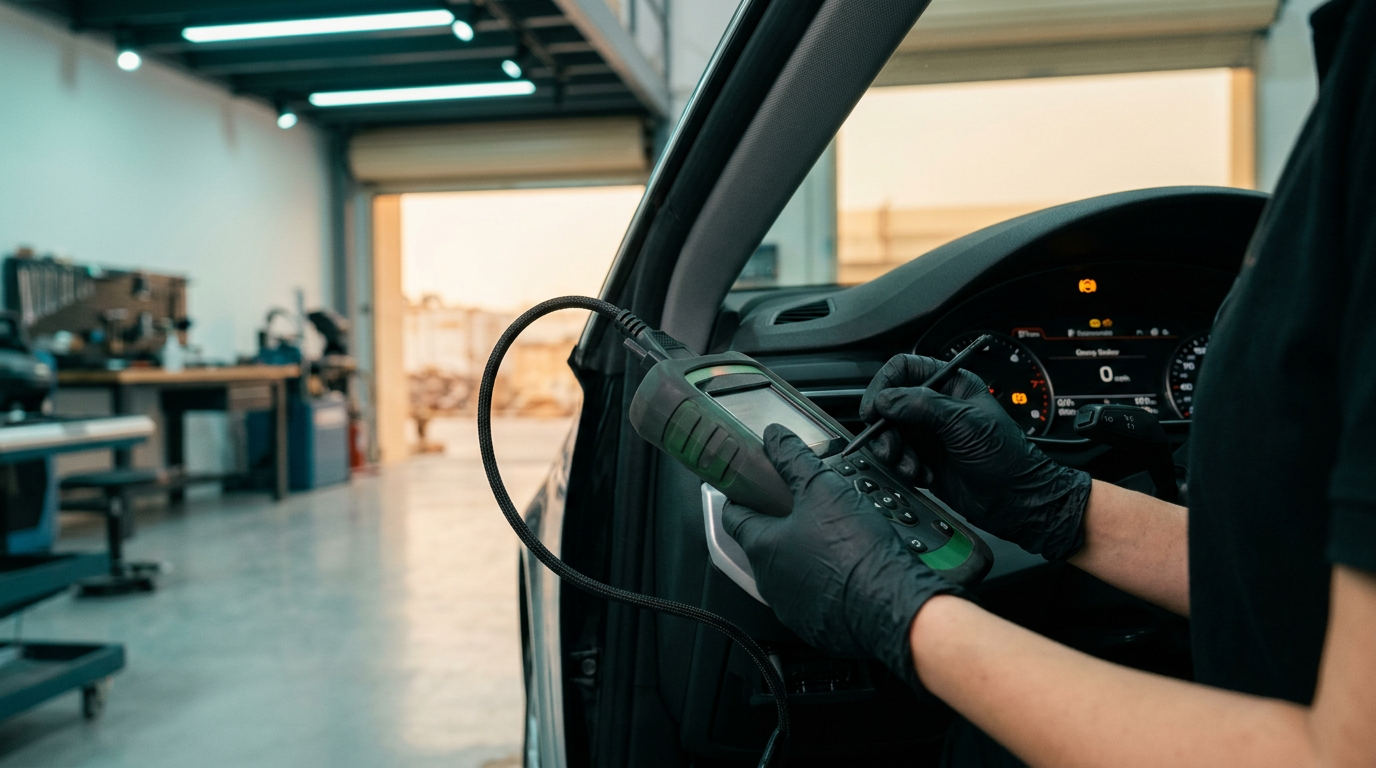
Professional diagnostics begin with an OBD2 scan using manufacturer-grade equipment. Generic code readers from auto parts shops retrieve basic codes but lack the depth needed for European cars. BMW, Audi, Mercedes-Benz, and Porsche require brand-specific software to access live data, freeze-frame information, and module-specific codes.
A typical diagnostic service involves:
- Connecting the scan tool and retrieving all stored and pending codes
- Reviewing freeze-frame data to see conditions when the fault occurred
- Inspecting related components—sensors, wiring, hoses, and connectors
- Testing sensor outputs with a multimeter or oscilloscope
- Checking service history for patterns or recurring issues
- Road-testing the car to replicate the fault if needed
Diagnostics typically take 30–60 minutes, depending on complexity. A single code might point to multiple potential causes, so experienced technicians cross-reference symptoms, service records, and known failure points for your model. For detailed insight into what a scan reveals, see our guide on what an OBD diagnostic scan actually tells a mechanic.
Typical Diagnostic and Repair Costs in Dubai
Diagnostic scans at independent workshops in Dubai typically range from AED 150 to AED 400, depending on the vehicle and equipment required. Repair costs vary widely based on the fault:
| Fault | Typical Market Range (AED) |
|---|---|
| Tighten or replace fuel cap | 0–150 |
| Replace oxygen sensor | 400–1,200 |
| Clean or replace MAF sensor | 300–900 |
| Replace spark plugs (set of 4–8) | 400–1,500 |
| Replace ignition coil | 300–800 each |
| Replace thermostat | 500–1,500 |
| Replace catalytic converter | 3,000–12,000+ |
Prices reflect typical ranges across Dubai garages and vary by brand, model, and parts choice. OEM parts cost more but guarantee fitment and longevity; premium aftermarket alternatives offer good value for older vehicles. For more on this trade-off, read OEM vs aftermarket parts: when each makes sense.
Can You Use a DIY OBD2 Scanner?
Consumer OBD2 scanners and smartphone apps can read basic codes, which helps you understand the general area of the fault. However, they don't provide the depth needed for accurate diagnosis on European cars. Generic scanners retrieve powertrain codes (P-codes) but often miss body, chassis, and network codes (B, C, U-codes) stored in other modules.
More importantly, a code like P0171 (system too lean, bank 1) could stem from a vacuum leak, faulty MAF sensor, failing fuel pump, clogged injector, or even a software glitch. Identifying the root cause requires live data analysis, component testing, and experience with common failure modes—work best left to a workshop with the right tools and knowledge.
If you do use a DIY scanner, note the codes and any symptoms, then book a professional diagnostic. Clearing codes without fixing the underlying issue just resets the light temporarily; the fault will return, and you may miss the chance to prevent more serious damage.
Preventing Check Engine Light Issues in Dubai
Regular maintenance tailored to UAE conditions reduces the likelihood of check engine light warnings:
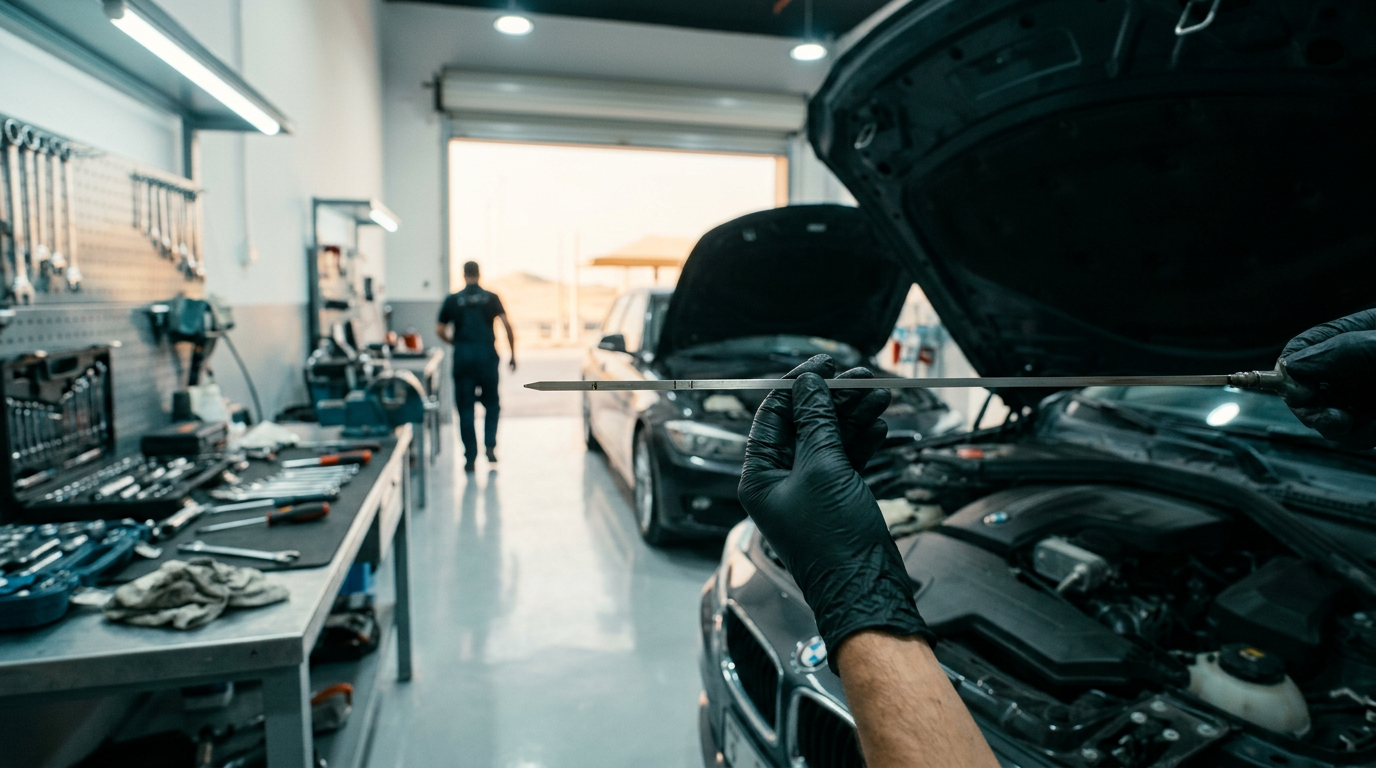
- Change engine oil every 7,500–10,000 km or six months, whichever comes first, using the correct viscosity for high heat
- Replace air filters every 10,000–15,000 km to prevent MAF sensor contamination
- Inspect and replace spark plugs at manufacturer intervals, or sooner if you do mostly short trips
- Flush coolant every two years to prevent corrosion and overheating
- Check fuel cap seal and tighten after every refuel
- Address warning lights promptly—small faults escalate quickly in extreme heat
For comprehensive care, follow your manufacturer's service schedule and adapt it to local conditions. European brands like Audi, BMW, and Mercedes-Benz have flexible service intervals based on oil quality sensors, but Dubai heat and dust often mean shorter real-world intervals are safer. Our article on dealer vs specialist garage servicing explores how independent workshops handle scheduled maintenance with the same rigour at better value.
Where to Get Reliable Check Engine Light Diagnostics in Dubai
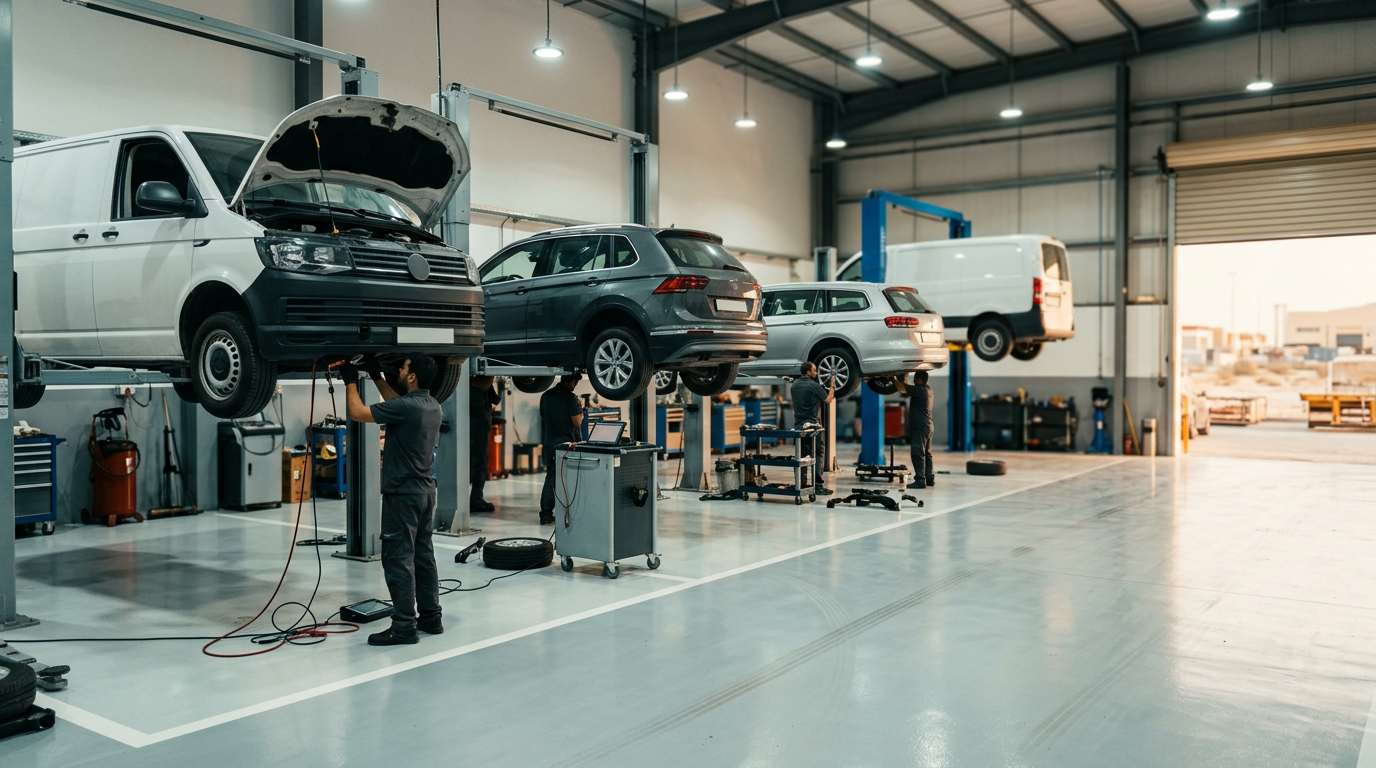
Independent European car specialists in Al Quoz, Dubai, offer manufacturer-grade diagnostics without the premium of main-dealer pricing. Look for workshops with brand-specific scan tools, experienced technicians familiar with common UAE-related faults, and transparent pricing for both diagnostics and repairs.
JAD Garage in Al Quoz 4 provides comprehensive diagnostic services for European and EV brands, using the same equipment as main dealers to read codes, analyze live data, and pinpoint faults accurately. Whether it's a simple sensor issue or a complex engine fault, the workshop handles everything from initial scan to engine repair, electrical diagnostics, and ECU programming.
For brands prone to specific faults—BMW N20/B48 timing chain issues, Range Rover common problems, or MINI Cooper faults—experienced workshops recognize patterns and fix the root cause, not just clear the code.
Final Thoughts
A check engine light is your car's way of asking for help. In Dubai's demanding climate, ignoring it risks turning a minor sensor fault into an expensive repair. Whether the light is steady or flashing, getting a proper diagnostic scan quickly gives you the information you need to make the right decision—and keeps your car reliable in the heat, dust, and traffic of the UAE.
If you're unsure what's causing the light or need a second opinion, book a diagnostic appointment with a specialist who understands European cars and local conditions. The sooner you know what's wrong, the sooner you're back on the road with confidence.
Check Engine Light On? Get It Diagnosed Today
JAD Garage in Al Quoz 4 offers fast, accurate diagnostics for all European and EV brands using manufacturer-grade equipment. Call +971 56 355 6113 or visit us Monday to Saturday, 9 AM–7 PM, for same-day check engine light diagnostics and transparent repair advice.
Frequently asked questions