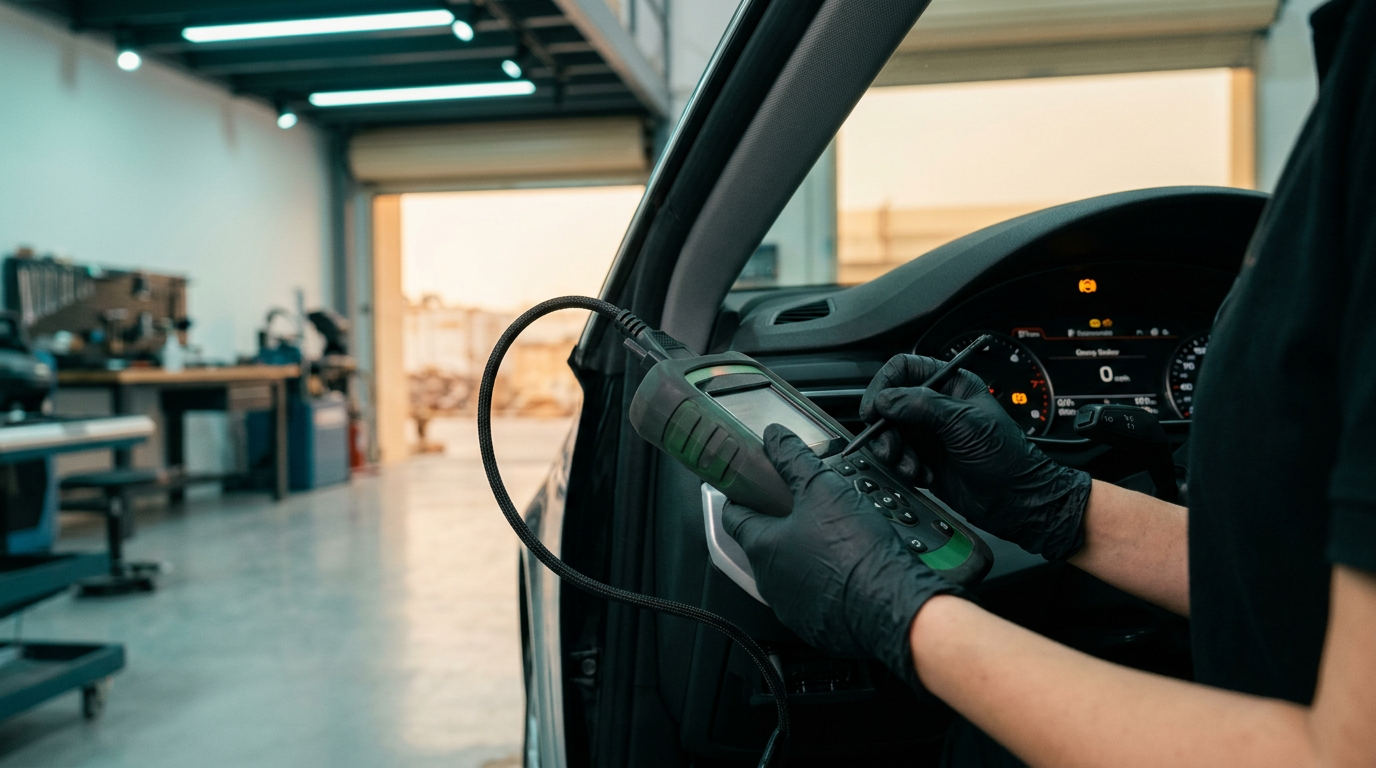

What Does an OBD Diagnostic Scan Actually Tell a Mechanic?

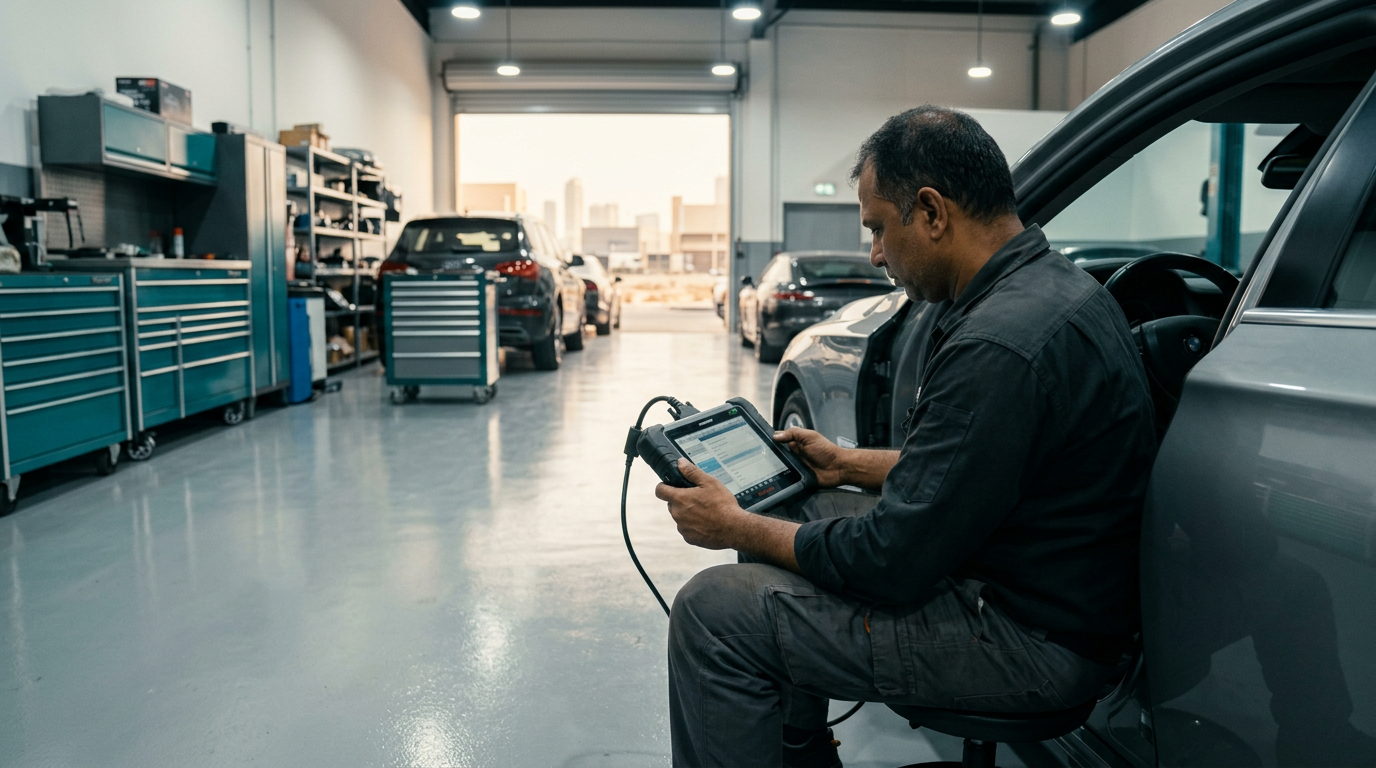
An OBD diagnostic scan connects to your vehicle's onboard computer and retrieves stored error codes that identify faults in the engine, transmission, ABS, airbags, emissions, and dozens of other systems. The mechanic interprets these codes alongside live sensor data to pinpoint failing components, intermittent problems, and performance issues that aren't always obvious from symptoms alone.
What Is a Car Diagnostic Test?
A car diagnostic test uses a scanner plugged into the OBD-II port—usually located under the dashboard near the steering column—to communicate with your vehicle's electronic control units. Modern cars contain multiple computers managing everything from fuel injection timing to climate control, and each logs fault codes when sensors detect readings outside normal parameters.
The test retrieves these codes, displays live data streams showing real-time sensor values, and often includes readiness monitors that confirm whether emission systems have completed their self-checks. For European cars common in Dubai—BMW, Mercedes-Benz, Audi, Porsche, Range Rover—manufacturer-specific diagnostic tools reveal far more detail than generic OBD-II scanners, accessing proprietary modules and adaptation values that generic tools cannot read.
How Does a Diagnostic Test Work?
The mechanic connects the scanner, turns the ignition to the 'on' position (engine may or may not need to run), and selects the vehicle make, model, and year. The tool queries each control module—engine, transmission, ABS, airbag, body control, infotainment—and retrieves any stored fault codes.
Each code consists of a letter and four digits. The letter indicates the system: P for powertrain (engine and transmission), B for body, C for chassis, and U for network communication. The first digit shows whether it's a generic code (0) or manufacturer-specific (1). The remaining three digits identify the specific fault.
Beyond codes, the mechanic reviews live data: coolant temperature, oxygen sensor voltages, throttle position, fuel trims, boost pressure in turbocharged engines, and battery voltage. In Dubai's heat—where ambient temperatures hit 50°C and under-bonnet temps exceed 80°C—sensor drift and heat-related faults are common, and live data reveals whether readings fall within normal ranges for operating conditions.
What Vehicle Systems Are Checked During the Test?
A comprehensive diagnostic test interrogates every electronic system in the car. The breadth depends on the scanner and the vehicle's architecture, but typically includes:
- Engine management: fuel injection, ignition timing, turbocharger control, variable valve timing, emissions controls including catalytic converters and EGR valves.
- Transmission: shift solenoids, clutch pressures, torque converter lock-up, gear position sensors—critical for DSG, ZF, and other complex automatic gearboxes common in European cars.
- ABS and stability control: wheel speed sensors, hydraulic pump, yaw and lateral acceleration sensors.
- Airbag system: crash sensors, seat occupancy sensors, belt pre-tensioners.
- Climate control: compressor clutch, refrigerant pressure sensors, blend door actuators—especially relevant given Dubai's reliance on air conditioning year-round.
- Body electronics: central locking, window regulators, seat memory, adaptive lighting.
- Battery and charging: alternator output, battery state of charge, voltage drops—vital in the UAE where battery life is shortened by heat.
For electric and hybrid vehicles, diagnostics also cover high-voltage battery health, cell balance, inverter status, and regenerative braking systems. EV servicing relies heavily on diagnostic data because there are fewer mechanical symptoms to observe.
What Kind of Problems Can a Diagnostic Test Identify?
Diagnostic tests excel at catching issues before they cause breakdowns or expensive damage. Common faults revealed include:
- Misfires: codes pinpoint which cylinder is misfiring, often caused by faulty ignition coils, spark plugs, or fuel injectors.
- Oxygen sensor failures: these sensors degrade over time and cause poor fuel economy and rough idling.
- Mass airflow sensor faults: sand and dust ingress in Dubai can contaminate the sensor, leading to incorrect fuel metering.
- Thermostat stuck open: the engine runs too cool, triggering codes and reducing efficiency—less common in hot climates but still occurs.
- Transmission solenoid issues: codes identify which solenoid is sticking or failing, preventing harsh shifts or slipping gears.
- ABS sensor problems: a faulty wheel speed sensor triggers the ABS light and disables stability control.
- Evaporative emission leaks: loose fuel caps or cracked hoses trigger codes, though these are less critical for safety.
- Battery and alternator faults: low voltage codes warn of charging system issues before you're stranded. Battery care is especially important in the UAE heat.
Crucially, diagnostics also reveal intermittent faults. A code stored as 'pending' or 'historic' indicates a problem that occurred once but hasn't repeated—yet. Mechanics use freeze-frame data, which records sensor values at the moment the fault occurred, to understand the conditions that triggered it.
What a Diagnostic Test Cannot Tell You
While powerful, diagnostics have limits. A code points to a symptom, not always the root cause. For example, a misfire code might result from a bad coil, a worn spark plug, low compression, a vacuum leak, or contaminated fuel. The mechanic must use experience and further tests—compression checks, smoke tests, visual inspections—to confirm the underlying issue.
Diagnostics also won't detect purely mechanical problems with no electronic sensor involvement: worn bushings, leaking dampers, noisy wheel bearings, or oil leaks from gaskets. A suspension problem might not throw a code unless an electronic damping system is involved.
Similarly, bodywork damage, paint condition, and interior wear require physical inspection. A pre-purchase inspection combines diagnostic scanning with a thorough visual and mechanical check to assess a used car's true condition.
When Should I Get a Diagnostic Test Done?
The most obvious trigger is the check engine light. This dashboard warning means the engine control unit has logged a fault code. Ignoring it risks further damage—a minor misfire can destroy a catalytic converter if left unaddressed, turning a 300 AED coil replacement into a 4,000+ AED repair.
Other warning lights—ABS, airbag, transmission, battery—also warrant immediate diagnostics. Even if the car seems to drive normally, a logged fault compromises safety systems or emissions controls.
Beyond warning lights, consider a diagnostic check if you notice:
- Rough idling or hesitation during acceleration
- Unexplained drops in fuel economy
- Unusual noises that might relate to electronic systems (fuel pump whine, solenoid clicks)
- Intermittent electrical issues: flickering lights, erratic gauge readings
- Before and after oil changes or major service to clear adaptation values or confirm system health
For used car buyers in Dubai, a diagnostic scan is essential. Many sellers reset codes before listing, and a scan will reveal pending or recently cleared faults. Combine it with a full pre-purchase inspection to avoid expensive surprises, especially on complex models like Maserati, Jaguar, or Aston Martin.
How Much Does a Car Diagnostic Test Typically Cost in Dubai?
Diagnostic test pricing in Dubai varies by workshop and equipment. Independent specialists using manufacturer-grade tools typically charge between 150 and 400 AED for a comprehensive scan covering all modules. Basic OBD-II scans at quick-service centres may cost 100–200 AED but provide limited data and no access to proprietary systems.
For European and luxury brands—BMW, Mercedes-Benz, Audi, Porsche, Land Rover—factory-level diagnostics require brand-specific software (ISTA, Xentry, ODIS, PIWIS, SDD) and often cost toward the higher end of that range. The investment is worthwhile: accurate fault identification saves hours of trial-and-error repairs and prevents misdiagnosis.
Some workshops include a basic diagnostic scan as part of a service or inspection package. Always ask whether the quoted diagnostic fee covers all modules or just the engine, and whether a printed report with fault codes and live data is provided.
Benefits of Regular Diagnostic Tests for Car Maintenance
Proactive diagnostics catch small issues before they escalate. A pending code for a failing oxygen sensor, addressed early, costs a few hundred dirhams. Left until it damages the catalytic converter, the bill jumps to thousands.
Regular scans also establish a baseline for your vehicle's electronic health. Comparing live data over time reveals gradual sensor drift, declining battery performance, or fuel trim adjustments that hint at air leaks or injector wear. This is particularly useful for high-mileage European cars and classic cars where sensor degradation is inevitable.
For fleet operators and corporate accounts managing multiple vehicles, scheduled diagnostics reduce unexpected downtime and extend service intervals by addressing faults early. Fleet services often include periodic scanning as part of preventive maintenance.
Diagnostics also verify repair quality. After engine work, transmission repairs, or electrical troubleshooting, a post-repair scan confirms that fault codes are cleared, adaptations are reset, and all systems communicate correctly. This is standard practice at specialist workshops and protects you from recurring faults.
Choosing the Right Diagnostic Service in Dubai
Not all diagnostic tools are equal. Generic OBD-II scanners read basic powertrain codes but miss manufacturer-specific modules, live data parameters, and adaptation settings. For European brands, insist on workshops equipped with factory-level diagnostic platforms.
Ask whether the workshop provides a printed or emailed diagnostic report. A professional scan includes fault codes, descriptions, freeze-frame data, and live sensor readings—not just a verbal summary. This documentation is invaluable for tracking recurring issues or getting second opinions.
Experience matters as much as equipment. Interpreting diagnostic data requires understanding how systems interact, recognizing heat-related faults common in Dubai, and knowing model-specific quirks. Workshops specialising in European and luxury marques bring that depth of knowledge, whether you drive a BMW, Mercedes-Benz, Audi, Porsche, Range Rover, Volvo, or MINI.
For electric vehicles like Polestar, Audi e-tron, or Jaguar I-PACE, ensure the workshop has EV-specific diagnostic capability and high-voltage safety certification. EV diagnostics cover battery health, cell voltages, thermal management, and inverter performance—areas where generic tools provide no insight.
Related reading: Wheel Alignment vs Balancing: What Your Car Actually Needs.
Get a Professional Diagnostic Scan in Al Quoz
JAD Garage in Al Quoz 4 uses manufacturer-grade diagnostic equipment for European and electric vehicles. Our technicians provide detailed fault reports and honest repair advice. Call +971 56 355 6113 or visit us Monday to Saturday, 09:00–19:00.
Frequently asked questions