
EV Servicing in Dubai: What Electric Cars Still Need

Electric vehicles in Dubai still need regular servicing despite having no engine oil to change. EVs require tyre rotation every 10,000 km, brake fluid replacement every two years, coolant system checks, cabin air filters, AC refrigerant top-ups, suspension and steering inspections, and software updates to maintain safety, efficiency, and battery health in the UAE's extreme climate.
The Services Electric Cars Still Need
Switching to an electric vehicle doesn't mean maintenance disappears. While you'll never need an oil change or spark plug replacement, EVs share many components with petrol cars and introduce new systems that require specialist attention.
Tyres and Alignment
Electric motors deliver instant torque from zero rpm, which accelerates tyre wear compared to conventional engines. The additional weight of battery packs—often 200–700 kg more than equivalent petrol models—increases load on all four corners. In Dubai's heat, where asphalt temperatures exceed 70°C in summer, tyre compound degradation happens faster.
Most EV manufacturers recommend tyre rotation every 10,000–12,000 km. Wheel alignment should be checked every 15,000 km or whenever you hit a kerb or deep pothole. Misalignment on an EV wastes battery range and can cost you 5–8% of your total driving distance.
Brake System
Regenerative braking means your friction brakes do less work, but that creates a different problem: brake discs and pads can develop surface rust and corrosion from sitting unused, especially in Dubai's humid coastal air. Brake fluid still absorbs moisture over time and needs replacement every two years, exactly as it does in petrol cars.
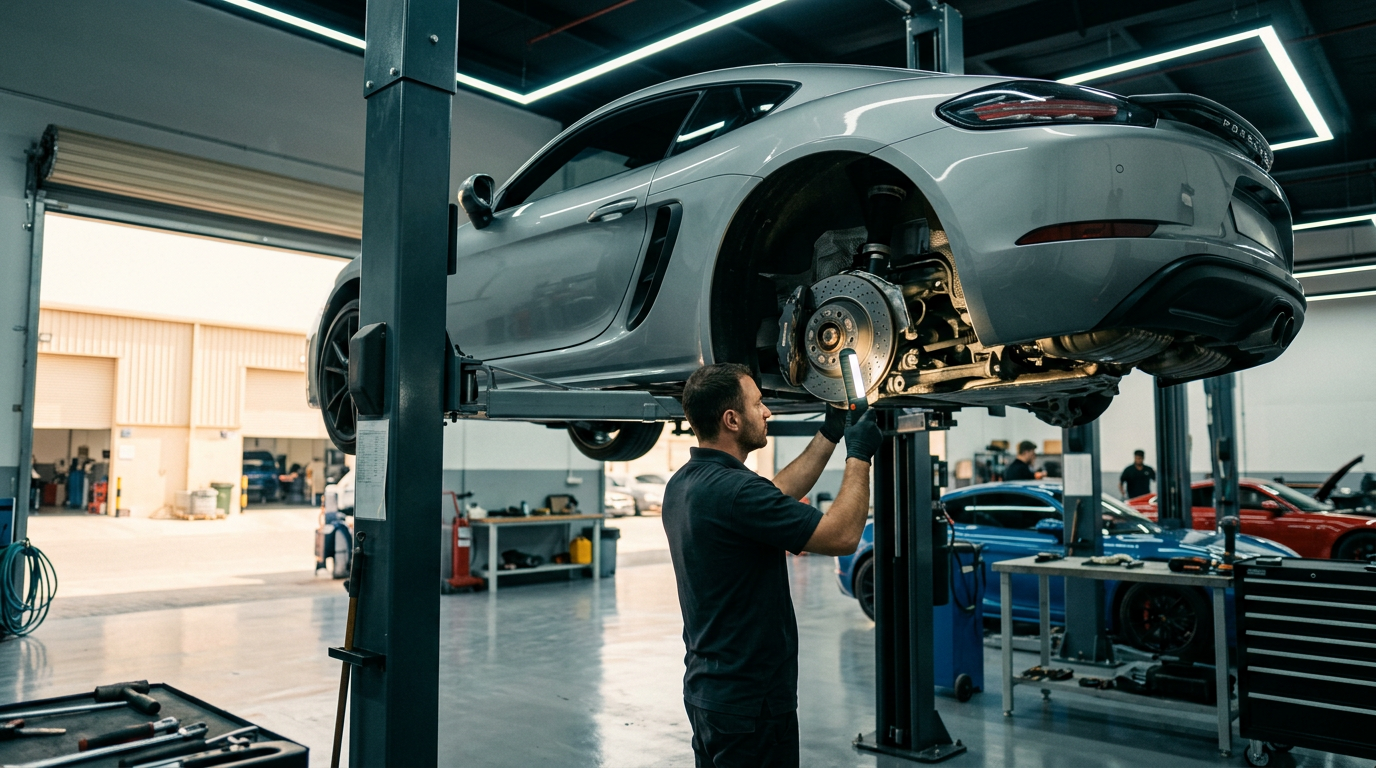
Brake services for EVs include calliper cleaning, rotor inspection, pad measurement, and fluid testing. Many Tesla, BMW iX, and Audi e-tron owners in the UAE find their pads last 80,000–100,000 km, but the fluid and calliper maintenance schedule doesn't change.
Cooling Systems
Electric vehicles use liquid cooling for the battery pack, electric motor, and power electronics. These systems run separate coolant loops with their own pumps, hoses, and heat exchangers. In UAE summer heat, coolant degradation accelerates, and any leak or air pocket can trigger thermal management faults that limit charging speed or available power.
Coolant condition should be tested annually. Most European EV manufacturers specify coolant replacement every 4–6 years, but Dubai's sustained high ambient temperatures can shorten that interval. A cooling system fault is one of the most common causes of reduced fast-charging speeds.
Air Conditioning
Your EV's AC system works harder than in a petrol car because there's no waste engine heat to help with cabin warming in winter, and summer cooling directly impacts your driving range. The AC compressor, condenser, evaporator, and refrigerant all require the same maintenance as any car.
Cabin air filters should be replaced every 15,000 km or annually in Dubai due to fine sand and dust. A clogged filter forces the AC to work harder, draining the battery faster. Refrigerant leaks are common after three to four years, especially if the car is parked outdoors in direct sun.
12-Volt Battery
Every electric car still has a small 12-volt lead-acid or lithium auxiliary battery that powers the computers, screens, locks, and lights. This battery is charged from the high-voltage traction battery, but it can still fail—and when it does, the entire car becomes immobile even if the main battery is full.
12-volt battery replacement is needed every 3–5 years in the UAE. Heat is the main killer. If your EV won't wake up or displays a "12V battery low" warning, this is the culprit, not the big battery pack.
Software Updates and Diagnostics
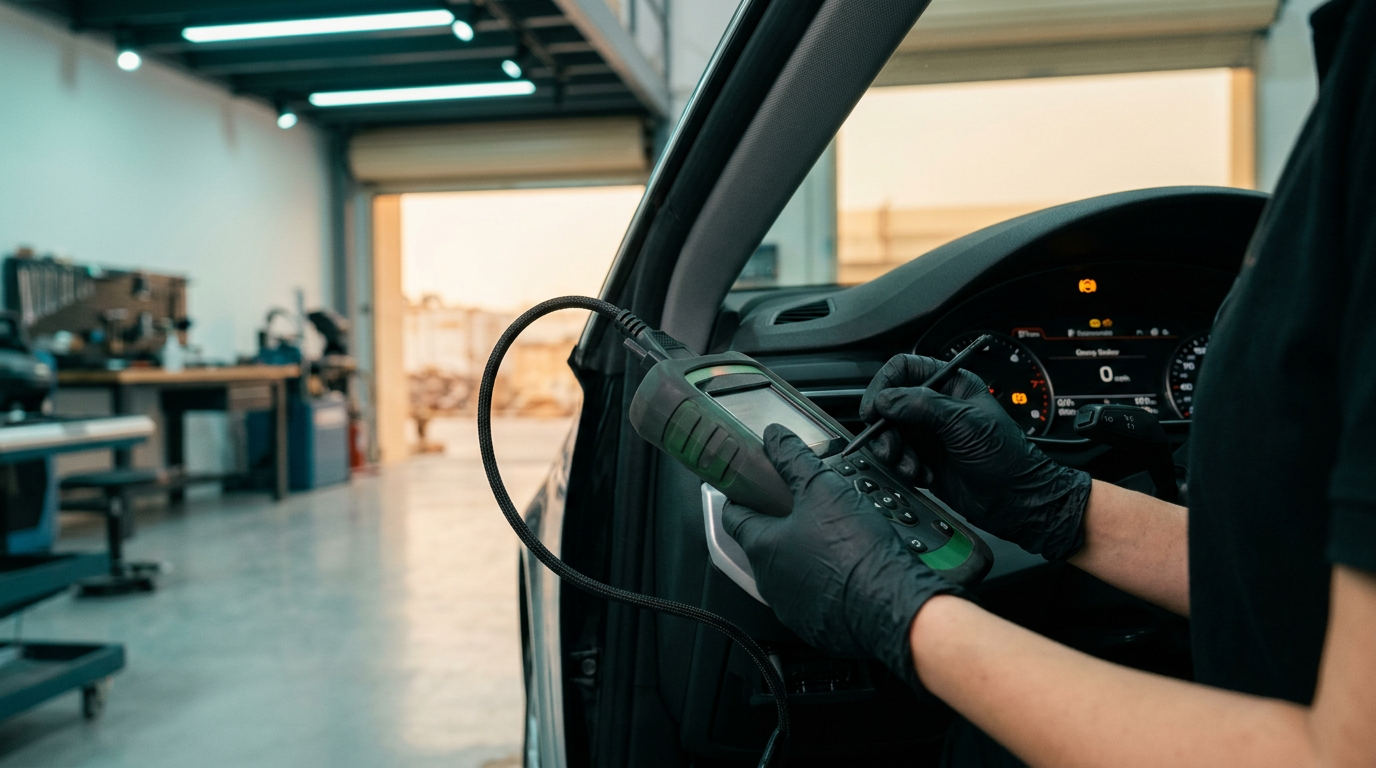
Modern electric vehicles are computers on wheels. Over-the-air updates can fix bugs, improve range algorithms, adjust charging curves, or even unlock new features. But not all updates install successfully, and some require a diagnostic connection in a workshop.
If your EV shows persistent warning lights, reduced charging speed, or phantom faults, software recalibration may be needed. Independent specialists with manufacturer-grade scan tools can read fault codes, clear adaptations, and install updates that didn't complete remotely.
Battery management system recalibration is sometimes required after a software update or if the displayed range becomes inaccurate. This isn't a physical repair—it's a software reset that re-teaches the car how much energy the pack can hold.
What EVs Don't Need
To keep perspective, here's what you'll never pay for again once you switch to an electric car:
- Engine oil and filter changes every 10,000 km
- Spark plugs, ignition coils, or fuel injectors
- Timing belts or chains
- Exhaust systems, catalytic converters, or emissions testing
- Clutch replacement (even single-speed EVs have no clutch)
- Transmission services with multi-speed gearboxes
- Engine air filters or fuel filters
This removes the highest-frequency and often highest-cost maintenance items from your ownership experience.
EV Service Intervals in Dubai
Most European electric vehicles sold in the UAE follow a 12-month or 15,000–20,000 km service interval, whichever comes first. Because Dubai driving is often short trips with lots of stop-start traffic and extended periods parked in heat, the time-based interval usually triggers first.
A typical first-year electric vehicle service includes:
- Visual inspection of high-voltage cables and connectors
- Battery pack health report and cell balance check
- Coolant level and condition test
- Brake fluid moisture test
- Tyre tread depth, pressure, and rotation
- Cabin filter replacement
- 12V battery voltage test
- Software version check and update if available
- Suspension, steering, and underbody inspection
Second and subsequent services add brake calliper cleaning, coolant top-up or replacement, and more detailed electrical system diagnostics.
Finding EV Service in Dubai
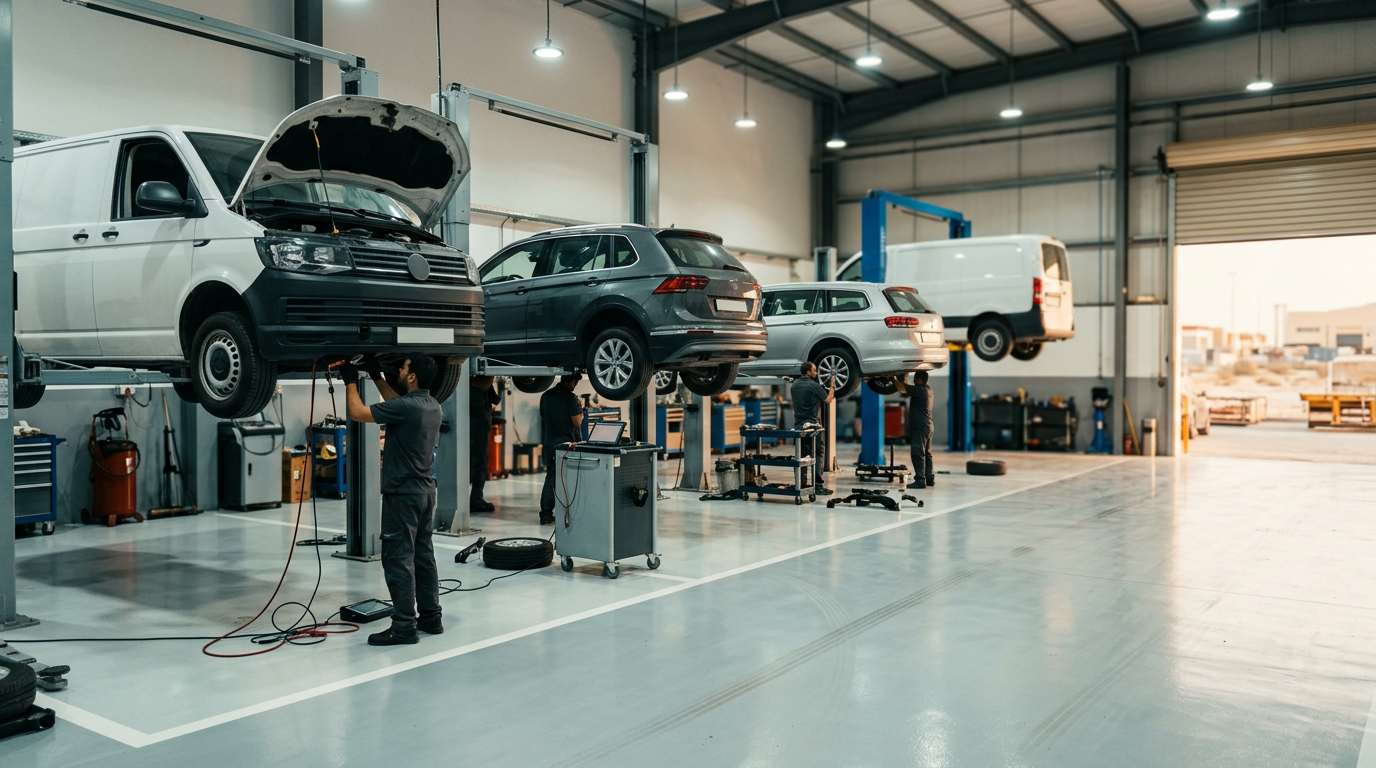
Many electric car owners in Dubai, Abu Dhabi, and Sharjah assume they must return to the brand showroom for every service. In reality, independent workshops with the right diagnostic equipment and trained technicians can handle all routine maintenance, plus most repairs that don't involve opening the high-voltage battery pack.
Look for a facility with:
- Manufacturer-grade diagnostic tools for your EV brand (Tesla, BMW, Audi, Mercedes-Benz EQ, Polestar, Volvo, Porsche Taycan, etc.)
- High-voltage safety training and insulated tools
- Access to OEM technical service bulletins and wiring diagrams
- Climate-controlled workspace to protect electronics during repair
Independent specialists often provide faster turnaround, more transparent explanations, and the same quality parts without the dealership markup. For owners of Polestar and Volvo EVs, or those comparing EV versus petrol ownership costs, choosing an experienced independent can reduce annual service expenses by 30–40% while maintaining full service history documentation.
Battery Health and UAE Heat
The single biggest long-term concern for any electric vehicle in Dubai is battery degradation. High ambient temperatures accelerate chemical reactions inside lithium-ion cells, and repeated fast-charging in summer heat compounds the stress.
While you can't prevent all degradation, regular servicing helps. A cooling system that's low on fluid or has a failing pump will allow the battery to run hotter than designed, shortening its lifespan. Software updates often include improved thermal management algorithms that weren't available when the car was new.
For a detailed look at how heat affects your EV and what you can do about it, read our guide on EV battery health in UAE heat.
Emergency and Roadside EV Services
Running out of charge is the EV equivalent of running out of fuel, but the solution is different. Mobile charging services in Dubai can deliver 20–30 km of range in 15–20 minutes using a portable DC charger, enough to reach the nearest public fast-charger or get you home.
Other common roadside issues include 12V battery failures (which immobilise the car completely), tyre punctures (EVs often don't carry a spare due to weight), and software glitches that prevent the car from powering on. A workshop familiar with electric vehicles can diagnose and resolve these issues faster than a general roadside service.
Corporate and Fleet EV Servicing
As more UAE businesses add electric vehicles to their fleets, scheduled maintenance becomes critical to maximise uptime and residual value. Fleet services for EVs should include regular battery health reporting, software update tracking, and predictive maintenance based on telematics data.
For companies operating mixed fleets of electric and petrol vehicles, choosing a service provider that handles both under one roof simplifies logistics and record-keeping. Corporate account structures with dedicated contacts and priority booking help keep commercial EVs on the road.
Related reading: Importing a Car to Dubai: Compliance, Testing and Servicing, Ferrari Annual Service and Fluid Schedule Explained.
Expert EV Service in Al Quoz
JAD Garage in Al Quoz 4 services all European and electric vehicles with manufacturer-grade diagnostics, software updates, and battery health checks. Open Monday to Saturday, 09:00–19:00. Call +971 56 355 6113 or WhatsApp to book your EV service.
Frequently asked questions