
EV Battery Health in UAE Heat: Degradation and Care

Electric vehicle batteries face accelerated degradation in UAE's extreme heat, losing 2–3% more capacity annually compared to temperate climates. High ambient temperatures—often exceeding 45°C in Dubai and Abu Dhabi summers—stress lithium ion batteries, reduce charging efficiency, and temporarily lower driving range. Proper thermal management, smart charging habits, and routine cooling system checks help mitigate long-term damage and maintain battery health.
How Extreme Heat Affects EV Battery Chemistry
Lithium ion batteries operate most efficiently between 20°C and 30°C. When cell temperatures climb above 40°C—common when parking outdoors in Sharjah or Dubai during July and August—the electrolyte inside degrades faster. This chemical breakdown is permanent and cumulative, shortening the overall lifespan of the battery pack.
Heat also increases internal resistance. Your electric vehicle must work harder to push current through the cells, generating additional heat in a feedback loop. This is why many EVs throttle performance or limit fast charging when the battery management system detects high temperatures, protecting the pack from catastrophic damage.
Real-World Range Impact in UAE Summer Heat
Owners in the United Arab Emirates typically notice 10–15% range reduction during peak summer months, even on the same route. Part of this loss comes from running the air conditioning—cabin cooling can consume 2–4 kW continuously in 50°C heat—but elevated battery temperature also reduces the energy available from each charge cycle.
Short-trip city driving in stop-start Dubai traffic compounds the problem. Frequent acceleration heats the battery, and if the car sits in the sun between errands, the cooling system runs on battery power to prevent thermal runaway. Over weeks and months, this pattern accelerates capacity fade beyond what you'd see in London or Munich.
Fast Charging in Hot Weather: What Changes
Fast charging already generates heat as a byproduct of high current flow. When you plug into a 150 kW charger on Sheikh Zayed Road in July, the battery management system monitors cell temperature in real time. If the pack is already hot from driving or ambient exposure, the system will reduce charging speed—sometimes by half—to avoid overheating.
This throttling is a safety feature, not a fault. Repeatedly fast-charging a hot battery without adequate cooling causes lithium plating on the anode, permanently reducing capacity. Many EV drivers in the Gulf have learned to precondition their cars or charge during cooler evening hours to maintain faster speeds and protect battery health over the long term.
The Role of Thermal Management Systems
Modern electric vehicles use active cooling to regulate battery temperature. Most European EVs—BMW iX, Audi e-tron, Mercedes-Benz EQS, Porsche Taycan, and Polestar 2—employ liquid cooling loops that circulate chilled glycol around the battery pack. Air-cooled designs, found in some older or budget models, struggle in UAE conditions and show faster degradation.
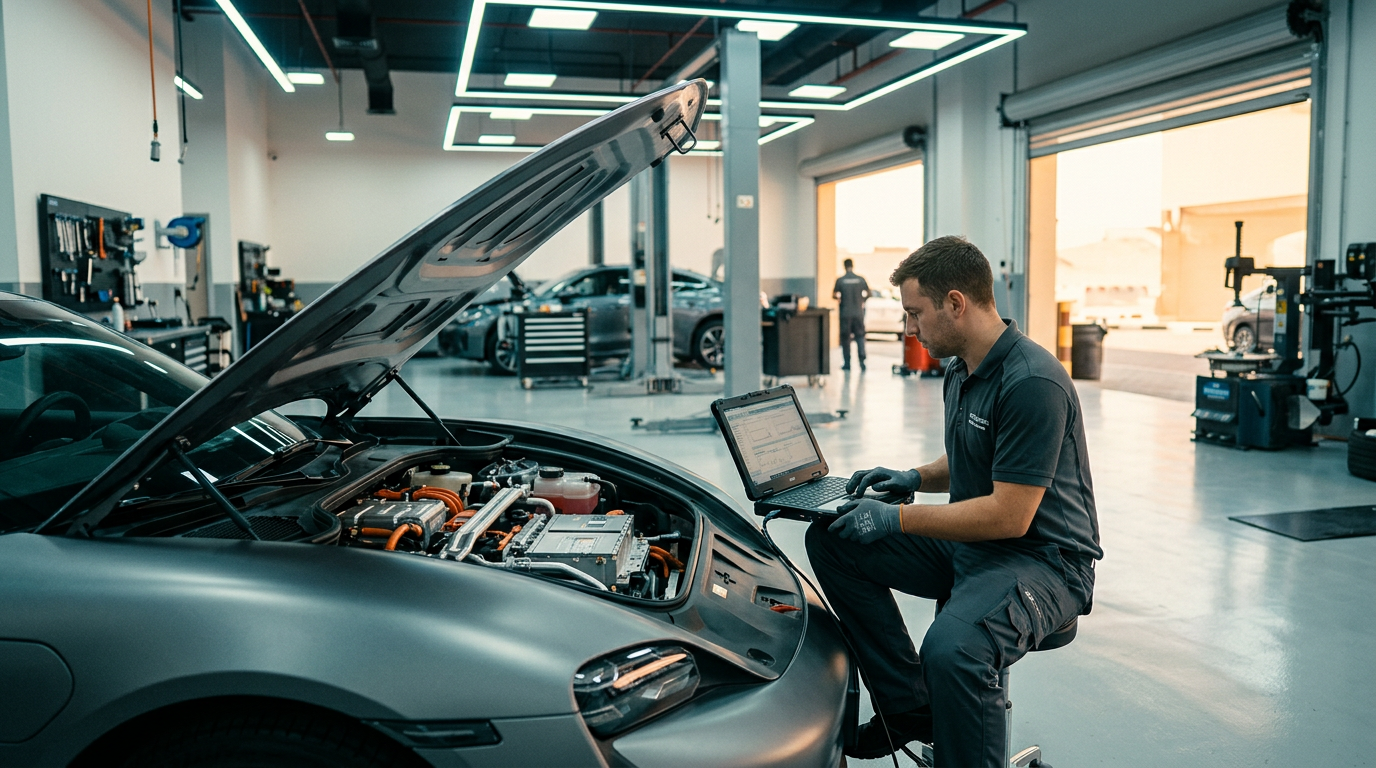
The cooling system itself requires maintenance. Coolant levels drop, hoses crack under UV exposure, and radiator fins clog with fine sand and dust. A failing thermal management system can't protect the battery, leading to premature capacity loss and expensive pack replacements. Regular diagnostic checks catch these issues early, especially before summer.
Practical Tips to Protect EV Batteries in UAE Heat
- Park in covered or shaded areas whenever possible. Even a simple carport reduces cabin and battery temperature by 10–15°C compared to direct sun exposure.
- Charge during cooler hours—early morning or late evening—to reduce thermal stress and allow faster charging speeds.
- Avoid leaving the battery at 100% charge in hot weather. Keep it between 20% and 80% for daily use; full charges heat the cells and accelerate degradation.
- Precondition the cabin while plugged in so the air conditioning draws grid power, not battery reserves, before you drive.
- Limit back-to-back fast charging sessions on long trips. Allow 20–30 minutes between charges for the pack to cool naturally.
- Service the cooling system annually, including coolant flush, hose inspection, and radiator cleaning, to maintain optimal thermal performance.
- Use low rolling resistance tyres to reduce energy consumption and heat generation from friction. Check pressures weekly, as heat expands air and affects handling.
Are Some EV Models Better Suited to UAE Climate?
Vehicles with robust liquid cooling, larger battery packs (which dissipate heat more effectively per cell), and heat pumps for efficient cabin climate control perform better in extreme temperatures. Tesla Model 3 and Model Y, Audi e-tron GT, Porsche Taycan, and BMW iX have all demonstrated strong real-world durability in the Gulf, with slower-than-average degradation curves reported by owners.
Conversely, early-generation EVs with passive or air cooling—Nissan Leaf (pre-2018), some Renault Zoe variants—show accelerated capacity loss in Dubai and Abu Dhabi. If you're considering a used electric car, a pre-purchase inspection with battery health diagnostics is essential to avoid inheriting heat-damaged cells.
Long-Term Degradation: What to Expect
Under typical UAE conditions, well-maintained electric car batteries lose 8–12% capacity over the first five years, compared to 5–8% in cooler climates. After eight years, expect 15–20% total degradation if you follow best practices. Poor thermal management, frequent fast charging in summer heat, and leaving the car parked at full charge outdoors can double that rate.
Battery warranties from most manufacturers cover significant capacity loss—usually below 70% within eight years—but warranty claims require documented service history and proof of proper use. Keeping records of routine maintenance, coolant changes, and electrical system checks protects your investment if degradation accelerates unexpectedly.
Monitoring Battery Health Over Time
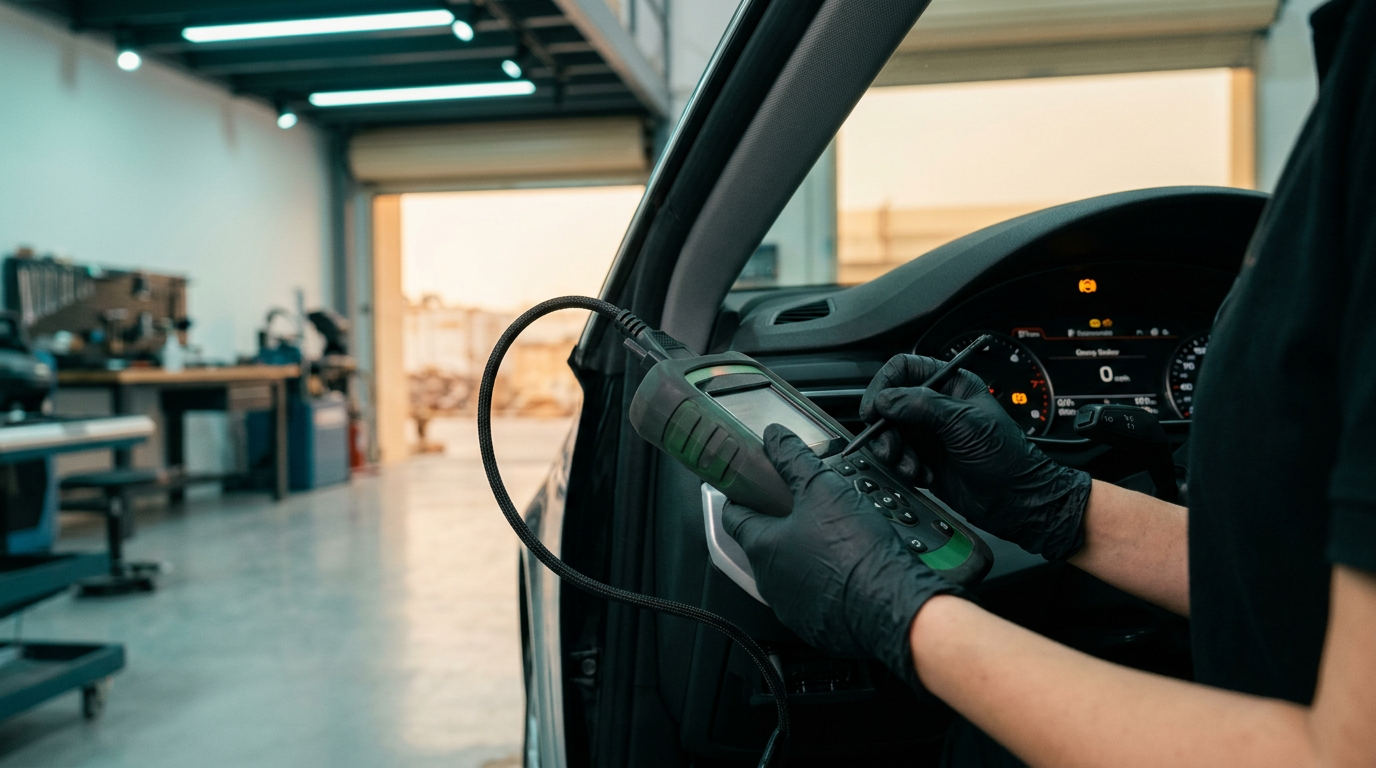
Most EVs display state-of-health (SOH) metrics through the infotainment system or dedicated app. An SOH reading above 90% after three years indicates healthy aging; below 85% suggests accelerated degradation worth investigating. Independent workshops with manufacturer-grade diagnostic equipment can pull detailed cell-level data, revealing imbalances or cooling faults before they cause permanent damage.
If you notice sudden range drops, longer charging times, or frequent thermal warnings, schedule a diagnostic session immediately. Early intervention—replacing a failing coolant pump or rebalancing cells—can prevent minor issues from cascading into full pack replacement, which costs tens of thousands of dirhams even outside warranty.
Comparing UAE Battery Performance to Global Data
Studies from Europe and North America show average annual degradation of 1.5–2.5% under mixed driving. UAE owners consistently report 2.5–3.5% in the first few years, with the gap widening for cars parked outdoors or driven primarily in summer. The difference isn't catastrophic, but it does mean a battery expected to last 12 years in Germany may reach 70% capacity in 8–9 years here without careful management.
Fleet operators in Dubai running electric vehicle fleets have adopted stricter protocols: mandatory covered parking, off-peak charging schedules, and quarterly cooling system audits. These measures reduce degradation rates to near-European levels, proving that climate impact is manageable with discipline and infrastructure investment.
What About Humidity and Dust?
Coastal humidity in Dubai, Sharjah, and Abu Dhabi doesn't directly harm battery chemistry, but it accelerates corrosion of electrical connectors and cooling system fittings. Fine sand infiltrates radiator fins and cabin air filters, reducing cooling efficiency and forcing the system to work harder. Regular filter changes—every 5,000–7,500 km in UAE conditions versus 15,000 km in Europe—and annual underbody cleaning prevent these secondary heat sources from compounding battery stress.
If you drive frequently on desert roads or through construction zones, inspect the front grille and cooling intakes monthly. A layer of dust blocking airflow can raise battery temperature by several degrees, especially during highway driving when aerodynamic cooling matters most. AC system maintenance and electrical component cleaning should be part of your annual service routine.
Charging Infrastructure and Battery Longevity
The UAE's growing fast-charging network is convenient, but relying exclusively on 150+ kW chargers accelerates wear. For daily commuting, home or workplace Level 2 charging (7–11 kW) generates far less heat and stress. If fast charging is unavoidable, try to arrive with a cool battery—drive gently for the last few kilometres—and avoid charging beyond 80% unless you need the range immediately.
Public chargers in open parking areas expose your car to direct sun while plugged in. Whenever possible, choose covered or underground charging stations. The combination of high current and ambient heat is the worst-case scenario for battery health, and even one summer of careless charging habits can shave a year off pack lifespan.
When to Seek Professional Battery Assessment
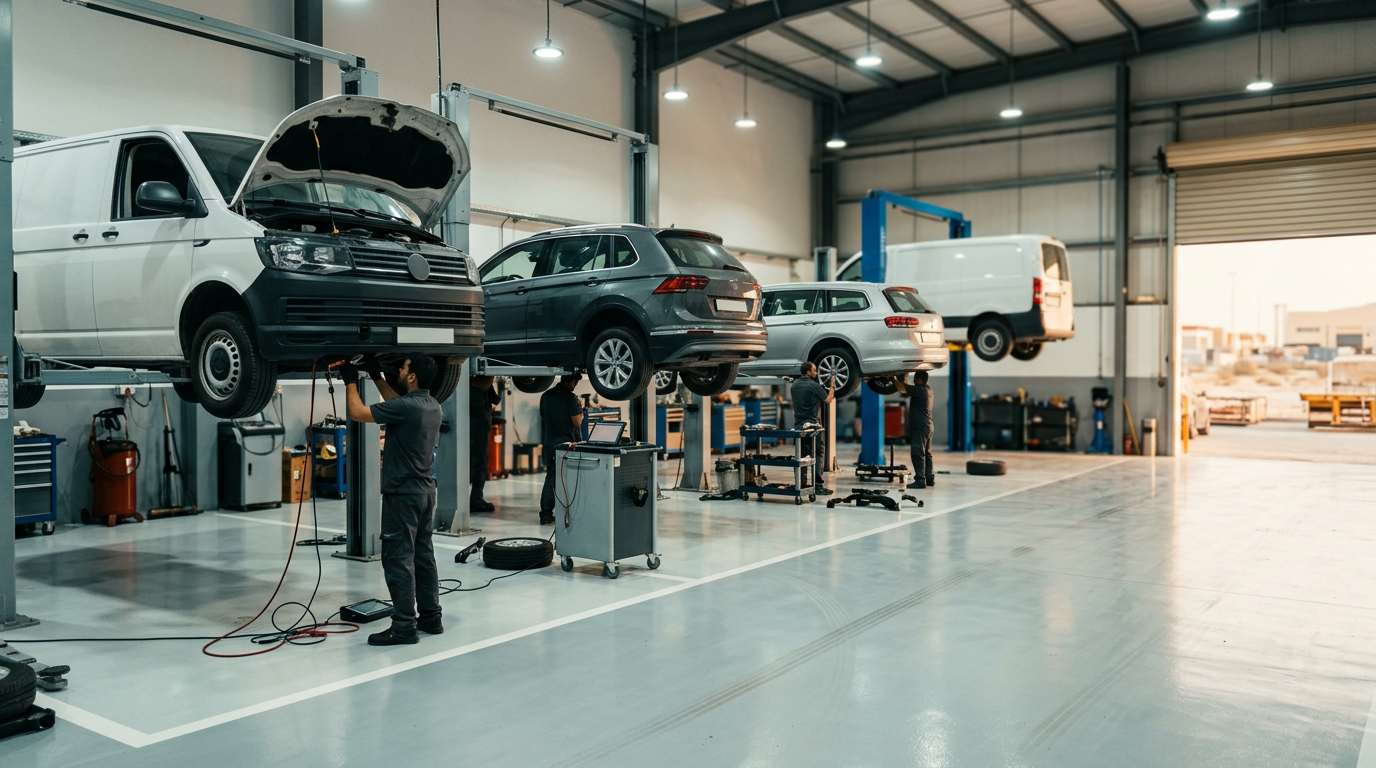
Annual health checks are prudent for any EV in the UAE, especially after the first summer of ownership. A comprehensive assessment includes coolant system pressure testing, thermal sensor calibration, cell voltage balance analysis, and software updates to the battery management system. These services aren't typically covered by routine maintenance schedules but are critical in extreme climates.
If you own a Tesla, Audi, BMW, Mercedes-Benz, Porsche, Polestar, Volvo, or any other electric vehicle, working with a facility that has the correct diagnostic tools and understands Gulf-specific challenges ensures accurate assessment and appropriate preventive care. Generic code readers can't access proprietary battery data, leaving you blind to developing problems.
Protecting your electric vehicle from UAE summer heat requires a combination of smart daily habits, infrastructure choices, and proactive maintenance. The technology is robust, but the environment is unforgiving. With attention to thermal management and charging discipline, you can enjoy the performance and efficiency of an EV while minimising the long-term cost of battery degradation.
Related reading: Turbocharger Care in Dubai Heat: Cooldown, Oil and Boost Leaks.
EV Battery Health Check in Al Quoz
Keep your electric vehicle running efficiently in Dubai heat. JAD Garage in Al Quoz 4 offers comprehensive battery diagnostics, cooling system service, and preventive care for all European EVs. Call +971 56 355 6113 to schedule your assessment.
Frequently asked questions