
Turbocharger Care in Dubai Heat: Cooldown, Oil and Boost Leaks


In Dubai's 50°C summers, turbochargers endure exceptional thermal stress. Proper cooldown procedures, correct oil specification, and early detection of boost leaks are critical to prevent premature bearing failure, oil coking, and loss of power. Most turbo failures in the UAE result from heat-related oil degradation and owner habits rather than component defects.
What a Turbocharger Does and Why Dubai Heat Matters
A turbocharger uses exhaust gas energy to spin a turbine wheel, which drives a compressor wheel that forces more air into the engine. This boost allows a smaller engine to produce the power of a larger one while improving fuel efficiency under light load. Brands like Porsche, Audi, BMW, and Mercedes-Benz now fit turbochargers to most of their range, from mild hybrid systems to twin-turbo performance engines.
The turbine wheel sits directly in the exhaust gas stream and can reach 1,000°C. The compressor side handles ambient air—in Dubai, that means intake temperatures routinely hit 50-55°C before the air even enters the compressor. The turbo's bearing cartridge, which allows the shaft to spin at up to 250,000 rpm, relies entirely on a thin film of engine oil for lubrication and cooling. When that oil breaks down or flow is interrupted, bearing failure follows within minutes.
Dubai's combination of extreme ambient heat, stop-start traffic, and short city trips creates three specific risks: oil coking inside the turbo after hot shutdown, sustained high exhaust gas temperature with insufficient airflow, and accelerated degradation of hoses and gaskets that seal the boost system.
Cooldown Procedure: Why You Should Idle Before Shutdown
After sustained high-speed driving or heavy load—motorway runs to Abu Dhabi, towing, or spirited driving—the turbocharger's core temperature remains extremely high even after you lift off the throttle. If you shut down the engine immediately, oil flow stops but the turbine housing continues to radiate heat into the bearing cartridge. Stationary oil above 200°C begins to coke, forming hard carbon deposits that restrict the bearing's oil passages and score the shaft.
A proper cooldown allows the engine to idle for 30-60 seconds, maintaining oil circulation while exhaust gas temperature drops. Modern turbocharged cars from Volkswagen, Volvo, and others often include an electric auxiliary coolant pump that continues to circulate coolant through the turbo's water-cooled bearing housing for several minutes after shutdown. This system only works if the battery and pump are healthy—a failing auxiliary pump is a common cause of premature turbo wear in the UAE.
- After motorway driving above 120 km/h for more than 15 minutes, idle for 45-60 seconds before shutdown
- After city driving or short trips, immediate shutdown is generally safe
- If your car has an auxiliary coolant pump (check owner's manual), listen for it running after you remove the key; silence indicates pump failure
- Turbocharged cars used for short trips (under 10 km) should have oil changed every 7,500 km in Dubai, not the 15,000 km interval suited to motorway use
Oil Specification and Change Intervals in UAE Heat
Turbocharger bearings demand oil that maintains viscosity and film strength at high temperature. Most European turbocharged engines specify 0W-40, 5W-30, or 5W-40 fully synthetic oil meeting ACEA C3 or manufacturer-specific approvals (VW 504.00/507.00, BMW LL-04, Mercedes 229.51, for example). Using a lower-grade oil or extending change intervals causes sludge formation in the turbo's oil feed and return lines.
In Dubai, oil degrades faster due to sustained high temperature and fine dust ingress through the crankcase ventilation system. A European change interval of 15,000 km or 12 months should be shortened to 10,000 km or 10 months for cars driven primarily in city traffic. Performance and luxury models—Maserati, Alfa Romeo, Aston Martin—often specify 7,500 km intervals as standard, and this should not be stretched in the UAE.
Workshops confirm oil condition using a diagnostic scan to check oil life monitoring data (if equipped) and visual inspection for colour and consistency. Black, gritty oil or a burnt smell indicates overdue service. The turbo's oil feed line—a small-diameter pipe from the engine block to the turbo—should be inspected for internal sludge during every oil change; blockage here causes oil starvation and rapid bearing failure.
Boost Leaks: Symptoms and How They're Diagnosed
A boost leak is any unintended escape of compressed air between the compressor outlet and the intake valves. Leaks reduce the volume and pressure of air entering the cylinders, causing loss of power, increased turbo lag, and higher exhaust gas temperature as the ECU adds fuel to compensate. In turbocharged cars, even a small leak—equivalent to a 3 mm hole—can drop peak boost by 0.2-0.3 bar and cost 15-20% of power.
Common leak points include the intercooler itself (core or end-tank cracks), intercooler hoses (especially at clamps and bends), the throttle body gasket, intake manifold gaskets, and the turbo compressor outlet seal. Dubai's heat cycles cause rubber hoses to harden and silicone joints to separate. Fine sand abrades the inside of the intake tract, creating pinholes in aluminium intercooler pipes.
| Symptom | Most Likely Cause | Less Common Cause |
|---|---|---|
| Hissing or whooshing sound under acceleration | Split intercooler hose or loose clamp | Cracked intercooler end tank |
| Black smoke and loss of power above 3,000 rpm | Large boost leak causing rich fuelling | Turbo compressor wheel damage |
| Increased turbo lag and sluggish response | Boost leak reducing effective pressure | Exhaust restriction or wastegate fault |
| Check engine light with underboost code (P0299) | Boost leak or wastegate actuator failure | Turbo shaft play or compressor wheel damage |
| Oil residue around intercooler or hoses | Turbo compressor seal leaking oil into intake | PCV system fault pressurising crankcase |
How Workshops Confirm Boost Leaks
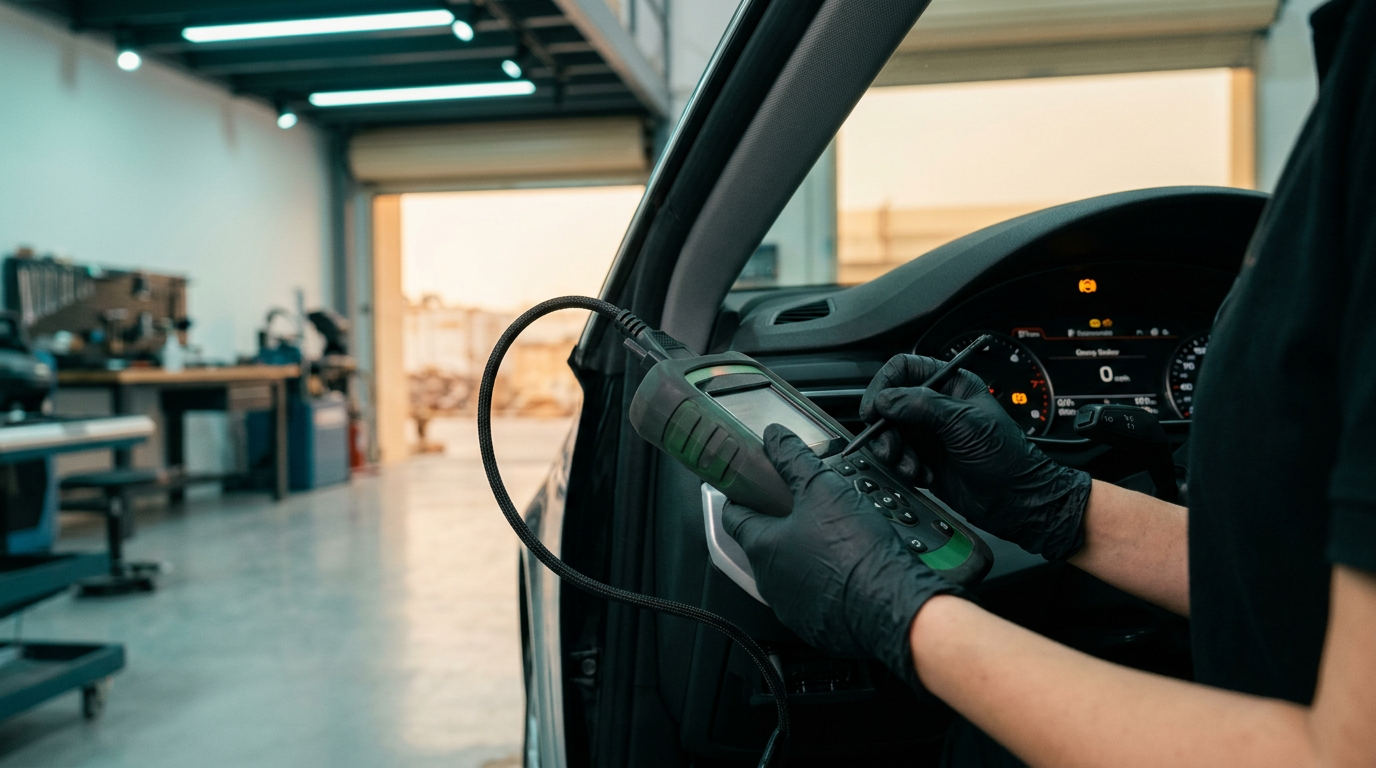
A boost leak test involves sealing the intake system and pressurising it with compressed air to 1.0-1.5 bar (typical peak boost pressure). The technician listens for escaping air and uses soapy water to reveal bubbles at leak points. The system should hold pressure for at least two minutes; a drop indicates a leak. Manufacturer-grade diagnostic equipment logs actual boost pressure versus requested boost under load, and a consistent shortfall confirms a leak even if it's not audible.
Workshops also inspect the turbo compressor housing for oil contamination. Oil in the intake tract usually indicates worn turbo seals, but can also result from a blocked crankcase breather or PCV valve—common in UAE conditions due to short-trip driving and dust. A compression test and crankcase pressure measurement distinguish between turbo seal failure and engine blowby.
What Turbo Repairs Typically Involve
Minor boost leaks—split hoses or loose clamps—are straightforward replacements. Independent workshops in Al Quoz stock OEM and premium aftermarket hoses for most European marques. An intercooler hose replacement typically takes 30-60 minutes depending on accessibility.
Turbocharger replacement or rebuild is more involved. If bearing wear or seal failure is confirmed, the options are a new OEM turbo, a remanufactured unit from a specialist like Garrett Motion, or a rebuild of the existing turbo. New OEM turbos for common models (Audi 2.0 TFSI, BMW B58, Mercedes-Benz M274) typically range from AED 4,500 to AED 9,000 in the Dubai market, plus 4-6 hours labour. Performance and supercar turbos can exceed AED 15,000 each, and twin-turbo configurations double the cost.
Rebuilds involve replacing the bearing cartridge (CHRA – centre housing rotating assembly), seals, and sometimes the compressor or turbine wheel if damaged. A rebuild costs 40-60% of a new unit but requires specialist equipment and expertise. Turnaround is typically 3-5 working days if the core is rebuildable.
During turbo replacement, the workshop must flush the oil feed and return lines, replace the engine oil and filter, check the air filter and intake for debris, and inspect the exhaust system for restrictions. Fitting a new turbo without addressing the root cause—contaminated oil, blocked feed line, or exhaust restriction—leads to repeat failure within months.
Preventive Measures for Turbocharged Cars in Dubai
Preventing turbo damage in UAE conditions centres on oil quality, cooldown discipline, and intake cleanliness. Use only the oil specification listed in your owner's manual—never a lower grade—and shorten change intervals to 10,000 km for city-driven cars. Replace the air filter every 15,000 km or 12 months; Dubai's fine dust clogs filters faster than in temperate climates, and a restricted filter increases intake vacuum and oil consumption.
Check intercooler hoses and clamps during every service. Silicone hoses last longer than rubber in heat, but both degrade. If you hear any hissing under acceleration, book a diagnostic check immediately—small leaks worsen quickly and cause secondary damage.
For cars with auxiliary coolant pumps (common on VAG, BMW, and Mercedes turbocharged engines), have the pump function tested annually. Pump failure is silent but catastrophic for turbo longevity. If your car is used for short trips—under 10 km per journey—consider a monthly motorway run to operating temperature to purge moisture and combustion byproducts from the oil.
Turbo Lag, Performance and Efficiency
Turbo lag—the delay between throttle application and boost delivery—results from the time needed to accelerate the turbine and compressor wheels from idle to operating speed. Smaller turbos spool faster but produce less peak boost; larger turbos deliver more power but with greater lag. Modern variable-geometry turbos and twin-scroll designs minimise lag, and many manufacturers now pair turbocharging with mild hybrid systems (48-volt electric compressors) to eliminate lag entirely at low speed.
Turbocharging improves fuel efficiency under light load because a smaller-displacement engine suffers lower friction and pumping losses. A 2.0-litre turbocharged engine can match the performance of a 3.5-litre naturally aspirated engine while returning better economy in city driving. However, under sustained high load—such as motorway cruising at 140 km/h in 45°C heat—turbocharged engines often consume more fuel than their naturally aspirated equivalents due to enrichment for cooling and higher intake charge temperature.
Performance upgrades—ECU remaps, larger intercoolers, upgraded turbos—are popular for brands like Porsche, Audi, and BMW. Any increase in boost pressure demands corresponding upgrades to fuelling, cooling, and often the clutch or transmission. Modified turbocharged cars require more frequent inspection of boost system integrity and oil condition. ECU programming should always be carried out with attention to UAE ambient temperatures and fuel quality (95 RON standard).
When to Seek Professional Diagnosis
Book a diagnostic inspection if you notice any loss of power, unusual noises (whining, grinding, or hissing), increased oil consumption, or visible smoke from the exhaust. Turbocharged engines often trigger check-engine lights for underboost (P0299), overboost (P0234), or turbo control faults well before catastrophic failure occurs. Early intervention—replacing a worn wastegate actuator or fixing a boost leak—prevents expensive turbo replacement.
Workshops use live data logging to measure actual versus requested boost, exhaust backpressure, intake air temperature, and turbo speed (on vehicles with turbo speed sensors). Physical inspection includes checking shaft play—axial and radial movement of the turbo shaft—using a dial gauge. More than 0.05 mm axial play or any perceptible radial play indicates bearing wear. Oil analysis can reveal metal particles from bearing damage before performance symptoms appear, useful for high-value or sports car applications.
If you're considering a used turbocharged car, a pre-purchase inspection should always include a boost leak test, turbo shaft play check, and inspection of service history for oil change intervals. Turbocharged cars with incomplete or extended service history carry significant risk in the UAE market.
Related reading: Cheap Car Repair Shops in Dubai: 9 Red Flags.
Turbo Diagnostics and Repair in Al Quoz
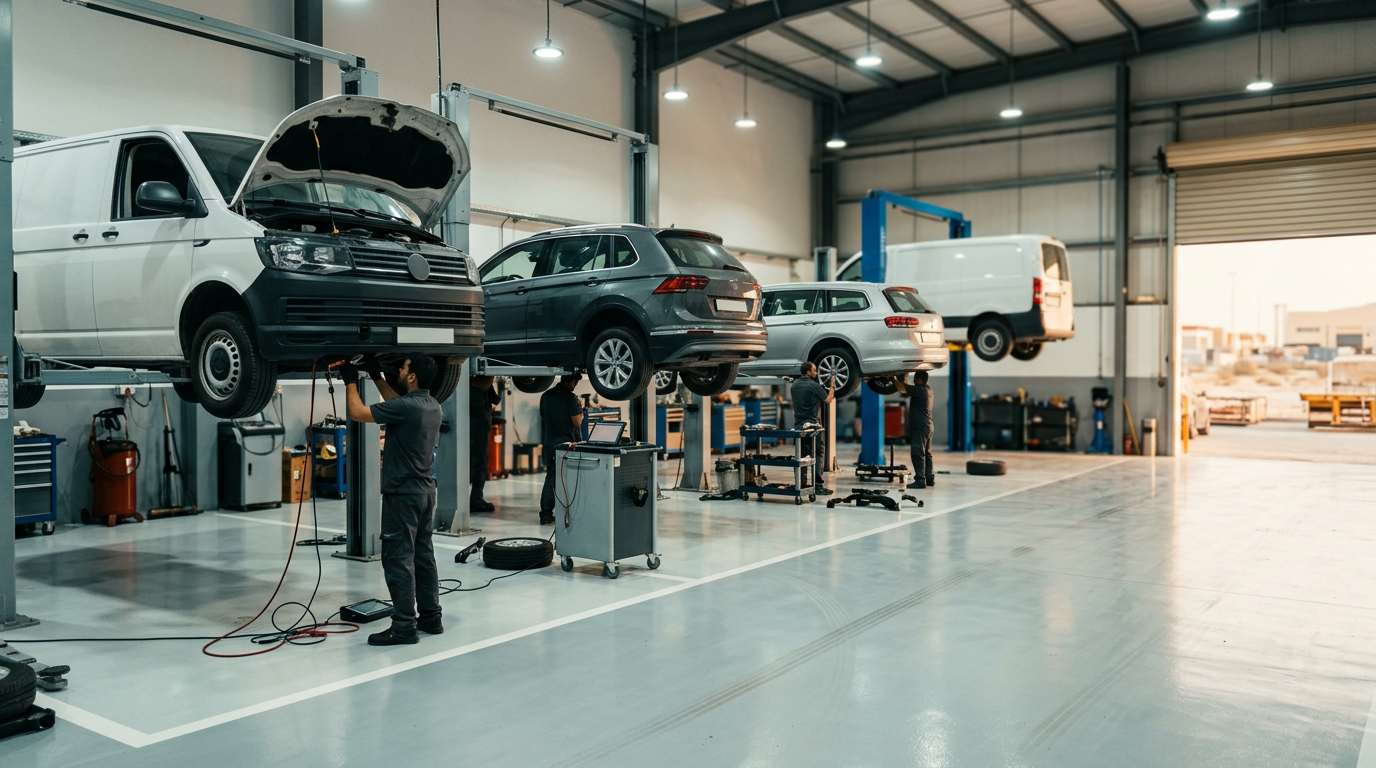
JAD Garage in Al Quoz 4 uses manufacturer-grade diagnostic tools and boost leak testing to pinpoint turbocharger faults on European and EV models. Call +971 56 355 6113 or visit Warehouse No.1, Street 8 to book your inspection.
Frequently asked questions