
BMW N20/B48 Timing Chain and Oil Leak Issues in UAE Cars

BMW timing chain problems, especially in N20 and B48 four-cylinder turbocharged engines, cause rattling noises at cold start, oil leaks from the front cover, and check engine lights. Premature wear of the chain, guides and tensioner can lead to catastrophic engine damage if ignored. Early diagnosis and timely replacement are critical for UAE-driven cars.
Which BMW Engine Models Are Affected by Timing Chain Issues?
The N20 engine (2011–2017, found in 320i, 328i, 520i, X1, X3, Z4) and the B48 engine (2015–present, used in 230i, 330i, 520i, X1, X3, X5) are the most notorious for timing chain problems. Both are 2.0-litre four-cylinder turbocharged units that replaced the naturally aspirated inline-six engines BMW was known for.
The N20 in particular saw widespread early failure, with many cars developing symptoms before 80,000 km. The B48, while improved, still experiences chain stretch and tensioner wear, especially under harsh driving conditions. The older N47 diesel engine (common in 320d, 520d) also suffers timing chain failures, though oil-related wear is the primary culprit there.
Three-row timing chains in these engines are under high load from the turbocharger oil pump and variable valve timing systems. Dubai's stop-start traffic, short trips and extreme heat accelerate oil degradation, which directly impacts chain lubrication and lifespan.
Early Warning Signs of Timing Chain Failure
Recognising symptoms early can prevent a snapped chain and the catastrophic engine damage that follows. Here are the most common warning signs:
- Rattling noise at cold start: A metallic rattle from the front of the engine for 2–5 seconds after ignition, quieting as oil pressure builds. This is the classic sign of a slack chain or worn tensioner.
- Check engine light: Fault codes for camshaft or crankshaft position sensor correlation (P0016, P0017, P0018, P0019) indicate timing misalignment.
- Rough idle or misfires: As the chain stretches, valve timing drifts out of specification, causing poor combustion and hesitation.
- Oil leaks from the front cover: The timing cover gasket often fails on N20 engines, leaving visible oil pooling under the car or streaking down the block.
- Loss of power: Stretched timing chains retard valve events, reducing turbo boost and throttle response.
If you hear rattling, don't delay. A stretched chain can jump teeth or snap, causing pistons to collide with valves—resulting in bent valves, damaged pistons and a complete engine rebuild or replacement.
Root Causes of BMW Timing Chain Problems
Several design and operating factors combine to cause premature timing chain wear in these engines:
Inadequate tensioner design: The hydraulic tensioner in early N20 engines lacks sufficient force to maintain tension under all conditions. When oil pressure drops (cold starts, low oil level), the chain slackens and slaps against the guides.
Plastic chain guides: The guides that keep the chain aligned are made of plastic. High under-hood temperatures in Dubai (often exceeding 90°C in summer) accelerate brittleness and cracking. Fragments can enter the oil system and cause further damage.
Oil quality and change intervals: BMW specifies long-life oil with 15,000–20,000 km intervals in temperate climates. In the UAE, oil degrades faster due to heat and dust ingress. Degraded oil loses its protective film, allowing metal-on-metal contact between chain pins and sprockets.
High mechanical load: The timing chain drives not only the camshafts but also the high-pressure fuel pump and vacuum pump. This increases tension and accelerates wear, especially during hard acceleration common on Dubai highways.
Short-trip driving: City driving in Dubai means the engine rarely reaches full operating temperature for sustained periods. Condensation and fuel dilution contaminate the oil, further reducing lubrication quality.
How Timing Chain Failure Is Diagnosed
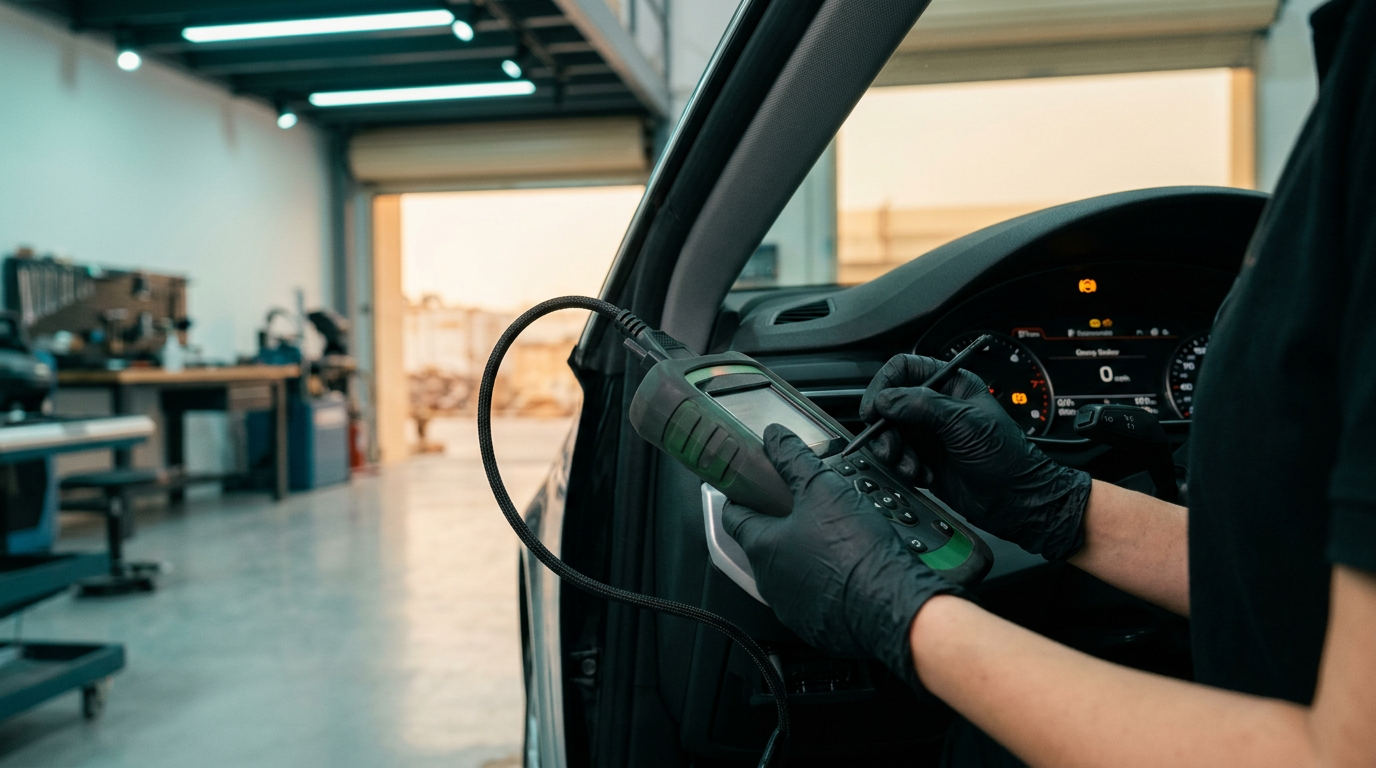
Proper diagnosis requires manufacturer-grade diagnostic equipment to read live data and fault codes. Here's the step-by-step process:
Visual and auditory inspection: A technician listens for rattling at cold start and inspects for oil leaks around the timing cover and valve cover.
Scan tool analysis: Fault codes related to camshaft timing (P0016 family) are checked. Live data shows actual vs. target camshaft advance, revealing stretch or slack.
Timing chain deflection test: With the front cover removed, the chain is manually deflected between sprockets. Excessive play (typically more than 5–8 mm) confirms wear.
Borescope inspection: A camera inserted through the oil filler or spark plug holes can reveal broken guide fragments or scoring on the chain.
Oil analysis: Metal particles in the oil (visible on the dipstick or filter) indicate advanced wear. This is often too late to prevent damage, but confirms the need for immediate action.
At BMW service facilities in Dubai, diagnostic scans and visual checks typically take 30–60 minutes. If chain wear is confirmed, replacement is the only reliable solution—there is no adjustment or temporary fix.
Timing Chain Replacement Procedure and Parts
Replacing a BMW timing chain is labour-intensive. The procedure involves:
- Removing the front bumper, radiator support and accessory drive belts to access the timing cover
- Draining coolant and disconnecting hoses, as the water pump is often integrated
- Removing the valve cover, camshaft sensors and variable valve timing solenoids
- Locking the crankshaft and camshafts in the correct position using special tools
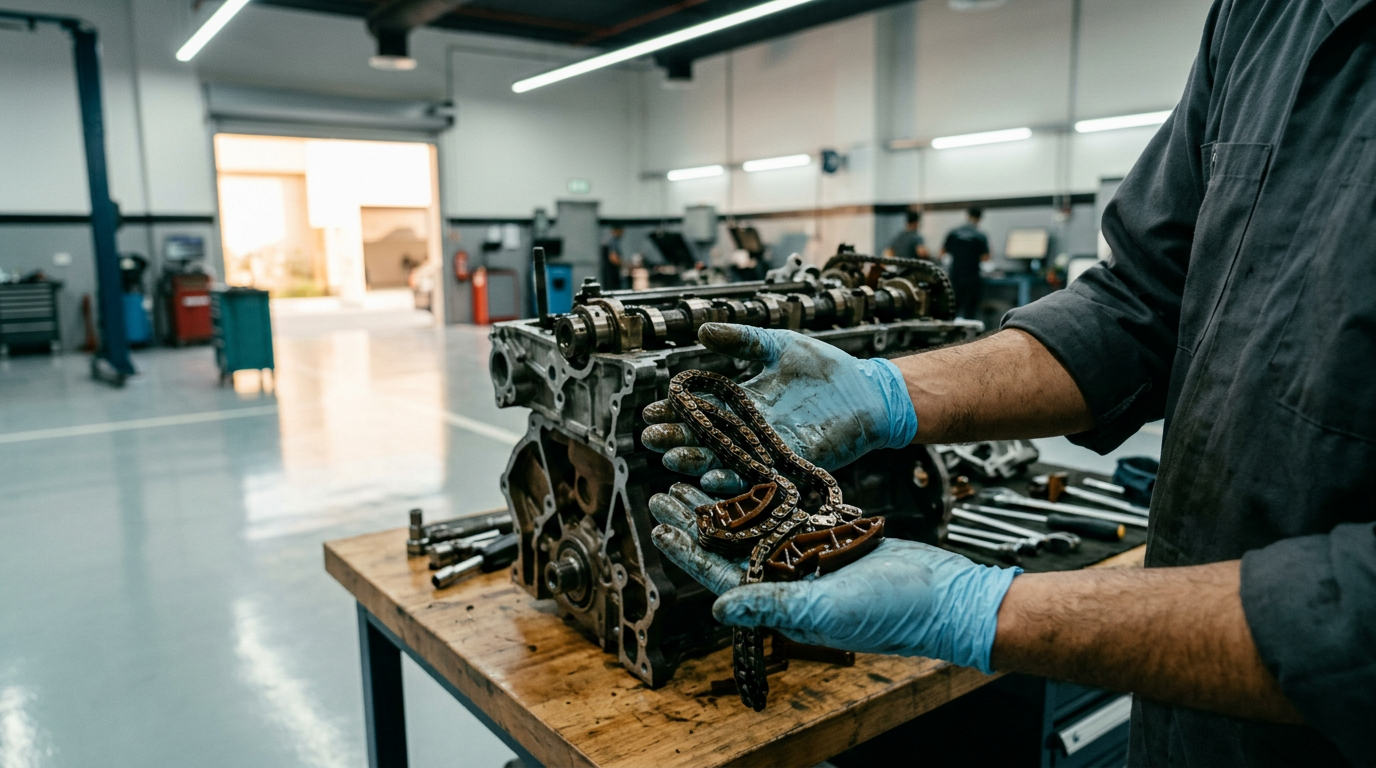
- Replacing the timing chain, tensioner, guides, and often the oil pump chain and sprockets
- Installing a new timing cover gasket, valve cover gasket and front crankshaft seal
- Refilling with fresh engine oil and coolant
- Running adaptation procedures via diagnostic software to reset learned timing values
OEM parts from BMW include the chain kit, tensioner, guides and gaskets. Premium aftermarket brands (such as INA, Febi or Schaeffler) offer kits at lower cost with comparable quality. Using genuine or high-quality parts is essential—budget components often fail prematurely.
The job typically takes 8–12 hours depending on engine variant and access. N20 engines in the 3 Series are more accessible than those in the X3 or X5, where subframe removal may be required.
Typical Repair Costs in Dubai
Timing chain replacement costs in Dubai vary based on the workshop, parts choice and vehicle model. Typical market ranges are:
- Parts (OEM timing chain kit, tensioner, guides, gaskets, oil, coolant): AED 3,000–5,500
- Labour (8–12 hours): AED 2,500–4,500
- Total cost range: AED 5,500–10,000
If the chain has already failed and caused valve or piston damage, costs escalate dramatically. A cylinder head rebuild adds AED 8,000–15,000, and a full engine replacement can exceed AED 25,000 for a used unit or AED 40,000+ for a remanufactured engine.
Preventative replacement is always more cost-effective than emergency repair after failure. If your N20 or B48 engine is approaching 100,000 km or showing early symptoms, plan for replacement before catastrophic damage occurs.
Preventative Maintenance to Avoid Timing Chain Failure
While design flaws make some degree of wear inevitable, proper maintenance significantly extends timing chain life:
Shorten oil change intervals: In Dubai, change oil every 7,500–10,000 km instead of the factory 15,000 km interval. Use a fully synthetic 5W-30 or 0W-40 oil meeting BMW Longlife-01 or Longlife-04 specifications. Read more about oil grades for Dubai heat.
Maintain correct oil level: Check the dipstick monthly. Low oil starves the tensioner and chain of lubrication, accelerating wear. Top up with the correct grade if needed.
Avoid excessive idling and short trips: Allow the engine to reach full operating temperature. Combine errands to reduce cold starts, which are hardest on the chain and tensioner.
Address oil leaks immediately: Leaking valve cover or timing cover gaskets reduce oil volume and pressure. Fix leaks as soon as they appear.
Use quality fuel: Poor fuel quality causes carbon buildup on valves and pistons, increasing engine load and vibration that stress the timing chain.
Schedule regular inspections: During routine general maintenance, ask your technician to listen for chain noise and scan for timing-related fault codes. Early detection allows planned replacement instead of roadside breakdown.
Should You Buy a Used BMW with N20 or B48 Engine?
If you're considering a used BMW with one of these engines, factor timing chain replacement into your budget. Request service records showing oil change intervals and any previous chain work. During a pre-purchase inspection, insist on a cold-start test to listen for rattling and a full diagnostic scan.
Many UAE-market cars have been serviced at extended intervals or neglected entirely. A 2014 320i with 90,000 km and no documented chain replacement is a high-risk purchase unless the price reflects the imminent repair cost. Conversely, a car with recent chain, tensioner and guide replacement (with receipts) is a safer bet.
For more guidance, see our article on expensive faults to watch for in used luxury cars.
Final Thoughts on BMW Timing Chain Problems in the UAE
BMW timing chain issues in N20 and B48 engines are well-documented and predictable. The combination of design limitations and Dubai's harsh operating environment makes early failure common. Rattling at cold start, check engine lights and oil leaks are red flags that demand immediate attention.
Timely replacement with quality parts and shorter oil change intervals are your best defence. Ignoring symptoms leads to engine destruction and repair bills five times higher than preventative replacement. If you own or are considering a BMW with these engines, budget for timing chain work and prioritise regular inspections.
BMW Timing Chain Inspection and Replacement in Al Quoz
If your BMW is showing signs of timing chain wear—rattling, oil leaks or fault codes—contact JAD Garage in Al Quoz 4 for a thorough diagnostic inspection. Call +971 56 355 6113 or visit us Monday to Saturday, 09:00–19:00.
Frequently asked questions