
Which Engine Oil Grade Is Right for Dubai Summer?


For Dubai's summer temperatures that regularly exceed 45°C and can reach 50°C, the best engine oil for Dubai is a fully synthetic 5W-40 or 5W-30 grade that meets your manufacturer's specifications. Synthetic oils maintain viscosity and protective film strength under extreme heat, resist thermal breakdown, and handle the stop-start traffic and short-trip driving patterns common across the UAE far better than conventional alternatives.
Why Dubai Summer Demands Different Engine Oil
Engine oil in the UAE faces conditions that accelerate degradation. When ambient temperatures hit 48°C in July, underbonnet temperatures can exceed 100°C even at idle. Add stop-start traffic on Sheikh Zayed Road, short trips between air-conditioned destinations, and fine desert sand infiltration, and your oil works harder than in temperate climates.
High temperatures thin oil, reducing the protective film between metal surfaces. Conventional oils break down faster under heat, forming sludge and losing their ability to lubricate effectively. This is why choosing engine oil suited to UAE roads isn't optional—it's essential for protecting your investment.
Understanding Oil Viscosity Grades for Hot Climates
Viscosity grades like 5W-40 or 0W-30 describe how oil flows at different temperatures. The first number (followed by W for winter) indicates cold-start flow; the second number describes viscosity at operating temperature. In Dubai, that second number matters most.
Most European car manufacturers recommend 5W-30 or 5W-40 for the UAE market. High-performance engines—common in Porsche, BMW, and Mercedes-Benz models—often specify 5W-40 or even 0W-40 to maintain film strength under stress. Always check your owner's manual or the sticker under your bonnet for the manufacturer's UAE-specific recommendations.
Older vehicles or those with higher mileage may benefit from slightly thicker oils like 10W-40, but only if the manufacturer permits it. Thicker isn't automatically better; modern engines are engineered for specific viscosities, and deviating can affect fuel economy and engine protection.
Synthetic vs Semi-Synthetic vs Conventional Oil in the UAE
The oil type you choose directly impacts how well your car engine handles UAE heat:
- Fully synthetic oils are engineered molecules that resist thermal breakdown, maintain viscosity across extreme temperature ranges, and offer superior protection in high-stress conditions. They're the best choice for modern engines, turbocharged vehicles, and anyone driving in Dubai summer.
- Semi-synthetic oils blend synthetic and conventional base stocks, offering better heat resistance than conventional oils at a mid-range price point. Suitable for older naturally aspirated engines with moderate performance demands.
- Conventional mineral oils are refined petroleum products that break down faster under heat and require more frequent changes. Rarely appropriate for UAE conditions unless specifically required by an older vehicle design.
Brands like Caltex Havoline, Mobil 1, Castrol Edge, and Shell Helix Ultra are widely available in the UAE and offer synthetic formulations meeting European ACEA specifications. ACEA standards (A3/B4, C3, etc.) ensure oils meet performance requirements for European engines common in Dubai—Audi, Volkswagen, Volvo, and others.
How Often Should You Change Engine Oil in Dubai?
Manufacturer service intervals are typically based on temperate climates and highway driving. Dubai's severe conditions—defined by high heat, dust, humidity, and short trips—qualify as "severe service" in most owner's manuals, which means shorter oil change intervals apply.
If your manual suggests 15,000 km or 12 months for normal conditions, reduce that to 10,000 km or 6-8 months in the UAE. For high-performance or turbocharged engines, 7,500 km intervals are common. Regular oil changes are the single most cost-effective way to prevent expensive engine repairs down the line.
Pay attention to oil condition, not just mileage. If you frequently drive short distances (under 10 km), your engine never fully warms up, leading to moisture and fuel contamination in the oil. In these cases, time-based intervals matter more than kilometres. Check your dipstick monthly—if the oil looks dark and gritty or smells of fuel, it's time for a change regardless of mileage.
For more on recognising when oil needs attention, see our guide on signs of low engine oil and what happens if you ignore them.
Choosing the Right Oil for Your Vehicle Type
Different vehicles have different oil requirements, and Dubai's roads host everything from city hatchbacks to high-performance supercars:
Luxury and Performance Cars
Brands like Range Rover, Maserati, and Jaguar demand premium synthetic oils meeting strict ACEA or manufacturer-specific approvals. These engines run hotter and tighter tolerances, making oil quality non-negotiable. Using the wrong grade can trigger warning lights or, worse, cause premature wear. Our luxury car service always uses oils that match or exceed OEM specifications.
Sports and Supercars
Ferrari, Lamborghini, and McLaren engines operate under extreme stress and heat. These require fully synthetic 5W-40 or 10W-60 oils (depending on model) with high HTHS (High Temperature High Shear) ratings. Track use or spirited driving on UAE roads accelerates oil degradation—consider more frequent changes if you push your car. Our supercar service and sports car maintenance programmes include oil analysis to monitor condition.
Classic and Older Vehicles
Older engines, especially those from the 1980s and 1990s, were designed for higher-viscosity conventional oils and may not tolerate modern low-viscosity synthetics. If you own a classic car, consult a specialist about oils formulated with appropriate additive packages (higher zinc content for flat-tappet camshafts, for example).
Electric Vehicles
EVs don't use engine oil, but they do require gearbox and differential fluids that also face heat stress in Dubai. Our guide to EV servicing in Dubai covers what electric cars still need for maintenance.
Popular Engine Oil Brands and Products in Dubai
The UAE market offers a wide range of engine oils. Quality matters more than brand, but certain products have earned reputations among Dubai workshops and car owners:
- Caltex Havoline – Widely available, strong synthetic range, competitive pricing, meets ACEA specifications for European engines
- Mobil 1 – Premium fully synthetic, excellent high-temperature protection, popular for performance cars
- Castrol Edge – Titanium FST technology, strong film strength, widely recommended by European manufacturers
- Shell Helix Ultra – PurePlus Technology, good thermal stability, extensive product range for different vehicle types
- Total Quartz – French brand popular for Peugeot, Renault, and Citroën owners
- Motul – Favoured by enthusiasts and track-day drivers, premium pricing, excellent for high-stress applications
Typical market prices in Dubai range from AED 35-60 per litre for quality synthetic oil, with premium or specialist products reaching AED 80-120 per litre. Most passenger cars need 4-6 litres per change; larger engines or performance vehicles may require 8-10 litres.
Additional Summer Oil Considerations for UAE Driving
Beyond choosing the right grade and type, consider these factors specific to Dubai conditions:
Oil filter quality: A premium oil deserves a quality filter. Cheap filters can restrict flow or fail to capture contaminants, negating the benefits of expensive synthetic oil. OEM or premium alternative filters are worth the small additional cost.
Top-ups between changes: Check your oil level monthly. Some engines (particularly German turbocharged models) consume oil by design. Keeping the level between the min and max marks prevents damage. See our article on BMW N20/B48 timing chain and oil leak issues for examples of how low oil causes problems.
Summer car care: Oil is one part of preparing your vehicle for extreme heat. Our summer car care checklist for Dubai covers other essential services like AC maintenance and battery checks.
When to Seek Professional Advice
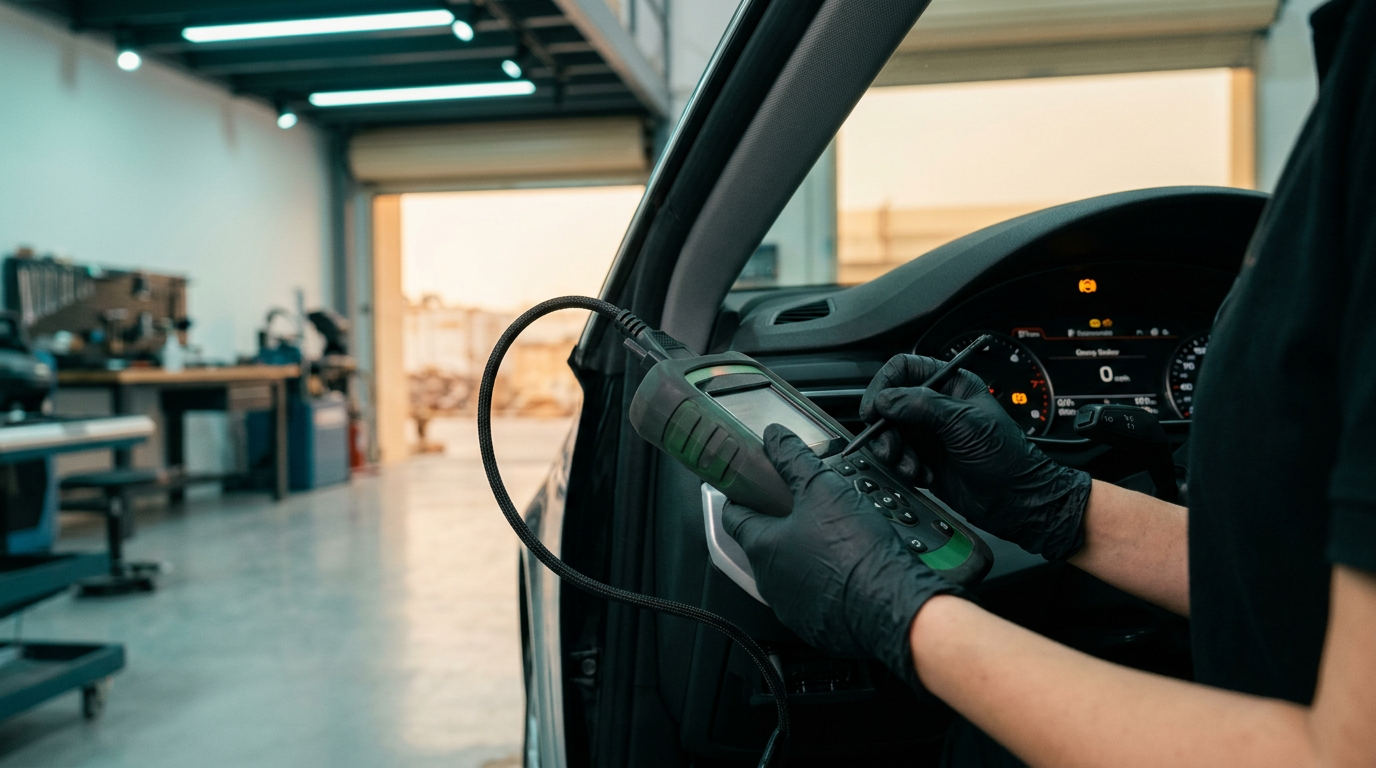
If you're unsure which oil is right for your car, a diagnostic check and consultation with experienced technicians can clarify manufacturer requirements and assess your engine's condition. Older vehicles or those with modified engines may need specialist recommendations beyond what's printed in the manual.
Using manufacturer-grade diagnostic equipment, workshops can also identify oil-related issues early—leaks, consumption, contamination—before they escalate into major repairs. For severe cases, our guide on engine overhaul cost in Dubai explains when rebuilding makes sense.
The Bottom Line on Engine Oil for Dubai Summer
The best engine oil for Dubai combines the right viscosity grade (typically 5W-40 or 5W-30), fully synthetic formulation, and manufacturer approval for your specific vehicle. Change it more frequently than temperate-climate intervals suggest—every 7,500-10,000 km or 6-8 months is a sensible rule for most cars in the UAE.
Don't compromise on oil quality to save a few dirhams. The cost difference between conventional and synthetic oil is trivial compared to the repair bills from inadequate lubrication in 50°C heat. Your engine will reward you with smooth performance, better fuel economy, and years of reliable service.
Expert Oil Service for European Cars in Al Quoz
Not sure which oil your car needs for Dubai summer? JAD Garage in Al Quoz 4 uses manufacturer-grade diagnostics and OEM-spec oils for all European and EV models. Call +971 56 355 6113 or visit us Monday to Saturday, 09:00–19:00.
Frequently asked questions