
Summer Car Care Checklist for Dubai (May to September)

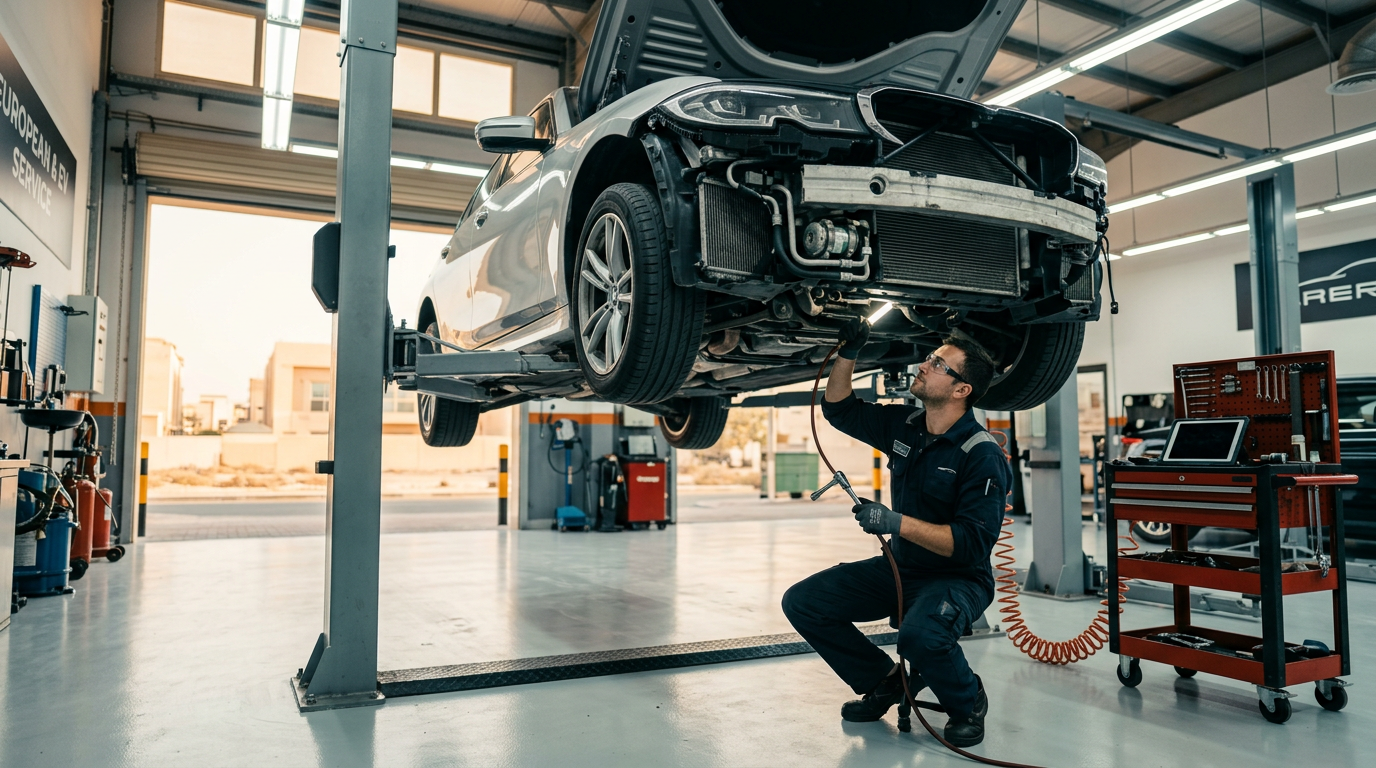
Dubai summer demands a focused car care routine. Between May and September, ambient temperatures regularly exceed 45°C and tarmac can reach 70°C. To protect your car, prioritize air conditioning system inspection, battery health checks, daily tire pressure monitoring, coolant and engine oil condition, and cabin protection from UV damage. Heat accelerates fluid degradation, stresses electrical components, and inflates tire pressure beyond safe limits.
Why UAE Summer Is Uniquely Hard on Cars
The combination of extreme heat, fine dust, high humidity near the coast, and short-trip city driving creates a perfect storm for accelerated wear. Engine bays struggle to dissipate heat when idling in traffic, batteries work harder to crank hot-soaked engines, and rubber seals, hoses and tires age faster under constant UV exposure. Cars parked outdoors face dashboard temperatures exceeding 80°C, warping plastics and fading upholstery.
Stop-start traffic means your cooling system rarely gets sustained airflow, and short trips prevent the engine from reaching optimal operating temperature consistently, leading to moisture and contaminant buildup in engine oil. Fine sand clogs cabin air filters faster than in temperate climates, reducing AC efficiency exactly when you need it most.
Battery Care and Testing
Heat is the biggest enemy of car batteries. For every 8°C rise above 25°C, battery life can halve. In Dubai, this means a battery rated for four years elsewhere may only last two to three summers. High temperatures accelerate the chemical reactions inside the battery, causing fluid evaporation and internal plate corrosion.
Before summer peaks, have your battery load-tested. Most battery service centres use a digital tester to measure cranking amps and state of charge. If your battery is over two years old and shows signs of slow cranking or dimming interior lights, consider replacement before you're stranded in a mall car park in July.
Check that battery terminals are clean and tight. Corrosion increases resistance, making the battery work harder. Park in shade whenever possible, and if your car sits unused for more than a week, consider a trickle charger to maintain charge without overworking the battery in the heat.
Air Conditioning System Maintenance
Your car air conditioning system is not optional in Dubai summer; it's a safety feature. An AC that struggles or blows warm air can make a 10-minute drive unbearable and even dangerous. Before May, have the system inspected for refrigerant charge, compressor function, and condenser blockages.
The cabin air filter traps dust and sand before it enters the cabin. In UAE conditions, this filter clogs every 10,000 to 15,000 km, sometimes sooner if you drive on unpaved roads or during sandstorms. A clogged filter reduces airflow, forcing the blower motor to work harder and reducing cooling efficiency. Replacing the cabin air filter is inexpensive and takes minutes, but the improvement is immediate.
If your AC smells musty when first switched on, bacteria and mold have likely colonised the evaporator. An antibacterial treatment and evaporator cleaning can eliminate the odour and improve air quality. For detailed pricing on common AC repairs, see our guide on car AC repair cost in Dubai.
Run your AC on recirculation mode in heavy traffic to reduce the load on the system and cool the cabin faster. Once the interior is comfortable, switch to fresh air mode periodically to prevent moisture buildup and keep the evaporator dry.
Tire Pressure and Condition
Tire pressure rises roughly 1 PSI for every 5°C increase in ambient temperature. A tire inflated to 32 PSI at 20°C in the morning can easily reach 36 PSI by midday when parked in direct sun. Overinflated tires reduce contact patch, compromise handling, and increase the risk of a blowout on hot tarmac.
Check tyre pressure every week during summer, ideally in the early morning before the car has been driven. Use the pressure recommended on the door placard, not the maximum printed on the tire sidewall. If you regularly drive on highways, consider inflating 1-2 PSI above the placard recommendation to account for heat buildup, but never exceed the maximum safe pressure.
Inspect tires for cracks, bulges, and tread depth. UAE law requires a minimum tread depth of 1.6 mm, but for safety in sudden summer rain, 3 mm is a better threshold. Tires older than five years should be replaced regardless of tread depth, as rubber degrades faster in heat and UV. Read more in our article on how often tyres should be replaced in the UAE.
Avoid parking with tires on painted lines or metal covers, which can be 10-15°C hotter than asphalt and accelerate localized wear. If you need new tires or professional inspection, tire services include mounting, balancing, and disposal.
Engine Cooling System and Fluids
The engine cooling system works overtime in Dubai. Coolant should be a 50/50 mix of antifreeze and distilled water, providing boil-over protection up to 120°C and corrosion inhibitors for aluminium and steel components. Over time, coolant degrades, losing its protective properties and allowing scale and rust to form inside the radiator and engine block.
Check coolant level when the engine is cold. If you're topping up more than once a month, you have a leak that needs engine service attention. Inspect hoses for cracks, soft spots, and bulges; rubber degrades faster in heat, and a burst hose on Sheikh Zayed Road is both dangerous and expensive.
Engine oil also degrades faster in extreme heat. If your manufacturer recommends 10,000 km intervals in temperate climates, consider shortening to 7,500 km in UAE summer, especially for turbocharged engines and cars doing mostly short city trips. High-quality synthetic oil handles heat better than conventional oil. For more detail, see when to change oil in Dubai heat.
Transmission fluid, brake fluid, and power steering fluid (if hydraulic) should also be checked. Brake fluid is hygroscopic and absorbs moisture over time, lowering its boiling point. In Dubai heat, degraded brake fluid can boil under hard braking, causing brake fade.
Protecting the Interior and Exterior
Dashboard and steering wheel temperatures inside a parked car can exceed 80°C, hot enough to cause burns and warp plastics. Use a windscreen sunshade every time you park outdoors. Reflective shades can reduce interior temperature by 10-15°C, protecting the dashboard, seats, and electronics.
Leather and vinyl seats crack and fade under UV exposure. Apply a quality protectant every few weeks, and consider seat covers for cars parked outdoors regularly. Avoid leaving electronics, lighters, aerosol cans, or plastic bottles inside; heat can cause batteries to leak, cans to explode, and bottles to deform and release chemicals.
Exterior paint suffers too. Wash your car regularly to remove dust, sand, and salt (near the coast), which act as abrasives and hold heat against the paint. Wash in the early morning or evening, never in direct midday sun, as water droplets can act as magnifying glasses and etch the paint. For paint correction and protection, explore bodywork and paint services.
Wax or apply a ceramic sealant before summer to add a protective layer against UV and contaminants. Park in covered or shaded areas whenever possible, and if your car sits unused for days, consider a breathable car cover to block sun while allowing moisture to escape.
Pre-Summer Inspection Checklist
A comprehensive car service before summer can catch small issues before they become roadside emergencies. Here's what to prioritize:
- Battery load test and terminal cleaning
- AC system refrigerant charge, compressor operation, and cabin air filter replacement
- Tire pressure, tread depth, and sidewall condition check
- Coolant concentration test and hose inspection
- Engine oil and filter change if due within the next 2,000 km
- Brake fluid condition test (moisture content and color)
- Wiper blades and washer fluid top-up (summer dust reduces visibility)
- Lights and indicators function check
- Suspension and steering inspection for leaks and wear
For a structured service plan, see the 30-60-90 maintenance schedule explained for European cars or book a general maintenance appointment.
Special Considerations for EVs and Hybrids
Electric and hybrid vehicles face unique summer challenges. High-voltage batteries perform best between 20-25°C; above 40°C, thermal management systems work constantly to cool the pack, reducing range and stressing cooling pumps and fans. Park in shade and precondition the cabin while plugged in to reduce the load on the battery during your drive.
EV battery health degrades faster in extreme heat. For detailed advice, read EV battery health in UAE heat. Hybrid vehicles still require engine oil, coolant, brake fluid, and cabin air filter changes, plus inspection of the high-voltage battery cooling system. See hybrid car servicing in Dubai for cost comparisons.
What to Keep in the Car
Summer essentials for your car include:
- Bottled water (replace weekly; heat degrades plastic)
- Tire pressure gauge
- Sunshade for windscreen
- Microfiber cloth for quick interior wipe-downs
- Spare coolant and engine oil (store in the boot, not the cabin)
- Jumper cables or a portable jump starter
- Emergency contact numbers, including roadside assistance
Avoid leaving anything that can melt, explode, or emit fumes. This includes aerosol cans, hand sanitizer, medication, and food.
When to Seek Professional Help
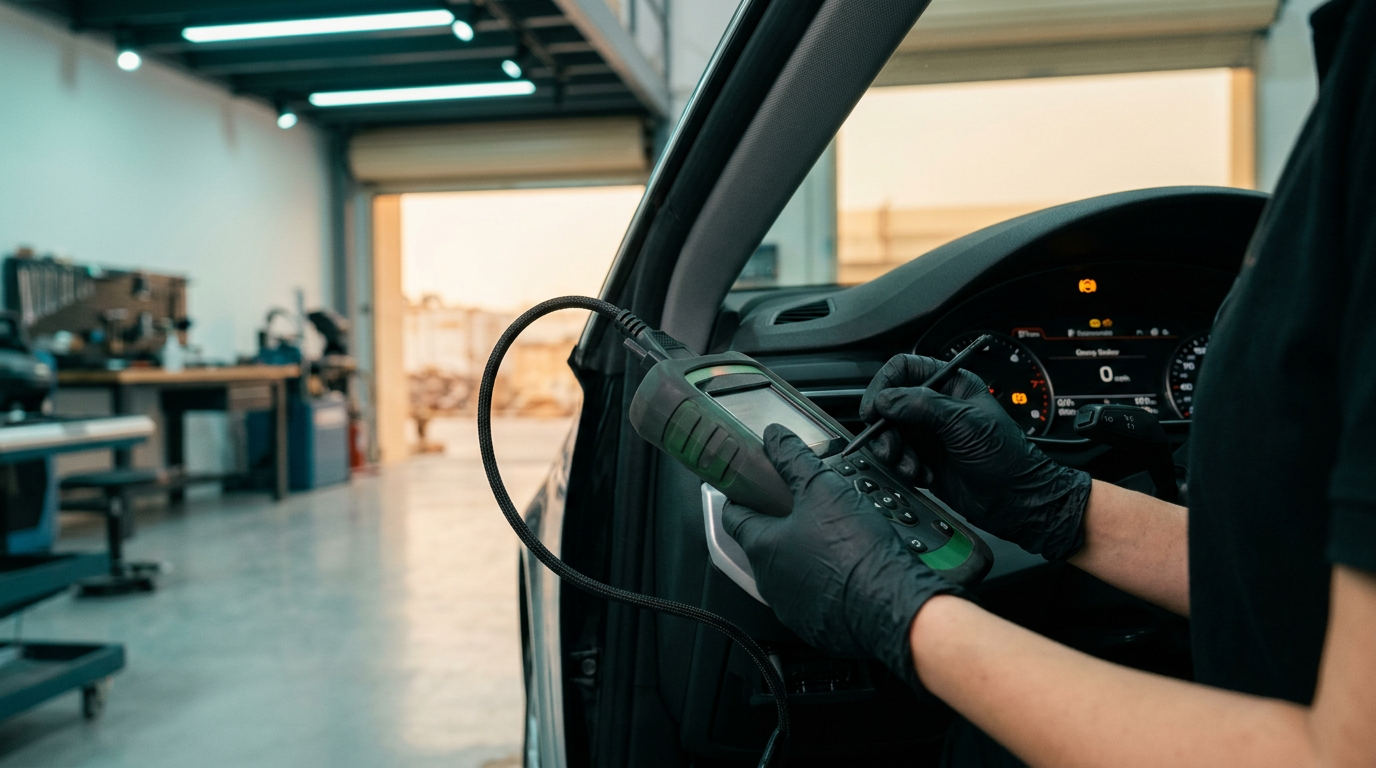
Some summer car issues require immediate attention. If you notice any of the following, book a diagnostic service promptly:
- Engine temperature gauge reading higher than normal
- AC blowing warm air or weak airflow
- Battery warning light on the dashboard
- Unusual smells (burning rubber, sweet coolant, or rotten eggs)
- Tire pressure warning light that doesn't reset after inflation
- Fluid leaks under the car (coolant is usually green or orange, oil is brown or black)
Ignoring these signs in summer heat can turn a minor repair into an expensive failure or leave you stranded in 48°C heat.
Prepare Your Car for Dubai Summer
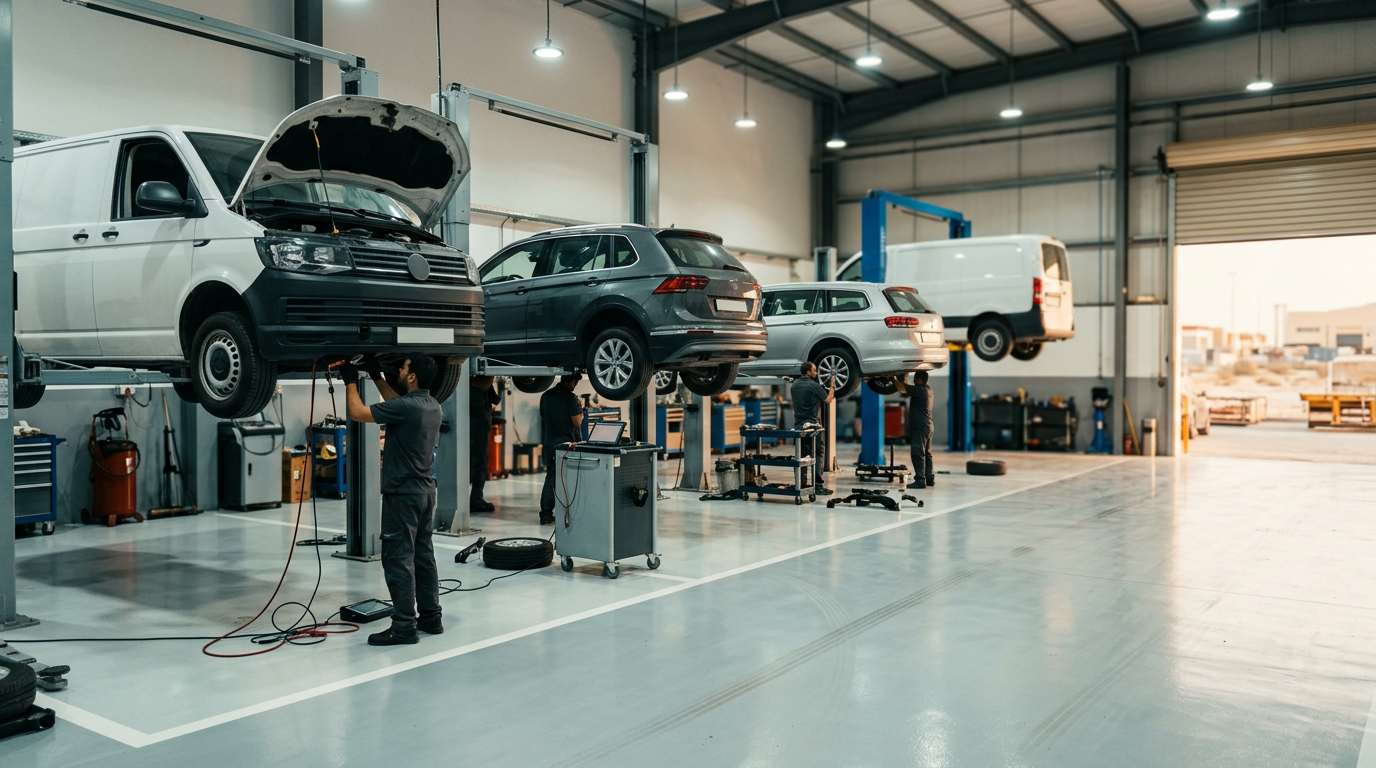
JAD Garage in Al Quoz 4 offers comprehensive pre-summer inspections covering battery, AC, tires, fluids and cooling systems. Book your summer car service today on +971 56 355 6113 and drive with confidence through the heat.
Frequently asked questions