
Signs of Low Engine Oil and What Happens If You Ignore Them

The signs of low engine oil include an illuminated oil warning light on your dashboard, unusual knocking or ticking engine noise, visible smoke from the exhaust, engine overheating, a burning oil smell, and reduced fuel economy. Ignoring these symptoms can lead to catastrophic engine failure, especially in Dubai's extreme heat where oil degrades faster and engines work harder.
Why Engine Oil Level Matters in Dubai
Your engine relies on oil to lubricate hundreds of moving metal parts, reduce friction, dissipate heat, and prevent metal-on-metal contact. In Dubai's climate—where ambient temperatures reach 50°C and road surfaces exceed 70°C—engine oil works under severe stress. Stop-start traffic across Sheikh Zayed Road, short city trips that never fully warm the engine, and fine sand infiltration all accelerate oil consumption and degradation.
When oil level drops below the minimum mark, the oil pump can't maintain adequate pressure throughout the engine. Critical components like camshafts, crankshaft bearings, piston rings, and timing chains begin to starve. The remaining oil overheats faster, loses viscosity, and forms sludge. What starts as a minor top-up issue can escalate to a seized engine within minutes of hard driving.
Early Warning Signs of Low Oil Level
Recognizing these symptoms early gives you time to add oil or schedule service before permanent damage occurs.
Oil Warning Light on the Dashboard
The oil pressure warning light—usually a red oil can symbol—indicates dangerously low oil pressure, not just low level. If this light illuminates while driving, pull over immediately and switch off the engine. Continuing to drive risks catastrophic failure. Check your oil level with the dipstick once the engine cools; if it's below the minimum mark, do not restart until you've added oil.
Some modern European cars, including many BMW, Audi, and Mercedes-Benz models, display a yellow service reminder for low oil level before the red pressure warning appears. Never ignore these early alerts.
Unusual Engine Noise
Low oil causes a distinctive knocking, ticking, or rattling sound from the engine bay, particularly noticeable at idle or during acceleration. This noise comes from valve train components—lifters, camshafts, timing chains—operating without sufficient lubrication. In Subaru boxer engines, low oil often triggers a characteristic ticking from the hydraulic lash adjusters. In turbocharged engines common across Volkswagen, Porsche, and Audi ranges, you may hear turbo whine or bearing noise as oil-cooled turbos begin to fail.
Burning Oil Smell
A strong burning oil smell, especially when stationary or after hard driving, suggests oil is leaking onto hot engine components or the exhaust manifold. This often accompanies low oil level—leaks reduce the oil available for lubrication. Check under the car for drips and inspect the engine bay for wet spots around valve covers, oil pan gaskets, and turbo oil feed lines.
Blue Smoke From the Exhaust
Blue-tinted exhaust smoke indicates the engine is burning oil internally, usually past worn piston rings or valve stem seals. This condition progressively lowers your oil level between changes. Older Range Rover V8s, certain BMW N63 engines, and high-mileage turbocharged units are particularly prone to oil consumption. If you're regularly adding oil between services, diagnostic services can pinpoint whether the consumption is acceptable or symptomatic of wear.
Engine Overheating
Oil doesn't just lubricate—it carries heat away from combustion chambers, pistons, and bearings. Low oil level reduces the engine's ability to manage heat, causing the temperature gauge to climb higher than normal. In Dubai's summer, this effect is amplified; engines already operating near their thermal limits lose critical cooling capacity. Overheating can warp cylinder heads, blow head gaskets, and crack engine blocks. If you notice rising temperatures alongside low oil, stop driving immediately and arrange recovery.
Reduced Fuel Economy
When oil level drops, friction inside the engine increases, forcing it to work harder and consume more fuel. If you notice your car drinking more petrol or diesel during your usual commute without any change in driving habits, check the oil level. This symptom is subtle and often accompanies other signs, but it's measurable—many drivers report 10–15% worse fuel economy when running a litre or more below the recommended level.
What Happens If You Keep Driving With Low Oil
Ignoring low oil warnings leads to a predictable sequence of damage, each stage more expensive than the last.
Immediate: Increased Wear and Friction
Within minutes of driving with low oil, metal surfaces begin to make contact. Microscopic wear accelerates on camshaft lobes, lifters, and bearing surfaces. Timing chains stretch, piston rings lose tension, and turbocharger bearings score. This wear is invisible at first but accumulates quickly, especially under load—motorway merging, climbing ramps, or towing.
Short-Term: Component Failure
After sustained driving with insufficient oil, individual components fail. Timing chains can jump teeth or snap, causing valve-to-piston contact and destroying the cylinder head. Turbochargers seize, sending metal fragments through the oil system. Camshafts wear flat, leading to misfires and loss of power. Rod bearings spin, creating the infamous "rod knock" that signals imminent catastrophic failure. Repair costs at this stage typically range from AED 8,000 for a timing chain replacement to AED 25,000 for cylinder head work on a V6 or V8 engine.
Long-Term: Complete Engine Seizure
The final outcome of driving with critically low oil is engine seizure. Pistons weld themselves to cylinder walls, the crankshaft locks, and the engine stops dead—often while you're driving. At highway speeds, this can be dangerous; the sudden loss of power steering and brake assistance (which rely on engine vacuum or hydraulic pressure) makes the car difficult to control. A seized engine is almost always a total loss, requiring either a replacement engine (AED 15,000–60,000 depending on the model) or scrapping the car. For high-performance and luxury marques like Maserati, Ferrari, or Bentley, replacement costs can exceed AED 100,000.
How to Check Your Engine Oil Level
Checking oil level is simple and should be part of your monthly routine, especially before long trips or if you notice any warning signs.
- Park on level ground and switch off the engine. Wait 5–10 minutes for oil to drain back into the sump.
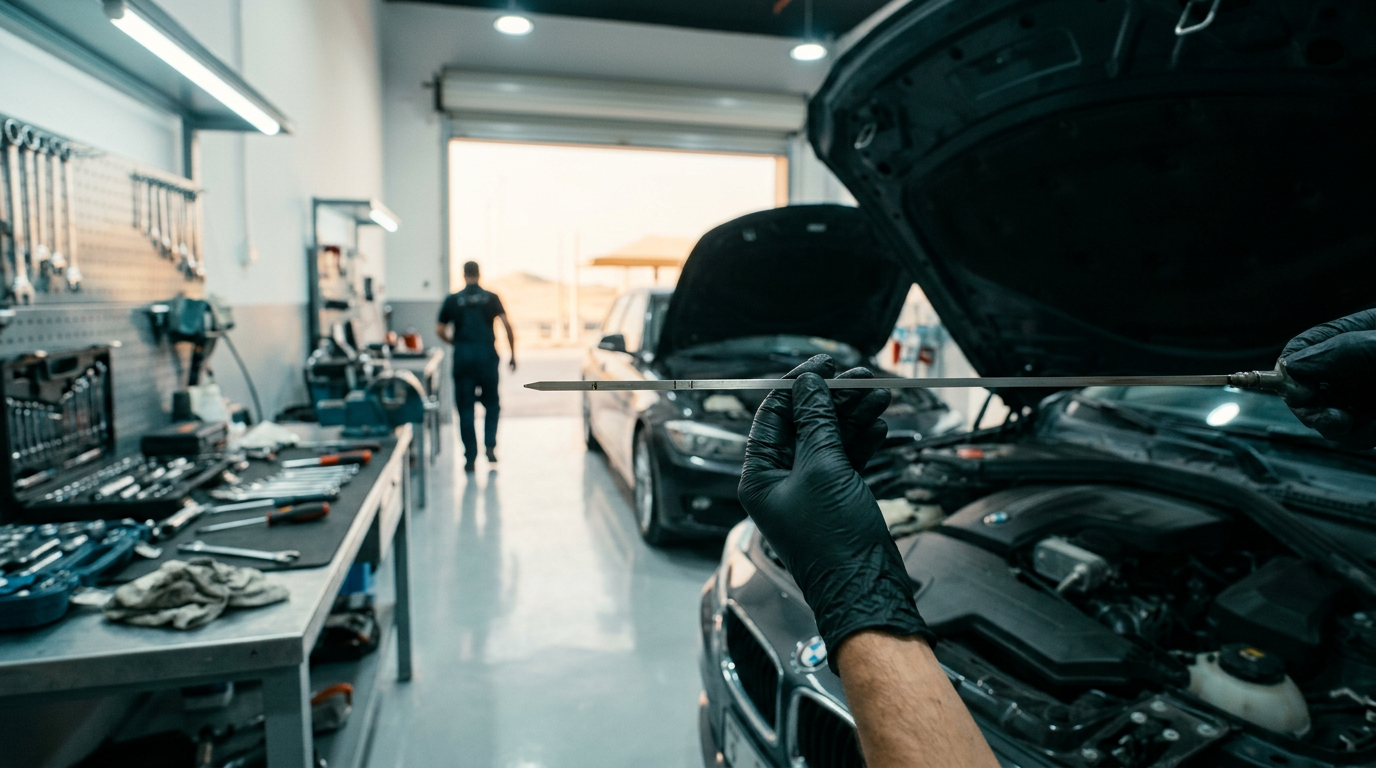
- Locate the dipstick (usually marked with a yellow or orange loop) and pull it out completely.
- Wipe the dipstick clean with a lint-free cloth, reinsert it fully, then pull it out again.
- Check where the oil film sits between the MIN and MAX marks. Ideal level is near the MAX mark.
- If the level is at or below MIN, add the correct grade of oil in small increments (200–300 ml at a time), rechecking after each addition.
Many modern European and electric vehicles no longer have a dipstick; instead, they display oil level via the dashboard menu. Consult your owner's manual for the correct procedure. For electronic level checks, the car typically needs to be on level ground with the engine at operating temperature or fully cold, depending on the manufacturer.
Common Causes of Low Oil Level
Understanding why your oil level drops helps you prevent recurrence.
Oil Leaks
External leaks from valve cover gaskets, oil pan gaskets, crankshaft seals, or turbo oil lines are common in older European cars. BMW N20 and B48 engines, for example, are notorious for oil filter housing gasket and valve cover leaks. If you spot oil puddles under your car or notice a wet, oily engine bay, book engine services to identify and repair the leak before it worsens.
Burning Oil (Internal Consumption)
High-performance engines, turbocharged units, and older cars with worn piston rings or valve seals consume oil as part of normal operation. Manufacturers like Audi and Subaru specify acceptable consumption rates—sometimes up to one litre per 1,000 km under hard driving. However, if consumption suddenly increases, it indicates accelerating wear that warrants inspection.
Extended Service Intervals
Some manufacturers recommend oil changes every 15,000–20,000 km or once a year. In Dubai's severe operating conditions—extreme heat, dusty air, short trips—oil degrades faster. Many independent specialists, including those with experience in European marques, recommend shortening intervals to 10,000 km or every six months. Regular oil change services prevent sludge buildup and ensure the engine always has fresh, effective lubricant.
What to Do If You Notice Low Oil Symptoms
If you observe any signs of low oil, act immediately to minimize damage.
- Stop driving: If the red oil pressure light illuminates, pull over safely and switch off the engine. Do not attempt to drive to a garage.
- Check the level: Once cool, use the dipstick or electronic menu to confirm oil level. If it's low, add the correct grade of oil to bring it up to the MAX mark.
- Inspect for leaks: Look under the car and around the engine for signs of oil leakage. Take photos if you find anything unusual.
- Book a diagnostic: Even if topping up resolves the warning light, find out why the level dropped. Sudden oil loss indicates a leak or internal consumption that needs professional attention. Diagnostic services using manufacturer-grade equipment can identify the root cause.
- Avoid hard driving: Until the issue is resolved, drive gently. Avoid high RPM, rapid acceleration, and motorway speeds that stress the engine.
Preventing Low Oil Issues
Proactive maintenance is far cheaper than engine repairs.
- Check your oil level monthly and before any long journey.
- Follow a service schedule appropriate for Dubai's climate—typically shorter intervals than the manufacturer's global recommendation.
- Use the correct oil grade specified in your owner's manual. Many European engines require low-viscosity synthetics (0W-20, 5W-30) that cope better with heat.
- Address leaks and consumption issues as soon as they appear, before they escalate.
- Keep a litre of the correct oil in your boot for emergency top-ups.
- For high-mileage or performance cars, consider more frequent general maintenance inspections to catch wear early.
Owners of specific models known for oil-related issues—such as certain Porsche engines prone to bore scoring, or Range Rover V8s with timing chain tensioner problems—should be especially vigilant and consult specialists familiar with these common failure modes.
When to Seek Professional Help
While topping up oil is straightforward, recurring low levels or any of the symptoms above warrant professional inspection. Modern European engines are complex, with variable valve timing, turbochargers, and sophisticated oiling systems that require proper diagnostics to assess. Independent specialists with experience across brands like Audi, BMW, Mercedes-Benz, Porsche, and Jaguar can pinpoint issues quickly using manufacturer-level scan tools and technical knowledge.
If you're buying a used car and want to check for hidden oil consumption or leaks, a thorough pre-purchase inspection includes oil system checks, leak detection, and a review of service history to flag potential problems before you commit.
Related reading: Turbo Failure Warning Signs in Modern European Engines.
Concerned About Your Oil Level or Engine Health?
JAD Garage in Al Quoz 4 offers comprehensive oil service, leak diagnostics, and engine inspections for all European marques using manufacturer-grade equipment. Call +971 56 355 6113 to book your check today and prevent costly damage.
Frequently asked questions