Clutch Replacement in Dubai: Cost, Symptoms and Lifespan


Clutching a car refers to operating the clutch pedal in a manual transmission vehicle to engage or disengage power flow between the engine and gearbox. Proper clutch control is essential for smooth gear changes, and poor technique—such as riding the clutch or prolonged half-clutching—accelerates wear, particularly in Dubai's stop-start traffic and extreme heat, where clutch temperatures can soar.
How the Clutch System Works
The clutch sits between the engine and the gearbox, allowing you to temporarily disconnect engine power during gear changes. When you press the clutch pedal fully, you separate the friction plates—one connected to the engine, one to the transmission—so the engine can spin independently while you move the gear lever into the next position. Release the clutch pedal, and spring pressure clamps the plates together, transmitting engine torque through the gearbox to the drive wheels.
In a typical manual transmission system, three core components handle this task:
- Friction disc (clutch plate): splined to the gearbox input shaft, sandwiched between the flywheel and pressure plate
- Pressure plate: bolted to the flywheel, uses a diaphragm spring to clamp the friction disc
- Release bearing (throw-out bearing): pushed by the clutch pedal hydraulic or cable linkage to relieve spring pressure
When the clutch pedal is released and the clutch is fully engaged, engine speed and gearbox input speed match. Press the pedal, and the plates separate, letting engine speed rise or fall independently—critical for smooth, jolt-free gear changes.
What Does "Riding the Clutch" Mean?
Riding the clutch describes resting your foot on the clutch pedal while driving, or holding the pedal partially depressed for extended periods. Even light pressure moves the release bearing against the pressure-plate diaphragm, creating continuous friction and heat. In Dubai's dense traffic—think Sheikh Zayed Road at 18:00 or Beach Road on a Friday—drivers often keep the clutch partially engaged to creep forward, which can halve clutch lifespan.
Why it matters: the friction material is designed for brief engagement cycles, not sustained slip. Continuous slip generates heat that glazes the friction surface, reduces grip, and warps the pressure plate. You'll notice a burning smell (hot organic friction material), a higher bite point, and eventually clutch slip under acceleration.
Double Clutching: When and Why
Double clutching is a two-step technique used to match engine speed to gearbox speed during downshifts, historically essential for older transmissions without synchronisers. The process:
- Press the clutch pedal fully and move the gear lever to neutral
- Release the clutch pedal (gearbox now spins with the wheels)
- Blip the throttle to raise engine speed
- Press the clutch pedal again and slot into the lower gear
Modern European cars—BMW, Audi, Porsche, Volkswagen—have helical-cut synchromesh gears that handle speed matching automatically, so double clutching is rarely necessary for everyday driving. It remains useful in sports car track driving to reduce synchro wear during aggressive downshifts, and it's still practiced in heavy commercial vehicles with non-synchro 'boxes.
Half Clutch Driving: Benefits and Risks
Half clutching—or feathering the clutch—means holding the clutch pedal at the engagement point so the clutch is partially engaged, allowing controlled power transfer at low speeds. You use it when pulling away from a standstill, manoeuvring in tight car parks (common in Dubai Marina or JBR underground parking), or crawling up a slope.
The benefit: precise speed control without touching the brake pedal. The risk: prolonged half-clutch operation keeps the friction plates slipping, generating heat and wearing the friction material. A few seconds during a hill start is fine; holding it for 30 seconds in a traffic queue is destructive.
In Dubai's summer heat—ambient temperatures above 45°C and road surfaces exceeding 70°C—clutch components start hotter than in temperate climates, so any additional slip accelerates degradation. If you must hold position on an incline, use the brake pedal and release the clutch pedal fully between gear lever movements.
Symptoms of Clutch Wear or Damage
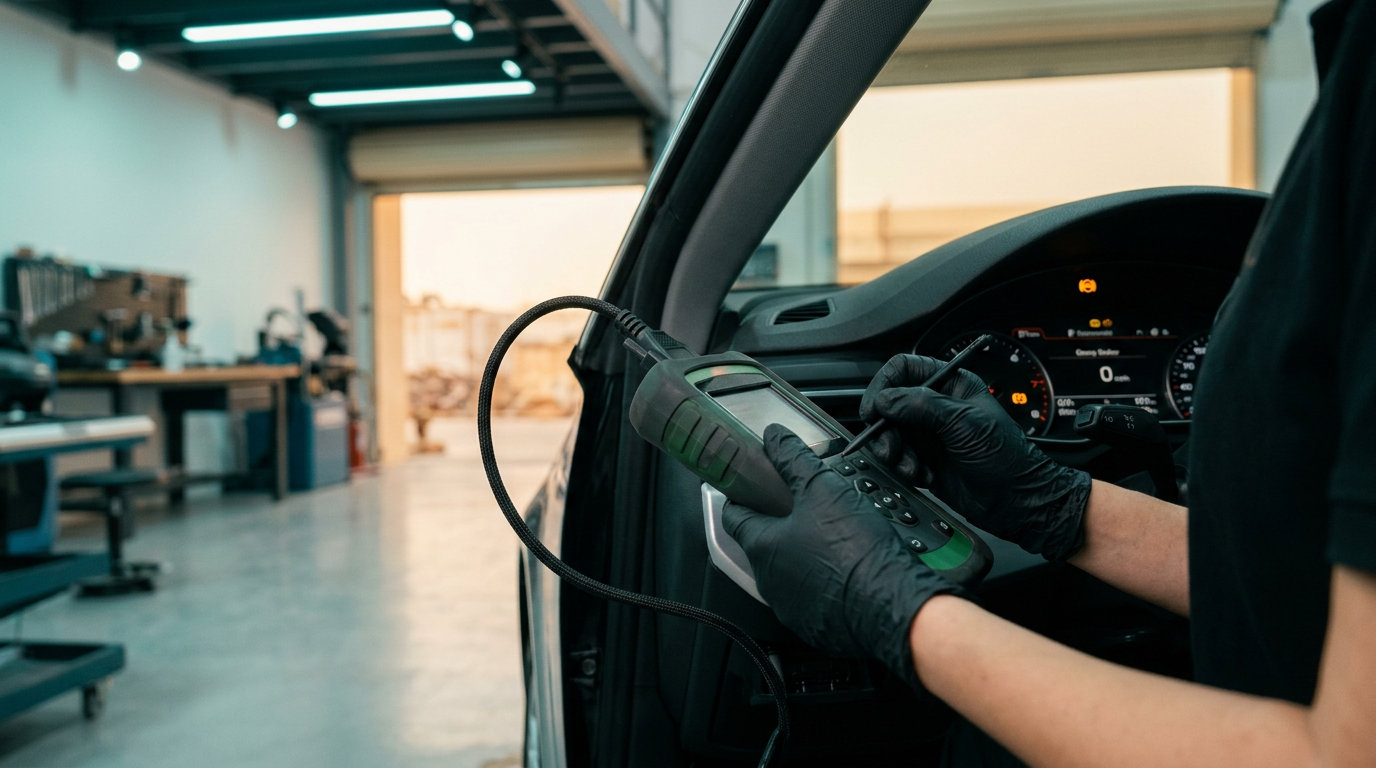
Improper clutch use and high-mileage wear produce recognisable symptoms. A workshop uses specific tests to pinpoint the cause:
| Symptom | Likely Cause | Workshop Confirmation |
|---|---|---|
| Clutch slip under load (engine revs rise but car doesn't accelerate) | Worn friction disc, glazed surface, or oil contamination | Road test in third or fourth gear, apply full throttle; measure engine vs. wheel speed with OBD scanner |
| High or vague bite point | Worn friction material or stretched cable (cable clutch) / air in hydraulic line (hydraulic clutch) | Measure pedal free-play with ruler; pressure-test hydraulic circuit; inspect cable adjustment |
| Judder or vibration during engagement | Warped pressure plate, contaminated friction disc, or worn engine/gearbox mounts | Visual inspection of flywheel and pressure-plate surface for heat spots; measure flywheel runout with dial gauge; check mount condition |
| Difficulty selecting gears or grinding noise | Worn release bearing, failed hydraulic master/slave cylinder, or synchromesh damage | Listen for bearing noise with clutch pedal pressed; test hydraulic pressure at slave cylinder; inspect synchro rings if gearbox is removed |
| Burning smell during driving | Continuous slip from riding the clutch or failed pressure-plate diaphragm spring | Thermal inspection of clutch housing (infrared thermometer); road test to reproduce slip condition |
Clutch Lifespan in Dubai Conditions
Clutch life depends more on driving technique than mileage. In gentle highway driving with smooth gear changes, a clutch can last 150,000–200,000 km. In Dubai's reality—short city trips, frequent traffic jams on Al Khail Road, and aggressive starts—expect 60,000–100,000 km. Performance models with higher torque (Porsche 911, BMW M cars, Audi RS range) wear clutches faster, especially if used for spirited driving.
Heat is the enemy. Dubai summer cockpit temperatures can reach 80°C before you start the air conditioning, and that heat soaks into the transmission tunnel. Combined with stop-start traffic and the temptation to hold the car on the clutch rather than the brake, friction material degrades faster than in cooler climates. If you regularly drive in heavy traffic, inspect clutch condition during routine general maintenance every 20,000 km.
What Clutch Replacement Involves
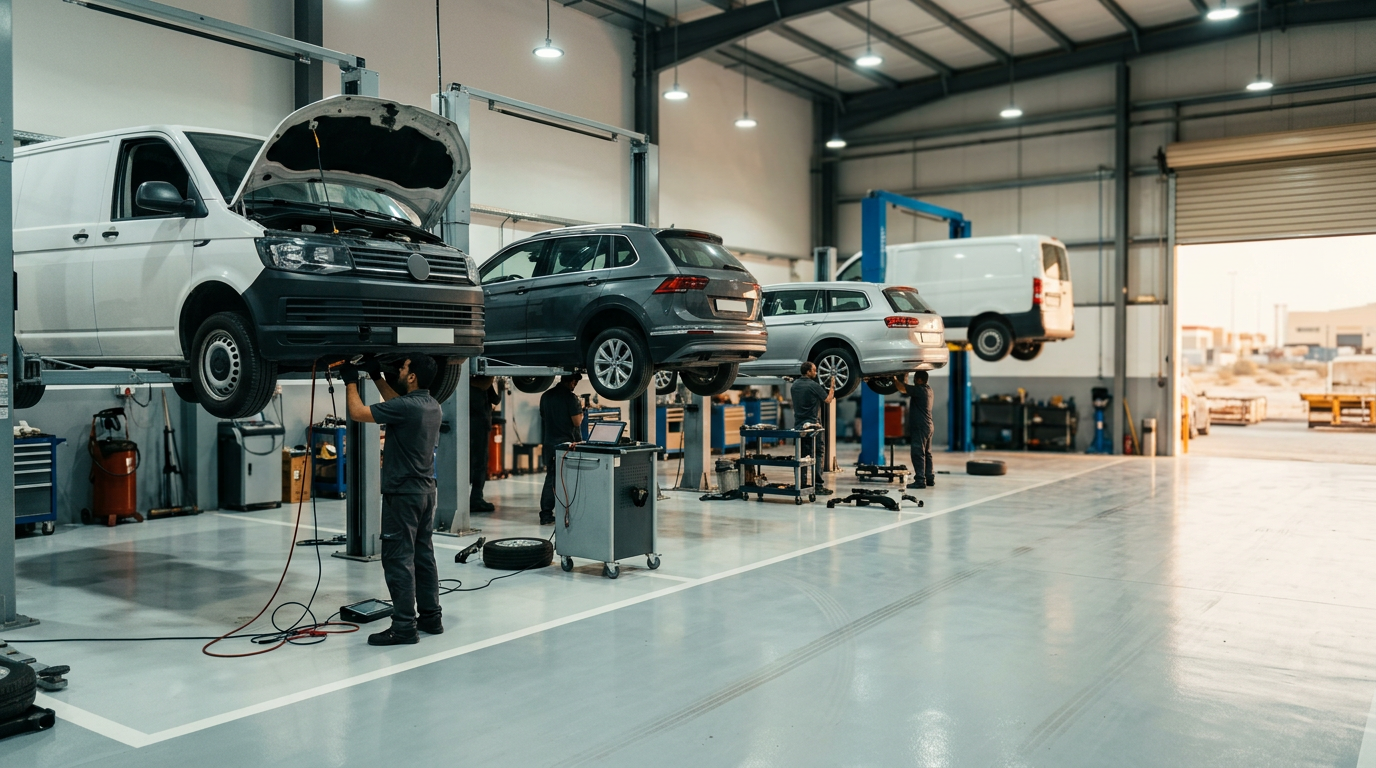
Replacing a clutch is labour-intensive because the gearbox must be removed to access the clutch assembly. The typical process at an independent workshop equipped with manufacturer-grade diagnostic equipment:
- Disconnect the battery and lift the vehicle on a four-post hoist
- Remove the driveshafts (front-wheel drive) or propshaft (rear-wheel drive)
- Disconnect the clutch hydraulic line or cable, and any electrical connectors
- Support the engine with a beam or jack, unbolt the gearbox mounts, and slide the gearbox back off the input shaft
- Inspect the flywheel surface for heat cracks, scoring or warping; resurface or replace if necessary
- Unbolt the pressure plate, remove the old friction disc, and fit the new clutch kit (disc, pressure plate, release bearing)
- Align the friction disc with a pilot tool so the gearbox input shaft will slide through cleanly
- Reinstall the gearbox, reconnect all linkages, bleed the hydraulic clutch circuit if applicable, and road-test for correct engagement and pedal feel
Labour typically takes 4–8 hours depending on the model; transverse-engine front-wheel-drive cars (Volkswagen Golf, Audi A3) are quicker than longitudinal rear-drive layouts (BMW 3 Series, Mercedes-Benz C-Class). Transmission services often include clutch work because the access is identical.
Typical Clutch Replacement Costs in Dubai
Across Dubai's independent workshops, clutch replacement typically ranges from AED 1,800 to AED 4,500, depending on the vehicle. Compact hatchbacks and sedans (Volkswagen Polo, Renault Megane) sit at the lower end; larger or performance models (Porsche Cayman, BMW M3, Audi S4) climb toward the upper range due to parts cost and labour complexity. Dual-mass flywheels—common in modern diesel and high-torque petrol engines—add AED 1,000–2,000 if replacement is necessary.
Always confirm whether the quote includes the release bearing, pilot bearing (if fitted), and flywheel resurfacing or replacement. A complete clutch kit using OEM or premium alternative parts ensures all wear items are renewed together, avoiding a repeat strip-down six months later. For guidance on parts choice, see OEM vs Aftermarket Parts: When Each Makes Sense.
How Clutch Operation Affects Gear Shifting and Engine Performance
Smooth clutch control directly influences shift quality and drivetrain stress. When you press the clutch pedal fully before moving the gear lever, you allow the synchromesh rings to match speeds without fighting engine torque, resulting in a clean, quiet shift. Partial pedal pressure during a shift forces the synchros to work against residual clutch grip, causing grinding and premature synchro wear.
Engine performance is unaffected by clutch condition when the clutch is fully engaged—power transmission is 100%. Once the clutch starts slipping, however, engine speed no longer correlates with vehicle speed: the engine revs freely while acceleration lags, wasting fuel and generating heat. If you notice the engine climbing past 4,000 rpm in fourth gear but speed remains constant, the clutch is slipping and requires immediate attention to avoid stranding you in traffic.
For vehicles used in mixed city and highway driving, good clutch control technique—full pedal travel, no resting foot, minimal half-clutch time—preserves not only the clutch but also the gearbox synchros and engine mounts. If you're considering a used manual-transmission car, request a pre-purchase inspection that includes a clutch bite-point check and a road test under load.
Clutch Care Tips for Dubai Drivers
- Remove your foot from the clutch pedal completely between gear changes; rest it on the dead pedal or floor
- Use the brake pedal to hold position in traffic, not the clutch
- On inclines, apply the handbrake or footbrake, release the clutch pedal fully, then execute a normal hill start when ready to move
- Avoid high-rpm clutch dumps; smooth, progressive engagement reduces shock load on the friction disc and gearbox
- If you smell burning during normal driving, pull over safely, let the clutch cool, and have it inspected—continued use can warp the flywheel
- Service the clutch hydraulic fluid (if hydraulic) every two years; moisture ingress reduces pedal feel and can cause the slave cylinder to fail
Dubai's combination of heat, sand-laden air, and traffic congestion is tough on every drivetrain component. Regular inspection during car repair or service visits catches wear early, before a slipping clutch leaves you stuck on Al Wasl Road at midday.
If you're experiencing any clutch symptoms—slip, judder, high bite point, or difficulty selecting gears—bring your car to JAD Garage in Al Quoz 4. Our team uses manufacturer-grade diagnostic equipment to pinpoint the issue and explain exactly what's needed. Call +971 56 355 6113 to book an inspection, or visit us Monday to Saturday, 09:00–19:00.
Clutch Problems? Get a Professional Diagnosis in Al Quoz
If you're experiencing any clutch symptoms—slip, judder, high bite point, or difficulty selecting gears—bring your car to JAD Garage in Al Quoz 4. Our team uses manufacturer-grade diagnostic equipment to pinpoint the issue and explain exactly what's needed. Call +971 56 355 6113 to book an inspection, or visit us Monday to Saturday, 09:00–19:00.
Frequently asked questions