German Car Specialists in Dubai: How to Vet One


When choosing a German car specialist in Dubai, prioritise three criteria: access to manufacturer-grade diagnostic equipment that reads factory control modules, proven experience with your specific marque (BMW, Mercedes, Audi, Volkswagen or Porsche), and transparent record-keeping that documents every repair with part numbers and service history for future resale value.
Why German Cars Need Specialist Knowledge in Dubai
German vehicles—BMW, Mercedes-Benz, Audi, Volkswagen and Porsche—dominate the UAE premium car market, yet their complexity increases maintenance risk when handled by generalist workshops. Modern German cars integrate dozens of control modules that communicate over CAN and FlexRay buses; a fault in one system can cascade warnings across the instrument cluster. Dubai's climate adds stress: under-bonnet temperatures regularly exceed 70°C in summer, accelerating coolant hose degradation, oil coking and turbocharger bearing wear. A technician who services Japanese economy cars will lack the diagnostic software, wiring diagrams and part-number cross-references essential for German marques.
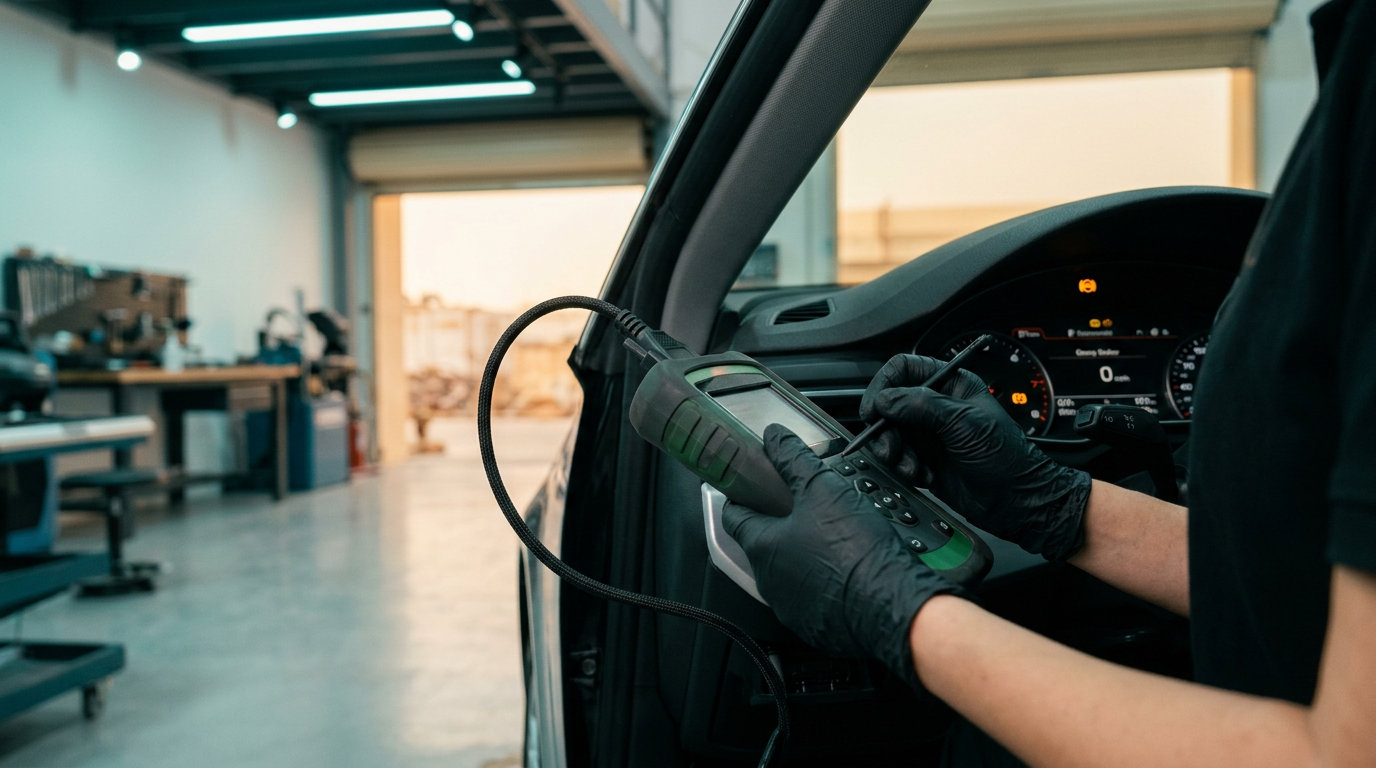
German manufacturers update software and issue technical service bulletins throughout a model's life. An independent workshop that invests in subscription-based diagnostic platforms—ISTA for BMW, Xentry for Mercedes, ODIS for VAG group—can read live data, perform adaptations after component replacement and clear fault codes correctly. Workshops without these tools rely on generic OBD-II scanners that miss proprietary modules and cannot code new keys, reset service intervals or calibrate steering angle sensors after suspension work.
Core Selection Criteria for a German Car Specialist
1. Diagnostic Equipment and Software Access
Ask whether the workshop owns factory-level scan tools or relies on aftermarket readers. Genuine diagnostics matter for:
- Multi-module scanning: Reading airbag, ABS, transmission, engine, infotainment and comfort modules in one session.
- Coding and programming: Installing a replacement battery on a late-model BMW requires registering capacity and chemistry in the DME; generic tools cannot perform this.
- Service reset: Clearing the inspection reminder and resetting oil-quality algorithms, not just the dashboard light.
- Live data graphing: Plotting fuel trims, boost pressure or gearbox clutch slip over time to diagnose intermittent faults.
Workshops that subscribe to manufacturer portals also download wiring diagrams and repair procedures, reducing guesswork on complex jobs like electrical troubleshooting or ECU programming.
2. Marque-Specific Experience and Parts Sourcing
German marques share platforms but differ in architecture. A Mercedes M276 V6 uses a different timing-chain layout to Audi's EA839; a technician experienced with one is not automatically proficient with the other. Ask how many years the team has worked on your specific brand and request examples of similar repair jobs—replacing a Porsche PDK mechatronic unit or diagnosing a BMW N63 oil-consumption issue.
Parts sourcing separates capable independents from generalists. OEM parts (manufactured to the same specification as dealer parts but without the three-pointed star or roundel) offer identical fit and warranty at lower cost. Premium aftermarket brands—Bosch, Sachs, Lemförder, Bilstein—supply many OE components and are acceptable for service items like brake pads, filters and suspension bushings. Cheap pattern parts from unknown suppliers cause premature failure: budget brake discs warp in Dubai heat, and no-name oil filters lack proper bypass-valve calibration.
3. Transparent Record-Keeping and Digital Service History
Comprehensive service records protect resale value. Every visit should generate a printed or emailed report listing:
- Date, odometer reading and VIN
- Work performed with part numbers and labour hours
- Fault codes retrieved and cleared
- Fluid condition notes (oil colour, coolant pH, brake-fluid moisture percentage)
- Upcoming maintenance due at the next interval
Some workshops upload service history to cloud platforms accessible via smartphone app, replicating the digital service book used by main dealers. When you sell the car, a complete maintenance file reassures buyers and can add thousands of dirhams to the asking price.
4. Workshop Environment and Equipment Investment
Visit the facility before committing. Look for:
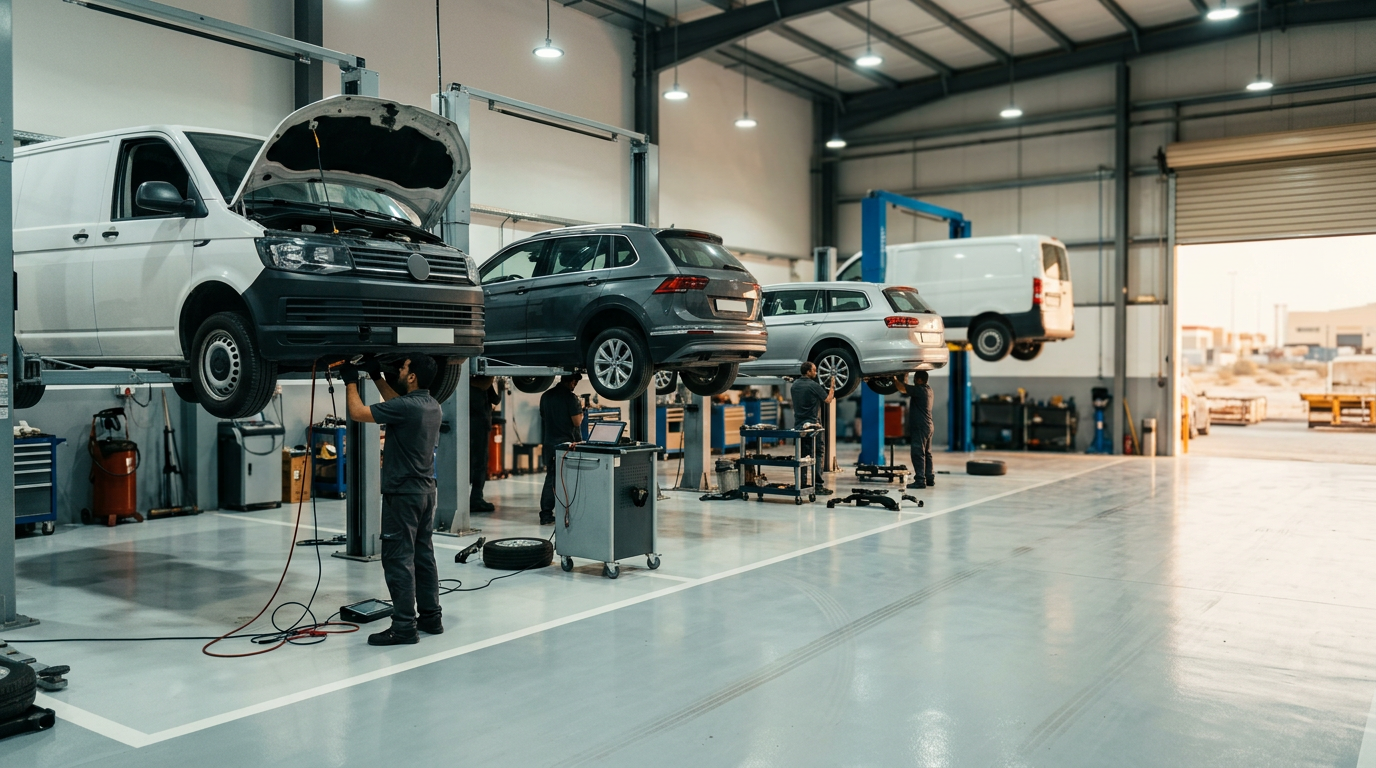
- Covered, air-conditioned bays (essential for technician accuracy in 45°C ambient temperatures)
- Four-post and two-post lifts rated for heavy vehicles (a loaded Audi Q7 or Porsche Cayenne exceeds 2,500 kg)
- Wheel alignment equipment with manufacturer-specific databases
- AC recovery and recharge stations that handle R134a and R1234yf refrigerants
- Battery chargers and power-supply units to maintain voltage during module coding
A clean, organised workshop with labelled tool storage and a parts inventory system signals professionalism. Cluttered bays with corroded lifts and missing safety equipment indicate corner-cutting that will extend to your vehicle.
Comparing Workshop Types in Dubai
| Workshop Type | Diagnostic Access | Parts | Typical Cost Range (AED) | Turnaround |
|---|---|---|---|---|
| Main-dealer service centre | Full factory access, latest software | OEM only | Major service 1,800–3,500 | 1–3 days; may require appointment weeks ahead |
| Independent marque specialist | Factory-level tools, subscription diagnostics | OEM + premium aftermarket | Major service 1,200–2,200 | Same day to 2 days for most jobs |
| Multi-brand chain | Aftermarket scan tools, limited coding | Mixed quality; some budget brands | Major service 900–1,600 | Same day for routine work |
| Mobile mechanic | Portable OBD-II reader | Customer-supplied or basic stock | Varies widely | On-site; limited to simple tasks |
Main-dealer service centres maintain the digital service book automatically and use genuine parts exclusively, but labour rates reflect showroom overheads. Independent specialists offer comparable diagnostics and parts quality at lower cost, provided they invest in the right equipment. Multi-brand chains handle routine oil changes and brake service competently but may lack marque-specific expertise for complex faults. Mobile mechanics suit emergency roadside repairs but cannot perform work requiring lifts, alignment rigs or controlled environments.
Questions to Ask Before Booking
Vet any workshop with these questions:
- Which diagnostic platform do you use for my brand? The answer should name ISTA, Xentry, ODIS, PIWIS or equivalent, not "we have a scanner."
- Can you show me a sample service report? Review the level of detail and whether part numbers are documented.
- What is your parts warranty policy? Reputable suppliers back OEM-equivalent parts with 12–24 month warranties.
- Do you provide a courtesy car or shuttle service? Useful for longer jobs, though not universal among independents.
- How do you handle software updates and recalls? Some independents coordinate with dealers for recall work; others advise the owner to visit the dealer separately.
Red Flags to Avoid
Walk away if the workshop:
- Refuses to provide a written estimate before starting work
- Cannot explain the diagnostic process or insists on "trying parts" without scanning
- Stores vehicles outdoors in direct sun (UV and heat damage interiors and paint during multi-day repairs)
- Offers suspiciously low quotes that omit essential steps (e.g., brake fluid flush without specifying DOT 4 LV for modern ABS systems)
- Has no visible business registration or tax documentation
German Marque Considerations Specific to Dubai
BMW
Common Dubai-climate issues include cooling-system failures (electric water pumps, expansion tanks), VANOS solenoid clogging from short-trip driving, and battery drain from extended comfort-access use in heat. Diagnostic services must cover all modules; a generic reader will miss footwell-module faults that cause phantom battery drain. Refer to our BMW service centre comparison for model-specific guidance.
Mercedes-Benz
The M276 and M278 V6/V8 engines suffer timing-chain stretch and balance-shaft failure, often first detected via rough idle and check-engine light. Airmatic suspension on S-Class and E-Class models leaks from dried seals; a specialist should inspect compressor duty cycle and ride-height sensors during routine service. Xentry diagnostics are mandatory for any electrical work beyond bulb replacement.
Audi
VAG group vehicles share platforms with Volkswagen and Porsche. Common faults include DSG mechatronic failures (especially DQ250 and DQ500 in Dubai stop-start traffic), carbon buildup on direct-injection engines, and sunroof-drain blockages that flood footwells during rare rain. ODIS software is essential for transmission adaptations after fluid changes.
Volkswagen
The EA888 Gen 3 engine (Golf GTI, Tiguan) and DSG gearboxes require strict service intervals—every 60,000 km for DSG fluid in Dubai heat, not the 120,000 km interval published for temperate climates. Workshops familiar with TSI and TDI peculiarities will check PCV valve condition and intercooler oil contamination during major services.
Porsche
Air-cooled and water-cooled models demand different expertise. The 996/997 IMS bearing issue, Cayenne coolant-pipe corrosion and PDK clutch wear are well-documented; a capable independent will proactively inspect these during general maintenance. PIWIS diagnostics unlock full system access. Our Porsche owner's guide details common watch points.
Cost vs. Value: What You're Paying For
Hourly labour rates in Dubai range from AED 150 at budget garages to AED 600+ at main dealers. Independent specialists typically charge AED 250–400 per hour. The difference reflects diagnostic capability, technician training, parts quality and facility overheads. A cheaper quote that omits essential steps—skipping brake fluid changes, reusing crush washers, or topping off rather than replacing engine oil—costs more in the long run through repeat failures and accelerated wear.
Request itemised estimates that separate parts, labour and consumables. Compare part numbers across quotes; a genuine BMW oil filter (11 42 7 953 129) costs AED 35–50, while an unknown brand may be AED 10 but lack proper bypass-valve calibration, risking engine damage if the filter clogs.
Maintaining Service History for Resale
Dubai's used-car market values documented maintenance. Buyers on dubizzle and AutoTrader filter by service history, and a complete file can justify a 10–15 per cent price premium. Ensure every service visit generates a stamped, dated record. Independent workshops should provide:
- Printed invoice with workshop stamp and technician signature
- Digital PDF emailed to your records
- Entry in any third-party service-book apps (some workshops use Carfax or local equivalents)
If you switch workshops, carry the service file to the new provider and request they continue the documentation sequence. Gaps in the record raise buyer suspicion and reduce offers.
Disclosure
This guide is published by JAD Garage, an independent European and EV specialist located in Al Quoz 4, Dubai. The comparison criteria and workshop types described reflect general market observations. Readers should verify current service capabilities, parts sourcing policies and pricing directly with each workshop before making a booking decision. No ratings, review counts or awards are implied for any named business.
Related reading: Land Rover Service Options in the UAE: Dealer, Specialist, Mobile.
German Car Expertise in Al Quoz
JAD Garage in Al Quoz 4 offers manufacturer-grade diagnostics and transparent service records for BMW, Mercedes, Audi, Volkswagen and Porsche. Call +971 56 355 6113 or visit Warehouse No.1, Street 8 to discuss your vehicle's needs with our team.
Frequently asked questions