
How Long Does an RTA Inspection Take and What They Check

An RTA vehicle inspection in Dubai typically takes 30 to 60 minutes, depending on the testing centre, time of day, and whether your vehicle passes on the first attempt. The inspection covers brakes, lights, emissions, tyres, steering, suspension, and structural integrity to ensure compliance with UAE road safety standards before registration renewal or ownership transfer.
What Is an RTA Vehicle Inspection?
The RTA vehicle inspection—often called a technical inspection or vehicle testing—is a mandatory safety and emissions check required for car registration renewal and ownership transfer in Dubai. Administered by RTA Dubai and Dubai Municipality testing centres, the inspection confirms that your vehicle meets minimum safety, environmental, and structural standards.
Every vehicle in Dubai must pass this inspection annually (or biennially for new cars in their first two years) to renew the mulkiya. If you're buying or selling a car, the vehicle must pass an RTA inspection before the ownership transfer can be completed.
How to Book an RTA Vehicle Inspection Appointment
Since early 2023, walk-in inspections have been phased out at most RTA testing centres. You must book an appointment through the official RTA Dubai app or the RTA website. Here's how:
- Download the RTA Dubai app (iOS or Android) or visit rta.ae
- Log in with your UAE Pass or create an RTA account
- Select Vehicle Testing under the Services menu
- Choose your preferred testing centre and time slot
- Pay the inspection fee (typically AED 170 for a standard car)
- Receive a confirmation SMS with your appointment details
Appointment slots are available during working hours Monday to Saturday, 09:00–19:00 (some centres close earlier on Saturdays). Sunday is closed. Booking in advance—especially during peak renewal months—helps you avoid long waits.
What Do RTA Inspectors Check?
The RTA inspection is systematic and covers every safety-critical system. Inspectors use calibrated equipment and visual checks to assess the following:
Brakes
The vehicle is driven onto a rolling-road brake tester that measures braking force on each wheel. Inspectors check for balance, minimum braking efficiency, and parking brake performance. Worn brake pads, warped discs, or uneven braking will cause immediate failure.
Lights and Indicators
All exterior lights are tested: headlights (low and high beam), fog lights, brake lights, indicators, hazard lights, reverse lights, and number-plate lights. A single blown bulb, cracked lens, or aftermarket LED that doesn't meet brightness standards will fail the test.
Emissions
Petrol vehicles undergo an exhaust emissions test to measure carbon monoxide, hydrocarbons, and lambda (air-fuel ratio). Diesel vehicles are tested for smoke opacity. Catalytic converter faults, engine misfires, or tampered emissions equipment will result in failure.
Tyres
Inspectors check tread depth (minimum 1.6 mm across the central three-quarters of the tyre), sidewall condition, and uniform wear. Bald tyres, cracks, bulges, or mismatched sizes will fail. Spare tyre condition is also noted but rarely causes failure.
Steering and Suspension
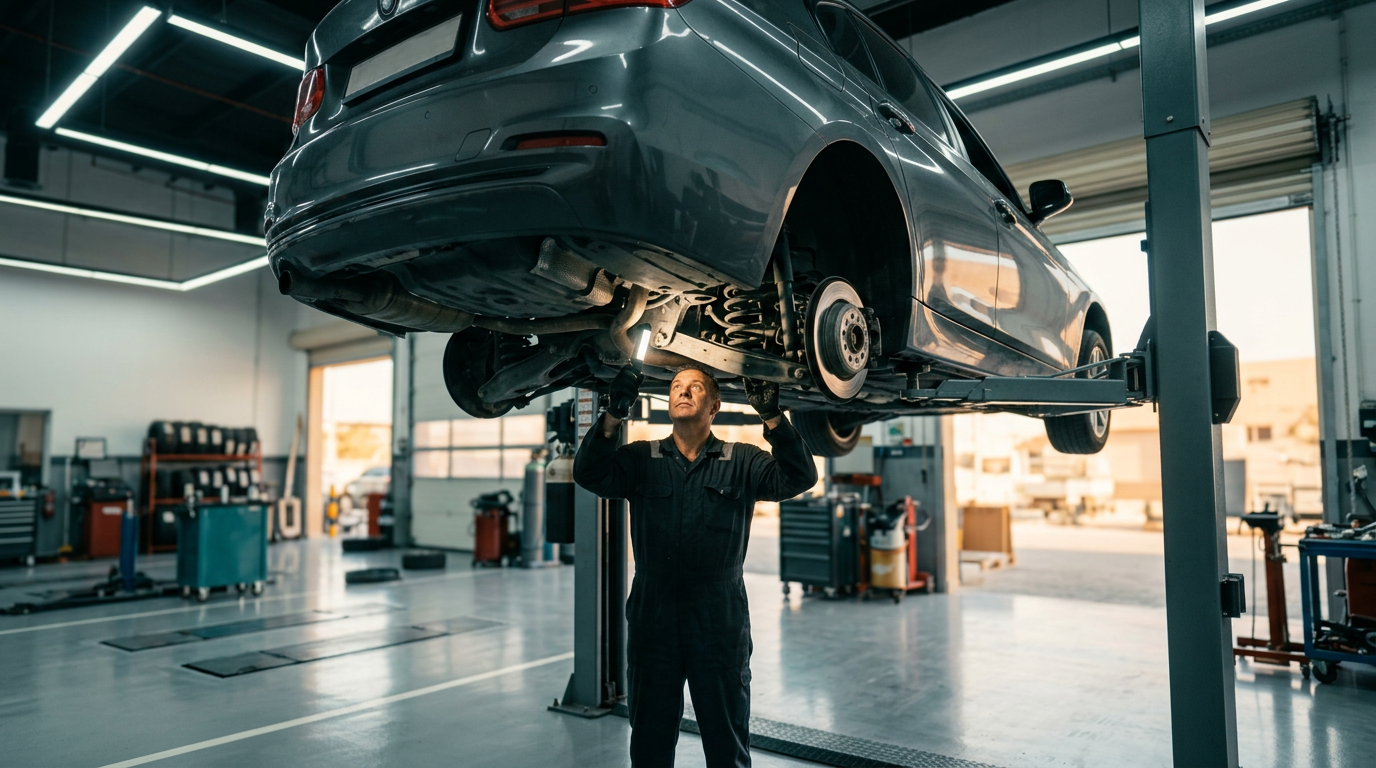
The vehicle is placed on a ramp or pit, and inspectors physically check steering linkages, ball joints, control arms, shock absorbers, and bushings for play, leaks, or damage. Excessive free play in the steering wheel or clunking noises will fail the inspection.
Windscreen and Glass
Cracks or chips in the driver's line of sight (roughly the area swept by the wipers) are a failure. Side and rear glass must be intact. Heavily tinted windows that don't meet UAE regulations (minimum 50% light transmission on front side windows) may also fail.
Body and Chassis
Inspectors look for structural damage, rust perforation, sharp edges, or poorly executed bodywork. Accident damage that affects the chassis or crumple zones, missing bumpers, or insecure body panels will cause failure. Aftermarket modifications—especially suspension lifts, exhaust systems, or engine swaps—must comply with RTA requirements or you'll be asked to revert to stock.
Mirrors, Horn, Wipers, and Seatbelts
All mirrors must be present and adjustable. The horn must work. Wiper blades must clear the screen without streaking. All seatbelts must latch, retract, and show no fraying.
Common Reasons for RTA Test Failure and How to Avoid Them
Most failures are preventable with basic pre-inspection checks. The most frequent issues include:
- Worn brake pads: Dubai's stop-start traffic and heat accelerate pad wear. Have brakes inspected at least two weeks before your RTA appointment.
- Blown bulbs: Check all lights the night before. Carry spare bulbs if your car uses standard halogen units.
- Cracked windscreen: Even a small chip can spread in UAE heat. Repair or replace the glass before the inspection.
- Bald or mismatched tyres: Inspect tread depth with a gauge or the 1-dirham coin test (the silver edge should not be fully visible in the tread groove).
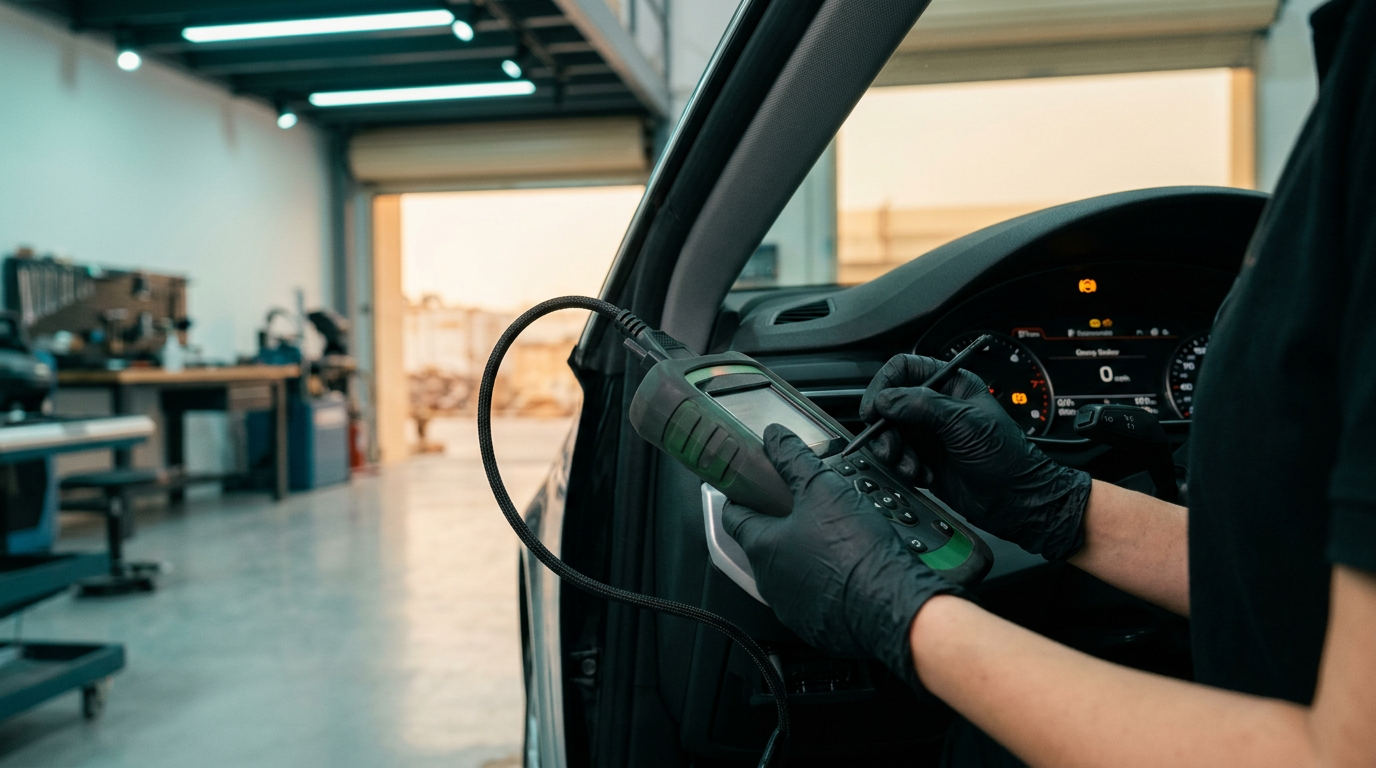
- Emissions failure: Often caused by a faulty oxygen sensor, catalytic converter, or overdue service. A diagnostic scan and engine service can identify and fix the root cause.
- Suspension noise or play: Clunking over bumps or vague steering feel suggests worn bushings or ball joints. A suspension inspection before the RTA test avoids failure and re-test fees.
- Aftermarket modifications: Lowered suspension, loud exhausts, tinted front windows, or undeclared engine modifications are common failure points. Keep modifications within RTA compliance or revert to OEM specification.
If your vehicle fails, you'll receive a printed report listing the defects. You have 30 days to fix the issues and return for a re-test (at a reduced fee, typically AED 85). The re-test covers only the failed items, not the entire vehicle.
What Documents Do You Need?
Bring the following to your RTA inspection appointment:
- Original vehicle registration card (mulkiya)
- Valid Emirates ID of the registered owner
- Proof of valid UAE car insurance
- Appointment confirmation (SMS or app screenshot)
If the vehicle is financed, the bank's details will already be linked in the RTA system. For ownership transfer, the buyer and seller must both be present with their Emirates IDs, or a power of attorney must be provided.
Where Are the RTA Vehicle Testing Centres?
RTA Dubai operates several testing centres across the emirate, including Al Quoz, Al Awir, Warsan, and Nad Al Sheba. Dubai Municipality also runs vehicle testing centres in certain areas. All centres perform the same checks to the same standards, but appointment availability and wait times vary. Choosing a centre close to your home or workplace—and booking early in the day—can save time.
Preparing Your Vehicle Before the Inspection
A little preparation goes a long way. One to two weeks before your appointment:
- Book a general maintenance check at an independent workshop to catch brake, tyre, light, or suspension issues early.
- If you drive a European or EV model, ensure any software updates or recalls are completed—some emissions or ABS faults are software-related.
- Check your battery health; a weak battery can cause dashboard warning lights that may complicate the inspection.
- Top up all fluids: engine oil, coolant, brake fluid, washer fluid.
- Clean the exterior and number plates so inspectors can read them clearly.
- If you own a high-performance or modified vehicle—Porsche, BMW, Audi, or Mercedes-Benz—have a specialist review any aftermarket parts for RTA compliance.
For buyers, always insist on a current RTA pass certificate or schedule a pre-purchase inspection before committing to a used car. A vehicle that struggles to pass RTA may have hidden issues that cost far more than the purchase saving. Our used car buying guide covers the key checks.
What Happens After You Pass?
Once your vehicle passes, the RTA system is updated immediately. You can then proceed to renew your registration (either at the test centre kiosk, via the RTA app, or at a Tas'heel centre) and pay the renewal fees, Salik deposit, and any outstanding fines. Your new mulkiya and registration sticker will be issued on the spot or delivered within a few days if processed online.
For ownership transfer, the passing inspection certificate is valid for 30 days. The buyer and seller complete the transfer formalities at an RTA customer service centre or Tas'heel, and the new registration card is issued in the buyer's name.
Recent Changes to RTA Inspection Policies
In 2023, RTA Dubai made appointment booking mandatory at all major testing centres to reduce congestion and improve service quality. Walk-in slots are no longer available except in exceptional cases. The RTA app and website now offer real-time slot availability, and SMS reminders are sent 24 hours before your appointment.
Fees have remained stable, but the RTA has tightened enforcement on emissions compliance and aftermarket modifications, particularly for diesel vehicles and modified sports cars. If you own a sports car or supercar, ensure any performance upgrades are documented and compliant.
Why a Pre-Inspection Service Check Saves Time and Money
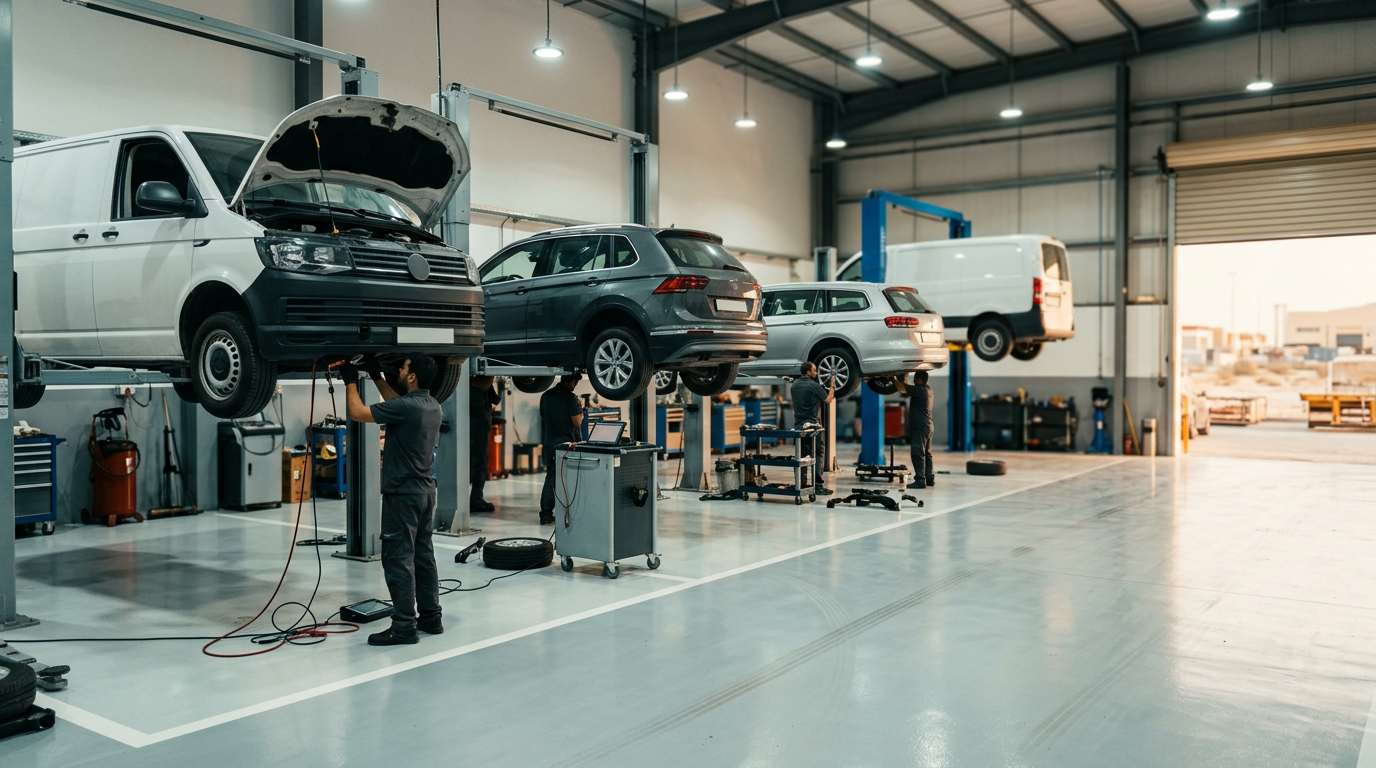
Many Dubai workshops—including independent European and EV specialists—offer a pre-RTA inspection service. This involves a technician running through the same checklist the RTA uses, identifying issues before you book your official appointment. For European brands—Volkswagen, Volvo, Land Rover, MINI, Alfa Romeo—this can be especially valuable, as certain faults (ABS sensors, airbag lights, emissions readiness) require diagnostic equipment and ECU programming that roadside garages may not have.
A pre-check typically costs AED 150–300 and can prevent a failed RTA test, a wasted appointment, and the inconvenience of a re-test. It's a small investment for hassle free registration renewal.
Pre-RTA Inspection Check in Al Quoz
Avoid surprises at the testing centre. JAD Garage in Al Quoz 4 offers pre-RTA inspection checks for European and EV models, using manufacturer-grade diagnostics to catch brake, light, emissions, and suspension issues before your appointment. Call +971 56 355 6113 or visit us Monday to Saturday, 09:00–19:00.
Frequently asked questions