
How to Read the Tyre Date Code and Why It Matters Here

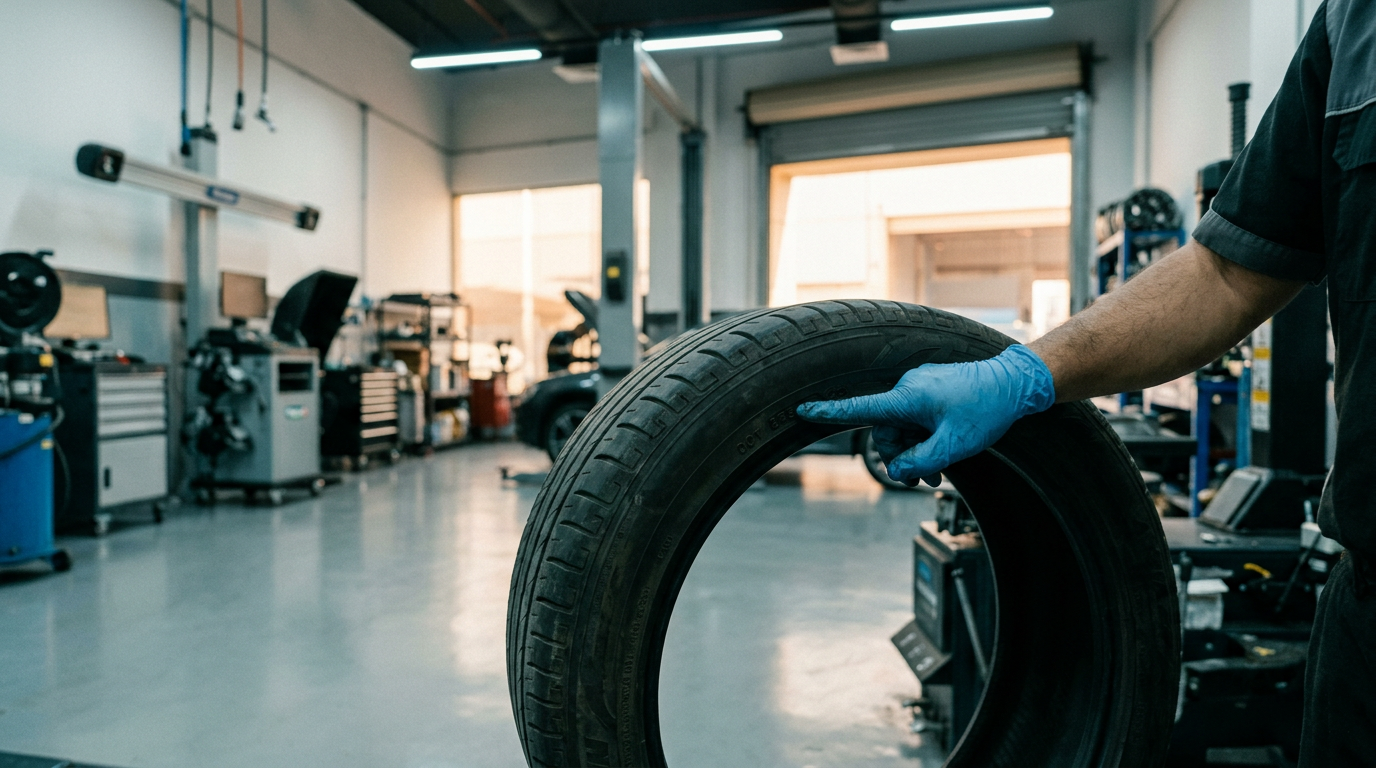
The tyre date code is a four-digit number stamped on the sidewall as part of the DOT code. The first two digits show the week of manufacture, and the last two show the year. For example, "2419" means the tyre was made in the 24th week of 2019. Knowing this date matters because tyres age even when unused, and Dubai's heat accelerates rubber degradation.
What Is the Tyre Date Code and Where Do You Find It?
Every tyre sold in the United States, Canada, and most global markets carries a DOT code—a regulatory marking mandated by the Department of Transportation. The date code sits at the end of this longer string of letters and numbers, always enclosed in a small oval on one sidewall.
The full DOT code looks something like this: DOT U2LL LMLR 2419. The final four digits—2419 in this example—are the tire manufacture date. You'll find this stamp moulded into the rubber, usually near the rim edge. If you don't see it on the outboard side, check the inboard sidewall; manufacturers often place it on the side that faces the vehicle when mounted.
Not all markings on the sidewall relate to age. You'll also see the tire size (e.g., 245/40 R18), load rating, speed rating, maximum inflation pressure, and tread-wear indicators. The date code is distinct: always four digits, always in an oval.
How to Read the Tire Date Code
Reading the tire identification number is straightforward once you know the format. The code uses a week-and-year system:
- First two digits: the week of the year (01 to 52)
- Last two digits: the year (e.g., 19 = 2019, 23 = 2023)
So a tyre stamped 0522 was made in the fifth week of 2022—early February. A code of 4820 indicates the 48th week of 2020, which is late November.
Tyres manufactured before the year 2000 used a three-digit code, but those are now well beyond safe service life and extremely rare on the road. If you encounter a three-digit date code, replace the tyre immediately.
Why Tyre Age Matters for Safety and Performance
Rubber compounds degrade over time due to oxidation, UV exposure, temperature cycling, and ozone. Even a tyre that has never touched the road will harden, crack, and lose grip as it ages. In Dubai, where ambient temperatures regularly exceed 45°C and road surface temperatures can hit 70°C in summer, this ageing process accelerates.
Most tyre manufacturers, including Michelin, recommend replacing tyres that are six years old, regardless of tread depth. Some specify a maximum service life of ten years from the date of manufacture, but that assumes ideal storage and moderate climates. Here in the UAE, the combination of heat, fine sand, humidity near the coast, and intense sunlight means the practical safe lifespan is shorter.
Aged tyres exhibit several dangerous characteristics:
- Reduced grip, especially in emergency braking and cornering
- Increased risk of sudden tread separation or blowouts
- Cracking in the sidewall and between tread blocks
- Hardened rubber that no longer flexes properly
If your vehicle sits unused for long periods—common with classic cars or second vehicles—the tyres can age faster than the odometer suggests. Always check the date code during pre-purchase inspections and routine maintenance visits.
Other Important Tyre Markings You Should Understand
The sidewall is packed with information beyond the date code. Understanding these markings helps you choose the right replacement and maintain safe operation.
Tyre Size and Aspect Ratio
The tire size appears as a sequence like 225/50 R17 94W. Here's what each part means:
- 225: tread width in millimetres
- 50: aspect ratio—the sidewall height as a percentage of width
- R: radial construction (nearly all modern tyres)
- 17: wheel diameter in inches
- 94: load index (explained below)
- W: speed rating (explained below)
Fitting the wrong tire size can affect speedometer accuracy, handling, and even trigger dashboard warnings on modern vehicles with tyre-pressure monitoring.
Load Index and Load Rating
The load index is a two- or three-digit number that tells you the maximum load each tyre can carry at the correct inflation pressure. For example, a load index of 91 corresponds to 615 kg per tyre. Multiply by four, and your vehicle can safely carry 2,460 kg total on those tyres—assuming correct pressure.
This number is especially important for SUVs, Land Rover and Range Rover models, and any vehicle used for towing or heavy loads. Fitting tyres with an insufficient load rating is dangerous and can lead to structural failure.
Speed Rating
The speed rating is a letter code (sometimes preceded by a number for certain winter tyres) indicating the maximum speed the tyre can sustain safely. Common ratings include:
- T: 190 km/h
- H: 210 km/h
- V: 240 km/h
- W: 270 km/h
- Y: 300 km/h
Performance and sports cars, including models from Porsche, Audi, and BMW, often require V, W, or Y ratings. Fitting a lower speed rating than specified can compromise handling and safety, even if you never approach the maximum speed.
M+S and Three Peak Mountain Snowflake
Some tyres carry an M+S (mud and snow) marking or a three peak mountain snowflake symbol. These indicate suitability for winter or all-season use. While snow is irrelevant in Dubai, the M&S designation sometimes appears on all-season tyres sold here. For local conditions, focus on heat resistance and wet-weather performance rather than winter capability.
When Should You Replace Your Tyres?
There are three main reasons to replace a tyre: wear, damage, or age. Even if tread depth is adequate and there's no visible damage, age alone is grounds for replacement.
Here's a practical replacement guide for Dubai conditions:
- Tread depth below 3 mm: replace immediately. The legal minimum in many markets is 1.6 mm, but grip in wet conditions drops sharply below 3 mm.
- Any sidewall cracks, bulges, or cuts: replace the tyre. Sidewall damage cannot be repaired safely.
- Tyre older than five years: inspect closely for cracking and hardening; consider replacement even if tread looks good.
- Tyre older than six years: replace regardless of tread depth or appearance.
- Uneven wear patterns: this suggests alignment, suspension, or brake issues. Address the underlying problem and fit new rubber.
If you're unsure about tyre condition, a tyre service inspection can measure tread depth, check for internal damage, and assess age-related deterioration. This is especially important before long trips or after purchasing a used vehicle.
Special Considerations for EVs and Performance Vehicles
Electric vehicles place unique demands on tyres. The instant torque and additional weight from battery packs accelerate tread wear, and regenerative braking changes the wear pattern. Many EV owners find they need to replace tyres more frequently than on equivalent combustion-engine cars.
For supercars and high-performance models from Ferrari, Lamborghini, and McLaren, tyre age is even more critical. Performance rubber compounds are softer and degrade faster. Some track-focused tyres have a recommended service life of just three to four years.
If you own a Mercedes-Benz, Porsche, or Audi with a staggered fitment—different sizes front and rear—always check the date code on all four corners. It's not uncommon for a single replacement tyre to be significantly newer or older than the others, which can affect handling balance.
Checking Tyre Date Codes When Buying New or Used Tyres
When you buy new tyres, always check the date code before installation. Tyres can sit in a warehouse for a year or more before sale. A "new" tyre with a date code showing it's already two years old has lost a third of its safe service life before it even touches your car.
Reputable suppliers rotate stock and avoid selling aged inventory, but it's worth checking. If you're quoted a price that seems unusually low, the tyres may be old stock. Typical market rates in Dubai for a mid-range 17-inch tyre run between AED 300 and AED 600 per corner, fitted and balanced, depending on brand and specification. Premium or performance sizes cost more.
For used cars, always inspect tyre age during a pre-purchase inspection. Sellers sometimes fit cheap or aged tyres just to pass RTA inspection, leaving you with an immediate replacement cost. Factor this into your negotiation if the date codes reveal tyres older than four years.
How Dubai's Climate Affects Tyre Lifespan
The UAE's combination of extreme heat, UV intensity, and fine dust creates a harsh environment for rubber. Tyres parked in direct sunlight can reach surface temperatures well above 60°C, accelerating oxidation and hardening. Coastal humidity in Dubai adds another stress factor, promoting ozone-related cracking.
Short-trip city driving—common in Dubai's stop-start traffic—means tyres spend more time hot and stationary, which worsens heat cycling. If your vehicle is parked outdoors year-round, expect tyre lifespan to trend toward the lower end of manufacturer recommendations.
Garaging your car, maintaining correct inflation pressure, and rotating tyres every 10,000 km can extend life, but age will eventually win. The date code gives you the information you need to make a safe, informed decision before a failure occurs on Sheikh Zayed Road or the Al Ain highway.
For vehicles that see infrequent use—luxury cars or weekend sports cars—check tyre condition and date codes at least twice a year. Even low-mileage tyres can become unsafe if they're old.
Not Sure About Your Tyre Age or Condition?
Visit JAD Garage in Al Quoz 4 for a full tyre inspection, tread and date-code check, and expert advice on replacement timing. Call +971 56 355 6113 or stop by Monday to Saturday, 09:00–19:00.
Frequently asked questions