
Importing a Car to Dubai: Compliance, Testing and Servicing


Importing a car to Dubai requires customs clearance, proof of ownership, RTA emissions and safety testing, payment of 5% import duty (waived for GCC-spec vehicles), and registration within one month of arrival. Vehicles over five years old from outside the GCC face additional scrutiny, and all imported cars must pass RTA vehicle testing before receiving Dubai plates.
Legal Requirements for Importing a Car to the UAE
The United Arab Emirates permits private individuals and residents to import vehicles, but the process is tightly regulated. You must hold a valid UAE residence visa to register an imported car in your name. Tourists and visit-visa holders cannot complete registration, though they may initiate the shipping process.
Import duty stands at 5% of the vehicle's declared customs value for non-GCC vehicles. Cars originally sold in GCC markets and carrying a GCC-specification certificate are exempt from this duty, which is why many buyers prefer to source vehicles from neighbouring Gulf states. In addition to duty, you will pay a AED 100 customs registration fee and variable clearance charges depending on the port and agent.
Vehicles manufactured more than five years ago face stricter inspection. Dubai Customs and RTA both scrutinise older imports for compliance with UAE safety and emissions standards, and some vehicle categories—particularly right-hand-drive cars and certain modified or salvage-titled vehicles—may be refused entry altogether.
Shipping Methods and Costs
Two primary methods exist for vehicle shipping to the UAE: roll-on/roll-off (RoRo) and container shipping. RoRo is the more economical option, with cars driven onto a vessel and secured on deck. Container shipping offers better protection from salt air and weather, and is preferred for high-value or classic vehicles.
Typical shipping costs from the United States to Dubai range between AED 4,000 and AED 9,000 depending on port of origin, vehicle size, and method. West Coast ports such as Los Angeles are generally less expensive than East Coast departure points. Shipping from Europe to the UAE is often quicker and cheaper, with costs from AED 2,500 to AED 6,000, and transit times of two to three weeks compared to four to six weeks from the USA.
Choose a freight forwarder experienced in vehicle shipping to the UAE. They will arrange pick-up, handle export documentation in the origin country, and coordinate with a customs clearance agent in Dubai or Abu Dhabi. Always insure the vehicle during transit; marine cargo insurance typically costs one to two percent of the car's declared value.
Documents Required for Customs Clearance
Customs clearance at Jebel Ali Port or other UAE entry points requires a specific set of documents. Missing or incorrect paperwork will delay release and incur demurrage fees. Prepare the following:
- Original vehicle title or certificate of ownership, free of liens
- Export certificate or de-registration proof from the country of origin
- Bill of lading or airway bill issued by the shipping company
- Commercial invoice or purchase receipt showing the vehicle's value
- Copy of your UAE residence visa and Emirates ID
- Passport copy
- Customs import permit (arranged by your clearing agent)
- GCC certificate of conformity, if applicable
If the car was purchased in the United States, ensure the title is notarised and, in some cases, authenticated by the UAE embassy or consulate. Some US states issue electronic titles, which are not accepted; request a paper original well in advance of shipping.
RTA Testing and Registration
Once customs releases the vehicle, you must book an RTA vehicle testing appointment before registration. The test checks emissions, braking efficiency, lights, tyre condition, and overall roadworthiness. Imported cars often fail the first test due to minor issues such as tinted windows exceeding the legal limit, missing or incorrect bulbs, or worn brake pads from the journey and storage.
RTA testing centres operate in Al Quoz, Al Barsha, and other locations across Dubai. The test fee is AED 170 for light vehicles, with a re-test fee of AED 85 if the car fails. You will also need third-party insurance arranged before the test; many insurers offer short-term cover specifically for newly imported vehicles.
After passing the test, proceed to RTA registration. Fees vary by engine size and number of cylinders, ranging from around AED 400 for small four-cylinder cars to over AED 600 for larger engines. Number plates cost an additional AED 350 for standard plates, with premium and distinctive numbers priced much higher at auction.
The entire registration process, from port release to receiving plates, typically takes between five and ten working days if all documents are in order and the vehicle passes testing on the first attempt. For more detail on the RTA test itself, see our guide to RTA vehicle testing in Dubai.
Age Restrictions and Compliance Standards
Dubai and the wider UAE enforce age limits on certain categories of imported vehicles. Heavy commercial vehicles and buses older than ten years are generally prohibited. Light passenger cars face no hard age cut-off, but vehicles over five years old undergo more detailed inspection, and securing insurance and registration becomes progressively harder for cars older than fifteen years.
Emissions standards align broadly with Euro 4, though enforcement varies. Petrol engines are more easily approved than older diesels, which may fail opacity tests in Dubai's heat. Right-hand-drive vehicles are not permitted for registration in the UAE, regardless of age or origin. Salvage-titled or previously written-off cars are also refused, and any vehicle with a branded title from the USA will be rejected at customs.
Modified vehicles face scrutiny. Engine swaps, turbo upgrades, suspension changes, and non-standard exhaust systems must be declared and may require engineering certification. In practice, heavily modified cars are difficult to register, and RTA inspectors will flag discrepancies between the vehicle's specification and its import documents.
Post-Import Servicing and Inspection
Shipping exposes a car to salt air, humidity, and weeks of immobility. Even if the vehicle arrives without visible damage, a thorough post-import inspection is essential before regular use in Dubai's demanding climate.
Check all fluid levels and condition. Engine oil, coolant, brake fluid, and transmission fluid may have degraded or absorbed moisture during the voyage. Inspect the battery; many batteries arrive partially discharged and fail within weeks of the car entering service. Examine brake discs and pads for surface rust, which is common after ocean transport and can cause vibration or reduced braking performance until the rust wears off or is cleaned.
Tyres are another priority. If the car was stored or driven in a colder climate, the rubber compound may not be suited to Dubai's 50°C summer surface temperatures. Inspect tyre date codes and tread depth, and consider replacing tyres if they are over four years old or show cracking. Our article on how to read the tyre date code explains why age matters as much as tread in this climate.
Air conditioning performance is critical. Test the system under load; if it struggles to cool, the refrigerant charge may have leaked or the condenser may have been damaged in transit. A full AC inspection and regas is a sensible precaution before summer.
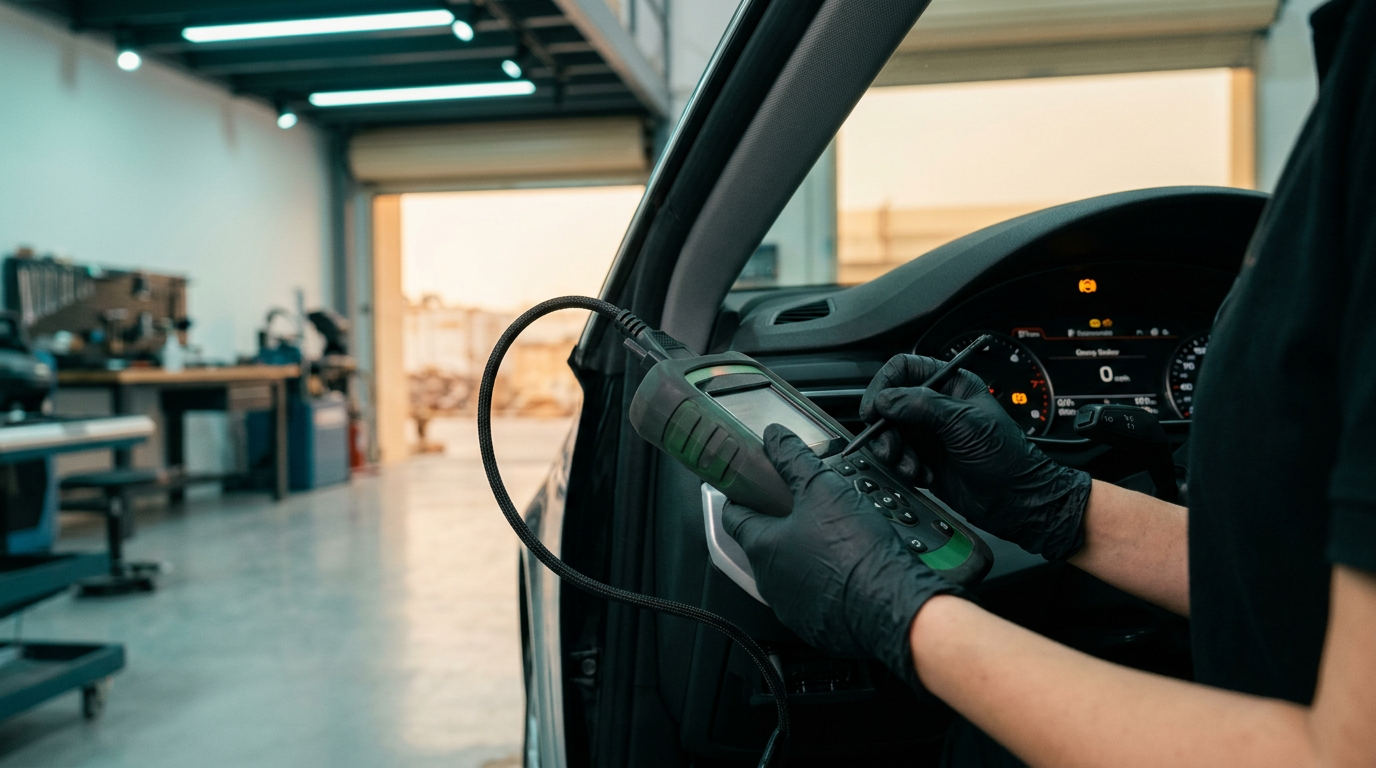
European marques such as BMW, Mercedes-Benz, Audi, Porsche, and Land Rover benefit from a full diagnostic scan to read any fault codes stored during shipping or storage. Many imported cars arrive with battery-related codes, tyre pressure warnings, or adaptive suspension faults that need clearing or repair.
If the vehicle has not been serviced recently, book a full service shortly after arrival. This is especially important for high-performance and luxury models such as Ferrari, Lamborghini, McLaren, and Aston Martin, where extended immobility can affect seals, gaskets, and hydraulic systems. For detailed service schedules, refer to our guides on BMW service intervals and Mercedes-Benz service schedules.
Importing from the USA vs Europe
Importing cars from the United States to Dubai is common, particularly for American muscle cars, trucks, and models not sold in the UAE. However, US-spec vehicles may have different headlight patterns, speedometers in miles per hour, and emissions equipment calibrated for US fuel. Some of these differences are acceptable, but others—such as missing or incorrect lighting—will cause an RTA test failure.
European imports are generally smoother. Vehicles sold in the EU already meet similar emissions and safety standards, and most have metric speedometers and headlights suited to right-side driving. Shipping times are shorter, and parts availability in Dubai is typically better for European-spec cars.
GCC-spec vehicles purchased in Saudi Arabia, Oman, or other Gulf states offer the simplest path. They are built for the local climate, carry the correct warranties, and are exempt from the 5% import duty. However, verifying the car's history and condition before purchase is more difficult when buying remotely, so a pre-purchase inspection by a trusted workshop is strongly recommended.
Common Pitfalls and How to Avoid Them
Many first-time importers underestimate the total cost. In addition to the purchase price and shipping, budget for customs duty, clearance fees, RTA testing and registration, insurance, and any repairs needed to pass inspection. A car bought cheaply in the USA can become expensive once all fees and post-import work are included.
Delays are another frequent issue. Port congestion, missing documents, and public holidays can extend the clearance process by weeks. Demurrage fees accrue if the vehicle is not collected promptly from the port, adding hundreds of dirhams per day.
Choosing an inexperienced clearing agent or freight forwarder is a false economy. A competent agent will navigate customs, arrange RTA testing, and ensure all paperwork is correct the first time. Ask for references and confirm they have recent experience importing vehicles to Dubai.
Finally, do not assume the car is road-ready on arrival. Even if it passed inspection in its origin country, Dubai's climate and RTA standards are different. A post-import service and inspection will catch issues before they strand you on Sheikh Zayed Road in July.
Just Imported? Book Your Post-Arrival Inspection
JAD Garage in Al Quoz 4 offers comprehensive post-import inspections, diagnostics, and servicing for European and EV imports. Call +971 56 355 6113 to schedule your check before hitting Dubai's roads.
Frequently asked questions