Jump Starting a Car Safely in UAE Heat (and When Not To)


A portable battery jump starter is safer and more convenient than jumper cables in Dubai's heat, but only if your battery is the sole problem. If the battery has been dead for days, the alternator has failed, or the engine control unit (ECU) has thrown fault codes, jump-starting can cause expensive electrical damage—especially on modern European and EV hybrid systems that rely on stable voltage.
Why Portable Jump Starters Are Essential in the UAE
Dubai's summer temperatures regularly exceed 45°C, and tarmac can reach 70°C. This accelerates battery degradation and increases the chance of a no-start, especially after short city trips where the alternator hasn't fully recharged the battery. A portable jump starter eliminates the need for a second vehicle, which is critical when you're stranded in a multi-storey car park, a remote construction site, or along Sheikh Zayed Road during peak hours.
Unlike traditional jumper cables, a quality jump box delivers controlled current without voltage spikes that can damage sensitive electronics. Modern cars—particularly BMW, Audi, Mercedes-Benz, and Porsche models—have multiple ECUs managing everything from the engine to the infotainment system, and all are vulnerable to transient voltage.
Lithium-Ion vs Lead-Acid Jump Starters
Portable jump starters come in two chemistries, and the difference matters in UAE conditions.
Lithium-Ion (Lithium Polymer)
Most modern jump starters use lithium ion cells. They're compact, lightweight (often under 1 kg), hold a charge for months, and can deliver high peak amps from a small package. Popular models like the NOCO Boost and similar units rated at 1,000–2,000 peak amps will start most petrol engines up to 6 litres and diesel engines up to 3 litres. They also double as a USB power bank for phones and tablets.
Lithium starters perform well in heat but should be stored below 60°C—keep them in the cabin or a shaded glovebox, not the boot where temperatures can exceed safe limits. They lose capacity faster if left in direct sun for extended periods.
Lead-Acid Jump Boxes
Older, heavier units use sealed lead acid batteries. They're bulkier (5–10 kg), require regular recharging even when unused, and tolerate heat slightly better than lithium but are far less convenient to carry. Unless you're jump-starting heavy diesel engines daily, a lithium unit is the practical choice for passenger cars in Dubai.
What Power Rating Do You Need?
Jump starter power is measured in cold cranking amps (CCA) and peak amps. CCA reflects sustained current; peak amps is the short burst delivered to turn the starter motor.
- Petrol engines (4-cylinder, up to 2.0L): 400–600 peak amps
- Petrol engines (6-cylinder, 3.0–4.0L): 800–1,200 peak amps
- V8 petrol (5.0L+): 1,500–2,000 peak amps
- Diesel engines (up to 3.0L): 1,000–1,500 peak amps
- Large diesel (3.5L+): 2,000+ peak amps
In Dubai's heat, a battery that's only partially discharged requires less current than a frozen battery in winter, so you can often get away with a lower rating than the manufacturer's cold-climate recommendation. That said, buy one tier higher than your engine size—especially for diesel or supercar applications—to ensure enough reserve for multiple attempts.
Key Features to Look For
Not all jump starters are equal. Look for these features when shopping on Amazon or at local electronics retailers:
- Reverse-polarity protection: prevents sparks and damage if you connect clamps incorrectly
- Over-current and short-circuit protection: shuts down the unit if it detects a fault
- LED torch: essential for night breakdowns or dimly lit car parks
- USB output (5V, 2A or higher): charges phones and tablets
- Built-in air compressor: some models include a tyre inflator—useful for slow punctures in the desert
- Charge indicator: shows remaining battery capacity so you know when to recharge
High-end units like the NOCO Boost GB40 or Boost Sport GB20, and models from brands such as GOOLOO, TACKLIFE, and Anker, are widely available and well-reviewed. Expect to pay between 150 and 600 AED depending on capacity and features.
How to Use a Jump Starter Safely
Follow this sequence every time to avoid damage to your car's electrical system:
- Park on level ground, engage the handbrake, and turn off all electrical loads (lights, air conditioning, radio).
- Connect the red clamp to the positive (+) battery terminal.
- Connect the black clamp to an unpainted metal ground point on the engine block or chassis—not the negative battery terminal—to reduce spark risk near the battery.
- Turn on the jump starter (if it has a power button) and wait 30 seconds for the capacitors to charge.
- Turn the ignition and crank the engine for no more than 3–4 seconds. If it doesn't start, wait 30 seconds and try again.
- Once the engine starts, disconnect the black clamp first, then the red clamp.
- Let the engine idle for at least 10 minutes to allow the alternator to begin recharging the battery, then drive for 20–30 minutes—avoid short trips for the rest of the day.
If the engine doesn't start after three attempts, stop. Repeated cranking can overheat the starter motor and drain the jump pack. At this point, the problem is likely not just a flat battery—see the next section.
When NOT to Jump-Start Your Car
Jump-starting is a temporary fix for a healthy battery that's simply discharged. It's not appropriate—and can cause serious damage—in these scenarios:
- Battery has been dead for more than 48 hours: a fully discharged lead-acid battery may have sulfated plates and won't hold a charge. Jump-starting forces the alternator to work overtime, risking overheating and premature failure.
- Visible battery damage: cracks, leaks, bulging case, or corrosion around terminals. A damaged battery can vent hydrogen gas, and a spark during connection can ignite it.
- Dashboard warning lights before the battery died: if the check-engine light, battery light, or other warnings were on, the root cause may be an alternator fault, wiring short, or ECU issue. Jump-starting won't fix these and may trigger additional fault codes.
- Hybrid or plug-in hybrid (PHEV) 12V battery: many hybrids use a small 12V battery to wake up the high-voltage system. If it's dead, the car may require a specific reboot sequence or diagnostic scan to clear fault codes after jump-starting. Incorrect procedure can put the vehicle into limp mode.
- Water or sand ingress: if your car has been through a flood, sandstorm, or off-road water crossing, moisture in the electrical system can cause short circuits when power is restored.
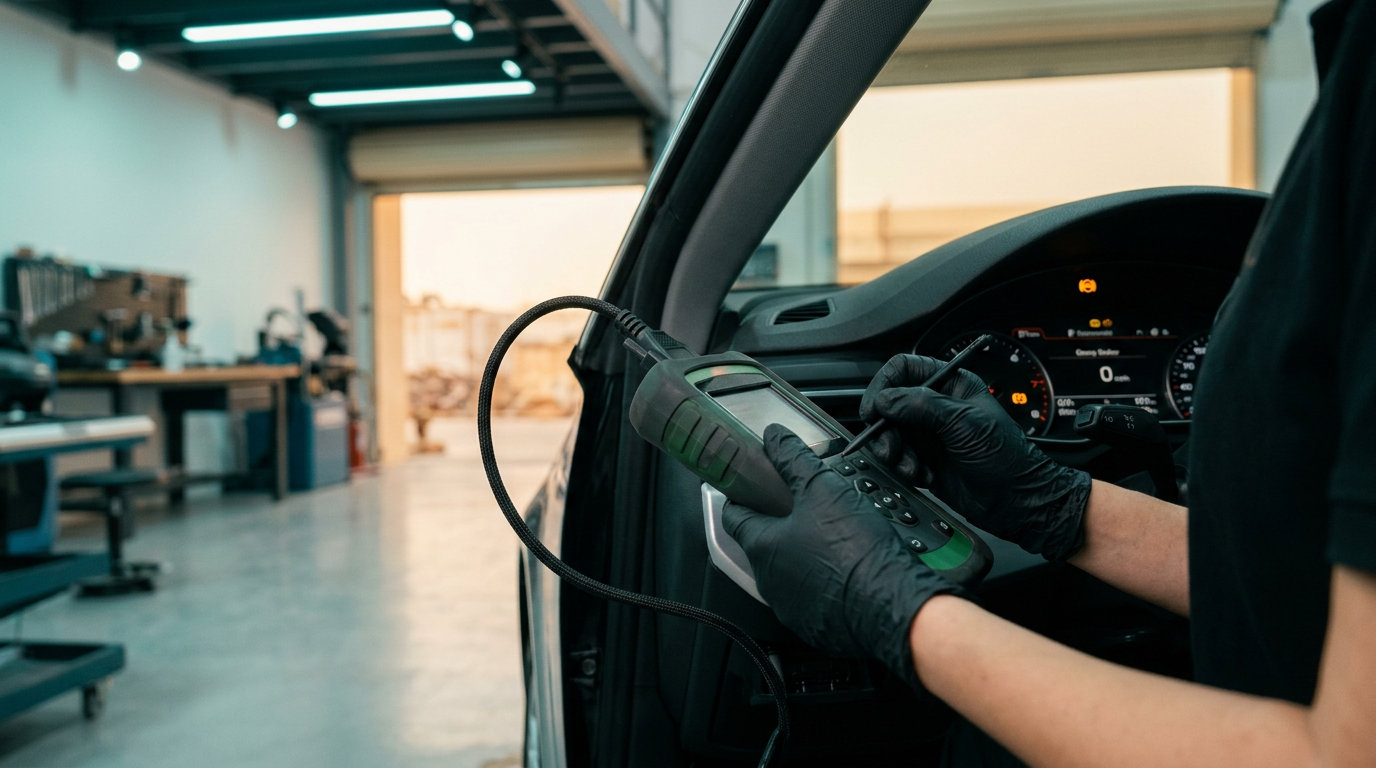
In any of these cases, arrange for professional battery diagnostics and charging rather than a jump start. A workshop with manufacturer-grade scan tools can test battery health, alternator output, and check for stored fault codes before reconnecting power.
Typical Dubai Market Prices for Portable Jump Starters
Prices vary by capacity, brand, and retailer. The table below shows typical market ranges in AED across Dubai electronics shops and online platforms—these are not JAD Garage prices, simply indicative of what you'll find when shopping.
| Capacity / Type | Peak Amps | Typical Market Range (AED) |
|---|---|---|
| Compact lithium (small petrol engines) | 400–800 | 150–250 |
| Mid-range lithium (most cars) | 1,000–1,500 | 250–400 |
| High-capacity lithium (diesel, V8) | 2,000+ | 400–600 |
| Lead-acid jump box | Varies | 200–500 |
Many units include additional features like an air compressor or work light, which can push the price toward the upper end of each range. It's worth investing in a reputable brand with safety certifications—cheap units from unknown manufacturers may lack over-current protection and can damage your car's electronics.
Maintenance and Storage in UAE Heat
Even the best portable jump starter needs care to remain reliable:
- Recharge every 3–4 months, even if unused, to prevent deep discharge.
- Store in a cool, dry place—ideally below 40°C. Avoid leaving it in the boot during summer; cabin storage or your home is better.
- Check clamps and cables for corrosion or fraying every six months. Clean terminals with a wire brush if needed.
- Test the unit once a quarter by connecting it to your battery (engine off) and checking the voltage indicator.
Lithium packs degrade faster if stored at full charge in high heat. If you won't use the unit for several months, charge it to around 50–70 per cent and keep it indoors.
When to Call for Professional Help
If your car won't start even with a fresh jump, or if it starts then dies within seconds, the issue is beyond a flat battery. Common culprits include a failing alternator, corroded wiring, a faulty starter motor, or a parasitic drain from aftermarket electronics. Modern European cars—especially Audi, BMW, and Mercedes-Benz—also require a battery registration procedure when you fit a new battery, so the ECU can adjust charging parameters. Skipping this step shortens battery life and can trigger warning lights.
For luxury, sports, and Ferrari or Lamborghini models, a failed jump-start attempt is a sign to get the car on a flatbed rather than risk further electrical damage. Similarly, if you own an EV or hybrid, consult a specialist familiar with high-voltage systems—EV servicing in Dubai requires different tools and safety protocols.
Buying vs Roadside Assistance
A quality portable jump starter costs less than two callouts to a roadside recovery service. If you drive regularly in remote areas—construction zones in Dubai South, mountain roads to Hatta, or desert tracks—carrying your own unit provides immediate self-rescue without waiting 45–90 minutes for a recovery truck. It's also invaluable for fleet operators or corporate accounts managing multiple vehicles across the emirate.
That said, a jump starter doesn't replace proper preventive maintenance. If your battery is more than three years old or you've needed multiple jump-starts in recent months, book a diagnostic check and battery test to identify the root cause before you're stranded in 50°C heat on a Friday afternoon.
Battery Diagnostics and Electrical Repairs in Al Quoz
If your car won't hold a charge or you're seeing electrical faults after a jump-start, bring it to JAD Garage in Al Quoz 4 for a full diagnostic scan and battery health test. Call +971 56 355 6113 to book.
Frequently asked questions