
McLaren Servicing in Dubai: Intervals, Fluids and Common Jobs

McLaren service in Dubai follows a 12-month or 15,000 km interval, whichever comes first, though the extreme heat and short-trip city driving common in the UAE often makes annual service the practical baseline. Engine oil, brake fluid, and cooling system checks are critical, and common jobs include carbon-ceramic brake inspections, hydraulic suspension servicing, and cooling system maintenance—all areas where specialist equipment and McLaren-specific diagnostic tools make a measurable difference.
McLaren Service Intervals and Schedules
McLaren recommends service every 12 months or 15,000 km. In Dubai, most owners hit the annual mark well before the distance limit, especially if the car is used for short city trips or weekend drives rather than regular motorway use. The service schedule is time-based because fluids degrade with heat exposure and calendar time, not just mileage.
The first service is typically at 12 months, followed by annual intervals. Major inspections—covering more extensive checks of the hydraulic systems, suspension, and carbon-ceramic brakes—occur every two years or 30,000 km. If you're tracking service history, the annual inspection is often logged as an "A" service, with the more comprehensive check labelled "B" in the second year.
For cars driven hard on track days or in the summer heat above 45°C, oil and brake fluid condition should be checked mid-interval. The twin-turbo V8 engine runs hot, and stop-start traffic in Dubai compounds thermal stress on oil and coolant.
Engine Oil: Grade, Capacity and Change Frequency
McLaren specifies a fully synthetic 5W-40 or 10W-60 engine oil, depending on the model and engine variant. The 3.8-litre and 4.0-litre twin-turbo V8 engines used across the 570S, 720S, and GT models require approximately 9 to 10 litres, including the filter. Oil capacity varies slightly by model, so always confirm the exact figure in the owner's handbook or service documentation.
In Dubai's summer, when ambient temperatures reach 50°C and engine bay temperatures climb higher still, oil degrades faster. Even with synthetic oil, an annual change is the minimum. If the car sees track use or extended high-speed driving, consider shortening the interval to 10,000 km or checking oil condition at six months.
Oil viscosity matters. A 10W-60 offers better high-temperature protection for track-driven cars, while 5W-40 is suitable for road use with good cold-start flow. Always use an oil that meets McLaren's specifications—typically ACEA A3/B4 or API SN. Using the wrong grade or a lower-quality oil risks bearing wear and turbocharger damage under sustained load.
Brake Fluid, Coolant and Other Fluids
Brake fluid should be changed every two years, or annually if the car is tracked. McLaren models use DOT 4 or DOT 5.1 fluid, and the high-performance braking systems generate significant heat. Brake fluid is hygroscopic—it absorbs moisture from the air—and in Dubai's humidity, moisture contamination accelerates. Degraded fluid lowers the boiling point, increasing the risk of brake fade under hard use.
Coolant is typically a 50/50 mix of ethylene glycol and distilled water, changed every four years or 60,000 km. The cooling system in a McLaren is under high thermal load, especially in traffic, and coolant condition should be checked annually for pH and protection level. Low coolant or a failing radiator can lead to overheating, which on a mid-engined car can cause expensive damage quickly.
Transmission and hydraulic fluid schedules vary by model. The dual-clutch transmission (SSG) uses a specific fluid, typically inspected at each service and changed every 36,000 km or three years. The hydraulic system that controls the active suspension and hydraulic steering also requires periodic fluid replacement—usually every two to three years depending on use.
Common McLaren Service and Repair Jobs in Dubai
Beyond routine oil and filter changes, several jobs appear regularly in McLaren service records, particularly for cars driven in the UAE:
- Carbon-ceramic brake inspection: Carbon-ceramic discs last far longer than steel, but the pads wear and require replacement. Pad life depends heavily on driving style; track use shortens it significantly. Typical market range for a set of pads is AED 3,000–6,000 depending on model and pad compound.
- Hydraulic suspension service: The ProActive Chassis Control system uses hydraulic actuators that can develop leaks or require fluid replacement. Suspension faults often show as warning lights or uneven ride height.
- Cooling system repairs: Radiators, coolant hoses, and water pumps are under constant stress in Dubai heat. A failing water pump or leaking hose can cause rapid overheating. Early detection during a service inspection avoids engine damage.
- Battery replacement: The 12V battery in a McLaren is smaller than in a typical car and can fail after three to four years, especially if the car sits unused. A weak battery causes electrical faults and can prevent the engine from starting. Replacement cost is typically AED 800–1,500 depending on specification.
- Tyre replacement: High-performance tyres wear quickly, and the rear tyres on a rear-wheel-drive McLaren wear faster still. In Dubai's heat, rubber hardens and loses grip even if tread depth remains legal. Replace tyres every four to five years regardless of wear, and check pressures weekly in summer.
- Air conditioning service: The AC system works hard year-round. Refrigerant leaks, condenser damage from road debris, and clogged cabin filters are common. An annual AC inspection ensures the system copes with 50°C exterior temperatures.
- Engine mounts: The powertrain mounts on a mid-engined car absorb significant vibration and heat. Worn mounts cause excessive engine movement, clunking noises, and poor throttle response.
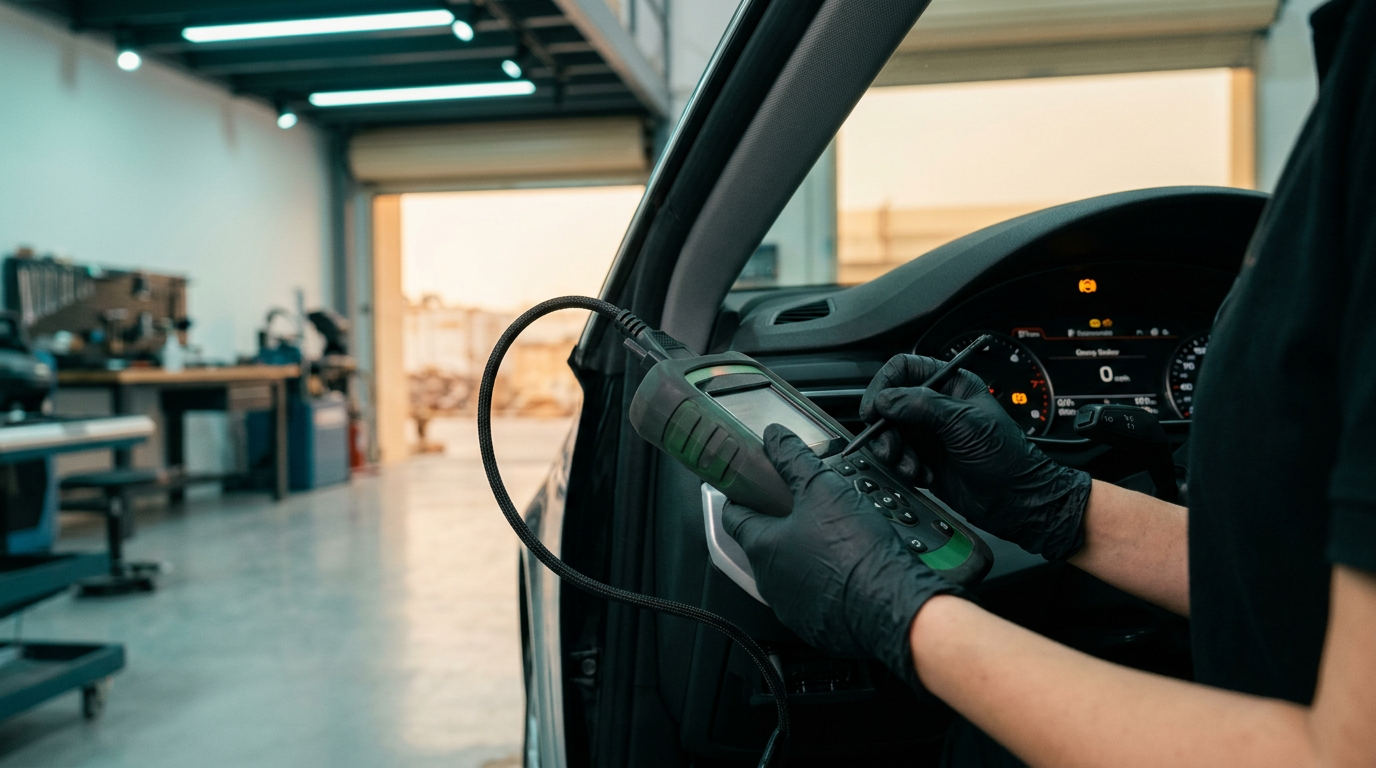
All of these jobs benefit from diagnostic services using McLaren-specific scan tools. The onboard systems log fault codes that generic OBD readers cannot access, and many faults—hydraulic pressure, gearbox adaptation values, or battery health—require live data monitoring to diagnose accurately.
Why Specialist Equipment Matters for McLaren Service
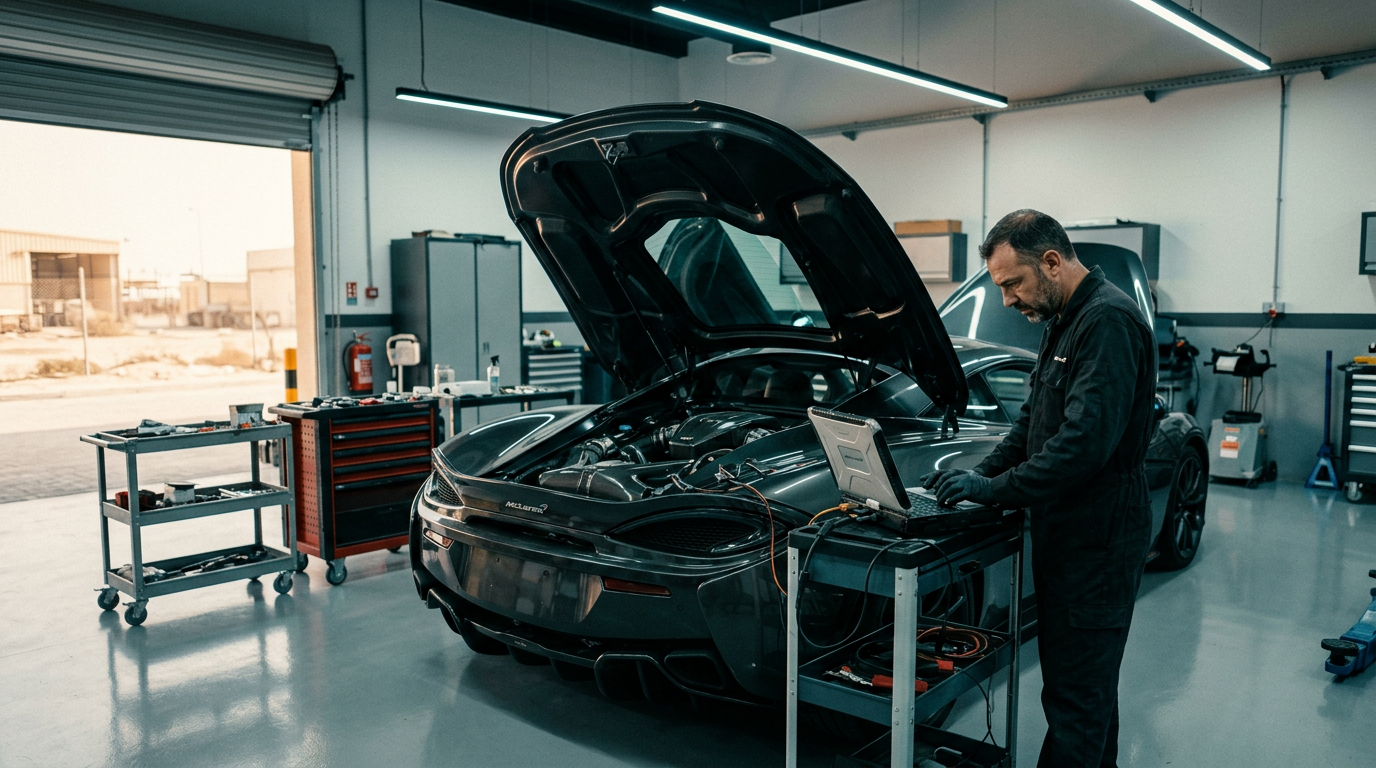
A McLaren is not a conventional car. The twin-turbo engine, dual-clutch transmission, hydraulic active suspension, and integrated electronic systems require specialist diagnostic tools and software that mirror what the factory uses. Independent workshops equipped with manufacturer-grade scan tools can read live data, reset service indicators, perform gearbox adaptations, and diagnose faults that generic equipment cannot see.
For example, the hydraulic suspension system requires specific bleed procedures and pressure tests. The SSG transmission needs software-guided clutch adaptation after certain repairs. Carbon-ceramic brakes require torque specifications and bedding-in procedures that differ from conventional brakes. Without the right tools and technical data, even a straightforward service can be incomplete.
Choosing a sports car service centre with McLaren diagnostic capability ensures that service schedules are reset correctly, fault codes are read accurately, and any emerging issues—wear on hydraulic seals, gearbox clutch condition, or cooling system pressure loss—are identified before they cause a breakdown.
Service Records and Resale Value
A complete, documented service history is critical for McLaren resale value. Buyers expect to see annual service stamps, fluid change records, and evidence that major inspections have been completed on schedule. Missing service history or gaps in maintenance records can reduce resale value by 10–15% or more, particularly for higher-specification models.
Keep all invoices, service reports, and parts receipts. A detailed pre-purchase inspection report from an independent specialist can also add credibility when selling, as it provides a third-party record of the car's mechanical condition and confirms that no deferred maintenance is hiding.
For cars still under extended warranty or manufacturer service plans, ensure that the servicing workshop meets the plan's requirements. Independent specialists can often carry out the work to the same standard using OEM or premium alternative parts, but confirm compatibility with any existing coverage before booking.
Parts: OEM vs Alternatives
McLaren OEM parts are expensive, and for many consumables—filters, brake pads, spark plugs, belts—premium alternative brands offer equivalent performance at lower cost. For example, high-quality brake pads from Pagid, Ferodo, or Brembo often match or exceed OEM specifications and are widely used in motorsport.
For critical components—engine internals, turbochargers, gearbox parts, or electronic modules—OEM is usually the safer choice. The cost difference is smaller relative to the risk, and traceability matters for warranty and resale purposes. A good independent workshop will discuss the options and recommend the best balance of quality, cost, and suitability for your use case. Read more in our guide to OEM vs aftermarket parts.
Typical Service Costs in the Dubai Market
Annual service costs for a McLaren in Dubai typically range from AED 3,500 to AED 6,000 depending on the model and what's included. An oil and filter change with a basic inspection sits at the lower end, while a full annual service with brake fluid change, all filters, and a comprehensive multi-point check is higher. Major services every two years, including gearbox and hydraulic fluid changes, can range from AED 8,000 to AED 12,000.
Repair costs vary widely depending on the fault. A set of brake pads might be AED 3,000–6,000, while a hydraulic actuator replacement can reach AED 10,000–15,000 including labour. A water pump replacement is typically AED 2,500–4,000, and a full set of tyres ranges from AED 6,000 to AED 10,000 depending on size and brand.
These are indicative market ranges across Dubai and the Northern Emirates, not specific to any single service centre. Always request a detailed quote before authorising work, and ask for a breakdown of parts, labour, and any diagnostic fees.
For fleet or corporate accounts managing multiple high-performance vehicles, independent specialists often offer structured pricing and priority booking.
Booking McLaren Service in Dubai
When booking a service, confirm what's included: oil and filter change, brake fluid, coolant check, tyre inspection, brake services, and a full visual inspection of suspension, exhaust, and underbody. Ask whether the workshop has McLaren-specific diagnostic equipment and whether they can reset the service indicator and generate a digital service report.
If you're experiencing a fault—warning lights, unusual noises, loss of power, or handling changes—book a diagnostic session first. Many issues can be identified via scan tool before stripping components, saving time and cost. A proper diagnostic service includes live data review, fault code interpretation, and a written report of findings.
For owners in Al Quoz, Dubai Marina, or surrounding areas, a specialist independent workshop in Al Quoz offers convenient access, transparent pricing, and the technical capability to service McLaren models alongside other European and performance marques like Lamborghini, Ferrari, and Porsche.
McLaren Service in Al Quoz with Specialist Diagnostics
JAD Garage in Al Quoz 4 services McLaren models with manufacturer-grade diagnostic tools, OEM and premium parts, and over 20 years of European performance car experience. Call +971 56 355 6113 or WhatsApp to book your service or diagnostic inspection.
Frequently asked questions