
Oil Change Service in Dubai: Filter, Sump Washer and Reset

A full oil change service replaces engine oil, installs a new oil filter, fits a fresh sump plug washer to prevent leaks, and resets the vehicle's service interval indicator. In Dubai's extreme heat—where temperatures reach 50°C—motor oil degrades faster than in temperate climates, making timely changes and proper procedure essential to prevent sludge buildup, bearing wear and eventual engine damage.
What a Complete Oil Change Service Includes
Many quick-lube operations drain oil and pour in new fluid, but a proper oil change service involves four distinct steps that protect your engine and maintain accurate service records.
Engine Oil Replacement
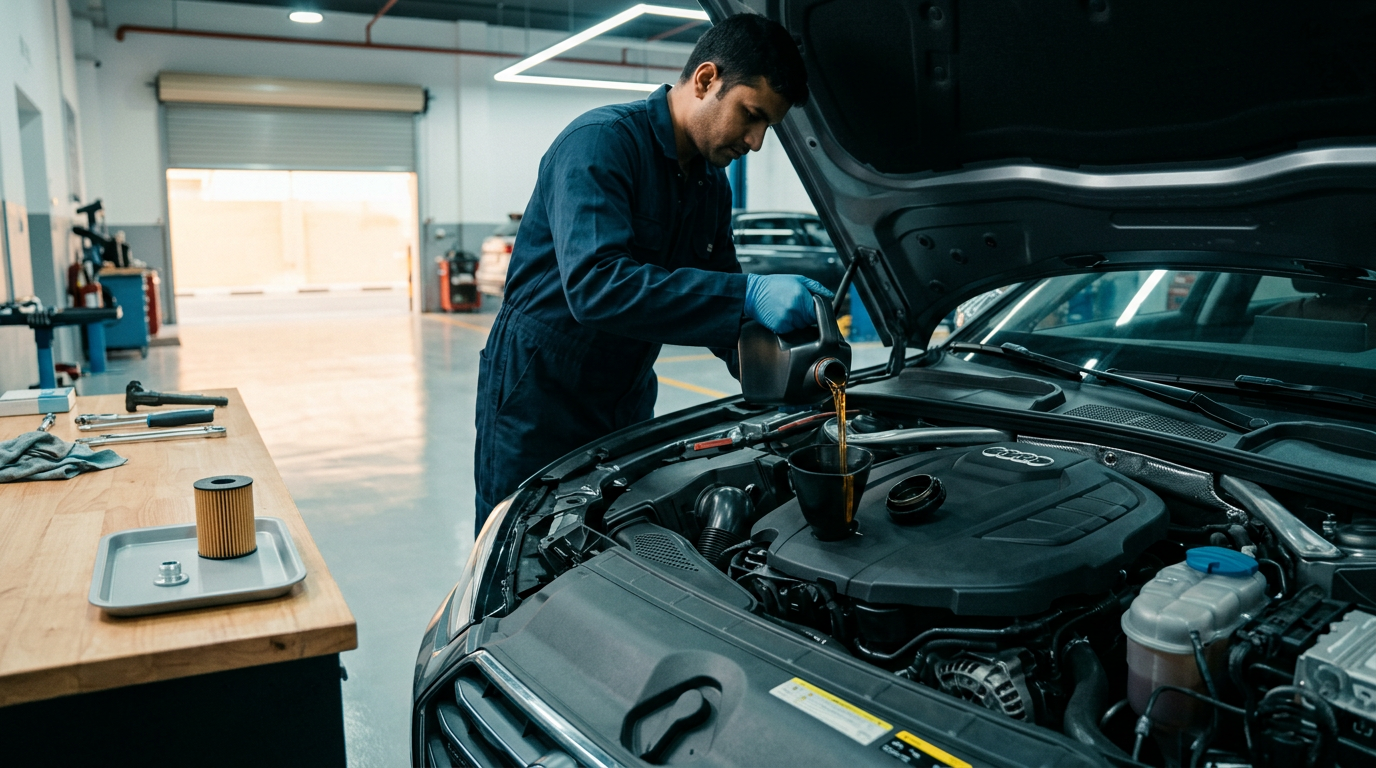
The workshop drains the old oil once the engine reaches operating temperature—warm oil flows faster and carries suspended contaminants out with it. European vehicles typically require 4 to 8 litres depending on engine size; a BMW B48 four-cylinder takes approximately 5 litres, while a Mercedes-Benz M256 inline-six needs around 7.5 litres. The technician verifies the correct viscosity grade from the vehicle's service book or oil filler cap—most modern European engines specify 0W-20, 0W-30 or 5W-30 synthetic oil.
Oil Filter Change
Every oil change requires a new filter. Cartridge-style filters are common on Audi, Volkswagen and Porsche engines; the technician removes the filter housing, replaces the paper element and installs new O-rings. Spin-on canister filters—still used on some Land Rover and older models—thread directly onto the engine block. Reusing an oil filter allows abrasive particles and combustion byproducts to circulate, accelerating bearing and camshaft wear.
Sump Plug Washer Replacement
The aluminium or copper crush washer beneath the sump plug deforms when torqued, creating an oil-tight seal. Reusing the same washer leaves microscopic gaps that weep oil onto your driveway and the road. A new washer costs less than two dirhams but prevents the slow drip that stains concrete and signals poor workmanship. European manufacturers specify single-use washers in service documentation.
Service Interval Reset
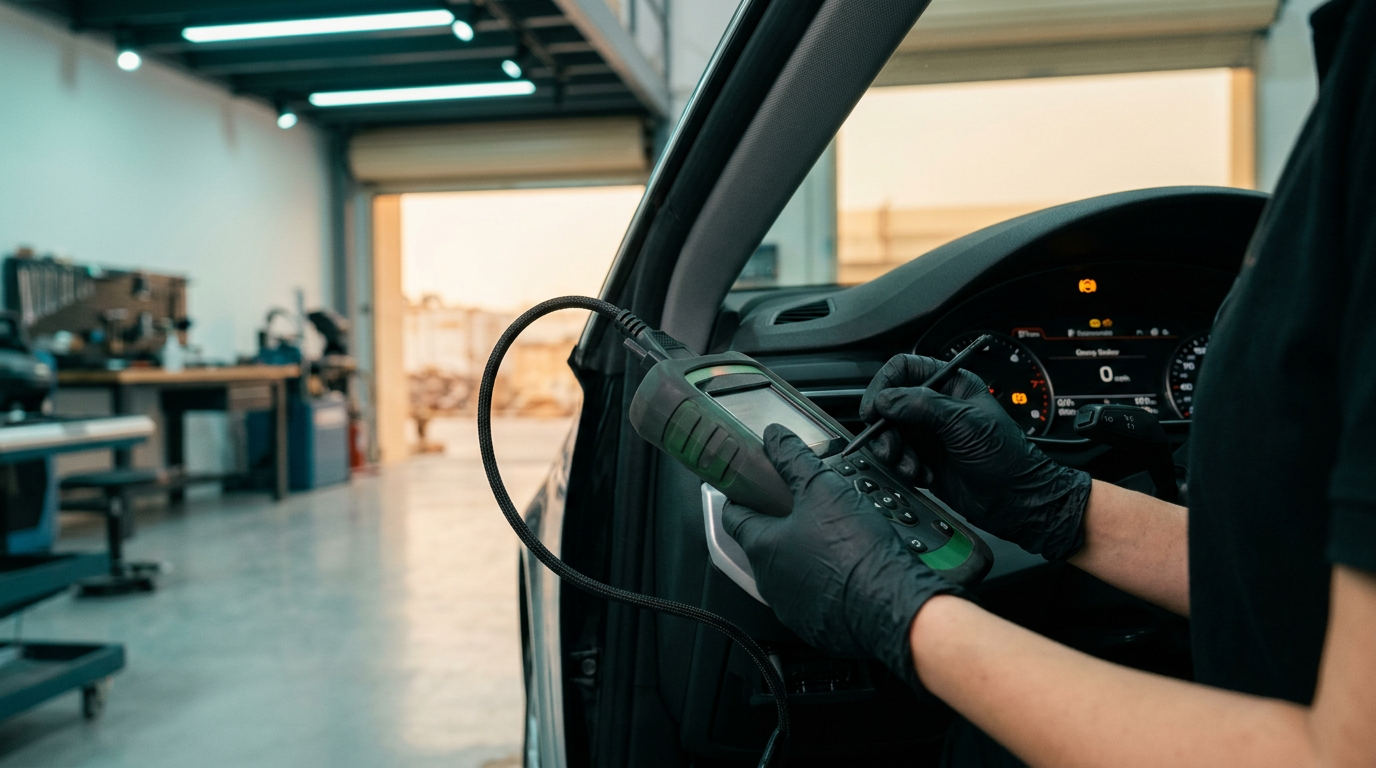
Modern vehicles calculate remaining service life using oil temperature, engine load and time. After the oil change, the technician resets this counter through the instrument cluster menu or with diagnostic equipment. Skipping the reset leaves the service warning illuminated and prevents accurate tracking of the next maintenance interval. Some models require specific reset procedures—Volvo and Polestar vehicles often need dealer-level software access for full reset functionality.
How Often Should You Change Oil in Dubai?
Manufacturer service intervals are calculated for mixed European driving conditions—motorway cruising, moderate temperatures and low dust. Dubai conditions are harsher. Stop-start traffic, short trips under 10 km, fine sand infiltration and sustained high temperatures all qualify as "severe service" in every manufacturer's maintenance schedule.
For detailed guidance on interval adjustment, see our article on when to change engine oil in the UAE. As a general rule, halve the standard interval: if the service book says 15,000 km or 12 months, change oil at 7,500 km or 6 months in Dubai. Turbocharged engines, performance models and vehicles used for frequent short trips benefit from even shorter intervals.
Types of Motor Oil and Which to Use
Three categories dominate the Dubai market, each suited to different engine designs and driving patterns.
- Full synthetic: Engineered base stocks with advanced additive packages. Required for most European engines built after 2010, especially turbocharged units. Resists thermal breakdown at high temperatures and maintains viscosity in stop-start traffic. Brands include Mobil 1, Castrol Edge and Valvoline Advanced.
- Synthetic blend: Mineral oil mixed with synthetic base stock. Suitable for older naturally aspirated engines and high-mileage vehicles where full synthetic offers diminishing returns. Provides better heat protection than conventional oil at moderate cost.
- High-mileage formulas: Contain seal conditioners to reduce oil consumption in engines beyond 100,000 km. Useful for older Jaguar, Alfa Romeo and Maserati models with slight seepage but not a substitute for addressing mechanical wear.
Always match the viscosity grade and specification (ACEA, API) printed in your owner's manual. Using 5W-40 in an engine designed for 0W-20 increases internal friction and fuel consumption; using too-thin oil in a high-performance engine risks bearing damage under load.
What Happens During the Service
A thorough oil change service at an independent workshop follows a structured process that takes 30 to 45 minutes, depending on vehicle access and filter location.
| Step | What the Technician Does | Why It Matters |
|---|---|---|
| Warm-up | Runs engine to operating temperature | Warm oil drains completely, carrying contaminants |
| Drain | Removes sump plug, collects old oil | Checks for metal particles or coolant contamination |
| Filter removal | Extracts old filter, inspects housing | Verifies no debris or seal fragments remain |
| Sump plug refit | Installs new washer, torques to specification | Prevents leaks and thread damage from over-tightening |
| Filter installation | Fits new element and O-rings with oil pre-coat | Ensures immediate lubrication on startup |
| Fill and check | Adds specified oil volume, verifies dipstick level | Overfilling damages catalysts; underfilling starves bearings |
| Reset | Clears service reminder via menu or scan tool | Maintains accurate interval tracking |
The technician also inspects fluid levels—coolant, brake fluid, power steering—and notes any leaks or worn components visible from underneath. This visual check often identifies issues before they strand you, particularly suspension bushings, CV boot tears and brake pad wear.
Additional Services During an Oil Change
An oil change service provides convenient access to other maintenance items due at similar intervals.
Fluid checks: Brake fluid absorbs moisture over time, lowering its boiling point and reducing braking performance. Most manufacturers recommend replacement every two years; our guide on brake fluid change intervals in Dubai explains why this matters more in high-humidity coastal areas.
Air and cabin filter replacement: Dubai's fine sand clogs filters faster than in Europe. A blocked engine air filter reduces power and increases fuel consumption; a clogged cabin filter overworks the AC system and reduces cooling efficiency. Both are accessible without special tools and take minutes to replace. For broader guidance, see how UAE conditions change service intervals.
Tire inspection: The workshop checks tread depth, sidewall condition and age code during the vehicle lift. Tires degrade from heat and UV exposure even with adequate tread; our article on tire date codes shows how to verify age. Tire services including rotation and balancing extend life and improve handling.
Battery test: High cabin temperatures accelerate battery degradation. A quick load test during the service identifies weak cells before they leave you stranded in a mall car park. Learn more in our battery services overview.
Typical Oil Change Service Costs in Dubai
Market rates vary by oil type, filter quality and vehicle complexity. As a general guide across independent workshops in Al Quoz and surrounding areas, expect the following ranges:
- Standard four-cylinder European car with synthetic oil: AED 250–400
- Six-cylinder or turbocharged engine: AED 350–550
- Performance or supercar models requiring high-capacity synthetic: AED 500–900
- Additional filter (air, cabin): AED 50–150 each, depending on brand
These figures reflect OEM-specification or premium alternative parts and full synthetic oil from recognized brands. Workshops using unknown-brand filters or mineral oil may quote lower prices but compromise engine protection. For broader context on service costs, see our comparison of BMW, Mercedes and Audi ownership costs in Dubai.
Why Skipping the Sump Washer or Reset Matters
These two steps are often skipped at budget quick-lube operations, with consequences that appear gradually.
A reused sump washer allows a slow seep—sometimes just a few drops per week. Over months, this coats the underside of the engine with dust-trapping oil film, obscures new leaks during future inspections, and leaves spots wherever you park. The leak rarely self-seals and typically worsens as heat cycles further compress the old washer.
Failing to reset the service interval means the dashboard reminder remains active or displays incorrect mileage until next service. If you sell the vehicle, the next owner sees an illuminated warning and assumes neglected maintenance, reducing resale value. For pre-sale preparation advice, see repairs worth doing before selling your car in Dubai.
Oil Change for Electric Vehicles
Battery-electric vehicles have no engine oil, but they still require periodic fluid changes—gearbox oil, brake fluid and coolant for the battery thermal management system. The service intervals are longer than combustion engines, but the procedures demand specific knowledge of high-voltage systems. Our article on EV servicing in Dubai details what electric cars still need for maintenance.
Choosing a Workshop for Oil Change Service
Independent European specialists in Al Quoz offer the same procedure and parts quality as franchise operations, with transparent pricing and experienced technicians familiar with BMW, Mercedes-Benz, Audi, Porsche and other marques. Look for workshops with manufacturer-grade diagnostic equipment for service resets, a clear explanation of the oil specification they'll use, and a policy of replacing the sump washer as standard.
For buyers considering pre-owned vehicles, a pre-purchase inspection verifies service history and identifies deferred maintenance. For ongoing care, fleet services and corporate accounts offer scheduled maintenance for multiple vehicles.
Oil Change Service in Al Quoz with Full Reset
JAD Garage in Al Quoz 4 provides complete oil change service—synthetic oil to manufacturer specification, OEM or premium filters, new sump washer and electronic service reset. Call +971 56 355 6113 or WhatsApp to book your appointment Monday to Saturday, 09:00–19:00.
Frequently asked questions