
Signs Your Car Battery Is Dying in UAE Heat


A dying car battery rarely fails without warning. In Dubai's extreme heat—often reaching 50°C in summer—most batteries show clear signs weeks before they stop working entirely. The most common indicators are slow engine cranking when you turn the key, dimming headlights or interior lights, flickering dashboard displays, and intermittent electrical faults. Recognising these early symptoms gives you time to test and replace the battery before you're stranded in a car park.
Why UAE Heat Accelerates Battery Failure
Car batteries rely on a chemical reaction between lead plates and sulphuric acid. High temperatures speed up this reaction, which sounds helpful but actually causes faster internal corrosion and evaporation of the electrolyte. A battery rated for five years in a temperate climate often lasts only two to three years in the UAE. The constant heat stress, combined with short city trips that don't allow full recharging, means Dubai drivers face battery issues far more frequently than the global average.
Parking outdoors in direct sun raises underbonnet temperatures even higher. The battery case itself can reach 60-70°C, accelerating degradation of the internal separators and weakening the plates. This is why a battery that worked fine in winter can suddenly struggle when summer arrives.
Seven Signs Your Car Battery Is Dying
1. Slow Engine Crank
When you turn the key or press the start button, the engine should turn over quickly and confidently. If you hear a sluggish, laboured cranking sound—especially on the first start of the day—the battery is struggling to deliver enough current to the starter motor. This is often the earliest and most reliable sign of a dying battery. The problem typically worsens over days or weeks until the engine won't start at all.
2. Dimming or Flickering Lights
Headlights that appear noticeably dimmer than usual, especially at idle, suggest the battery can't maintain voltage under load. Interior lights may also dim when you operate power windows or turn on the AC blower. Dashboard lights that flicker or pulse while driving—particularly when the electrical system is under heavy demand—point to either a weak battery or a failing alternator that isn't recharging it properly.
3. Electrical Glitches and Odd Behaviour
Modern cars rely on stable voltage for dozens of electronic modules. A dying battery can cause intermittent faults: the infotainment screen may reboot randomly, power windows slow down, or the central locking becomes unreliable. You might see warning lights on the dashboard that disappear after restarting. These symptoms are easy to dismiss as software bugs, but they often trace back to low or unstable battery voltage affecting the car's electrical system.
4. Check Engine or Battery Warning Light
Many cars illuminate a battery-shaped warning light or the check engine light when the charging system detects a problem. This could mean the battery itself is failing, the alternator isn't charging correctly, or there's a fault in the voltage regulation circuit. Either way, the warning deserves immediate attention. Ignoring it risks a complete electrical shutdown, often at the worst possible moment in Dubai traffic.
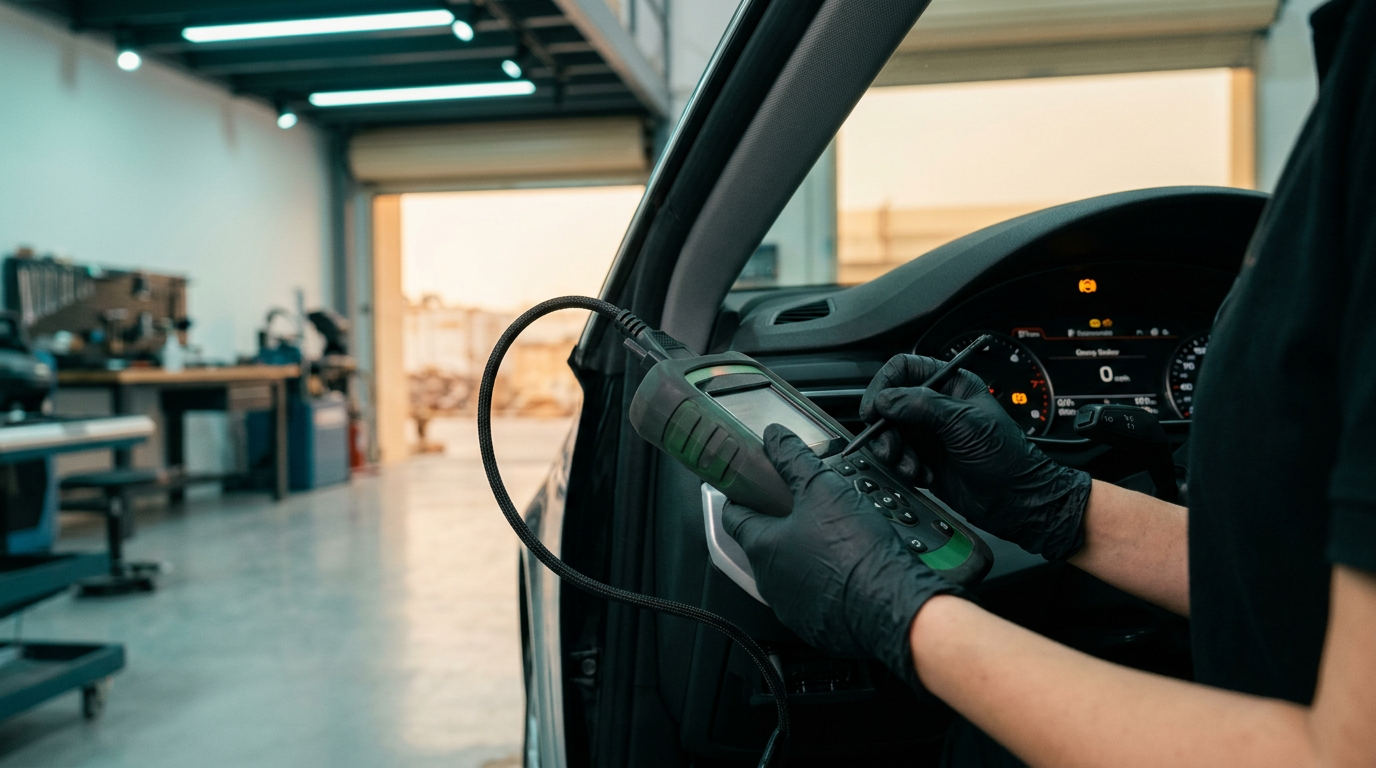
If you see a persistent warning light, a diagnostic scan will pinpoint whether the fault lies with the battery, alternator or wiring.
5. Swollen or Bloated Battery Case
Extreme heat can cause the plastic battery case to swell or bulge. This happens when internal gases build up due to overcharging or excessive heat exposure. A swollen battery case is a clear sign of internal damage and imminent failure. The battery should be replaced immediately, as a compromised case can leak acid or even crack, causing corrosion to surrounding components.
6. Corrosion on Battery Terminals
White, blue or greenish crusty deposits around the battery terminals indicate corrosion, often caused by acid vapour escaping from the battery. While some surface corrosion is normal over time, heavy buildup suggests the battery is venting excessively—a sign of internal breakdown. Corroded terminals also increase electrical resistance, making starting problems worse even if the battery still has some charge left.
Cleaning the terminals can restore a temporary connection, but if corrosion reappears quickly, the battery is likely on its way out.
7. Age and Service History
If your battery is more than three years old in the UAE and you're noticing any of the above symptoms, age is a strong contributing factor. Most conventional lead-acid batteries don't survive beyond four years in Dubai's climate, and many fail earlier if the car does frequent short trips or sits unused for long periods. Check the manufacturing date stamped on the battery case—if it's approaching or past three years, proactive replacement is sensible even without obvious symptoms.
Battery vs Starter vs Alternator: How to Tell the Difference
Not every starting problem is a dead battery. Here's how to distinguish between the three most common causes:
- Dying battery: Slow cranking that worsens over days, dimming lights, electrical glitches, and the engine eventually starts after several attempts or a jump-start.
- Failed starter motor: You turn the key and hear a single click or nothing at all, but the lights and electronics work normally. The engine doesn't turn over even slightly.
- Faulty alternator: The car starts fine initially, but the battery warning light stays on while driving. The battery drains even during a journey, and the car may stall or lose power after 20-30 minutes as the battery depletes.
If you're unsure, a workshop can test the battery's voltage and cold-cranking amps, check the alternator's output, and measure starter motor current draw. This takes only a few minutes with the right equipment and avoids replacing parts unnecessarily.
For a full assessment of starting and charging faults, electrical diagnostics will identify the root cause quickly.
What to Do When You Notice These Signs
As soon as you recognise any combination of the symptoms above, take action before the battery fails completely. Here's the recommended sequence:
- Test the battery: Most workshops and some parts retailers offer free battery testing. A load test measures the battery's ability to deliver current under demand and gives a clear pass or fail result.
- Check the alternator: If the battery tests weak, confirm the alternator is charging correctly. A failing alternator will kill a new battery within weeks.
- Inspect terminals and cables: Clean any corrosion and ensure connections are tight. Loose or corroded terminals can mimic a dying battery.
- Replace proactively: If the battery is over three years old or the test shows marginal performance, replace it before it leaves you stranded. Waiting for complete failure often means an inconvenient breakdown and the cost of recovery.
For comprehensive testing and replacement with quality parts, battery services include diagnostics, fitting and disposal of the old unit.
How Long Before a Dying Battery Fails Completely?
There's no fixed timeline. Some batteries show warning signs for weeks, giving you plenty of notice. Others deteriorate rapidly, especially if a cell fails internally or the car is left parked in the sun for extended periods. In Dubai's summer heat, a battery that cranks slowly in the morning may fail entirely within days.
The safest approach is to treat any persistent symptom as urgent. Don't assume you have time—schedule a test and replacement as soon as the signs appear.
Preventing Premature Battery Failure in Dubai
While no battery lasts forever in UAE heat, you can extend its life with a few straightforward habits:
- Park in covered or shaded areas whenever possible to reduce underbonnet temperatures.
- Drive the car regularly for at least 20-30 minutes to allow the alternator to fully recharge the battery.
- Avoid repeated short trips where the engine runs for only a few minutes—these drain the battery without giving it time to recover.
- Have the battery and charging system tested during every service, ideally every six months in summer.
- Keep terminals clean and connections tight to minimise resistance and voltage loss.
For European and luxury models with complex electrical systems—BMW, Mercedes-Benz, Audi, Porsche, Range Rover—using the correct battery type and ensuring proper coding after replacement is essential. Incorrect batteries or missed coding can trigger faults and shorten lifespan.
When to Book a Professional Check
If you've noticed slow starting, dimming lights or electrical oddities, don't wait for a roadside breakdown. A quick battery test confirms whether replacement is needed and rules out alternator or starter faults. Most issues are straightforward to fix if caught early, but a dead battery in a shopping mall car park in August is far less convenient.
For electric vehicles, battery health is a separate topic—EV battery degradation involves different chemistry and monitoring systems, though some of the same heat-related stress applies to the 12V auxiliary battery that powers lights and electronics.
Battery Showing Warning Signs? Get It Tested Today
If your car is cranking slowly or showing electrical faults, don't wait for a breakdown. JAD Garage in Al Quoz 4 offers fast battery testing, diagnostics and replacement with quality parts. Call +971 56 355 6113 or visit us Monday to Saturday, 09:00–19:00.
Frequently asked questions