
Volvo and Polestar Servicing in the UAE: What's Different

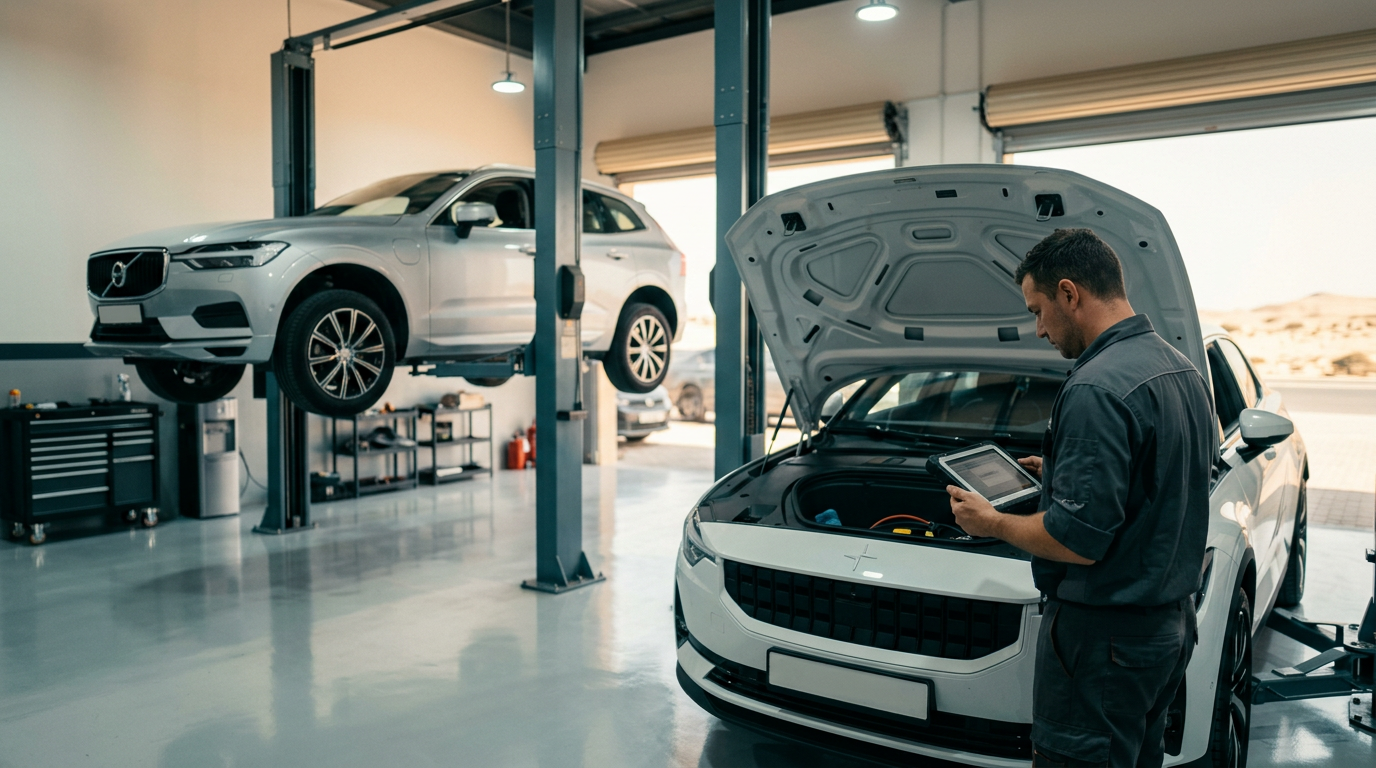
Volvo and Polestar vehicles share many components—SPA and CMA platforms, infotainment architecture, climate systems—but servicing diverges sharply when electric drivetrains enter the picture. Polestar models are pure EVs with high-voltage battery cooling and over-the-air updates, while most Volvos in the UAE remain petrol or mild-hybrid, requiring traditional engine maintenance alongside modern electronics. Understanding these differences ensures you book the right service and avoid unnecessary work.
Platform and Parts Commonality
Volvo and Polestar are part of the same engineering family. The Polestar 2 sits on Volvo's CMA platform (shared with the XC40), and many interior modules, suspension arms, brake calipers, and body panels cross over. This means a workshop experienced with Volvo systems already understands much of the Polestar architecture.
Where they differ is propulsion. A Volvo XC60 T5 uses a turbocharged petrol engine, eight-speed automatic transmission, and conventional cooling. A Polestar 2 Long Range has dual electric motors, a 78 kWh lithium-ion battery pack, and a dedicated thermal management loop for cells and inverters. That thermal loop is the single biggest service distinction: it uses a glycol coolant circuit that must be bled correctly and monitored for leaks, especially after Dubai's summer heat cycles expand and contract hoses.
What Traditional Volvo Service Involves
Petrol and mild-hybrid Volvos—XC90, XC60, S90, V90—follow familiar European service schedules. Volvo specifies 12-month or 15,000 km intervals for oil changes, though Dubai's stop-start traffic and 50°C ambient temperatures often push oil degradation faster. A typical general maintenance visit includes:
- Engine oil and filter replacement (0W-20 or 0W-30 synthetic, depending on model year)
- Cabin and engine air filter inspection—fine sand clogs these quickly in Al Quoz and surrounding industrial zones
- Brake fluid check (hygroscopic; absorbs moisture in humid coastal air)
- Coolant level and concentration test
- Drive belt and tensioner inspection
- Tire rotation and tread depth measurement
Volvo's eight-speed Aisin gearbox is generally reliable, but transmission services at 60,000–80,000 km—fluid drain and filter replacement—prevent valve-body wear. The four-cylinder Drive-E engines are robust, though the turbocharger and charge-air cooler should be inspected for oil seepage around 100,000 km.
Common Volvo Repair Jobs in Dubai
AC services top the list: compressor cycling in extreme heat stresses seals, and refrigerant top-ups are routine after three to four years. Suspension and steering components—front control-arm bushings, anti-roll bar links—wear faster on speed bumps and uneven compound roads. Brake services include rotor machining or replacement when pedal pulsation appears, usually around 40,000–50,000 km for front axles in city driving.
Electrical gremlins occasionally surface: parking sensors failing due to dust buildup, tailgate modules resetting, or infotainment freezes requiring a software reflash via diagnostic services. A capable independent workshop with Volvo VIDA or equivalent scan tools can address these without the markup of a main-dealer visit.
Polestar-Specific Service Requirements
Polestar 2 and Polestar 3 models eliminate engine oil, transmission fluid, spark plugs, and exhaust systems. What remains is simpler in count but more specialized in execution. Annual service intervals—typically 20,000 km or 12 months—focus on:
- High-voltage battery coolant inspection and top-up (dedicated glycol mix; never generic antifreeze)
- Brake fluid replacement every two years (regenerative braking reduces pad wear but fluid still absorbs moisture)
- Cabin air filter replacement (HEPA-grade in many Polestars; traps fine particulates)
- Tire rotation and alignment check (instant torque accelerates tread wear on rear or front axles depending on drive configuration)
- 12-volt auxiliary battery test (powers body control modules; heat degrades lead-acid cells faster in UAE)
- Underbody inspection for stone damage to battery enclosure or coolant lines
Software updates arrive over-the-air, but some—particularly those affecting battery management or motor calibration—require a workshop download via Polestar's engineering portal. A garage experienced with ECU programming and electric-vehicle architecture can handle these without sending the car back to a main dealer.
Battery Thermal Management
The battery coolant loop is the heart of EV longevity. In Dubai, where asphalt temperatures exceed 70°C in July and August, the thermal management system works overtime to keep cells between 20–35°C during fast charging and driving. Coolant hoses, pump seals, and the chiller unit (which ties into the AC compressor) must be leak-free. A slow glycol leak will trigger a warning light, but by then, the battery may have run hot for weeks, accelerating capacity fade.
Annual coolant concentration tests—measuring freeze point and pH—catch degradation early. Replacement intervals are typically 100,000 km or five years, but inspecting hose clamps and connections every service visit is prudent given vibration and thermal cycling.
Brake and Tire Wear Patterns
Regenerative braking in Polestar models means front brake pads can last 80,000–100,000 km, but rear pads (which handle parking-brake duty and occasional hydraulic braking) still wear. Rotors, however, can develop surface rust if the car spends weeks in light regen-only driving; periodic hard stops—safe and legal—burnish the surface clean.
Tire wear is more aggressive on EVs due to instant torque and heavier kerb weight. A Polestar 2 Long Range weighs roughly 2,150 kg, 300 kg more than an equivalent XC40 T4. Front tires on single-motor variants wear faster on the inside edge if alignment drifts; dual-motor cars distribute load more evenly but chew through tread overall. Rotation every 10,000 km and tire services including pressure checks (TPMS recalibration after rotation) extend life.
Diagnostic and Electrical Complexity
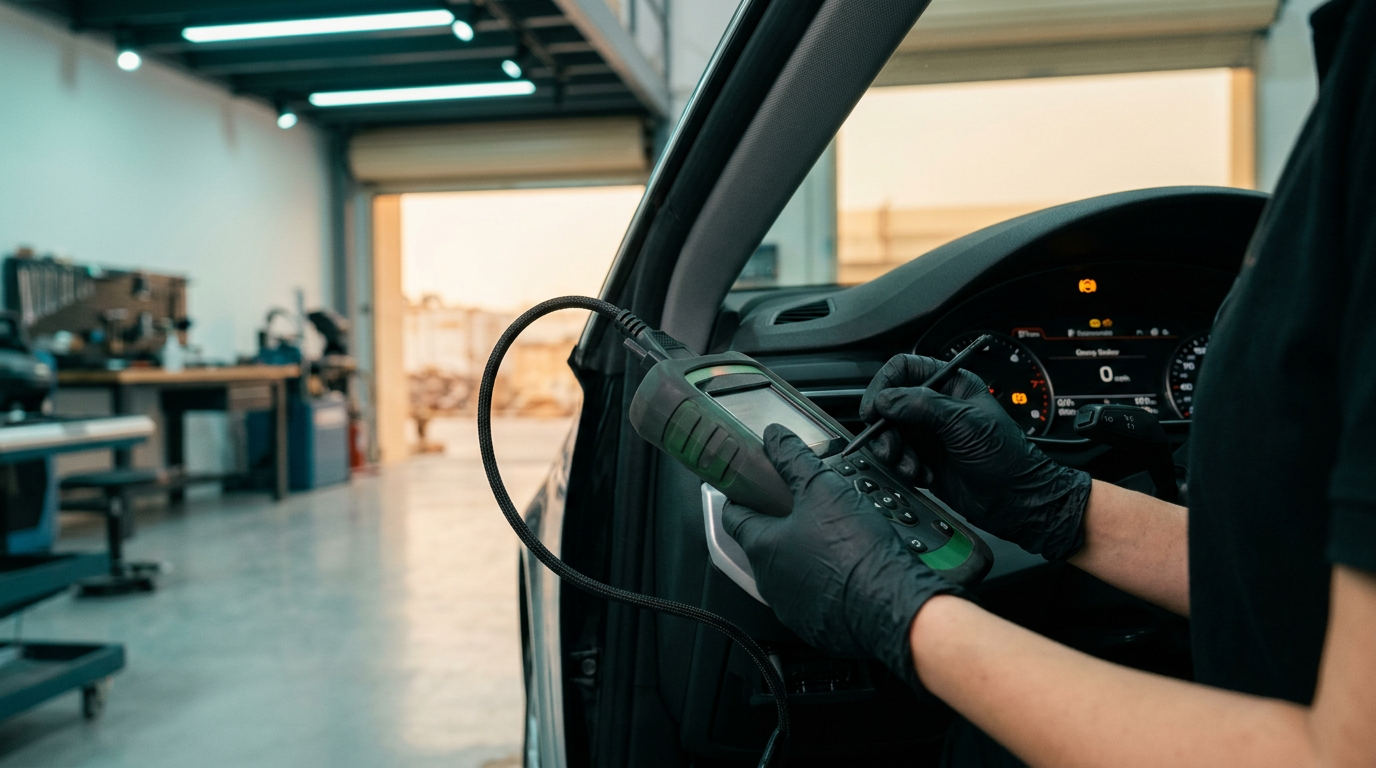
Both Volvo and Polestar use the same infotainment and driver-assistance stack—Sensus or Google Automotive OS—but Polestar adds layers of high-voltage monitoring. A proper scan tool must read battery-cell voltages, inverter temperatures, and motor-resolver data. Generic OBD-II readers will pull powertrain codes but miss critical EV faults.
Common electrical and electronics issues include 12-volt battery drain (body modules stay awake if a door sensor misfires), charge-port locking failures (micro-switch corrosion from humidity), and phantom range loss (often software calibration, not cell degradation). A workshop with access to Volvo's VIDA or Polestar's service platform can distinguish between hardware faults and software glitches, saving unnecessary part replacements.
Parts Sourcing and Lead Times
Shared components—brake pads, filters, suspension bushings—are readily available in Dubai through European parts distributors. Polestar-specific items—battery coolant pumps, high-voltage contactors, motor inverters—have longer lead times, sometimes two to four weeks from Sweden. Keeping a car on the road during that wait often means diagnosing accurately the first time and ordering parts before the vehicle arrives for repair.
OEM parts carry Volvo or Polestar branding and come with traceability, but premium alternatives—Bosch, Brembo, Sachs—offer equivalent performance for wear items like brake discs and dampers. For more context, see OEM vs Aftermarket Parts: When Each Makes Sense.
Cost Considerations in the UAE Market
A minor service for a petrol Volvo—oil, filters, inspection—typically ranges from 600 to 1,000 AED at independent workshops across Dubai. A major service at 30,000 km, including brake fluid, coolant top-up, and spark plugs, runs 1,400 to 2,200 AED depending on model and parts choice.
Polestar annual services are lighter on consumables—no oil, no plugs—so labour and inspection dominate. Expect 800 to 1,200 AED for a routine visit. Battery coolant replacement, when due, adds 1,500 to 2,500 AED including fluid and system bleed. High-voltage component repairs—motor bearings, inverter modules—can exceed 8,000 AED, but these are rare before 150,000 km if cooling is maintained.
For broader EV context, read Polestar and Volvo EV Maintenance in the UAE and EV Servicing in Dubai: What Electric Cars Still Need.
Choosing the Right Workshop
Not every garage that services Volvo engines is equipped for Polestar high-voltage systems. Look for a workshop with:
- Manufacturer-grade diagnostic equipment (VIDA, VCADS, or Polestar-compatible scan tools)
- Technicians trained in EV safety and high-voltage isolation procedures
- Access to OEM technical service bulletins and wiring diagrams
- Experience with thermal-management systems and battery diagnostics
An independent specialist familiar with both brands can handle routine maintenance, car repair, and many component replacements at lower cost than a main dealer, while still following factory procedures. For complex diagnostics or warranty-adjacent work, verify the workshop's capability before booking.
If you're comparing service options, Is Dealer Servicing Worth It in Dubai? Dealer vs Specialist Garage breaks down the trade-offs in detail.
Long-Term Ownership in Dubai's Climate
Heat, dust, and short-trip urban driving stress both petrol Volvos and electric Polestars. Petrol engines suffer oil degradation and carbon buildup on intake valves; EVs face accelerated 12-volt battery failure and coolant-hose aging. Regular service intervals—respected, not stretched—keep both types reliable past 150,000 km.
For Polestar owners, annual underbody inspections catch stone chips on the battery enclosure before they compromise seals. For Volvo drivers, monitoring oil consumption (especially on four-cylinder turbos) and addressing minor leaks early prevent expensive engine repairs later. Both benefit from pre-purchase inspection if buying used, and from reading service history to verify maintenance consistency.
Volvo or Polestar Service in Al Quoz
JAD Garage in Al Quoz 4 services both petrol Volvos and electric Polestars with manufacturer-grade diagnostics and high-voltage capability. Call +971 56 355 6113 or WhatsApp to book your next service and keep your Swedish car running as intended.
Frequently asked questions