Wheel Bearing Noise: How to Identify It Before It Fails


A failing wheel bearing announces itself through a distinctive humming, growling, or rumbling noise that grows louder as vehicle speed increases. The sound often changes pitch during cornering and may be accompanied by vibration through the steering wheel or floor. Identifying these symptoms early prevents complete bearing seizure, which can lock a wheel or cause it to detach—both dangerous outcomes at highway speed.
What Wheel Bearings Do and Why They Fail
Wheel bearings allow each wheel to rotate freely around its axle while supporting the vehicle's weight and absorbing lateral forces during cornering. Modern sealed bearings combine an inner race, outer race, steel balls or rollers, and grease inside a single hub assembly. They're designed to last 100,000–150,000 km under normal conditions, but Dubai's environment accelerates wear.
Heat cycling between 50°C ambient summer temperatures and air-conditioned interiors expands and contracts bearing components, gradually breaking down the grease seal. Fine sand ingress through damaged seals acts as an abrasive paste between the races and rolling elements. Potholes and speed-bump impacts at the wrong angle can dent the bearing races, creating flat spots that produce rhythmic noise. Water from occasional heavy rain or car washes can also penetrate compromised seals, causing corrosion on the precision-ground surfaces.
Worn suspension components—common in vehicles that navigate speed bumps daily—allow excessive wheel movement that overloads bearings outside their design tolerance. Incorrect wheel torque after tire services can either under-clamp or over-stress the bearing assembly, shortening its life.
Early Symptoms of a Bad Wheel Bearing
The first sign is usually audible. A faint humming or droning noise emerges at speeds above 50 km/h, often mistaken for tire noise. As the bearing deteriorates, the hum deepens into a growl or grinding sound. The noise is speed-dependent: it increases in pitch and volume as you accelerate, decreases when you slow down, and doesn't change with engine RPM when coasting in neutral.
Cornering provides a diagnostic clue. Load transfers to the outer wheels during a turn, so if the noise gets louder when turning left, the right-side bearing is usually at fault, and vice versa. This happens because the loaded bearing is pressed harder into its damaged race.
Vibration through the steering wheel, floor, or seat becomes noticeable as wear progresses. The damaged bearing creates an uneven rotational pattern that pulses through the suspension. In severe cases, you may feel play or looseness in the wheel when stationary—grasp the tire at 12 and 6 o'clock and try to rock it; any clunking or movement indicates bearing or suspension wear.
ABS or traction-control warning lights can illuminate if the bearing has an integrated magnetic encoder ring that feeds wheel-speed data to the vehicle's electrical system. As the bearing loosens, the sensor gap changes and triggers a fault code.
How a Workshop Confirms Which Bearing Is Bad
Technicians use a combination of road test, lift inspection, and sometimes thermal or vibration analysis to pinpoint the failed bearing.
Road Test
A test drive at varying speeds identifies the noise characteristics. The technician listens for speed correlation, notes whether the sound changes during left or right turns, and checks if braking alters the noise (which can indicate a brake issue instead). Modern workshops with chassis-ear diagnostic microphones place sensors near each wheel hub to isolate the source while driving.
Lift and Manual Inspection
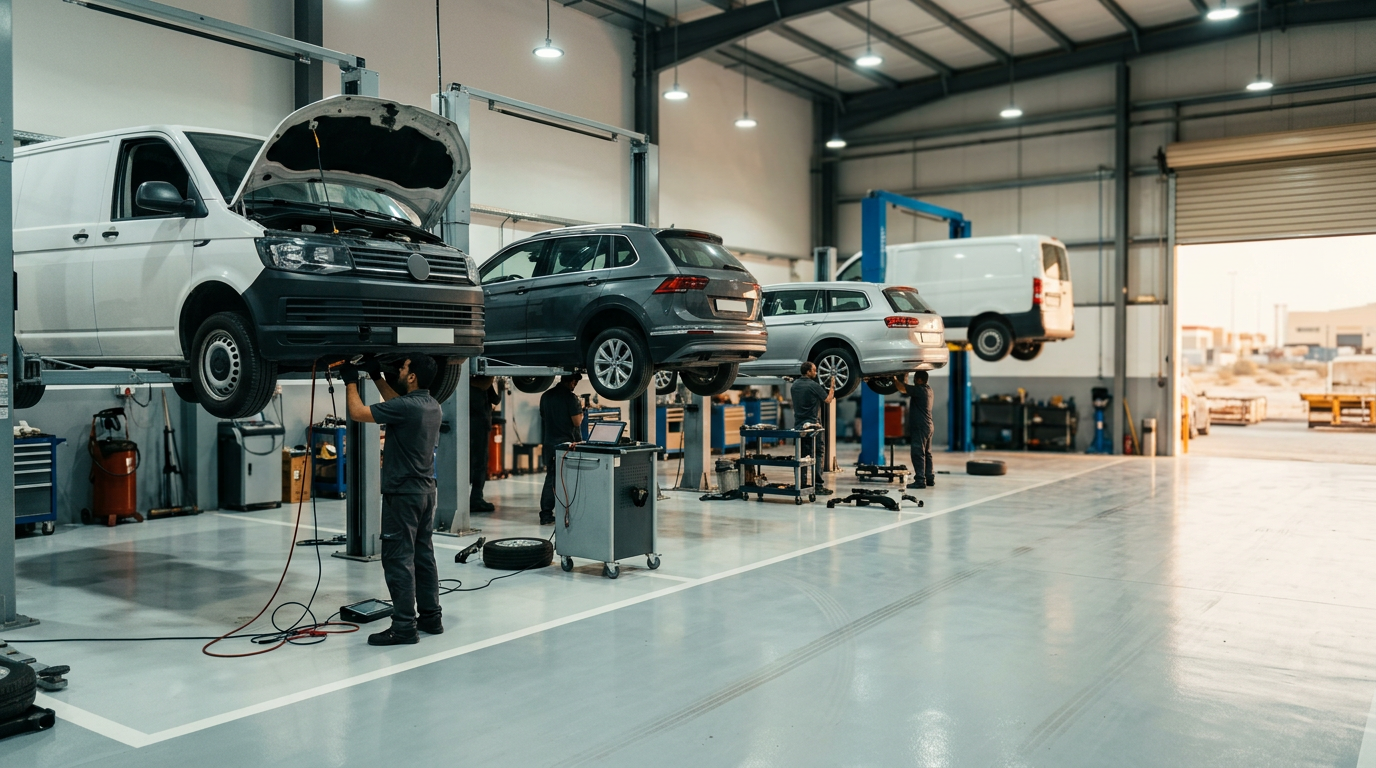
With the vehicle on a lift and wheels off the ground, the technician spins each wheel by hand. A bad wheel bearing produces a rough, grinding feel and audible noise. Grasping the tire at 12 and 6 o'clock, then 3 and 9 o'clock, the technician rocks it to check for play. Movement at 12 and 6 typically indicates bearing wear; movement at 3 and 9 often points to worn ball joints or tie rods, though severe bearing failure can also show lateral play.
Temperature Check
After a short drive, an infrared thermometer measures hub temperature. A failing bearing generates excess friction, so the faulty hub will be noticeably hotter than its counterpart on the opposite side—sometimes 20–30°C higher.
Vibration Analysis
Specialist workshops use accelerometers attached to the suspension or hub to measure vibration frequency. Bearing defects produce specific frequency patterns that distinguish them from tire imbalance or suspension issues. This is particularly useful on vehicles where noise is subtle or multiple components are suspect.
Diagnostic Scan
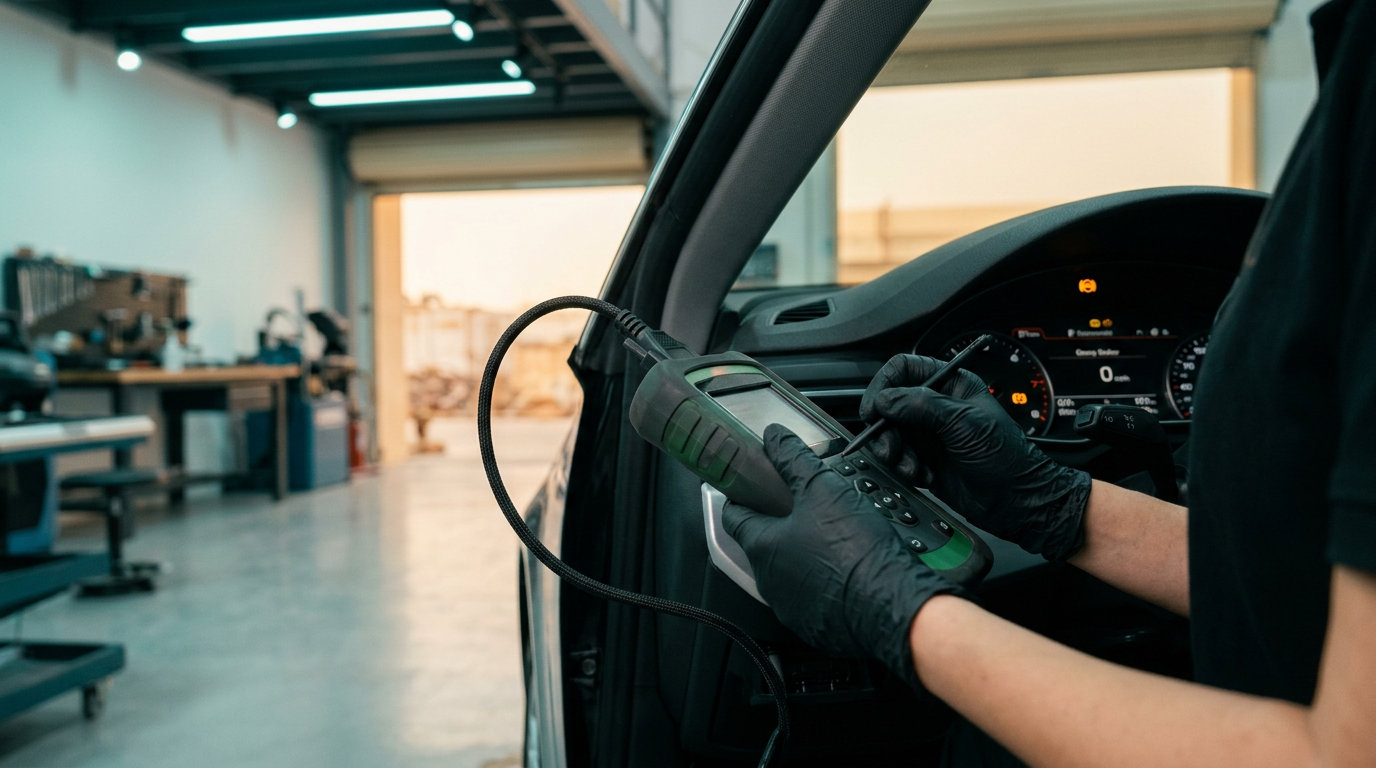
A scan tool checks for ABS or stability-control fault codes. Codes related to wheel-speed sensors often correlate with bearing damage on hubs that integrate the sensor ring. The scan also reveals if the vehicle has logged erratic speed signals from one wheel, confirming the bearing's mechanical looseness.
Common Causes Ranked by Probability
| Symptom | Most Likely Cause | Confirmation Method |
|---|---|---|
| Humming/growling that increases with speed | Worn bearing races or rolling elements | Road test, manual spin test on lift, temperature differential |
| Noise louder during left turns | Right-side wheel bearing failure | Cornering load test, right-wheel manual inspection |
| Noise louder during right turns | Left-side wheel bearing failure | Cornering load test, left-wheel manual inspection |
| Vibration through steering wheel | Front wheel bearing wear | Front-wheel spin test, check for play at 12 and 6 o'clock |
| Vibration through floor/seat | Rear wheel bearing wear | Rear-wheel spin test, temperature check after drive |
| ABS/traction light with noise | Bearing with integrated sensor ring damage | Scan tool for wheel-speed fault codes, manual play check |
| Clunking when rocking wheel | Advanced bearing failure or suspension wear | Play test at multiple positions, visual inspection of control arms |
What Wheel Bearing Replacement Involves
Most modern European vehicles use hub-bearing assemblies that replace as a single unit. The wheel and brake caliper are removed, the hub retaining bolt or axle nut is loosened (often requiring significant torque—300+ Nm on some models), and the old hub is pressed or bolted out. The new assembly is fitted, torqued to specification, and the wheel reinstalled with correct lug-nut torque.
On older or commercial vehicles, the bearing may be a separate component pressed into a hub or knuckle. This requires a hydraulic press to remove the old bearing races and install new inner and outer races, then pack the bearing with high-temperature grease. This method is less common on passenger cars built after 2010.
Replacement of one bearing doesn't automatically mean the opposite side needs changing, but if the vehicle has high mileage or both sides show similar wear patterns during inspection, replacing both on the same axle is often recommended to avoid a second repair visit within months.
After installation, a test drive confirms the noise is eliminated and the ABS system registers correct wheel-speed signals. On vehicles with adaptive suspension or electronic stability programs, a diagnostic scan tool may need to recalibrate the system to recognize the new sensor ring.
Typical Repair Costs in Dubai
Across independent workshops in Dubai, wheel bearing replacement typically ranges from AED 600 to AED 1,800 per wheel, depending on the vehicle. Compact hatchbacks and sedans sit at the lower end; luxury and performance models with complex hub assemblies or integrated ABS sensors cost more. Four-wheel-drive vehicles sometimes require additional labour to disconnect driveshafts. Parts account for roughly 60–70% of the total, with OEM hub assemblies for German marques often exceeding AED 1,000 per side, while premium aftermarket alternatives can reduce parts cost by 30–40% without compromising bearing life.
Labour time ranges from one to three hours per wheel, influenced by whether the hub is bolted or pressed, and whether the suspension design requires significant disassembly to access the bearing.
Driving on a Bad Wheel Bearing: The Risks
A noisy bearing that still turns smoothly might seem like a minor annoyance, but continued driving accelerates the damage. As the races and rolling elements wear, metal fragments contaminate the remaining grease, turning it into an abrasive compound that grinds away more material. The bearing heats up, which can warp the hub or damage the ABS sensor ring.
In the final stage, the bearing seizes or the hub separates from the spindle. A seized bearing locks the wheel, causing sudden drag and potential loss of control, especially dangerous at highway speed on the E11 or Sheikh Zayed Road. Complete separation allows the wheel to wobble or detach, with obvious catastrophic results.
Even before total failure, a worn bearing increases braking distance because the wheel doesn't rotate as freely, and it places uneven stress on tires, causing irregular wear patterns that shorten tire life. The extra load also stresses suspension components, potentially damaging ball joints or control-arm bushings.
Preventing Premature Wheel Bearing Failure
- Avoid potholes and speed bumps at speed: Impact loads dent bearing races; approach obstacles slowly and at a straight angle.
- Maintain correct tire pressure: Under-inflated tires increase rolling resistance and side-load forces on bearings during cornering.
- Inspect seals during brake or tire service: Damaged dust seals allow sand and water ingress; replacing a seal costs far less than a bearing.
- Torque wheels correctly: Over-tightening or under-tightening lug nuts stresses the hub; always use a calibrated torque wrench.
- Check suspension components: Worn ball joints or bushings allow excessive wheel movement that overloads bearings; address suspension wear promptly during general maintenance.
- Wash undercarriage after beach drives: Salt accelerates corrosion on bearing surfaces; rinse wheel wells and hubs after coastal trips.
When to Schedule Inspection
Any new humming, growling, or vibration that correlates with vehicle speed warrants immediate inspection. Don't wait for the noise to worsen or for warning lights to appear. Early-stage bearing wear is straightforward to diagnose and replace; advanced failure can damage the hub, spindle, or ABS components, multiplying the repair cost.
If you're unsure whether the noise is tire-related or bearing-related, a professional inspection on a lift provides a definitive answer within 30 minutes. Many workshops in Al Quoz offer diagnostic checks as a standalone service, allowing you to make an informed decision about repair timing.
For fleet operators or businesses managing multiple vehicles, integrating bearing inspection into scheduled service intervals—typically every 20,000 km or annually—catches wear before it causes roadside breakdowns or safety incidents.
Related reading: Engine Mounting Failure: Vibration at Idle Explained.
Wheel Bearing Noise? Get It Diagnosed in Al Quoz
JAD Garage in Al Quoz 4 uses lift inspection, temperature analysis, and scan tools to pinpoint bearing wear before it becomes a safety risk. Call +971 56 355 6113 or visit Warehouse No.1, Street 8 to schedule a diagnostic check.
Frequently asked questions