
Automatic Transmission Fluid Change: Interval and Warning Signs

Most modern automatic transmissions require a fluid change every 60,000–100,000 km under normal driving conditions, but Dubai's extreme heat, stop-start traffic, and frequent short trips can shorten this interval to 40,000–60,000 km. Manufacturer recommendations vary widely, and some 'sealed-for-life' gearboxes still benefit from routine maintenance to prevent premature wear and costly repairs.
Why Transmission Fluid Deteriorates Faster in Dubai
Transmission fluid serves three critical functions: it lubricates moving parts, cools internal components, and enables hydraulic pressure for gear changes. In Dubai's summer heat—where ambient temperatures reach 50°C and tarmac exceeds 70°C—transmission operating temperatures climb well beyond design limits during traffic jams and short city trips.
Heat accelerates fluid oxidation, breaking down the chemical additives that protect clutch packs and valve bodies. Fine desert sand infiltrates through breather vents and seals, acting as an abrasive that accelerates wear on precision components. Stop-start traffic generates more heat than highway cruising because the torque converter stays engaged longer without airflow to cool the transmission pan.
These conditions push Dubai-driven vehicles into the 'severe service' category found in every owner's manual, even if annual mileage is modest. A European car that might run 100,000 km between fluid changes in Germany often needs attention at 50,000 km here.
Manufacturer Recommendations vs Real-World Intervals
Published service schedules vary dramatically by brand and gearbox type. Traditional torque-converter automatics from Japanese manufacturers typically specify 60,000–80,000 km intervals. German dual-clutch transmissions (DSG, PDK, M-DCT) often call for 60,000 km or six years. ZF 8-speed automatics—fitted to BMW, Mercedes-Benz, Range Rover, and others—are sometimes labelled 'lifetime fill' but benefit from a 100,000 km fluid drain.
CVT transmissions in many Renault and Nissan models require more frequent fluid changes, often every 40,000–60,000 km, because the belt or chain system is sensitive to fluid degradation. Performance and luxury car gearboxes experience higher loads and heat, so Porsche, Ferrari, and McLaren models often specify shorter intervals or recommend inspection at every major service.
For UAE conditions, a practical rule is to halve any 'normal service' interval if your driving includes daily commutes under 15 km, regular traffic congestion, or frequent towing. If the manual lists a 'severe service' schedule, follow it without exception.
Warning Signs Your Transmission Fluid Needs Changing
Degraded transmission fluid announces itself through specific symptoms. If you notice any of these, check the fluid condition immediately:
- Delayed or harsh shifts: Worn fluid loses hydraulic properties, causing sluggish or abrupt gear changes, especially when cold.
- Slipping gears: The transmission revs without acceleration or drops out of gear under load—often a sign of clutch pack wear accelerated by contaminated fluid.
- Whining or grinding noise: Metal particles in old fluid indicate internal wear; the pump or planetary gears may be starved of lubrication.
- Burnt smell: Overheated fluid smells acrid and turns dark brown or black; this is an emergency requiring immediate attention.
- Fluid leaks: Red or brown puddles under the car signal seal failure, often caused by pressure buildup from degraded fluid.
- Check engine light: Transmission temperature or pressure sensors trigger fault codes when fluid performance drops.
These symptoms overlap with mechanical gearbox faults, so a proper diagnostic scan and fluid inspection are essential. Ignoring early warning signs leads to internal damage that costs ten times more than preventive fluid service. Our article on 7 symptoms of a failing automatic gearbox covers this in more detail.
Fluid Change vs Transmission Flush: Which Do You Need?
A transmission fluid change and a transmission flush are different procedures with distinct benefits and risks.
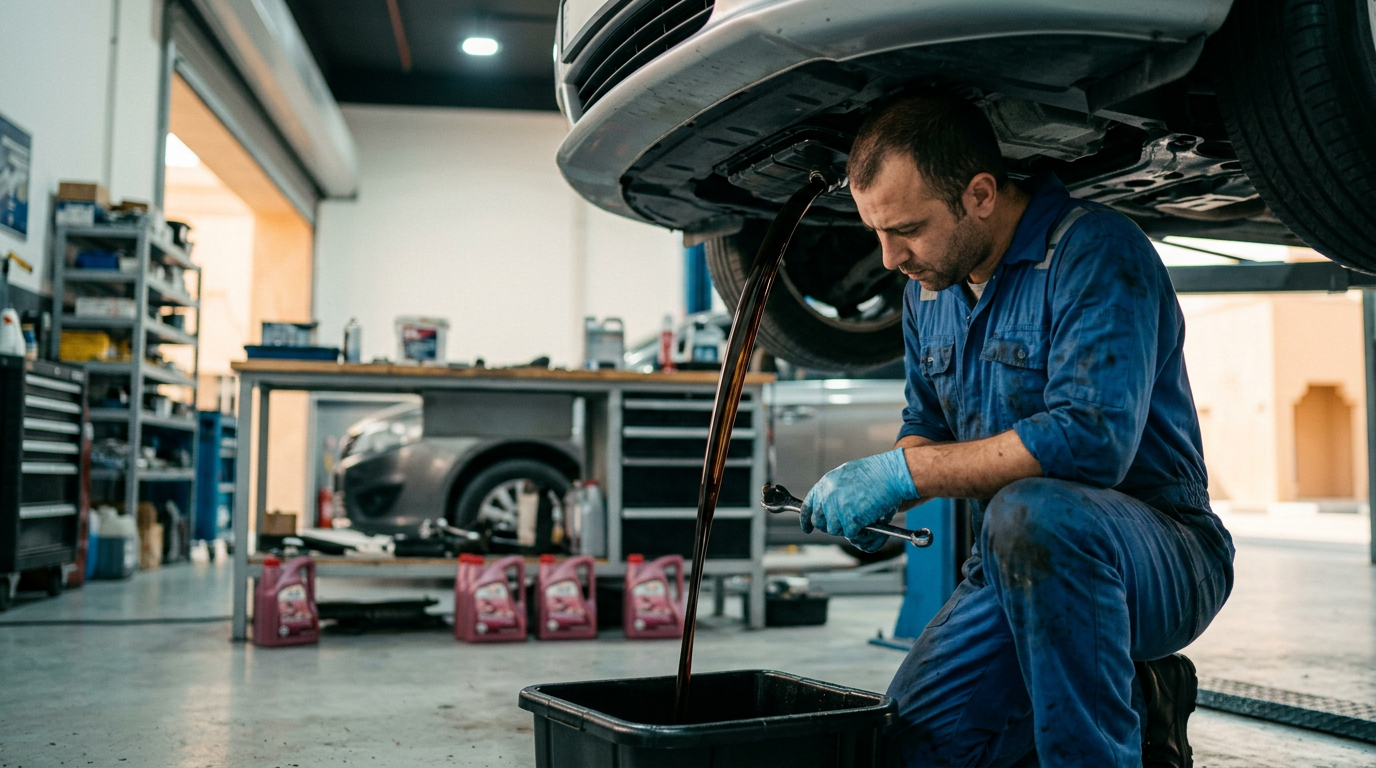
A fluid drain and refill removes 40–60% of the old fluid by dropping the transmission pan, replacing the filter (if fitted), cleaning metal debris from the pan magnet, and refilling with fresh fluid. This is the safest routine maintenance approach and matches what most manufacturers recommend. It's gentler on seals and valve bodies, and allows inspection of the pan for wear particles.
A transmission flush uses a machine connected to the cooler lines to push new fluid through the system under pressure, replacing 95–100% of the old fluid without removing the pan. Flush equipment cycles 12–20 litres through the gearbox, forcing out contaminants from the torque converter and valve body passages.
The flush replaces more fluid, but it carries risks if the transmission already has internal wear. High-pressure flushing can dislodge varnish deposits that were sealing worn seals, leading to leaks or valve-body blockages. For gearboxes with over 150,000 km or unknown service history, a drain-and-refill is safer. For well-maintained vehicles on a regular schedule, a flush every second or third service provides deeper cleaning.
Modern dual-clutch and CVT transmissions often require specific fill procedures and software adaptation after fluid changes, making DIY work risky. Professional transmission services include correct fluid specification, fill volume, and electronic relearning.
How Driving Habits Affect Fluid Change Frequency
Your transmission fluid change intervals should reflect how you actually use the vehicle, not just odometer readings. Frequent short trips—common in Dubai's villa-to-mall-to-office routine—prevent the transmission from reaching full operating temperature, allowing moisture and fuel contamination to build up in the fluid. This accelerates corrosion and sludge formation.
Towing, even occasionally, doubles the heat load on the transmission. If you tow a trailer, jet-skis, or a car transporter, cut the standard interval by 30–40%. The same applies to spirited driving in performance cars or track use—high torque and rapid shifts generate extreme heat that degrades fluid quickly.
Highway driving is easiest on transmissions because sustained speeds keep the torque converter locked and airflow cools the gearbox. City traffic is hardest: constant gear hunting, torque converter slip, and minimal cooling airflow push temperatures 20–30°C higher than highway cruising.
If your daily drive includes Al Khail Road congestion, Sheikh Zayed Road stop-start traffic, or school-run loops, treat your vehicle as severe service and shorten fluid change intervals accordingly. Many fleet operators and corporate accounts adopt 50,000 km intervals for this reason.
Choosing the Right Transmission Fluid
Transmission fluid specifications are not interchangeable. Each gearbox design requires a specific viscosity, friction modifier package, and additive chemistry. Using the wrong fluid—even a premium brand—causes shift quality problems, clutch slip, and accelerated wear.
Modern transmissions use highly specialized fluids: ZF Lifeguard 8 for ZF 8-speed gearboxes, VW/Audi G-series fluids for DSG units, Toyota WS for Lexus hybrids, Dexron VI for GM-derived gearboxes, and brand-specific formulations for Mercedes-Benz 9G-Tronic, BMW Steptronic, and Porsche PDK. CVT transmissions are especially sensitive—using ATF in a CVT destroys the belt or chain within thousands of kilometres.
Always verify the exact specification in your owner's manual or service booklet. The dipstick or filler cap may list a code (e.g., MB 236.14, VW G 052 182, ATF+4). OEM fluids meet these specs precisely, while premium aftermarket fluids from Fuchs, Liqui Moly, Ravenol, or Motul offer equivalent performance at lower cost—but only if the specification matches exactly.
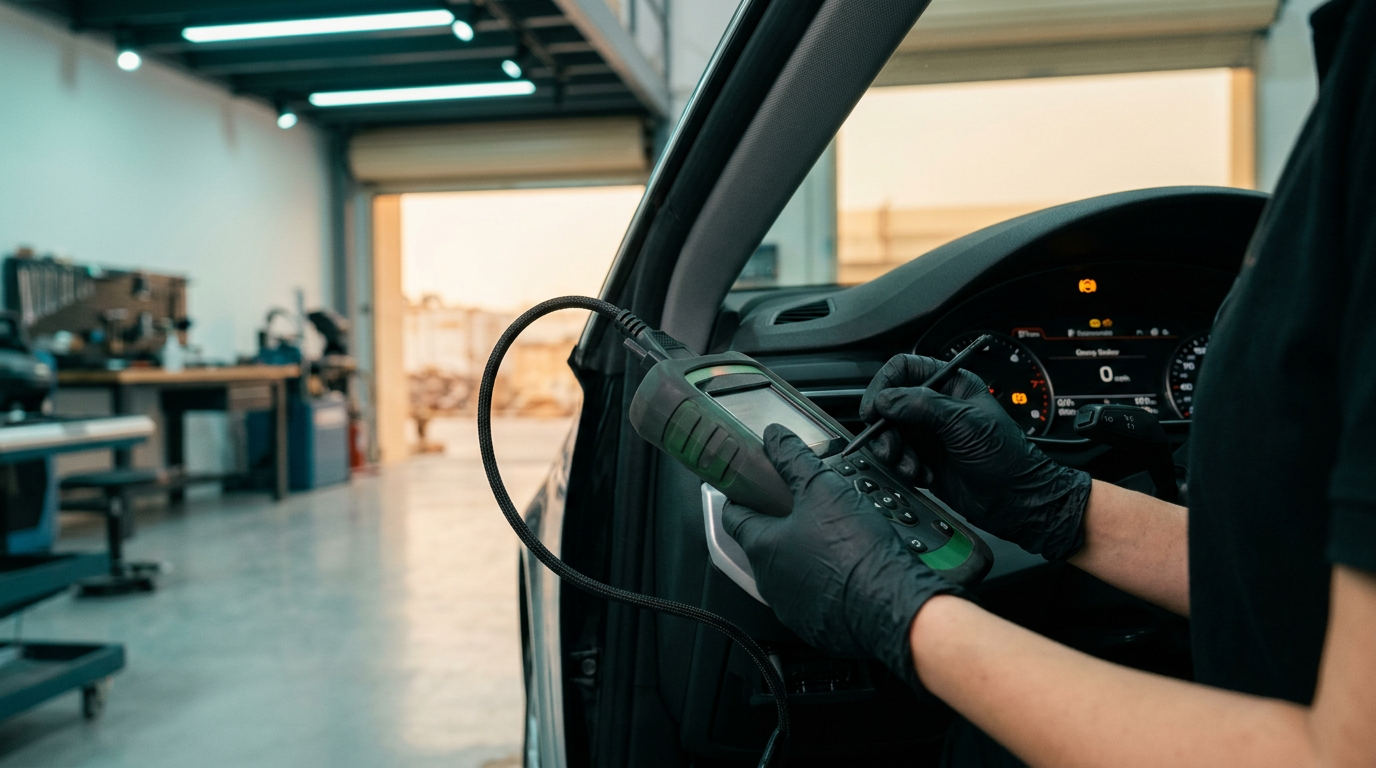
Using manufacturer-grade diagnostic equipment ensures the correct fluid type, fill volume, and temperature are achieved during service. Underfilling or overfilling by even half a litre causes shift problems or overheating.
Risks of Neglecting Transmission Fluid Maintenance
Skipping transmission fluid changes saves a few hundred dirhams today but risks five-figure repair bills tomorrow. Degraded fluid loses its ability to transfer heat, leading to clutch pack glazing, valve body seizure, and torque converter failure. Once internal damage begins, metal particles circulate through the system, accelerating wear on every component.
Rebuilt or replacement transmissions for European and luxury vehicles typically cost AED 15,000–40,000 in Dubai, while a preventive fluid service runs AED 800–1,800 depending on fluid capacity and gearbox type. The cost difference is stark, yet many owners ignore fluid maintenance until symptoms appear—by which point internal damage is often irreversible.
Transmission failure also creates safety risks. Sudden loss of drive in fast-moving traffic or on a highway slip road is dangerous. Slipping gears under acceleration can cause loss of control. These failures are far more common in neglected gearboxes operating in Dubai's heat.
For classic cars and sports cars with rare or discontinued transmissions, preventive fluid maintenance is the only way to preserve irreplaceable components. A well-maintained gearbox can outlast the rest of the vehicle; a neglected one fails prematurely.
Checking Your Transmission Fluid
Many modern transmissions have no dipstick, requiring a lift and a fill plug check at operating temperature—a job for a workshop. If your vehicle does have a dipstick (common on older Japanese and American gearboxes), check the fluid monthly:
- Warm the engine and transmission by driving for 10–15 minutes.
- Park on level ground with the engine idling and the transmission in Park or Neutral (check your manual).
- Pull the dipstick, wipe it clean, reinsert fully, then pull again to read the level.
- Fluid should be bright red or pink (some synthetics are amber or green). Dark brown or black fluid with a burnt smell needs immediate changing.
- Check for metal particles or a milky appearance (indicating coolant contamination from a failed heat exchanger).
Low fluid level causes slipping and overheating; overfilling causes foaming and erratic shifts. Both require correction. If you're unsure, include a transmission fluid check in your next general maintenance visit or major service.
Sealed-for-Life Gearboxes: A Myth in Dubai Conditions
Many European manufacturers label transmissions 'sealed for life' or 'lifetime fill', meaning the fluid is designed to last the vehicle's expected lifespan under ideal conditions. In practice, 'lifetime' assumes moderate European climates, regular highway use, and a 250,000 km vehicle life—none of which apply in Dubai.
Our detailed article on sealed-for-life gearbox servicing explains why these transmissions still benefit from fluid changes at 80,000–120,000 km in UAE conditions. Independent workshops with the correct equipment can service sealed gearboxes safely, extending their life well beyond the original 'lifetime' assumption.
Ignoring fluid maintenance in a sealed gearbox often means replacement rather than repair when failure occurs, because internal damage is typically catastrophic. Preventive service is always more economical.
Transmission Fluid Service in Al Quoz
JAD Garage in Al Quoz 4 provides transmission fluid changes and flush services for all European and EV models using manufacturer-grade diagnostic equipment and the correct fluid specifications. Call +971 56 355 6113 to book or discuss your gearbox service schedule.
Frequently asked questions