
What Happens During a Major Service vs a Minor Service

A minor service is a routine check performed every 10,000 km or 12 months, covering engine oil and filter changes, fluid top-ups, and basic safety inspections. A major service is more comprehensive, typically every 20,000–40,000 km or every two years, and includes all minor service tasks plus replacement of air filters, spark plugs, brake fluid, coolant, and detailed inspections of engine, transmission, suspension, and brake components.
What Is a Minor Service?
A minor service—sometimes called an interim or basic service—is the most frequent type of scheduled maintenance. It keeps your engine running smoothly between more extensive checks. Most manufacturer service books recommend a minor service every 10,000 to 15,000 km or once a year, whichever comes first.
In Dubai's climate, where temperatures reach 50°C and cars often sit in traffic or make short city trips, engine oil degrades faster. Even if you haven't covered the full mileage interval, time-based servicing is important because oil and fluids break down in extreme heat.
What a Minor Service Includes
- Engine oil and oil filter replacement: Fresh oil is the single most important task for engine health, especially in high-temperature environments.
- Fluid level checks and top-ups: Coolant, brake fluid, power steering fluid (where applicable), and windscreen washer fluid.
- Visual brake inspection: Pad thickness, disc condition, and brake line integrity checked without removing wheels.
- Tyre pressure and tread depth check: Correct pressures are critical in UAE heat to prevent blowouts.
- Lights, wipers, and horn: Functional checks to ensure safety equipment works.
- Battery condition test: Voltage and load test, crucial given that batteries often fail within 18 months in Dubai.
- Underbody visual inspection: Looking for leaks, damage, or corrosion from humidity and road salt near coastal areas.
A minor service is designed to be quick—usually completed in under two hours—and focuses on consumables that wear fastest. It doesn't involve removing major components or replacing parts with longer service lives.
What Is a Major Service?
A major service is a full, in-depth inspection and maintenance session. It includes everything in a minor service, plus replacement of parts and fluids that degrade over longer intervals. Most manufacturers schedule a major service every 20,000 to 40,000 km, or every two years, depending on the vehicle and driving conditions.
Because a major service involves more labour and more parts, it takes longer—typically three to five hours—and costs more. But it's essential for keeping your car reliable and catching problems before they become expensive failures.
What a Major Service Includes
- All minor service tasks: Oil, oil filter, fluid checks, and inspections.
- Engine air filter replacement: Dubai's fine sand clogs air filters faster than in temperate climates, reducing engine efficiency and power.
- Cabin air filter replacement: Essential for AC performance and air quality, especially in dusty conditions.
- Spark plug replacement: Typically every 40,000–60,000 km for conventional plugs, longer for iridium or platinum types.
- Brake fluid replacement: Brake fluid absorbs moisture over time, and in humid coastal areas this happens faster, reducing braking performance and causing internal corrosion.
- Coolant replacement: Engine coolant degrades and loses its ability to protect against corrosion and overheating, critical in UAE summers.
- Fuel filter replacement: On vehicles with serviceable filters, typically every 40,000–60,000 km.
- Transmission fluid check or replacement: Some manufacturers specify replacement intervals; others call for inspection only.
- Brake system inspection: Pads, discs, caliper operation, and brake lines inspected in detail, often with wheels removed.
- Suspension and steering inspection: Bushings, ball joints, tie rods, and shock absorbers checked for wear, play, or leaks.
- Drive belt inspection or replacement: Serpentine belts and tensioners checked for cracks, glazing, or wear; replaced if needed.
- Exhaust system inspection: Checked for leaks, corrosion, or damage.
- Battery terminals and charging system test: More thorough than a minor service check, including alternator output.
A major service is the time when technicians look deeper into the vehicle's condition, not just topping up fluids but replacing them entirely and inspecting components that don't need attention at every minor service.
How Often Should You Book Each Service?
The exact interval depends on your vehicle manufacturer and your driving habits. Always refer to your car's service book—it will specify whether you need a minor or major service at each interval.
A typical pattern for many European cars looks like this:
- 10,000 km or 1 year: Minor service
- 20,000 km or 2 years: Major service
- 30,000 km or 3 years: Minor service
- 40,000 km or 4 years: Major service
Some manufacturers use flexible or condition-based servicing, where the car's onboard computer calculates service intervals based on driving style, engine load, and operating conditions. BMW's Condition Based Servicing and Audi's flexible service plans are common examples.
In Dubai, even if your mileage is low, time-based intervals matter. Heat, humidity, and dust accelerate fluid degradation, rubber perishing, and battery wear. A car driven 5,000 km per year in stop-start city traffic still needs annual servicing.
Key Differences Between Major and Minor Services
| Aspect | Minor Service | Major Service |
|---|---|---|
| Frequency | Every 10,000–15,000 km or 1 year | Every 20,000–40,000 km or 2 years |
| Time required | 1–2 hours | 3–5 hours |
| Parts replaced | Engine oil, oil filter | Oil, oil filter, air filters, spark plugs, brake fluid, coolant, fuel filter (if applicable) |
| Inspection depth | Visual checks, fluid levels | Detailed component inspection, wheels-off brake check, suspension and steering assessment |
| Typical cost range (Dubai market) | AED 400–800 | AED 1,200–2,500 |
Cost varies significantly by vehicle brand and engine size. Luxury and performance marques such as Porsche, Mercedes-Benz, and BMW typically sit at the higher end, while mainstream European brands like Volkswagen, Peugeot, and Renault are more affordable.
How Do You Know Which Service Your Car Needs?
Your car's service book or digital service record will tell you. Many modern vehicles display a service reminder on the dashboard, sometimes specifying whether it's a minor or major service due. If you're unsure, a quick look at your last service invoice and current mileage will clarify which interval you're approaching.
If your car has covered 18,000 km since the last major service and it's been 18 months, you're likely due a minor service. If you're at 38,000 km and two years since the last major service, the next one is a major service.
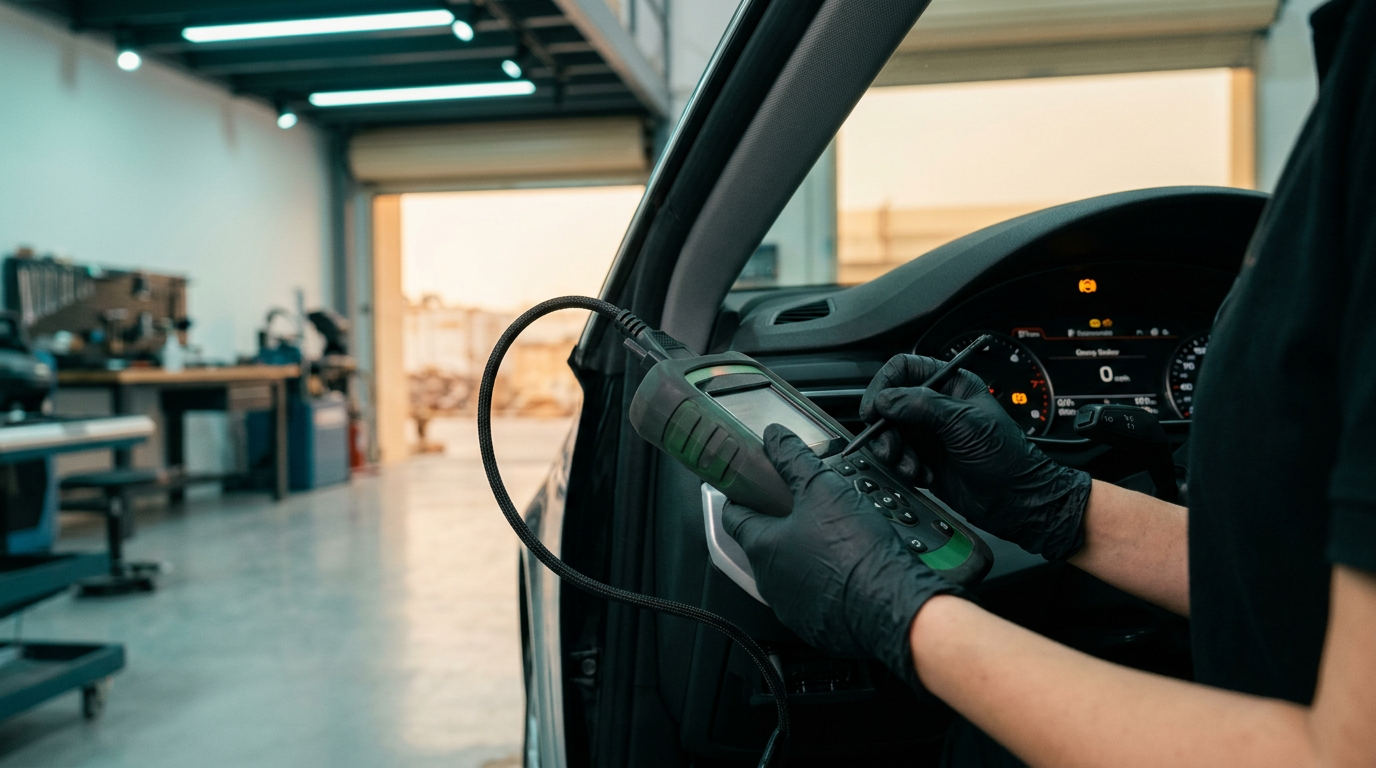
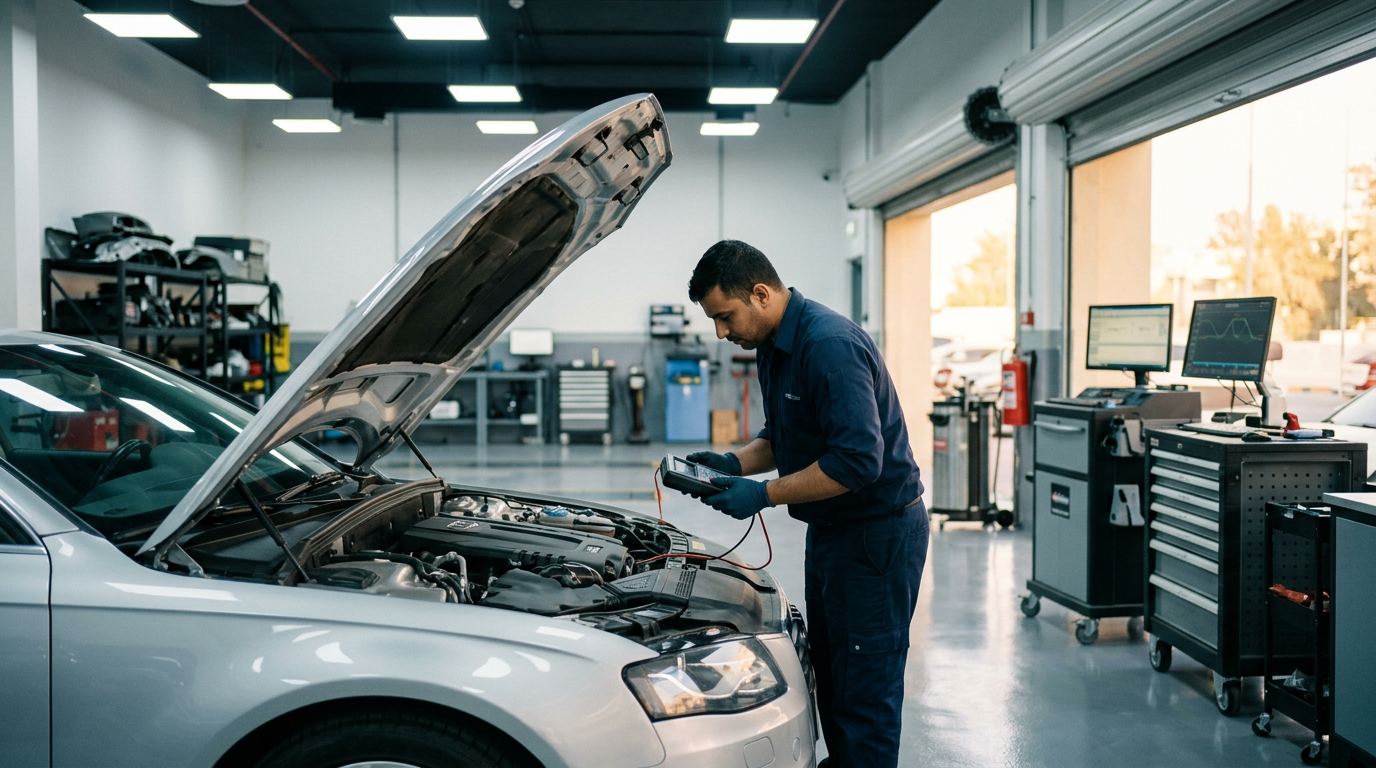
Independent workshops with manufacturer-grade diagnostic equipment can read your car's service history electronically and advise on the correct schedule, especially for brands with complex service algorithms like Audi, BMW, and Volvo.
What Happens If You Skip or Delay Servicing?
Skipping a minor service may not cause immediate failure, but it accelerates engine wear. Degraded oil loses its protective properties, leading to increased friction, heat, and sludge buildup. In Dubai's heat, this happens faster than in cooler climates.
Delaying a major service is riskier. Old brake fluid can cause brake fade or internal corrosion in the ABS system. Worn spark plugs reduce fuel economy and can cause misfires. A clogged air filter starves the engine of air, reducing power and increasing fuel consumption. Degraded coolant loses its ability to prevent overheating, a serious risk in 50°C summer temperatures.
Regular servicing also keeps a documented service history, which is essential for resale value in the UAE market. Buyers and pre-purchase inspections always check for service records, and gaps or missing stamps reduce a car's value significantly.
Does Regular Servicing Improve Performance and Reliability?
Yes. Fresh fluids, clean filters, and properly functioning ignition components keep the engine running efficiently. A well-maintained car starts reliably, runs smoothly, uses less fuel, and is less likely to break down.
Regular servicing also catches small issues early. A minor oil leak spotted during a service can be fixed inexpensively; left unnoticed, it can lead to low oil levels and catastrophic engine damage. Worn brake pads identified during a major service are a routine replacement; ignored, they damage the discs and multiply the repair cost.
For performance and luxury vehicles—sports cars, supercars, and luxury marques—precise servicing intervals are even more critical. High-performance engines operate at tighter tolerances and higher temperatures, so they're less forgiving of neglect.
Can You Mix Minor and Major Service Intervals?
No. Manufacturer service schedules are designed as a sequence. Skipping a major service and doing a minor service instead means critical components don't get replaced or inspected. This can lead to premature wear or failures that would have been caught during the major service.
If budget is a concern, it's better to discuss priorities with your workshop. Some items in a major service are time-critical (brake fluid, coolant), while others depend on condition (spark plugs, drive belts). An experienced technician can advise on what must be done now and what can wait a few thousand kilometres, but the full major service should still be completed within a reasonable window.
Servicing Specialist and Performance Vehicles
Certain vehicles have unique service requirements. McLaren models require annual fluid changes regardless of mileage due to the demands on their systems. Bentley and Rolls-Royce servicing involves detailed checks of air suspension, complex electronics, and hand-finished interior components. Volvo and Polestar EVs have simpler drivetrains but require software updates and high-voltage battery health checks.
For these vehicles, choosing a workshop with the right diagnostic tools, technical knowledge, and access to OEM or premium alternative parts is essential. Generic service schedules don't apply, and inexperienced workshops can miss critical brand-specific service items.
Book Your Minor or Major Service in Al Quoz
Whether your car is due for routine maintenance or a full major service, JAD Garage in Al Quoz 4 has the diagnostic tools and experience to service European and EV vehicles correctly. Call +971 56 355 6113 or send a WhatsApp to book.
Frequently asked questions