
Brake Discs vs Pads: When Both Need Replacing

Brake discs and pads should be replaced together when disc thickness falls below the manufacturer minimum (typically 24–28 mm for front discs), when surface damage like deep scoring or cracking is present, or when installing high-performance pads that require fresh mating surfaces. Replacing only pads on worn discs shortens pad life and reduces braking efficiency.
How Brake Discs and Pads Work Together
The brake disc (or rotor) is a cast-iron or composite disc that rotates with the wheel. When you press the brake pedal, hydraulic pressure forces the brake caliper piston to squeeze the brake pads against both sides of the disc, creating friction that converts kinetic energy into heat. This mechanical braking system relies on intimate contact between pad material and disc surface—any mismatch in wear or contamination degrades performance.
In Dubai's climate, brake components face extreme heat cycles. Ambient temperatures reaching 50°C combine with friction-generated heat (up to 700°C under heavy braking) to accelerate wear. Stop-start traffic in areas like Sheikh Zayed Road and short city trips prevent proper cooling, while fine sand acts as an abrasive that scores disc surfaces over time.
When Brake Discs Must Be Replaced
Brake discs wear gradually through friction, but several conditions mandate replacement rather than continued use:
Minimum Thickness Reached
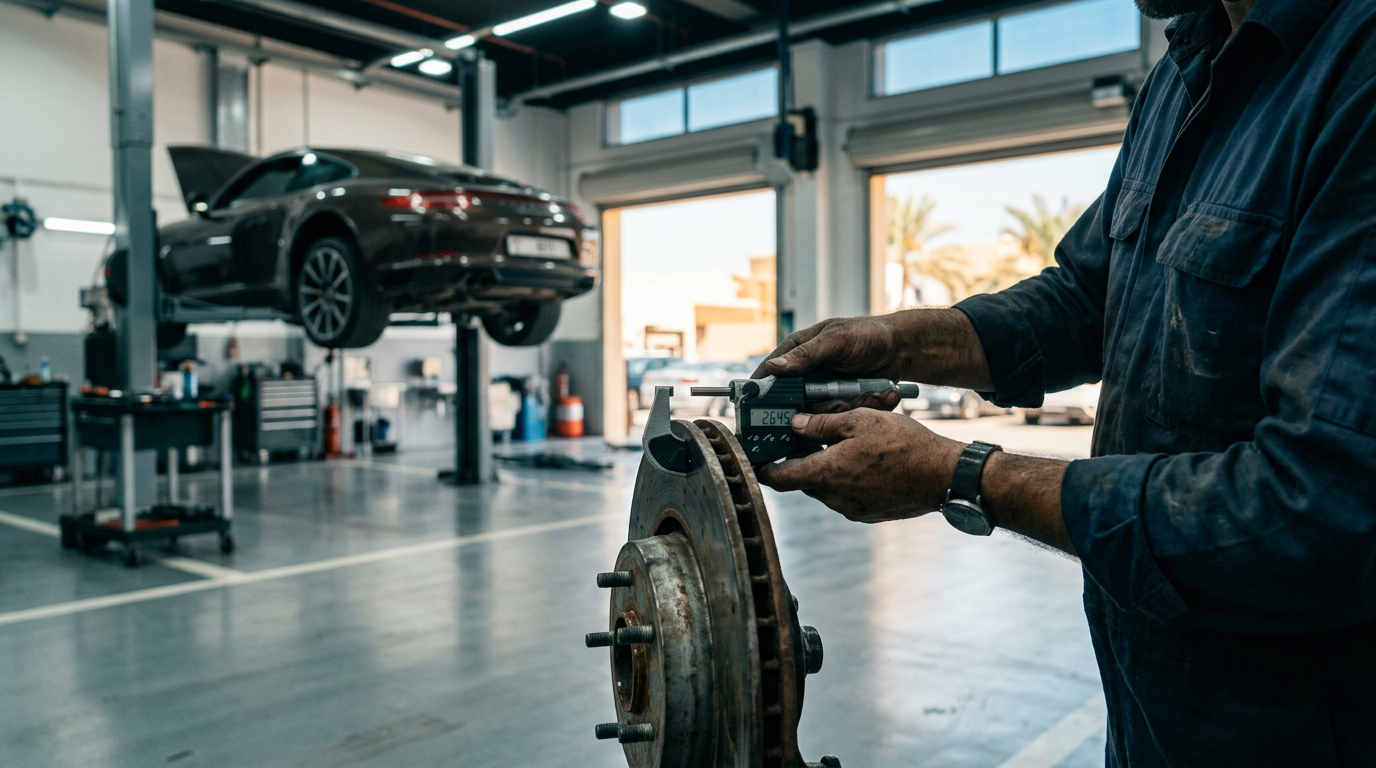
Every disc brake rotor is stamped with a minimum thickness specification, usually between 24 mm and 32 mm depending on vehicle size and performance requirements. Workshops measure actual thickness with a micrometer at multiple points around the disc. When any measurement falls within 1 mm of the minimum, replacement is due. German brands like BMW, Audi, and Porsche often specify tighter tolerances for their performance models.
Surface Damage and Scoring
Deep grooves exceeding 0.5 mm, heat cracks radiating from the friction surface, or visible blue discoloration (indicating overheating beyond 650°C) all require disc replacement. A workshop inspects the disc surface visually and runs a fingernail across grooves—if it catches noticeably, the scoring is too deep. These defects prevent even pad contact and create noise, vibration, and reduced stopping power.
Excessive Runout
Runout is lateral wobble as the disc rotates. Technicians mount a dial indicator against the disc face and rotate the wheel by hand. Runout exceeding 0.08–0.10 mm (manufacturer-specific) causes brake pedal pulsation. Warped discs cannot be reliably machined back to specification on modern thin designs, so replacement is standard practice.
Corrosion and Pitting
Vehicles stored outdoors in Dubai's humid coastal areas develop surface rust quickly. While light surface oxidation cleans off during initial braking, deep pitting compromises the friction surface and creates uneven pad wear. Workshops assess pitting depth with a depth gauge; anything over 0.3 mm typically means replacement.
When Brake Pads Dictate Disc Replacement
Even if discs measure above minimum thickness, certain pad conditions require both components to be replaced as a matched set:
- New performance pads: High-friction brake pad materials from AP Racing or OEM sport packages require a fresh, smooth disc surface to bed in correctly. Installing them on grooved or glazed discs prevents proper mating and wastes the pad's potential.
- Pad wear pattern mismatch: If pads have worn unevenly (tapered or with a lip), they've molded to an imperfect disc surface. New pads on that disc will contact only partially, reducing braking force and creating noise.
- Material change: Switching from organic to semi-metallic or ceramic pads alters the friction coefficient and heat distribution. The existing disc surface is burnished to the old material; mismatched friction properties lead to judder and premature wear.
Types of Brake Discs and Replacement Considerations
The type of disc brake rotor affects when and why replacement is needed:
Solid Discs
Common on rear axles and smaller vehicles, solid discs are a single cast-iron piece. They dissipate heat less efficiently than vented designs, making them more prone to overheating in Dubai traffic. Solid discs are lighter and cheaper but wear faster under heavy use. Workshops replace them when thickness or surface condition fails inspection.
Vented Discs
Most front brake discs on modern vehicles feature internal vanes that channel air between two friction surfaces. This design improves cooling and reduces brake fade. Vented discs are thicker (typically 28–32 mm new), so they tolerate more wear before reaching minimum thickness. However, the vane structure can trap sand and debris in Dubai conditions, accelerating internal corrosion.
Drilled and Slotted Discs
Drilled brake discs feature holes through the friction surface to vent gas and reduce weight. Slotted discs have machined grooves that wipe the pad surface and expel debris. Both designs are popular on performance vehicles from Porsche, Ferrari, and McLaren. Drilled slotted discs combine both features for racing applications.
These performance disc brakes require more frequent inspection. Cracks can initiate at drilled holes under thermal stress, and slots wear to shallow grooves over time, losing their cleaning effect. Workshops check hole edges for micro-cracks with dye penetrant testing on high-performance vehicles. When slots measure less than 1 mm deep, the disc has lost its performance advantage.
How Workshops Confirm Disc and Pad Condition
A comprehensive brake service inspection uses specific measurements and tests to determine whether discs, pads, or both need replacement:
| Component | Test Method | Replacement Threshold |
|---|---|---|
| Brake disc thickness | Micrometer at 8 points around disc | Within 1 mm of stamped minimum |
| Disc runout | Dial indicator on friction surface | >0.08–0.10 mm lateral movement |
| Surface scoring | Visual inspection and depth gauge | Grooves >0.5 mm or catching fingernail |
| Pad thickness | Caliper measurement through inspection hole | <3 mm friction material remaining |
| Pad wear pattern | Visual after caliper removal | Uneven taper or edge lip >1 mm |
| Caliper piston condition | Movement test and seal inspection | Sticking, corrosion, or fluid leaks |
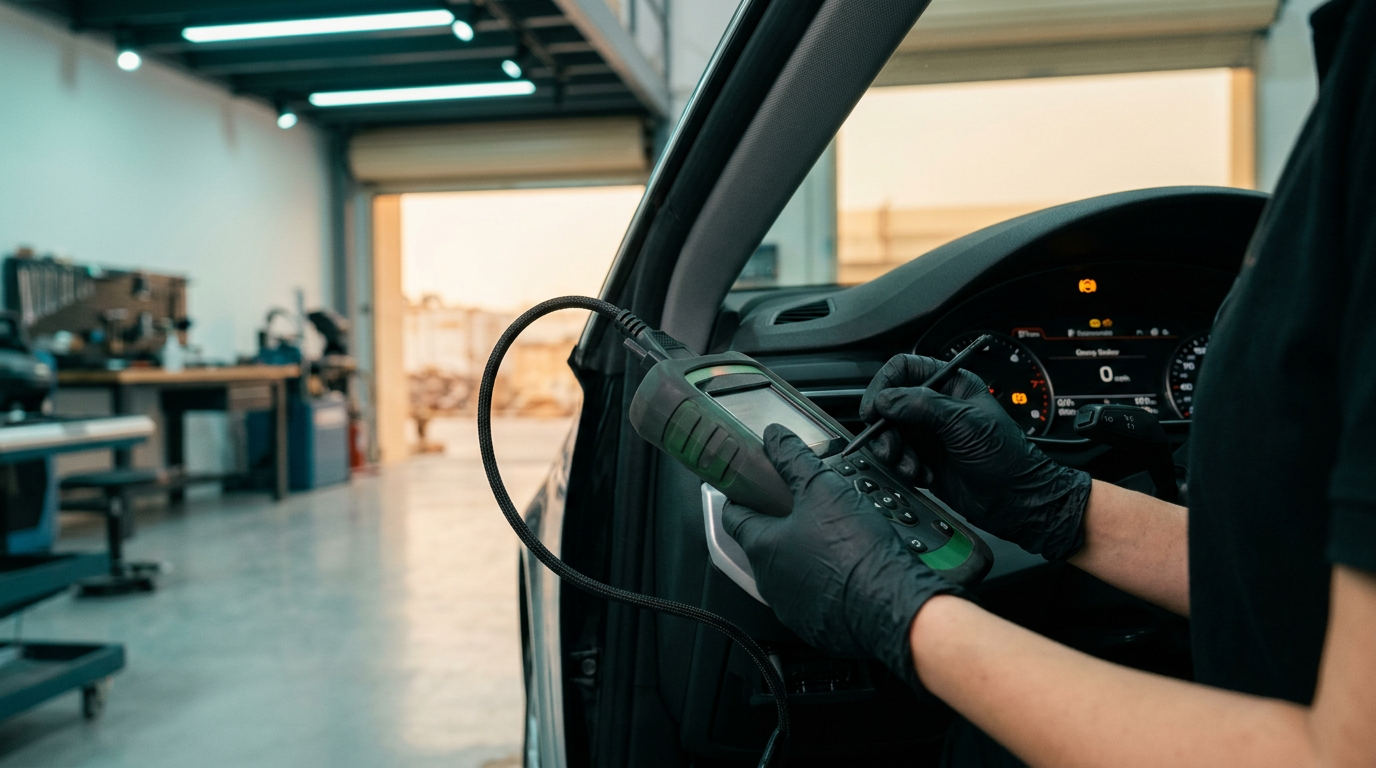
On European vehicles, diagnostic services also read brake wear sensors—electronic contacts embedded in the pad that trigger a dashboard warning when friction material reaches 3 mm. Brands like Mercedes-Benz and BMW use these sensors on front and rear axles.
What Disc and Pad Replacement Involves
When both brake discs and pads need replacing, the repair process includes:
- Wheel removal and caliper detachment: The brake caliper is unbolted and suspended with wire to avoid stressing the hydraulic hose. Caliper piston condition is inspected—seized pistons or torn dust seals require caliper service or replacement.
- Disc removal: The old disc is removed from the wheel hub. On some vehicles, hub corrosion bonds the disc in place, requiring penetrating fluid and careful hammering to avoid damaging the hub or wheel bearings.
- Hub cleaning: The hub face is wire-brushed and cleaned of rust and debris. Any residual material creates runout in the new disc, so thorough cleaning is essential.
- New disc installation: The replacement disc brake rotor is fitted to the hub, and mounting bolts (if used) are torqued to specification. Some vehicles use a retaining screw or clip to hold the disc during wheel installation.
- Pad installation: New brake pads are fitted to the caliper bracket with anti-rattle clips and shims. The caliper piston is compressed using a brake piston tool—on vehicles with electronic parking brakes, this requires a diagnostic scan tool to retract the motor.
- Caliper refitting: The caliper is bolted back over the new pads and disc, with slide pins cleaned and lubricated. Brake fluid level is checked and topped up if needed.
- Bedding procedure: New pads and discs require a bedding process—typically 10–15 moderate stops from 60–80 km/h without coming to a complete halt—to transfer an even layer of friction material onto the disc surface. Skipping this step leads to uneven braking and noise.
On sports cars and supercars, ceramic-composite brake discs are increasingly common. These require specialized handling and torque procedures, and they're typically replaced only in matched axle sets due to their cost and performance characteristics.
Material Considerations for Dubai Conditions
Brake disc and pad material choices directly affect lifespan and performance in the UAE:
Disc Material
Standard grey cast iron remains the most common disc material, offering good heat dissipation and friction characteristics. Premium options include carbon-ceramic (used by Lamborghini and Porsche on performance models) and composite materials that resist heat fade and last significantly longer—but at three to five times the cost of iron.
Pad Material
Organic pads are quiet and produce less dust but wear faster in high-heat conditions. Semi-metallic pads offer better heat resistance and longer life, making them popular for Dubai driving, though they generate more brake dust and can be noisier. Ceramic pads provide low dust and quiet operation but require higher temperatures to reach peak friction, which can be a disadvantage in light city driving.
OEM pads are engineered to match the vehicle's braking system specifications. Premium alternative brands offer similar performance at different price points, but matching the friction coefficient and thermal properties to the disc material is critical for safety and longevity.
Front vs Rear Disc Replacement Timing
Front brake discs and pads typically wear two to three times faster than rear components because the braking system applies 60–70% of braking force to the front axle. On most vehicles, front discs require replacement at 60,000–80,000 km, while rear discs may last 120,000–150,000 km.
However, vehicles with electronic parking brakes integrated into the rear calipers (common on Audi, BMW, and Mercedes-Benz) can experience accelerated rear pad wear due to frequent parking brake application. Rear disc corrosion is also more common because rear brakes generate less heat to burn off surface rust.
Electric vehicles exhibit different wear patterns. Regenerative braking reduces friction brake use significantly, often extending disc and pad life beyond 150,000 km. However, this also means discs can develop corrosion and pitting from lack of use. EV brakes and tyres wear differently than conventional vehicles, requiring inspection protocols that focus on corrosion rather than just thickness measurements.
Compatibility Across Vehicle Types
Brake discs are vehicle-specific. Diameter, thickness, mounting pattern, and hub bore vary by make and model. Even within a single brand like Volkswagen, a Golf and a Passat use completely different discs despite sharing platform components.
Performance variants complicate matters further. A standard BMW 3 Series uses 300 mm front discs, while the M340i steps up to 348 mm drilled discs with different caliper mounting. Fitting incorrect discs creates dangerous clearance issues with wheels and calipers.
Workshops verify part compatibility by VIN lookup and physical measurement. On luxury cars and classic cars, parts sourcing may require OEM supply chains, particularly for brands like Rolls-Royce, Bentley, and Aston Martin where aftermarket options are limited.
Warning Signs That Discs and Pads Need Attention
Several symptoms indicate brake disc or pad problems requiring immediate inspection:
- Squealing or squeaking: High-pitched noise during light braking usually means pads are worn to the wear indicator—a metal tab designed to contact the disc and create noise as a warning.
- Grinding or growling: A grinding sound indicates the friction material is completely gone and the pad backing plate is contacting the disc, causing rapid damage to both components.
- Vibration or pulsation: Pedal pulsation during braking points to disc runout or uneven thickness variation, typically from overheating or corrosion.
- Pulling to one side: If the vehicle pulls left or right under braking, one side's brakes may be worn more than the other, or a caliper piston is sticking.
- Longer stopping distances: Reduced braking efficiency suggests worn pads, glazed discs, or contaminated friction surfaces.
These symptoms are covered in detail in what your brakes are telling you. Any brake noise or performance change warrants immediate inspection—brake failure is among the most dangerous mechanical faults.
Maintenance Tips to Extend Disc and Pad Life
While wear is inevitable, several practices extend the interval between replacements:
- Avoid aggressive braking except in emergencies. Smooth, progressive braking reduces heat buildup and wear rates.
- Use engine braking on descents and in heavy traffic to reduce reliance on friction brakes.
- Rinse brake components occasionally to remove accumulated sand and salt, especially if driving near coastal areas or construction zones.
- Have brake fluid changed every two years. Old fluid absorbs moisture, lowering its boiling point and increasing the risk of brake fade and internal corrosion in the caliper and brake lines.
- Include brake inspection in regular general maintenance intervals—every 10,000 km or six months is appropriate for Dubai conditions.
For vehicles used on track days or spirited driving, consider upgrading to drilled slotted discs and high-performance pads designed for sustained high temperatures. These components require more frequent inspection but deliver consistent performance under extreme conditions.
Cost Factors in Dubai's Market
Brake disc and pad replacement costs vary widely based on vehicle type, parts choice, and labour complexity. Typical market ranges in Dubai for a front axle replacement (both discs and pads) run from AED 800–1,200 for mainstream brands like Honda or Renault, AED 1,500–2,500 for premium European brands, and AED 4,000–8,000 for performance or supercar applications with ceramic or drilled components.
Labour accounts for 20–30% of the total, with the remainder split between discs and pads. OEM parts typically cost 30–50% more than premium aftermarket equivalents. For fleet operators managing multiple vehicles, fleet services and corporate accounts can streamline maintenance scheduling and parts procurement.
Brake Inspection and Replacement in Al Quoz
JAD Garage in Al Quoz 4 provides comprehensive brake disc and pad inspection, replacement, and bedding services for European and EV vehicles. Call +971 56 355 6113 to book a brake system check with manufacturer-grade diagnostic equipment.
Frequently asked questions