
Brake Pad Replacement Cost in Dubai: Front vs Rear

Brake pad replacement cost in Dubai typically ranges from AED 300 to AED 1,200 per axle, depending on whether you're replacing front or rear pads. Front pads usually cost more because they handle 60–70% of braking force and wear faster. The final price depends on your car make, pad type (ceramic, semi-metallic, or OEM), and whether disc machining or rotor replacement is needed.
Why Front Brake Pads Cost More Than Rear
Front brake pads wear faster than rear pads in almost every car. Physics explains this: when you brake, weight transfers forward, pressing the front wheels harder into the road. The front braking system absorbs most of the kinetic energy, generating more heat and friction.
In Dubai's stop-start traffic—especially on Sheikh Zayed Road during peak hours or crawling through Al Quoz industrial areas—front pads take even more punishment. Short city trips mean frequent braking with little time for cooling, accelerating wear on the front axle.
Front brake pad replacement typically costs AED 400–1,200 per axle for European cars, while rear pads often fall in the AED 300–800 range. The difference reflects not just wear rates but also pad size: front pads are usually larger and use more friction material.
Market Price Ranges for Brake Pad Replacement in Dubai
Typical brake pad replacement costs across Dubai workshops vary by vehicle segment and pad quality:
- Compact European cars (Volkswagen Golf, MINI Cooper, Fiat 500): AED 300–600 per axle
- Mid-size sedans and SUVs (BMW 3 Series, Audi Q5, Mercedes-Benz C-Class): AED 500–900 per axle
- Performance and luxury models (Porsche Cayenne, Range Rover, Maserati Ghibli): AED 800–1,500 per axle
- High-performance brakes (Ferrari, Lamborghini, McLaren with carbon-ceramic systems): AED 2,000–5,000+ per axle
These ranges reflect typical Dubai market pricing and include labour. Front axles sit at the higher end; rear axles at the lower. The quality of replacement pads—premium aftermarket, OEM, or budget options—shifts the price within each band.
What Affects Brake Pad Replacement Cost
Pad Material and Quality
Three main brake pad types dominate the Dubai market:
- Ceramic pads: Quieter, produce less dust, last longer in high heat. Best for luxury and daily-driven European cars. Cost 20–40% more than semi-metallic options.
- Semi-metallic pads: Excellent heat dissipation, strong bite, more affordable. Can be noisier and produce more brake dust. Common for performance applications.
- OEM pads: Original-equipment specification, matched to your car's braking system calibration. Typically the most expensive but guarantee fit and performance.
Dubai's extreme summer heat—up to 50°C ambient, much hotter inside wheel wells—demands pads that resist fade. Cheap pads lose friction at high temperatures, compromising safety.
Disc Condition and Machining
Brake discs (rotors) wear alongside pads. If discs are scored, warped, or below minimum thickness, they need machining or replacement. Disc machining adds AED 100–200 per axle; new discs add AED 300–1,500 per axle depending on the car.
A good brake service includes measuring disc thickness and checking for runout. Skipping this step means new pads wear unevenly or produce vibration when braking.
Vehicle Make and Model
European cars often use larger, more complex braking systems than Asian or American brands. A Porsche Macan's six-piston front calipers require more pads and labour than a Volkswagen Polo's single-piston setup. Supercars and sports cars with carbon-ceramic brakes need specialist knowledge and tools, driving costs higher.
Labour and Workshop Equipment
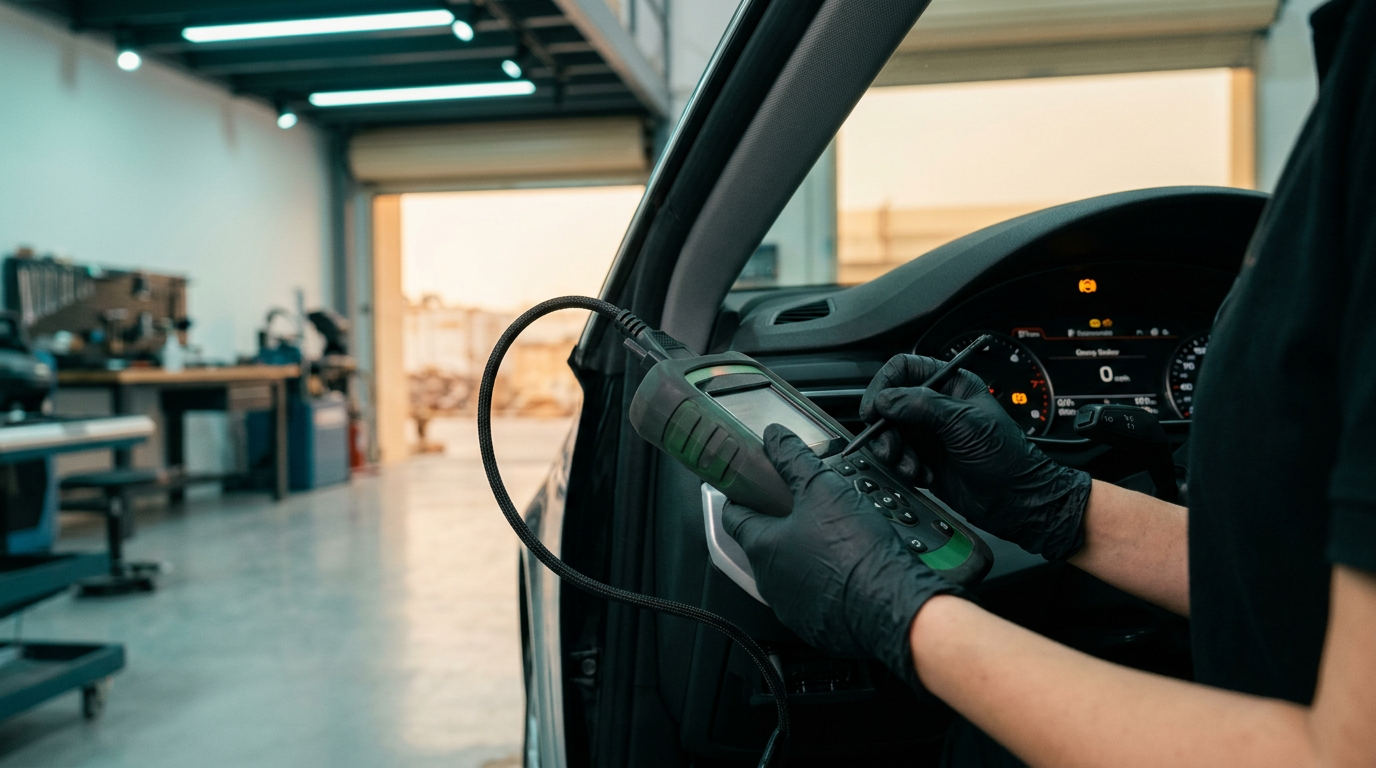
Modern European cars require electronic parking brake release via diagnostic equipment. BMW, Audi, Mercedes-Benz, and most EVs need the brake system put into service mode before rear pads can be replaced. Workshops without manufacturer-grade scanners can't perform the job correctly.
Labour time ranges from 1–2 hours for a straightforward front pad replacement to 3+ hours if discs, sensors, and brake fluid replacement are included.
When to Replace Brake Pads in Dubai
Most manufacturers recommend checking brake pads every 10,000–15,000 km and replacing them when friction material drops below 3–4 mm. In Dubai's driving conditions, front pads often need replacement every 20,000–40,000 km; rear pads last 40,000–70,000 km.
Warning signs include:
- Squealing or grinding noise when braking
- Brake warning light on the dashboard
- Longer stopping distances
- Vibration through the brake pedal
- Visible wear: less than 3 mm pad material remaining
Ignoring worn pads damages discs, turning a AED 600 pad replacement into a AED 1,500+ pad-and-disc job. Worn pads also increase stopping distance, a safety risk in Dubai's high-speed highway traffic.
EV Brake Pads: A Special Case
Electric vehicles use regenerative braking, which recovers energy and slows the car without friction brakes. This means brake pads on EVs like the Polestar 2, Audi e-tron, or BMW iX last significantly longer—sometimes 80,000–100,000 km or more.
But there's a catch: because EV brakes are used less, pads and discs can corrode, especially in Dubai's coastal humidity. Surface rust reduces braking performance and causes judder. Regular brake inspections remain essential even if pad wear is minimal. Read more in our guide on EV brakes and tyres.
What's Included in a Brake Pad Replacement Service
A complete brake pad replacement should include:
- Removal of wheels and inspection of the entire braking system
- Measurement of brake disc thickness and runout
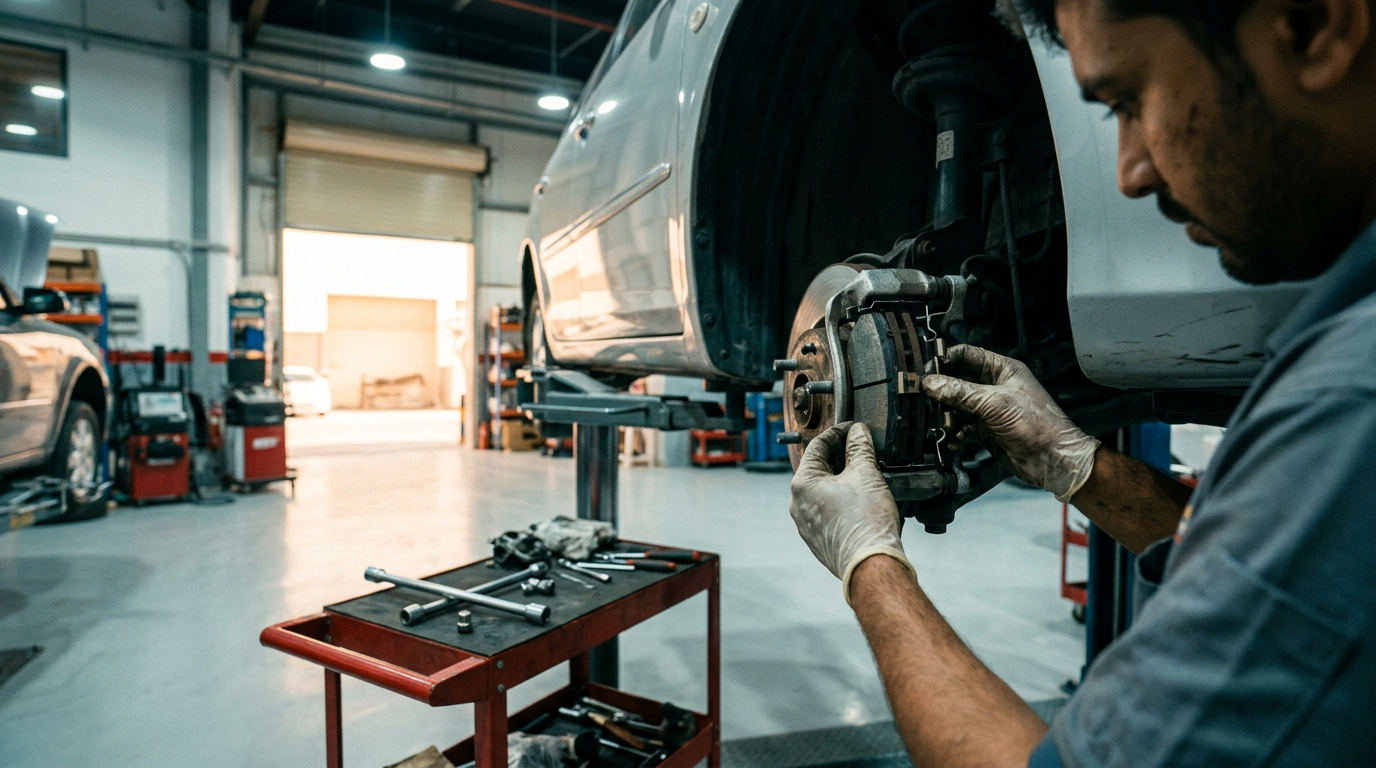
- Replacement of brake pads (front or rear axle)
- Cleaning and lubrication of caliper slide pins
- Electronic parking brake reset (if applicable)
- Brake fluid top-up or replacement if contaminated
- Road test to verify braking performance
Some workshops include a free brake check before quoting. This transparency helps you understand whether you need pads only or a more comprehensive brake repair.
Front vs Rear: Should You Replace Both at Once?
Usually, no. Front and rear brake pads wear at different rates, so replacing both axles simultaneously is rarely necessary unless the car has been neglected or you're preparing for a pre-purchase inspection.
Replace pads based on measured wear, not mileage alone. A proper inspection identifies which axle needs attention. Replacing pads that still have 50% life wastes money.
However, if you're replacing discs on one axle, it makes sense to fit new pads at the same time—even if the old pads aren't fully worn—to ensure even bedding-in and optimal braking performance.
Choosing the Right Brake Pads for Dubai Conditions
Dubai's heat, dust, and traffic demand pads that resist fade and wear. For daily drivers—Audi, BMW, Mercedes-Benz, Volvo—ceramic pads offer the best balance of performance, longevity, and low dust.
For sports cars or track-driven vehicles, semi-metallic or high-performance pads provide better bite and heat tolerance. Luxury car owners often prefer OEM pads to maintain factory braking feel and avoid voiding service history.
Budget pads may save AED 100–200 upfront but often wear faster, produce more noise, and fade in hard braking. In a city where highway speeds hit 120+ km/h and emergency stops happen without warning, braking performance isn't the place to cut corners.
Where to Get Brake Pads Replaced in Dubai
Independent European specialists in areas like Al Quoz offer transparent pricing, manufacturer-grade diagnostics, and quality parts without the premium markup. Look for workshops with experience in your car brand—BMW, Audi, Porsche, Range Rover—and the diagnostic tools to handle electronic brake systems.
A reliable workshop will measure pad thickness, show you the wear, explain what's needed, and provide a written quote before starting work. They'll also check brake fluid condition, caliper operation, and disc wear as part of the service.
Brake safety is non-negotiable. Whether you drive a Fiat 500 or a Bentley Continental, replacing worn pads on time protects you, your passengers, and everyone else on Dubai's roads.
Need Brake Pads Replaced? Get a Free Brake Check First
JAD Garage in Al Quoz 4 offers transparent brake pad replacement for all European and EV brands, with manufacturer-grade diagnostics and quality parts. Call +971 56 355 6113 to book your free brake inspection today.
Frequently asked questions