
Pre-Purchase Inspection in Dubai: The 120-Point Checklist

A thorough pre purchase car inspection in Dubai involves a systematic 120-point evaluation covering engine diagnostics, transmission function, suspension integrity, electrical systems, body condition, fluid analysis, brake performance, and computer diagnostics. Professional inspection services use manufacturer-grade equipment to detect hidden damage, accident history, and mechanical issues that could cost thousands to repair after purchase, providing peace of mind before you commit.
Why Pre-Purchase Car Inspections Matter in Dubai's Market
Dubai's used car market moves fast. Vehicles change hands frequently, and not every seller discloses the full history. A car that looks immaculate in a showroom or private seller listing may hide flood damage from rare heavy rain, accident repairs masked by fresh paint, or overheating issues from Dubai's relentless summer heat that regularly exceeds 45°C.
Buying a car without a professional pre purchase inspection is a gamble. The typical Dubai buyer faces specific risks: cars imported with unclear service records, vehicles that spent years in stop-start traffic on Sheikh Zayed Road, and European or performance cars maintained inconsistently. A comprehensive pre-purchase inspection acts as your technical advocate, revealing what the seller won't.
The cost of an inspection—typically between AED 400 and AED 800 in Dubai depending on vehicle type and inspection depth—is negligible compared to discovering a failed turbocharger, worn suspension, or electrical faults after purchase. For European brands like BMW, Mercedes-Benz, or Audi, repair bills can easily run into five figures.
The 120-Point Checklist: What Gets Inspected
A proper pre purchase car inspection in Dubai isn't a quick visual walk-around. It's a methodical process that examines every system and component. Here's what a comprehensive 120-point check covers:
Engine and Powertrain (25 Points)
- Cold start behaviour and idle stability
- Oil condition, level, and signs of contamination or metal particles
- Coolant level, colour, and signs of oil mixing
- Belt and hose condition, including cracks or glazing
- Engine mounts for wear or fluid leaks
- Turbocharger operation and boost pressure (if equipped)
- Exhaust smoke colour during acceleration
- Oil leaks from valve covers, oil pan, or seals
- Air filter condition and intake system
- Compression or leak-down test results
Dubai's heat accelerates oil degradation and coolant breakdown. An engine service history gap of even 12 months can mean internal wear, especially in turbocharged European engines that run higher operating temperatures.
Transmission and Drivetrain (18 Points)
- Transmission fluid colour, smell, and level
- Shift quality in all gears, including kick-down response
- Clutch engagement and bite point (manual)
- Transfer case and differential fluid condition (AWD/4WD)
- CV joint and driveshaft play or noise
- Transmission error codes via computer diagnostics
- Gearbox mounts and linkage
Automatic transmissions in luxury and performance cars are sensitive to heat and neglected fluid changes. A transmission service that's overdue can mean a rebuild costing AED 15,000 to AED 40,000 on brands like Range Rover or Porsche.
Suspension and Steering (22 Points)
- Shock absorber and strut condition, including leaks
- Control arm bushings and ball joint play
- Steering rack for leaks or excessive play
- Tie rod ends and alignment indicators
- Spring condition and ride height consistency
- Air suspension compressor and airbag integrity (if equipped)
- Wheel bearing noise during rotation
- Subframe and mounting point corrosion or damage
Dubai's speed bumps and potholed side streets punish suspension components. Air suspension systems on vehicles like Mercedes or Land Rover are particularly vulnerable, with compressor and airbag failures common after five years. Our article on bad suspension symptoms explains what to listen and feel for.
Brakes and Tyres (15 Points)
- Brake pad and rotor thickness measurements
- Brake fluid condition and moisture content
- Calliper operation and piston condition
- Brake line condition and signs of corrosion
- Parking brake hold and adjustment
- Tyre tread depth across all four corners
- Tyre age using date codes
- Uneven wear patterns indicating alignment or suspension issues
Tyres degrade faster in UAE heat. A tyre manufactured more than five years ago should be replaced regardless of tread depth. Read our guide on how to read the tyre date code to check this yourself.
Electrical Systems and Electronics (20 Points)
- Battery voltage, load test, and age
- Alternator charging output
- All exterior and interior lighting function
- Infotainment, navigation, and screen responsiveness
- Climate control operation at maximum cooling
- Power window, mirror, and seat function
- Sensor operation: parking, lane-keep, adaptive cruise
- Warning lights on the instrument cluster
- Wiring harness condition and aftermarket modifications
Modern European cars are electronics-intensive. A single faulty control module can disable multiple systems. Electrical diagnostics using manufacturer-grade tools reveal stored fault codes that a basic OBD reader misses.
Body and Paint (12 Points)
- Paint thickness measurements across all panels
- Panel gap consistency
- Signs of repainting or blending
- Rust or corrosion, especially in door sills and wheel arches
- Windscreen and glass condition, including chips or cracks
- Undercarriage inspection for impact damage
Paint thickness gauges detect accident repairs. A panel reading significantly thicker than factory spec has been repainted. Our article on spotting repaired panels walks through what to look for.
Computer Diagnostics (8 Points)
- Full system scan across all control modules
- Stored and pending fault codes
- Odometer verification against ECU records
- Service history stored in vehicle memory
- Airbag system status
- ABS and stability control function
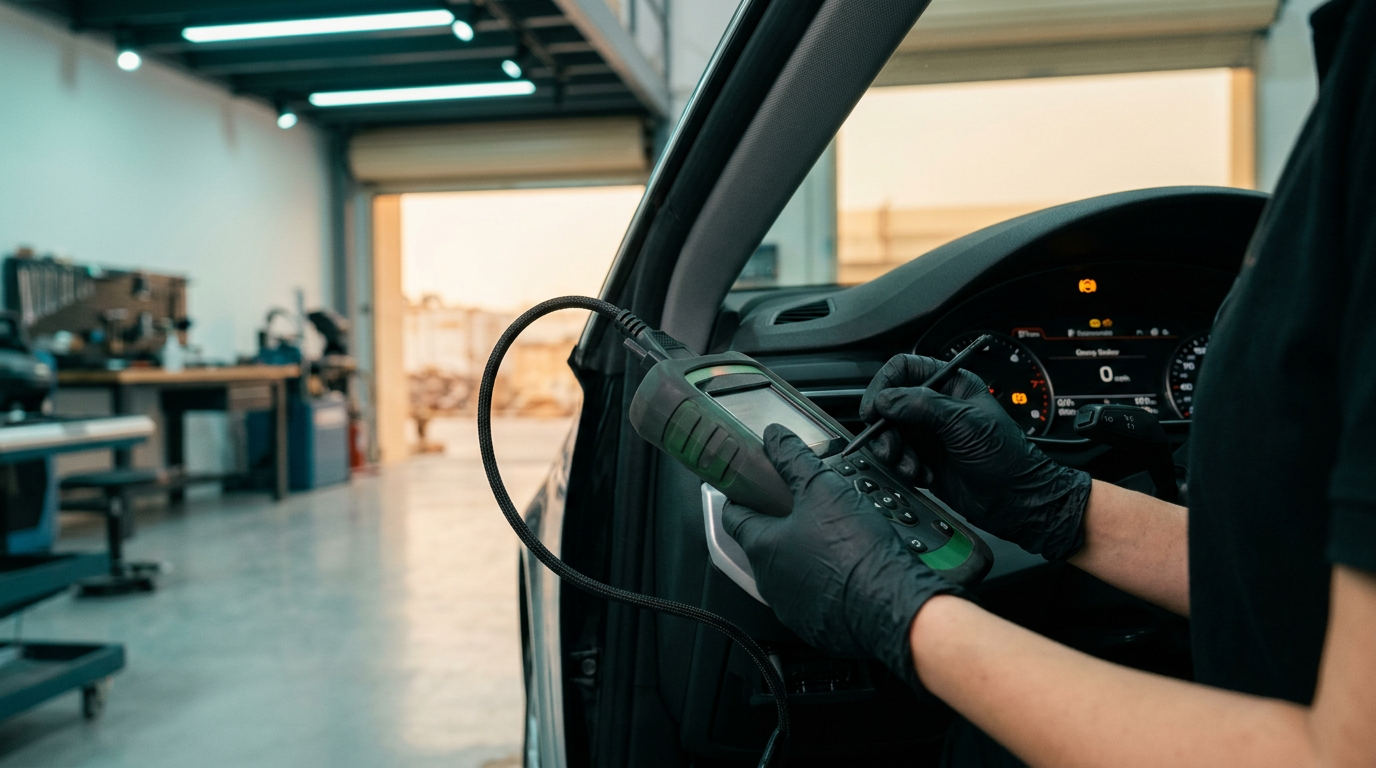
Professional diagnostic services using tools like STAR, VCDS, or ISTA can read manufacturer-specific data streams and verify if the odometer has been tampered with—a common issue when buying from private sellers.
Common Issues Found During Inspections
After conducting hundreds of pre purchase car inspections across Dubai, certain patterns emerge. Here are the most frequent problems detected:
Overheating damage: Cracked radiators, warped cylinder heads, or blown head gaskets from sustained driving in 50°C heat without proper coolant maintenance.
Neglected service intervals: Engines running 20,000 km past due oil changes, transmissions never flushed, brake fluid dark and moisture-saturated.
Accident history: Misaligned panels, paint overspray on rubber seals, frame damage visible only on a lift, airbag warning lights that sellers claim are "just a sensor."
AC system failure: Compressors on their last legs, refrigerant leaks, clogged condensers from fine sand. An AC service or compressor replacement can cost AED 3,000 to AED 8,000.
Suspension wear: Leaking shocks, worn bushings, air suspension faults that cost AED 10,000+ to repair on luxury SUVs.
Electrical gremlins: Parasitic battery drain, malfunctioning control modules, corroded wiring from humidity exposure in coastal areas.
How to Choose an Inspection Service in Dubai
Not all pre purchase car inspections in Dubai are equal. Some offer a cursory 20-minute check; others provide forensic-level analysis. Here's what separates a professional service from a quick visual:
Manufacturer-grade diagnostic equipment: Generic OBD scanners miss the majority of fault codes. Proper inspection requires brand-specific tools that read every control module.
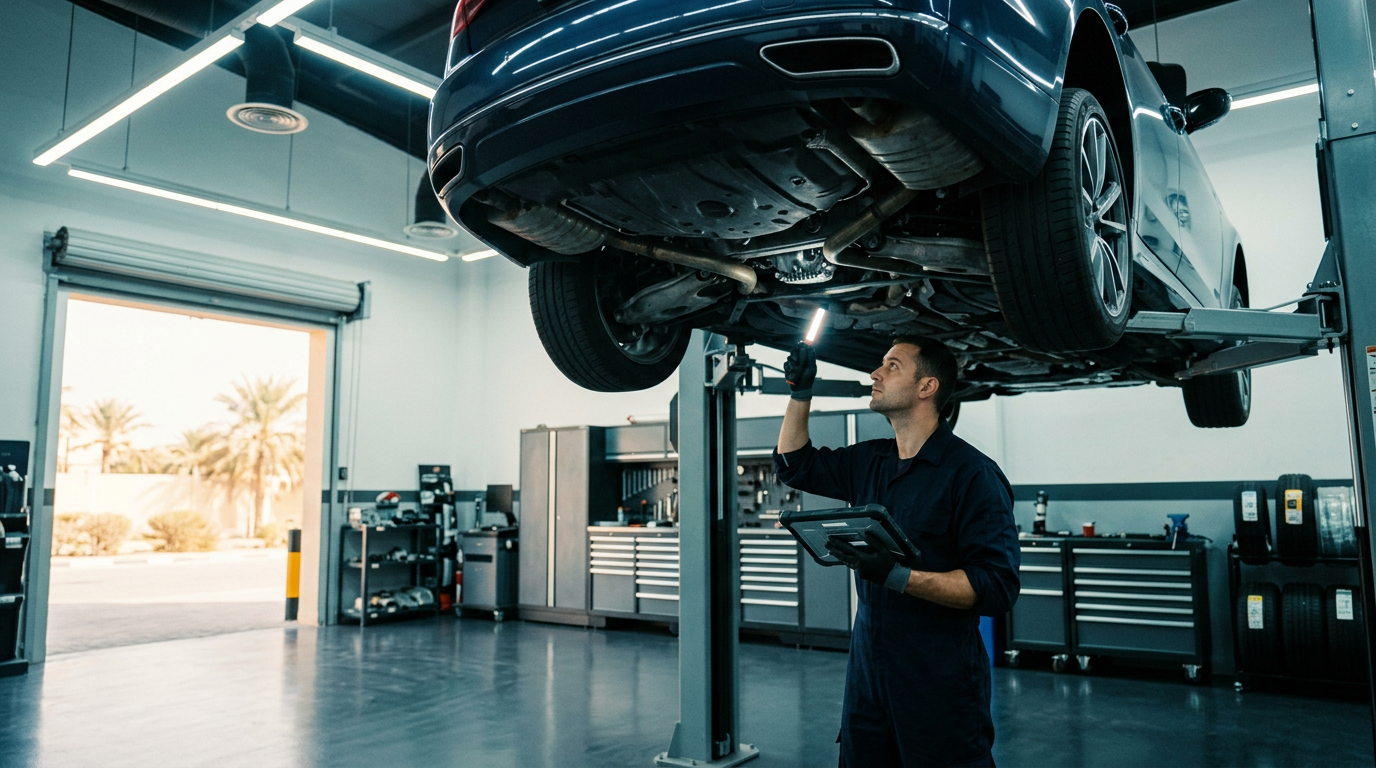
Lift access: Undercarriage inspection is impossible without raising the vehicle. Leaks, impact damage, and corrosion hide underneath.
Written report with photos: A verbal "looks good" is worthless. You need documentation, measurements, and images you can reference or use in negotiation.
Experience with your target brand: European cars have unique systems. An inspection service familiar with Volkswagen DSG transmissions, BMW VANOS systems, or Audi air suspension will catch issues generic mechanics miss.
For further peace of mind, cross-reference the vehicle's service history. Our guide on reading UAE car service history shows you how to verify maintenance claims.
What Happens After the Inspection
Once the inspection is complete, you receive a detailed report. If the vehicle passes with only minor wear appropriate for its age and mileage, you can proceed with confidence. If significant issues are found, you have three options:
Walk away: If the inspection reveals frame damage, major mechanical failure, or evidence of odometer fraud, the safest choice is to move on.
Negotiate: Use the inspection findings to reduce the asking price. A car needing AED 5,000 in deferred maintenance is a strong bargaining chip.
Request repairs: Ask the seller to address critical issues before sale. Get written confirmation and verify the work was completed properly.
An inspection doesn't guarantee a perfect car—it provides transparency. Even well-maintained vehicles will show some wear. The goal is to avoid expensive surprises and ensure you're paying a fair price for the vehicle's true condition.
Book Your Pre-Purchase Inspection in Al Quoz
Considering a used car purchase? JAD Garage in Al Quoz 4 provides comprehensive pre-purchase inspections using manufacturer-grade diagnostics for European and EV vehicles. Call +971 56 355 6113 or WhatsApp to schedule your inspection and buy with confidence.
Frequently asked questions