
Car AC Blowing Warm Air in Dubai: 7 Causes and Fixes

When your car AC blows warm air in Dubai, the most common causes are low refrigerant due to leaks, a failing compressor, clogged cabin filters, electrical faults in the climate control system, blocked condenser fins, faulty blend door actuators, or a worn serpentine belt. Dubai's extreme heat—often exceeding 50°C—accelerates refrigerant evaporation through microscopic leaks and places constant load on every AC component, making regular servicing essential.
Why Dubai's Climate Is Especially Hard on Car AC Systems
Dubai's combination of extreme heat, fine sand, and humidity creates a uniquely challenging environment for car air conditioning systems. When ambient temperatures hit 48-52°C in summer, your AC system runs almost continuously, cycling the compressor thousands of times more than in temperate climates. The condenser at the front of the vehicle becomes caked with fine sand and dust, reducing airflow and forcing the system to work harder. Salt-laden humidity from the coast accelerates corrosion on fittings and hose connections, creating slow refrigerant leaks that may take months to manifest as noticeably warm air.
Stop-start traffic across Dubai means your engine idles frequently, reducing airflow through the condenser and raising system pressure. Short city trips prevent the AC from reaching optimal operating temperature, allowing moisture to accumulate in the system. These conditions explain why car AC issues are among the most common repair needs for vehicles in the UAE, affecting everything from budget hatchbacks to high-performance European models.
1. Low Refrigerant Due to Leaks
Refrigerant doesn't evaporate or get "used up" under normal conditions—if your system is low, there's a leak. The most common leak points are:
- O-ring seals at hose connections, which harden and crack in extreme heat
- Condenser fins damaged by road debris or corroded by salt and humidity
- Evaporator core behind the dashboard, often from internal corrosion
- Compressor shaft seal, especially on high-mileage vehicles
- Schrader valve cores at service ports
A proper diagnosis requires UV dye injection or electronic leak detection, not just a "top-up" of refrigerant. Simply recharging the system without fixing the leak wastes money and refrigerant, and you'll be back to warm air within weeks or months. Modern European cars use R-134a or the newer R-1234yf refrigerant; the latter is significantly more expensive and requires specific handling equipment.
2. Compressor Failure or Clutch Issues
The compressor is the heart of your AC system, and Dubai's heat is its biggest enemy. When you turn on the AC, you should hear a distinct click as the compressor clutch engages, and the engine note may change slightly under the additional load. If the compressor isn't engaging, the issue might be electrical (a faulty clutch coil or relay) or mechanical (seized compressor bearings).
Compressor failure often follows extended periods of low refrigerant, which removes the oil that lubricates internal components. High-performance and luxury European vehicles—Audi, BMW, Mercedes-Benz, Porsche—use variable-displacement compressors that modulate output based on cooling demand. These are more efficient but also more complex and expensive to replace. Replacement costs in Dubai typically range from AED 1,500 for a basic compressor on a mass-market car to AED 6,000+ for premium European models, plus refrigerant and labour.
3. Clogged or Dirty Cabin Air Filter
Dubai's fine sand and dust load cabin air filters faster than almost anywhere else in the world. A clogged filter restricts airflow through the evaporator, reducing cooling performance and forcing the blower motor to work harder. You'll notice weak airflow from the vents even when the fan is set to maximum.
Cabin filter replacement is straightforward on most vehicles and should be done every 10,000-15,000 km in the UAE—more frequently if you drive in sandy or industrial areas. This is covered in our guide to cabin and air filter replacement intervals in dusty climates. A new filter costs AED 50-200 depending on the vehicle, and the job takes 10-15 minutes. Upgraded carbon filters also help eliminate odours that develop when moisture and dust accumulate in the evaporator housing.
4. Blocked or Dirty Condenser
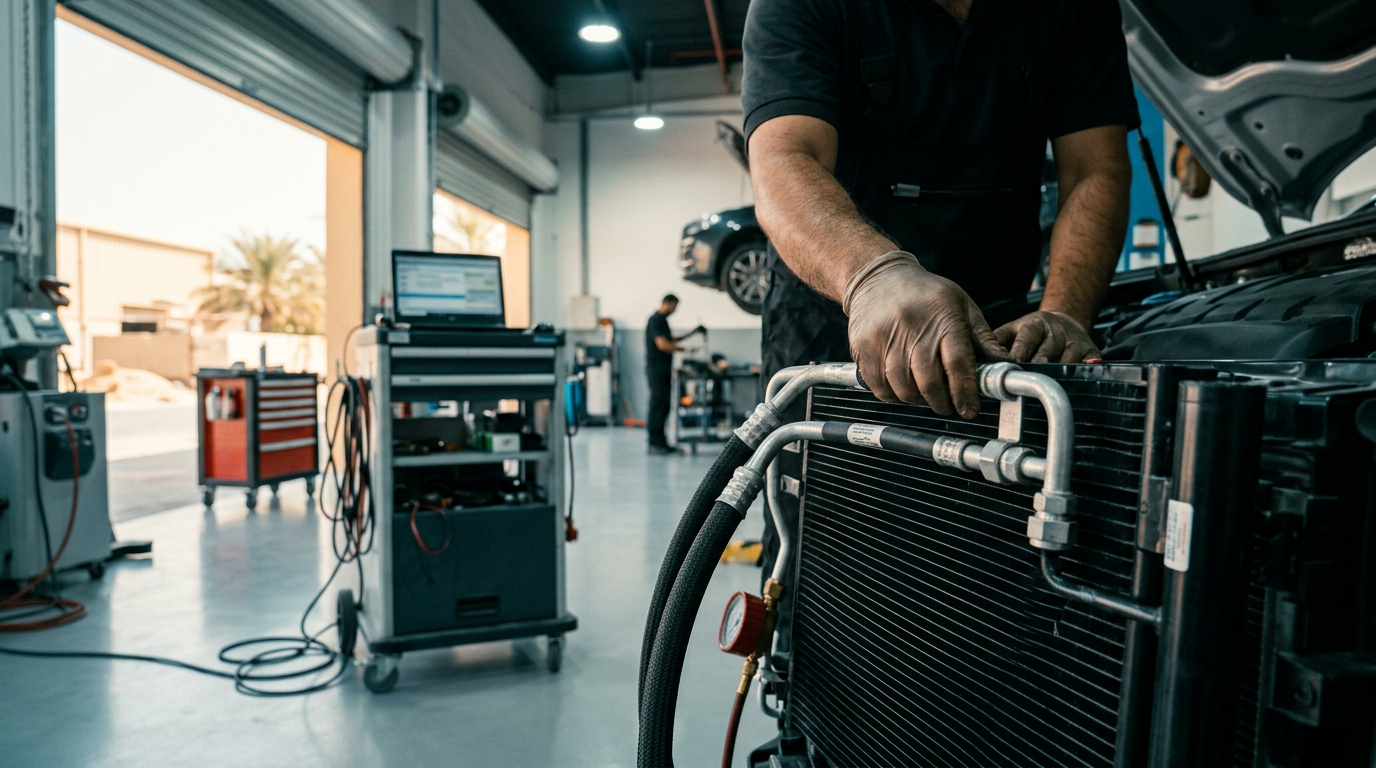
The condenser sits in front of the radiator and dissipates heat from the refrigerant. In Dubai, it becomes coated with a mixture of fine sand, insects, and road grime, which acts as insulation and prevents efficient heat exchange. Even if your refrigerant level is correct and the compressor is working, a blocked condenser will cause poor cooling, especially at idle or in slow traffic when there's minimal airflow.
External cleaning with a low-pressure wash from behind can help, but be careful not to bend the delicate aluminium fins. Internal blockages or corrosion require condenser replacement. If you're also experiencing engine overheating, the radiator and condenser should both be inspected, as blockage often affects both components. This is particularly common on low-slung sports cars and vehicles that spend time off-road.
5. Electrical Faults: Sensors, Relays and Control Modules
Modern car air conditioning systems rely on multiple sensors and control modules: cabin temperature sensors, evaporator temperature sensors, pressure switches, and the climate control module itself. A single faulty sensor can prevent the compressor from engaging or cause the system to shut down prematurely.
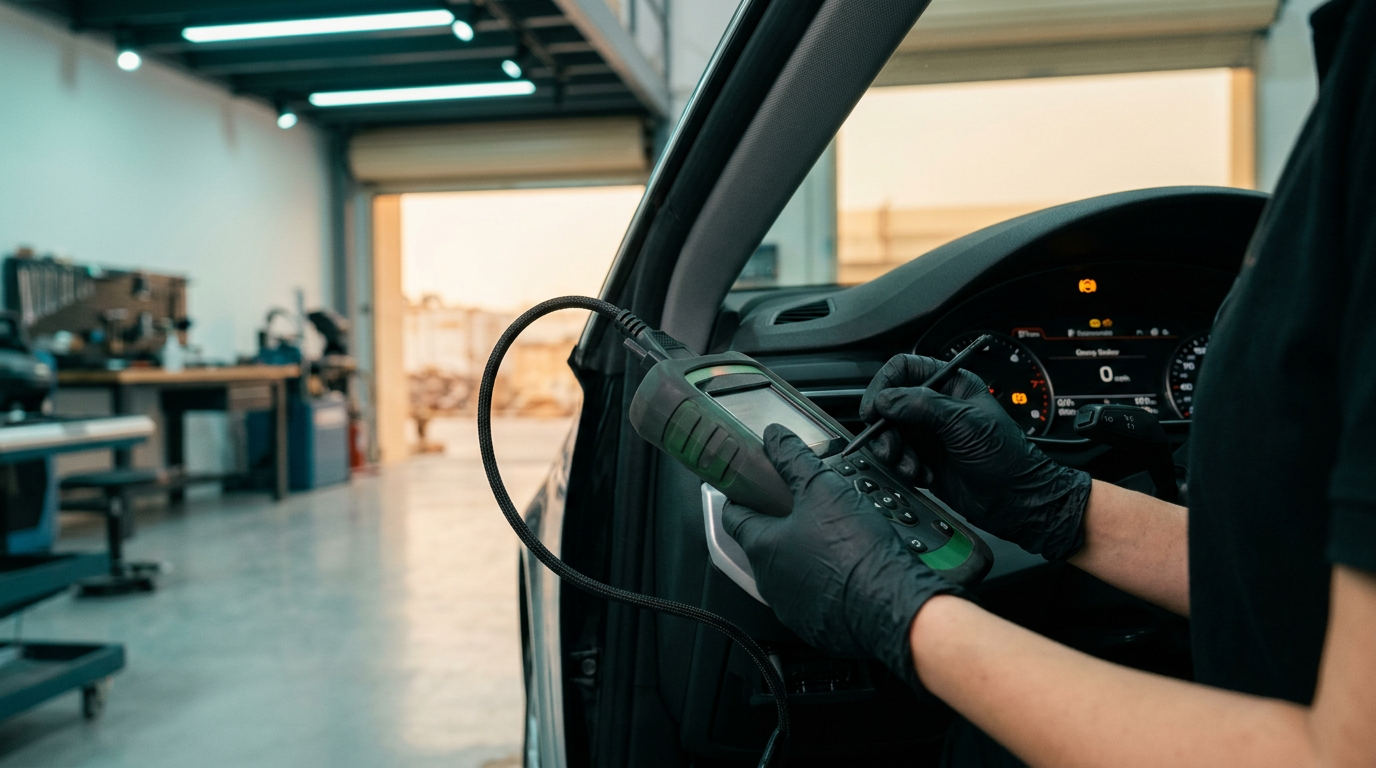
Diagnosis requires manufacturer-grade diagnostic equipment to read fault codes from the climate control system. Common issues include:
- High-pressure switch failure, causing the system to shut down even when pressure is normal
- Evaporator temperature sensor reading incorrectly, preventing compressor engagement
- Climate control module software glitches, sometimes resolved by ECU programming or module reset
- Corroded wiring connections, especially on older vehicles exposed to humidity
European vehicles in particular use complex automatic climate control systems with multiple zones and integration with other vehicle systems. A proper electrical diagnosis can save you from replacing expensive mechanical components unnecessarily.
6. Blend Door Actuator or Temperature Control Issues
If your AC system is producing cold air but you're still feeling warm air from the vents, the issue may not be refrigerant or the compressor—it could be the blend door actuator. This small motor controls flaps inside the HVAC housing that mix cold air from the evaporator with warm air from the heater core to achieve your desired temperature.
When an actuator fails or the blend door becomes stuck, you might get maximum heat even with the temperature set to coldest, or one side of the cabin blows cold while the other blows warm (common in dual-zone systems). You may also hear clicking or buzzing from behind the dashboard as the actuator tries and fails to move the door. Diagnosis requires monitoring actuator position with a scan tool while adjusting temperature settings. Replacement involves partial dashboard disassembly on many vehicles and typically costs AED 800-2,500 in Dubai depending on accessibility.
7. Worn Serpentine Belt or Tensioner
The serpentine belt drives the AC compressor along with the alternator, power steering pump, and water pump. A worn, glazed, or loose belt will slip under load, especially when the compressor engages. You might notice the AC works better at higher engine speeds but struggles at idle, or hear a squealing noise when you turn on the AC.
Belt replacement is part of routine maintenance and should be done every 60,000-80,000 km, or sooner if cracks or glazing are visible. The belt tensioner should also be inspected, as a weak tensioner allows the belt to slip even when new. This is a relatively inexpensive repair—typically AED 200-600 including parts and labour—but neglecting it can lead to complete belt failure and a stranded vehicle.
Preventive Maintenance to Avoid AC Failure in Dubai
Regular servicing is the best way to avoid expensive AC repairs. A comprehensive AC service should include:
- Refrigerant pressure check and leak test
- Compressor operation and clutch engagement test
- Cabin air filter inspection and replacement
- Condenser and evaporator cleaning
- Blower motor and resistor function test
- Drive belt condition inspection
- Climate control system fault code scan
Have your AC system inspected at least once a year, ideally before summer begins in April or May. This is covered in our summer car care checklist for Dubai. Run your AC for at least 10 minutes every week, even in winter, to keep seals lubricated and prevent refrigerant from settling. If you notice any reduction in cooling performance, address it immediately—small leaks become big leaks, and running the system low on refrigerant will destroy the compressor.
When to Seek Professional AC Repair in Dubai
While you can replace a cabin filter yourself, refrigerant work legally requires proper recovery and recycling equipment, and compressor replacement demands precise oil measurement and system evacuation. Attempting DIY refrigerant recharge with off-the-shelf cans often leads to overcharging, which can damage the compressor and other components.
Look for a workshop with manufacturer-grade diagnostic tools, proper AC service equipment, and experience with European vehicles. Professional AC services should include leak detection, not just recharging. For high-performance vehicles—Porsche, Maserati, Aston Martin, or Lamborghini—specialist knowledge of complex climate control systems and access to OEM specifications is essential. Independent specialists in car repair can offer the same technical capability with more flexible service options and transparent pricing.
If your car AC is blowing warm air and you're facing another Dubai summer without reliable cooling, bring your vehicle to JAD Garage in Al Quoz 4. Our technicians use manufacturer-grade diagnostic equipment to pinpoint the exact cause—whether it's a refrigerant leak, compressor fault, or electrical issue—and provide transparent recommendations. Call +971 56 355 6113 to book your AC inspection, or visit us Monday to Saturday, 09:00-19:00.
Expert Car AC Repair in Al Quoz
If your car AC is blowing warm air and you're facing another Dubai summer without reliable cooling, bring your vehicle to JAD Garage in Al Quoz 4. Our technicians use manufacturer-grade diagnostic equipment to pinpoint the exact cause and provide transparent recommendations. Call +971 56 355 6113 to book your AC inspection.
Frequently asked questions