
Coolant Leak Diagnosis: Radiator, Hose or Water Pump?

Coolant leak causes in cars typically include damaged radiators, cracked or perished hoses, failing water pumps, and blown head gaskets. In Dubai's extreme heat, hose degradation and radiator corrosion accelerate, while stop-start traffic increases pressure on the cooling system. Identifying the leak source quickly prevents engine overheating and costly damage.
Why Coolant Leaks Are Critical in Dubai
Your car's cooling system is designed to regulate engine temperature, but when coolant levels drop due to a leak, the engine can overheat in minutes—especially when ambient temperatures reach 50°C. A leaking coolant system loses its ability to transfer heat away from the engine block, and in Dubai's summer traffic, even a small leak can escalate into a breakdown on Sheikh Zayed Road.
Coolant leaks also waste expensive coolant fluid, create puddles under your vehicle, and can damage other components if the leak drips onto belts, sensors, or electrical connections. Catching the problem early saves both money and engine life.
Common Causes of Coolant Leaks
Understanding where coolant leaks originate helps you communicate with your mechanic and prioritise inspection points. Here are the most frequent culprits.
Radiator Damage
The radiator dissipates heat from engine coolant as air flows through its fins. In Dubai, fine sand and road debris can corrode aluminium radiators over time, while plastic end tanks become brittle in extreme heat. Impact from speed bumps or road debris can crack the radiator core or damage mounting brackets, causing coolant to seep or spray out.
Signs of radiator damage include visible coolant pooling under the front of the car, a sweet smell near the grille, and rising engine temperature. If you notice green, orange, or pink fluid below the front bumper, the radiator is a prime suspect. Diagnostic Services can pressure-test the cooling system to confirm the leak location.
Hose Cracks and Perished Rubber
Rubber coolant hoses connect the radiator, engine block, heater core, and expansion tank. Dubai's heat accelerates rubber degradation, causing hoses to harden, crack, and eventually split. Hoses near the engine bay are exposed to both ambient heat and radiant heat from the engine, making them especially vulnerable.
Common leak points include the upper and lower radiator hoses, heater hoses behind the dashboard, and smaller bypass hoses. A hose leak often appears as a spray or drip near a clamp or connection point. Replacing hoses is straightforward, but delaying repair can lead to a sudden rupture and complete coolant loss while driving.
Water Pump Failure
The water pump circulates coolant through the engine block, cylinder head, and radiator. Most water pumps are driven by the engine's timing belt or serpentine belt. Over time, the pump's internal seals and bearings wear out, causing coolant to leak from the weep hole—a small drain designed to signal impending failure.
Water pump leaks often appear as coolant dripping from the front-centre of the engine, near the belt area. You may also hear a grinding or whining noise from the pump bearings. Because the water pump is critical to cooling system function, a failing pump should be replaced promptly. Many European cars require water pump replacement every 80,000 to 120,000 km, and Dubai's heat can shorten that interval. Engine Services include water pump inspection and replacement.
Head Gasket Failure
A blown head gasket is one of the most serious coolant leak causes. The head gasket seals the junction between the engine block and cylinder head, preventing coolant and oil from mixing and keeping combustion gases contained. When a head gasket fails, coolant can leak externally down the side of the engine or internally into the combustion chamber or oil passages.
Signs of a leaky head gasket include white exhaust smoke (coolant burning in the cylinders), milky oil on the dipstick (coolant mixing with engine oil), overheating, and bubbles in the coolant reservoir. A blown head gasket often results from prolonged overheating, so addressing cooling system issues early can prevent this expensive repair. Oil Leaks in European Cars discusses related engine seal problems.
Expansion Tank and Radiator Cap Issues
The expansion tank (or overflow reservoir) stores excess coolant as it expands with heat. Cracks in the plastic tank or a faulty radiator cap that fails to maintain system pressure can both cause coolant to leak or boil over. A damaged radiator cap may allow coolant to escape as steam or liquid when the system is hot.
Inspect the expansion tank for cracks, especially around mounting points and seams. Replace the radiator cap if it no longer holds the correct pressure—typically 0.9 to 1.3 bar for most European cars.
Heater Core Leaks
The heater core is a small radiator inside the dashboard that provides cabin heating. Although Dubai drivers rarely use the heater, the core remains part of the cooling system year-round. A leaking heater core drips coolant onto the passenger-side floor, often creating a sweet smell inside the cabin and fogging the windscreen.
Heater core replacement is labour-intensive because it requires dashboard removal, but ignoring the leak can damage interior carpets and electronics.
How to Diagnose a Coolant Leak
If you suspect your car is leaking coolant, follow these diagnostic steps to pinpoint the source:
- Check coolant levels: Open the expansion tank when the engine is cold. If the level is below the minimum mark and you're topping up frequently, you have a leak.
- Look for puddles: Park on clean concrete overnight and check for coloured fluid in the morning. Green, orange, or pink puddles indicate coolant.
- Inspect hoses and clamps: With the engine cold, squeeze each hose gently. Soft, spongy, or cracked hoses need replacement. Check clamps for rust or looseness.
- Examine the radiator: Look for corrosion, bent fins, or wet spots around the radiator core and end tanks.
- Check under the timing cover: Coolant near the front of the engine may indicate a water pump leak.
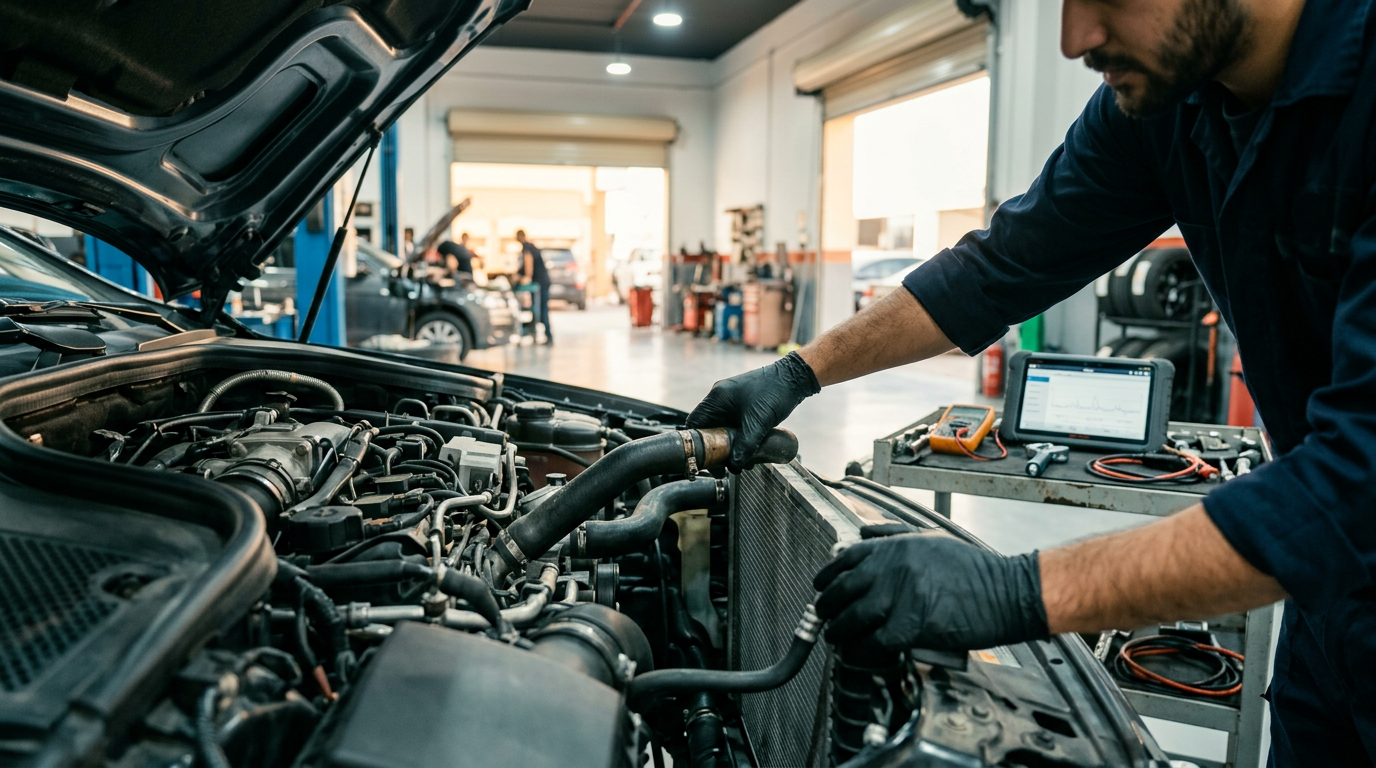
- Pressure test the system: A professional pressure test identifies leaks that only appear when the system is hot and pressurised. Diagnostic Services use manufacturer-grade equipment to locate hidden leaks.
- Inspect the oil: Pull the dipstick. Milky or frothy oil suggests a head gasket failure allowing coolant into the engine.
- Watch the exhaust: White smoke that smells sweet indicates coolant burning in the combustion chamber, pointing to a blown head gasket.
Repair Options and When to Seek Professional Help
Minor coolant leaks, such as a loose hose clamp or cracked overflow bottle, can sometimes be addressed at home if you have basic tools and fresh coolant. However, most coolant leak causes require professional repair to ensure the cooling system is properly sealed and bled of air pockets.
Radiator replacement typically takes a few hours and involves draining the coolant, disconnecting hoses and transmission cooler lines (if equipped), and installing a new radiator. Hose replacement is straightforward but requires the correct OEM or premium alternative parts to withstand Dubai's heat. OEM vs Aftermarket Parts explains when each option is appropriate.
Water pump replacement often coincides with timing belt service, as both components are accessed together. Replacing the water pump during a scheduled belt change saves labour costs. Head gasket repair is the most complex and expensive coolant leak fix, requiring engine disassembly, machining of the cylinder head surface, and careful reassembly with new gaskets and bolts. In severe cases, a warped cylinder head may need replacement or reconditioning.
Professional Engine Services include coolant system inspection, leak diagnosis, and repair using manufacturer-grade diagnostic equipment. Shops with experience in European and performance vehicles understand the specific cooling system layouts of brands like BMW, Audi, Mercedes-Benz, and Porsche, where cooling systems are often more complex than in mass-market cars.
Consequences of Ignoring Coolant Leaks
Driving with low coolant levels risks catastrophic engine damage. When coolant drops below the minimum level, air pockets form in the cooling system, preventing effective heat transfer. The engine temperature spikes, and within minutes, metal components can warp or seize.
A severely overheated engine may suffer a blown head gasket, warped cylinder head, cracked engine block, or seized pistons—all of which require major repair or engine replacement. Repair costs for a blown head gasket in a European car can range from AED 3,000 to AED 8,000, while a cracked block may necessitate a complete engine swap costing AED 15,000 or more, depending on the model.
Coolant leaks can also damage the transmission if your car has an integrated transmission cooler inside the radiator. A failing radiator can allow coolant to mix with transmission fluid, contaminating the gearbox and requiring a costly flush or rebuild. Transmission Services address these issues.
In Dubai's heat, the margin for error is slim. Car Overheating in Dubai Summer explains emergency steps if your temperature gauge climbs into the red zone.
Preventing Coolant Leaks
Regular cooling system maintenance reduces the risk of leaks and extends component life. Have your coolant inspected and replaced according to the manufacturer's schedule—typically every 2 to 5 years or 40,000 to 80,000 km, depending on the vehicle and coolant type. Fresh coolant contains corrosion inhibitors that protect the radiator, engine block, and water pump.
Inspect hoses and clamps annually, especially before summer. Replace any hose that feels soft, cracked, or bulging. Check the radiator cap and expansion tank for damage, and ensure the cooling fan operates correctly. General Maintenance includes cooling system checks as part of routine service intervals.
For high-performance and luxury vehicles, consider using OEM coolant and hoses designed for the specific thermal and pressure requirements of your engine. Brands like Ferrari, Lamborghini, and Maserati have precise cooling system specifications that generic parts may not meet.
Coolant Leak? Get Expert Diagnosis in Al Quoz
If you've spotted signs of a coolant leak or your engine is running hot, JAD Garage in Al Quoz 4 offers comprehensive cooling system diagnostics and repair for all European and EV models. Call +971 56 355 6113 to book your inspection today.
Frequently asked questions