
Oil Leaks in European Cars: Where They Start and What They Cost

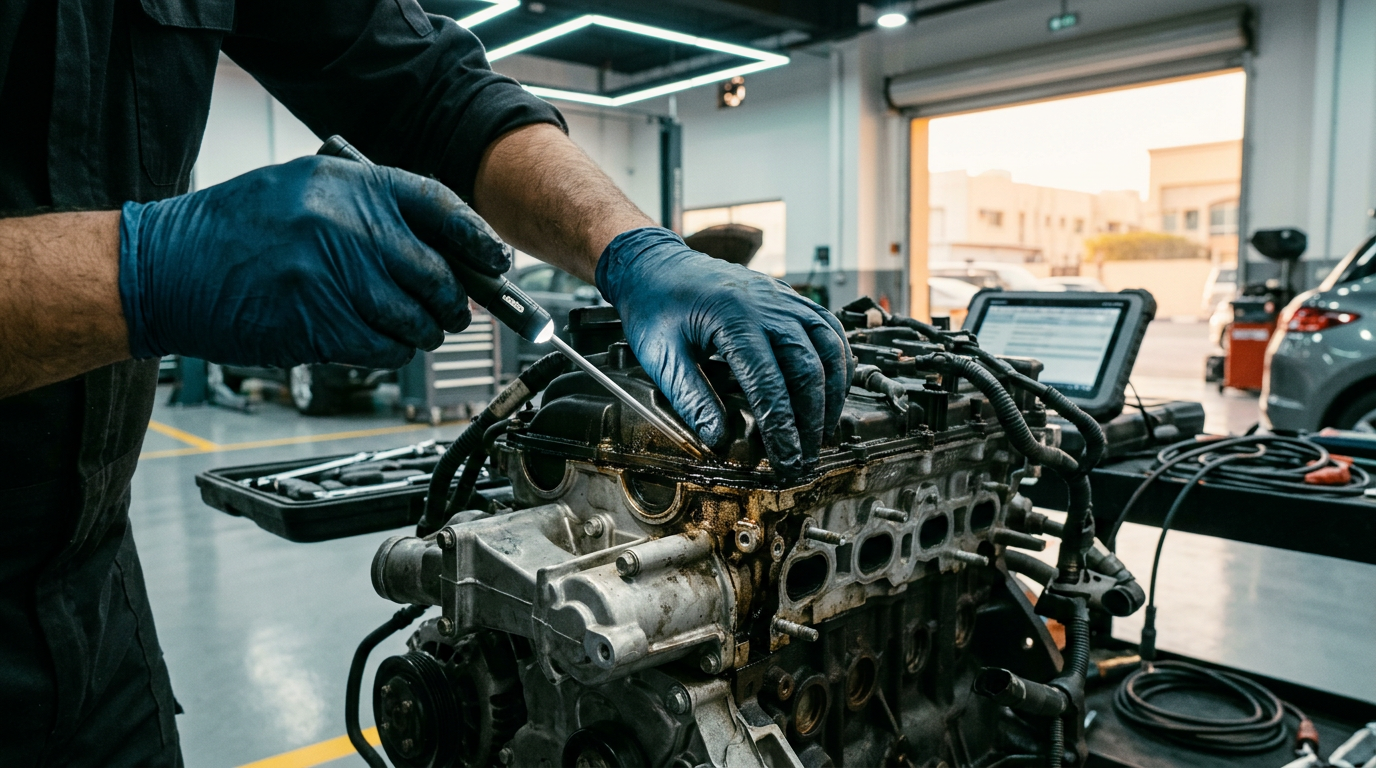
Oil leaks in European cars most often start at valve cover gaskets, oil pan seals, timing cover seals, and the oil filter housing. These components deteriorate faster in Dubai's extreme heat, with engine bay temperatures regularly exceeding 100°C in summer. Repair costs typically range from AED 400 for a simple gasket replacement to AED 3,500 for complex timing cover work, depending on the vehicle and parts required.
How to Tell If Your Car Is Leaking Oil
The first sign is usually spots or puddles under your car after it's been parked overnight. Fresh engine oil appears amber or light brown, darkening to black as it ages. Check your driveway or parking spot in the morning—oil leaks leave distinct patterns that differ from other fluids like coolant or transmission fluid.
Look at your engine oil level using the dipstick. If you're topping up more than half a litre between oil change intervals, you have a leak or a consumption problem. Most European cars should not require top-ups between services under normal driving conditions.
You might also notice a burning oil smell, especially after highway driving or when the engine is hot. This happens when leaking oil drips onto exhaust components and burns off. Some drivers see blue-grey smoke from the exhaust, though this usually indicates oil is entering the combustion chamber rather than leaking externally.
A diagnostic inspection with the car on a lift reveals the leak source. Oil travels downward and backward due to airflow, so the lowest wet point is rarely where the leak originates. Tracing the oil trail upward to its highest point identifies the failing component.
Where Oil Leaks Start in European Cars
Valve Cover Gasket
The valve cover gasket sits atop the engine and seals the valve train. It's made from rubber or cork composite that hardens and cracks under heat cycling. In Dubai's climate, valve cover gaskets on BMW, Audi, and Mercedes-Benz vehicles often fail between 60,000 and 100,000 km.
When this gasket fails, oil seeps down the side of the engine block. On V6 and V8 engines, there are two valve covers, doubling the potential leak points. The repair involves removing the cover, cleaning both mating surfaces, and installing a new gasket with fresh sealant where specified.
Oil Pan Gasket and Drain Plug
The oil pan bolts to the bottom of the engine block and holds the engine's oil supply. Its gasket can fail due to age, impact damage from speed bumps, or overtightening during previous oil change service work. The drain plug washer—a small crush washer—should be replaced at every oil change but is sometimes reused, leading to slow drips.
Oil pan gasket replacement is labour-intensive on many European cars. The subframe, exhaust components, or even the engine itself may need to be partially lowered to access all the pan bolts. This drives up repair time and cost significantly compared to a simple top-end gasket.
Timing Cover Seals
The timing cover at the front of the engine houses the timing chain or belt and uses multiple seals where the crankshaft and camshaft(s) pass through. These seals are under constant pressure and rotational friction, and they deteriorate with age and heat exposure.
Timing cover leaks often require significant disassembly. The serpentine belt, water pump, and sometimes the radiator must come off to access the cover. On some engines, this work overlaps with timing chain replacement, so it's worth inspecting chain wear if the cover is already off.
Oil Filter Housing and Cooler Seals
Many European engines use a cartridge-style oil filter inside a plastic or aluminium housing. The housing has O-ring seals that can fail, causing leaks that appear near the oil filter. Separately, engine oil coolers—common on turbocharged and high-performance engines—use their own seals and can develop leaks at the cooler-to-block interface.
These leaks are often mistaken for a loose oil filter. Tightening the filter won't help if the housing seal has failed. Replacement involves draining the oil, removing the housing, and installing new O-rings and seals with a light coat of clean engine oil for proper seating.
Rear Main Seal
The rear main seal sits between the engine and gearbox, sealing the crankshaft where it exits the block. It's one of the most labour-intensive seals to replace because the gearbox must be separated from the engine. On rear-wheel-drive cars, the driveshaft and exhaust also come off.
Rear main seal leaks are less common than valve cover or pan leaks, but when they occur, oil will drip from the bellhousing area. This repair is expensive due to labour hours, often coinciding with clutch replacement on manual gearbox vehicles to maximise the value of the disassembly work.
What Causes Engine Oil Leaks
Heat is the primary enemy. Gaskets and seals are made from rubber compounds, silicone, or cork that lose elasticity after thousands of heat cycles. Dubai's ambient temperatures above 45°C in summer, combined with engine operating temperatures around 90–110°C, accelerate this degradation compared to cooler climates.
Age matters more than mileage for many seals. A 10-year-old car with 80,000 km will often have the same gasket condition as a 6-year-old car with 150,000 km because the rubber has simply aged. Short trips common in city driving prevent the engine from reaching full operating temperature consistently, causing condensation and oil contamination that further degrade seals.
Overfilling the engine with oil increases crankcase pressure, forcing oil past seals. Using the wrong oil viscosity—particularly too-thin oil in high temperatures—can also lead to seepage past worn seals that would otherwise hold with the correct grade. Always follow the manufacturer's specification for engine oil grade suitable for Dubai conditions.
Poor maintenance plays a role. Neglected oil changes allow sludge to form, blocking crankcase ventilation and raising internal pressure. A clogged PCV (positive crankcase ventilation) valve is a common hidden cause of multiple oil leaks, as pressure has nowhere to escape except past seals.
Oil Leak Repair Cost in Dubai
Repair costs vary widely based on the leak location, vehicle make, and whether OEM or premium aftermarket parts are used. Labour rates at independent European specialists typically run AED 200–300 per hour, while parts costs depend heavily on the specific component and brand.
- Valve cover gasket: AED 600–1,200 for a four-cylinder engine, AED 1,200–2,200 for V6/V8 engines with two covers
- Oil pan gasket: AED 800–2,000 depending on access difficulty and subframe removal requirements
- Timing cover seals: AED 1,500–3,500 including associated components and coolant; higher if combined with timing chain work
- Oil filter housing seals: AED 400–700 for seal replacement; higher if the housing itself is cracked
- Rear main seal: AED 2,000–4,000 due to gearbox removal; often combined with clutch replacement on manual cars
- Oil drain plug washer: AED 50–100 when done during an oil change
Luxury and performance brands like Porsche, Maserati, and Range Rover sit at the higher end due to parts costs and engine complexity. Choosing quality aftermarket parts instead of OEM can reduce parts costs by 20–40% without compromising reliability; read more about OEM vs aftermarket parts to understand the trade-offs.
Can You Fix an Oil Leak Yourself?
Simple leaks like a drain plug washer or an accessible oil filter housing seal are within reach of a competent home mechanic with basic tools. You'll need a jack and jack stands, a drain pan, the correct replacement seal or gasket, and a torque wrench to tighten bolts to specification.
Valve cover gasket replacement is moderately difficult. It requires removing ignition coils, wiring harnesses, and sometimes intake components. The mating surfaces must be perfectly clean—any old gasket material or oil will cause the new gasket to leak. Using a plastic scraper and brake cleaner ensures a proper seal.
Oil pan and timing cover work is best left to professionals. Limited ground clearance, the need to support the engine while removing mounts, and the risk of damaging surrounding components make these jobs impractical without a lift and proper tooling. Incorrect torque on oil pan bolts can warp the pan, guaranteeing a leak.
Diagnosis is the hardest part. Oil migrates across the engine, and misidentifying the source wastes time and money on the wrong repair. A workshop with a lift can clean the engine, add UV dye to the oil, and run the engine to pinpoint the exact leak source under controlled conditions.
Risks of Driving with an Oil Leak
A small, slow leak that loses 100–200 ml between monthly checks is a maintenance issue, not an emergency. You can safely drive while planning the repair, provided you monitor the oil level weekly and top up as needed. Always carry a litre of the correct oil specification in the boot.
A moderate leak that requires topping up every week or leaves large spots is more serious. Low oil level reduces lubrication and cooling, accelerating wear on bearings, camshafts, and piston rings. Running even one litre low can cause oil starvation during hard cornering or acceleration, leading to catastrophic engine damage.
A severe leak that drips continuously or causes the oil pressure warning light to illuminate is an emergency. Stop driving immediately. Continuing to run the engine with low oil pressure will destroy bearings and seize the engine within minutes. The repair cost jumps from hundreds to tens of thousands for an engine rebuild or replacement.
Leaking oil is also a fire risk. Oil dripping onto hot exhaust components can ignite, especially if the leak is large. It creates slippery conditions for motorcyclists and other road users, and it's an environmental hazard that can result in RTA fines if your car is deemed unroadworthy during inspection.
Preventing Oil Leaks in Dubai Conditions
Regular servicing is the best prevention. Following the manufacturer's maintenance schedule ensures oil and filter changes happen before contaminants damage seals. Using high-quality synthetic oil suited to Dubai's heat provides better protection and cleaner operation than cheaper mineral oils.
Inspect your engine bay every few months. Look for oil residue, listen for unusual ticking or tapping from the valve train, and check the oil level regularly. Catching a small seep early means a simple gasket replacement; ignoring it can lead to a major leak and secondary damage.
Address small leaks promptly. A weeping valve cover gasket will worsen over time as heat continues to degrade the rubber. What starts as a minor seep can become a significant leak within 6–12 months, especially under the thermal stress of a Dubai summer.
Park in shade where possible to reduce engine bay temperatures when the car is off. Covered parking lowers ambient heat soak, slowing the aging process of rubber and plastic components throughout the engine.
When to Seek Professional Help
If you see oil but can't identify the source after a visual inspection, a professional diagnosis is worthwhile. Many workshops offer a diagnostic inspection service that includes a lift inspection, leak tracing, and a written report of findings and repair costs.
Seek help immediately if the oil pressure warning light comes on, if you smell burning oil inside the cabin, or if you see smoke from under the bonnet. These symptoms indicate a serious leak or a related problem like a failed oil pump or blocked oil passage.
For luxury and sports car owners, specialist knowledge matters. European vehicles often use specific sealants, torque sequences, and assembly procedures that differ from Japanese or American cars. A workshop experienced with your brand will complete the repair correctly the first time, avoiding comebacks and additional cost.
Parts Commonly Replaced During Oil Leak Repair
Beyond the primary gasket or seal, several related components are often replaced during leak repairs to prevent future issues:
- Valve cover bolts and grommets: Rubber grommets around the bolts can fail, allowing oil to seep up the bolt threads
- PCV valve: Replacing a clogged PCV valve reduces crankcase pressure and prevents new leaks
- Oil filter and drain plug washer: Always replaced during gasket work to ensure a complete seal
- Coolant and hoses: Often drained and replaced during timing cover work, especially if due for a coolant service
- Serpentine belt and tensioner: Accessed during front seal work; replaced if wear is evident
- Spark plug tube seals: On engines where spark plugs sit in the valve cover, these seals prevent oil from entering the plug wells
Using OEM gaskets or premium aftermarket brands ensures the repair lasts. Budget gaskets may save AED 100–200 initially but often fail within 12–24 months, requiring the job to be done again. Quality parts from brands like Elring, Victor Reinz, or Corteco offer the same lifespan as OEM at a lower cost.
Oil Leak Diagnosis and Repair in Al Quoz
JAD Garage specialises in European and EV vehicle repairs at our Al Quoz 4 workshop. We use manufacturer-grade diagnostic equipment to pinpoint leak sources and provide transparent repair quotes. Call +971 56 355 6113 or visit us Monday to Saturday, 09:00–19:00.
Frequently asked questions