Flatbed vs Wheel-Lift Recovery: Which Your Car Needs

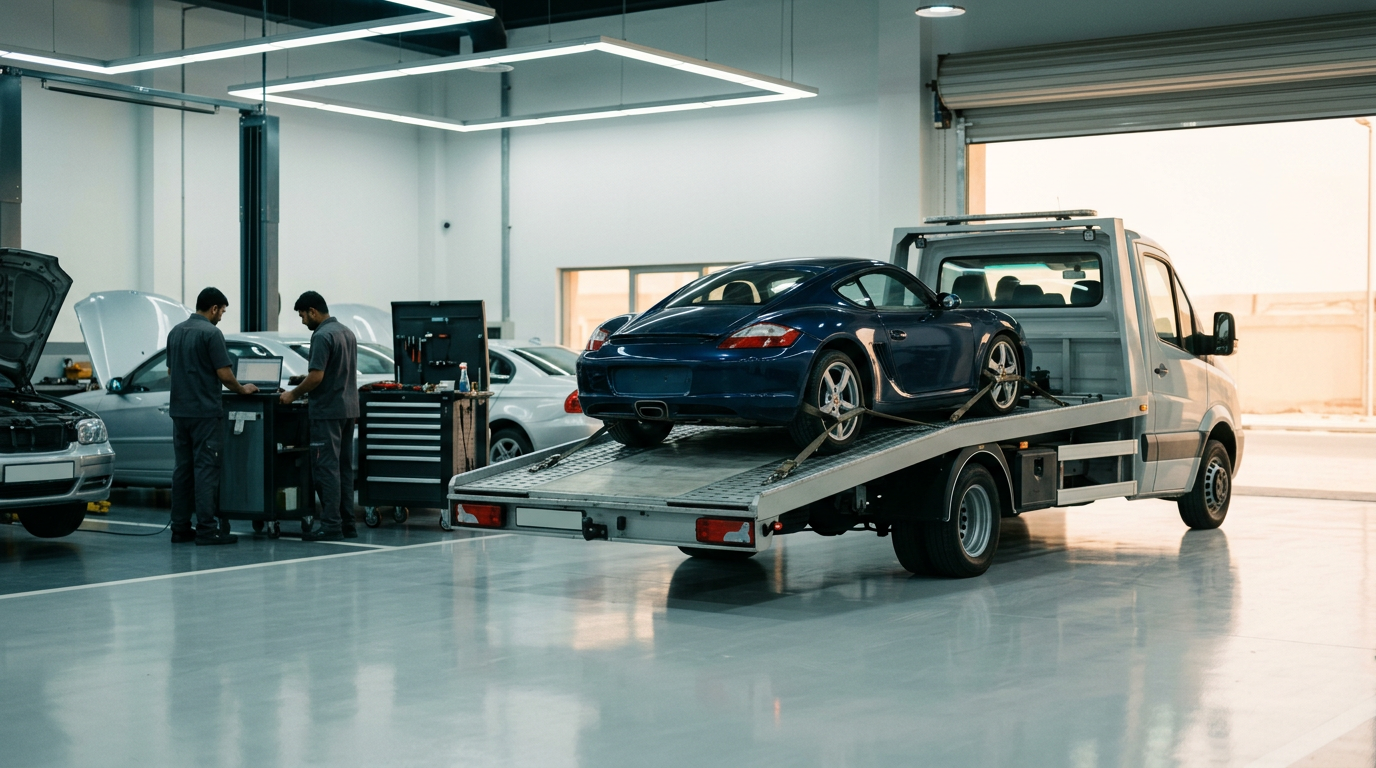
Flatbed recovery is the safer choice for all-wheel-drive, low-clearance sports cars, EVs, and luxury vehicles because it eliminates drivetrain stress and undercarriage contact. Wheel-lift towing suits conventional front- or rear-wheel-drive cars with adequate ground clearance for short-distance recovery, typically within city limits. Your choice depends on drivetrain type, ride height, distance, and the risk of further damage during transport.
How Vehicle Recovery Works in Dubai
Vehicle recovery services transport immobilised or broken-down cars from roadside, parking areas, or accident scenes to a workshop or home. In Dubai, recovery is commonly needed after breakdowns on Sheikh Zayed Road, battery failure in mall car parks, or collision damage requiring bodywork and paint repair. The two dominant methods are flatbed and wheel-lift towing, each suited to different vehicle types and scenarios.
Most recovery operators in the UAE work with insurance panels, roadside assistance programmes, and independent garages. When you call for recovery, the dispatcher will ask about your vehicle type, location, and destination. Knowing which tow system your car requires helps avoid delays and prevents accidental drivetrain or suspension damage during transport.
Flatbed Recovery: How It Works and When to Use It
A flatbed recovery truck features a hydraulically tilting platform that lowers to ground level. The vehicle is winched or driven onto the bed, secured with wheel straps and tie-downs, then transported with all four wheels off the ground. This method eliminates contact with the undercarriage and avoids any rolling of the drivetrain.
Vehicles That Require Flatbed Recovery
- All-wheel-drive and 4×4 vehicles: Audi Quattro, BMW xDrive, Mercedes 4MATIC, Range Rover, and Porsche models with active differentials. Towing with any wheels on the ground can damage the transfer case or differentials.
- Low-clearance sports and supercars: Ferrari, Lamborghini, McLaren, Lotus, and lowered Porsche 911 variants. Ground clearance below 100 mm risks scraping the front splitter or undertray on wheel-lift apparatus.
- Electric vehicles: Polestar, Tesla, and other EVs with regenerative braking systems. Towing with driven wheels on the ground can generate unwanted current and damage the motor or battery management system.
- Luxury sedans and SUVs with air suspension: Bentley, Rolls-Royce, Maserati, and high-spec Mercedes-Benz S-Class. Air suspension in fault mode may not support the vehicle safely on a wheel-lift.
- Collision-damaged or seized vehicles: Any car with suspension damage, locked wheels, or transmission seizure that prevents rolling.
Flatbed recovery is also preferred for long-distance transport—Abu Dhabi to Dubai, or cross-emirate moves—because it avoids mileage accumulation and wear on drivetrain components.
Wheel-Lift Recovery: How It Works and When It's Suitable
Wheel-lift towing uses a metal yoke that slides under the front or rear wheels, lifts one axle off the ground, and tows the vehicle with the opposite axle rolling. Modern wheel-lift systems are hydraulic, faster to deploy than flatbed, and work well for conventional drivetrains over short distances.
Vehicles Suitable for Wheel-Lift Towing
- Front-wheel-drive cars: Renault, Peugeot, Citroën, Fiat, MINI, Volkswagen Golf, and Audi A3 FWD variants. Towed from the front with rear wheels rolling.
- Rear-wheel-drive sedans: BMW 3 Series RWD, Mercedes C-Class RWD, older Jaguar saloons. Towed from the rear with front wheels rolling.
- Short-distance city recovery: Parking violations, minor breakdowns within Al Quoz, Jumeirah, or Business Bay where the destination is under 20 km.
- Adequate ground clearance: Minimum 120–140 mm ride height to accommodate the yoke without scraping the bumper or undertray.
Wheel-lift is not suitable for AWD, 4×4, or vehicles with automatic transmission problems that prevent the gearbox from being placed in neutral. Always confirm drivetrain type before accepting wheel-lift recovery.
Typical Car Recovery Costs in the Dubai Market
Recovery pricing in Dubai varies by tow type, distance, vehicle size, and time of day. The table below shows general market ranges; actual quotes depend on the provider and your insurance or roadside assistance coverage.
| Recovery Type | Typical Market Range (AED) | Notes |
|---|---|---|
| Wheel-lift (city, up to 20 km) | 200 – 400 | Standard sedan/hatchback, daytime |
| Flatbed (city, up to 20 km) | 350 – 600 | Saloon or small SUV |
| Flatbed (long-distance, 20–50 km) | 600 – 1,200 | Dubai to Abu Dhabi, or cross-emirate |
| Supercar/low-clearance flatbed | 800 – 1,500 | Specialist equipment, enclosed option available |
| After-hours or highway recovery | +50 – 100% | Night surcharge, Sheikh Zayed Road call-outs |
Many comprehensive motor insurance policies in the UAE include one or two free recovery call-outs per year, covering flatbed transport to the nearest garage. Check your policy schedule or contact your insurer before paying out of pocket. Fleet operators and corporate account holders often negotiate annual recovery contracts at fixed rates.
Stolen Vehicle Recovery and GPS Tracking
Stolen vehicle recovery is a separate service involving law enforcement, GPS tracking providers, and insurance investigators. In the United Arab States and across the Gulf region, modern vehicles equipped with factory or aftermarket GPS allow recovery operators and police to locate stolen vehicles quickly. Dubai Police and Abu Dhabi Police work with international agencies to track vehicles that cross borders into neighbouring states or are shipped to ports.
If your car is stolen, file a police report immediately and notify your insurer. GPS-based recovery systems can pinpoint the vehicle's location within minutes, and law enforcement will coordinate retrieval. Once recovered, a full diagnostic check, electrical system inspection, and general maintenance review are essential before returning the vehicle to service.
Choosing the Right Recovery Service for Your Situation
Start by identifying your vehicle's drivetrain. Check the owner's manual or the badge on the tailgate: Quattro, xDrive, 4MATIC, and 4WD all indicate all-wheel drive and require flatbed recovery. If you drive a sports car, supercar, or luxury sedan, specify flatbed when calling for roadside assistance.
For classic cars, always request enclosed flatbed transport to protect paintwork and trim from road debris and UV exposure during daylight recovery in temperatures up to 50 °C. Enclosed recovery is standard in Europe and the UK but less common in the UAE; book ahead if your vehicle warrants it.
If your car has suffered engine failure, brake system problems, or AC compressor seizure, flatbed transport avoids additional stress on ancillary components. Wheel-lift towing with a seized engine or locked transmission can cause secondary damage that complicates repair work.
What to Ask Your Recovery Operator
When arranging car recovery in Dubai, confirm the following before the truck is dispatched:
- Tow type: flatbed or wheel-lift?
- Estimated arrival time and any traffic or route delays.
- Maximum vehicle dimensions and weight capacity.
- Insurance or roadside assistance claim reference, if applicable.
- Destination address and any access restrictions (underground car parks, gated communities).
- Total cost and payment method; request a written quote if paying privately.
Reputable recovery operators will photograph your vehicle before loading, document existing damage, and provide a receipt or job sheet. Keep this paperwork for insurance claims and workshop records.
After Recovery: Next Steps at the Workshop
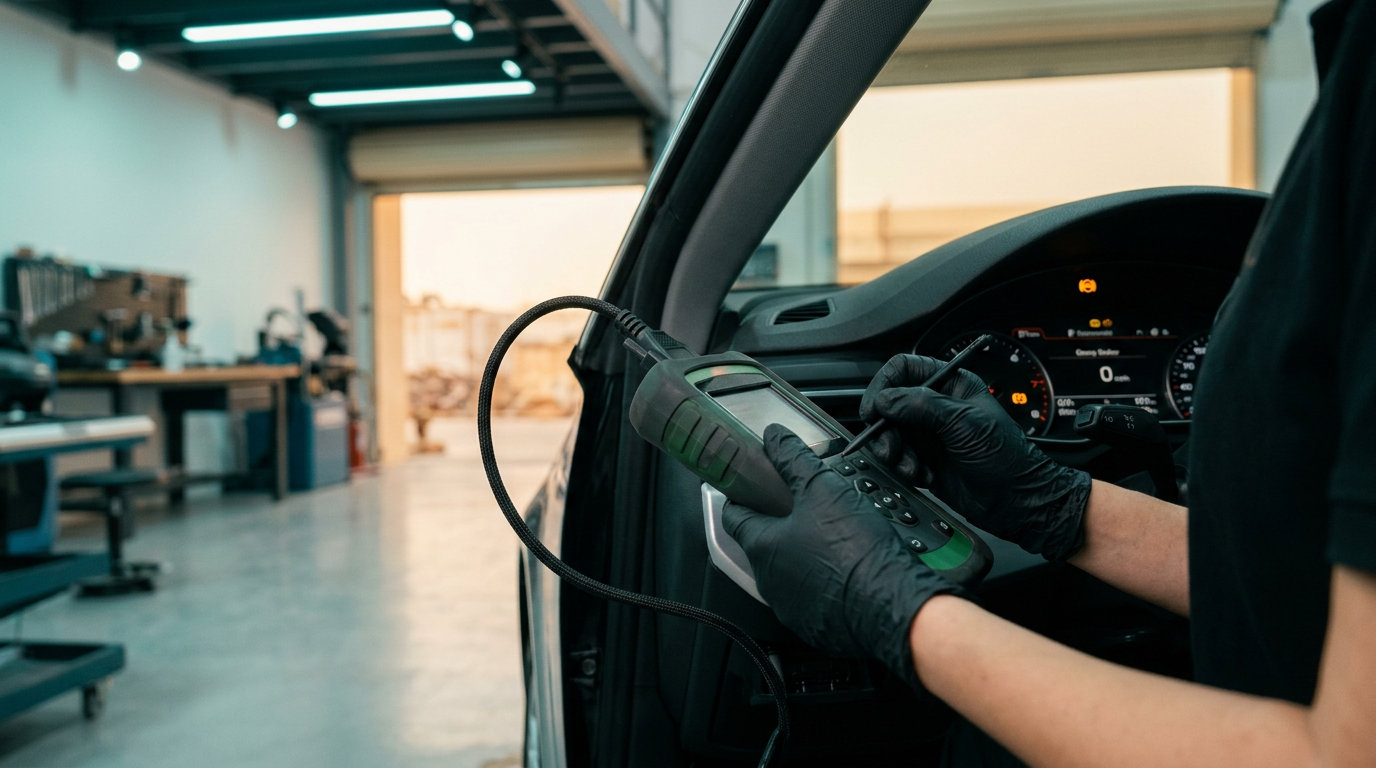
Once your vehicle arrives at the workshop, a diagnostic scan identifies fault codes stored in the ECU, transmission controller, ABS module, and other systems. This step is critical for EVs and modern European cars with complex ECU programming and networked control units.
If the breakdown was caused by battery failure in Dubai heat, a battery replacement and charging system test will follow. For gearbox faults, expect a transmission fluid check, solenoid inspection, and possible rebuild or replacement. Always request a written estimate before authorising major work, and confirm parts sourcing—OEM or premium alternative—and labour rates.
Independent workshops with manufacturer-grade diagnostic equipment can handle recovery follow-up for all European brands and EVs without voiding UAE warranty terms, provided they use OEM-specification parts and document all work.
Related reading: Car AC Gas Refill in Dubai: R134a vs R1234yf and Real Cost.
Need Expert Care After Recovery?
JAD Garage in Al Quoz 4 handles post-recovery diagnostics, repairs and maintenance for all European and EV models with manufacturer-grade equipment. Call +971 56 355 6113 to book your inspection.
Frequently asked questions