Broken Down on Sheikh Zayed Road: The 7-Step Playbook

If your car breaks down on Sheikh Zayed Road, move to the hard shoulder immediately, switch on hazard lights, exit the vehicle on the passenger side, stand behind the barrier, and call a car recovery service or Dubai Police on 999. Do not attempt repairs on the roadside—Sheikh Zayed Road's 120 km/h speed limit and heavy traffic make it one of the UAE's most dangerous breakdown locations. Your priority is safety, then fast recovery.
Step 1: Get Off the Road and Signal Distress
The moment you notice a mechanical fault—engine temperature spiking, loss of power, or unusual noises—indicate left and move to the hard shoulder as quickly and safely as possible. Switch on your hazard lights before you begin slowing down. If the vehicle loses power completely, coast to the shoulder using momentum. Do not stop in a live lane.
Once stationary, apply the parking brake firmly. In an automatic transmission vehicle, shift to Park. If you're driving a manual, leave it in first gear with the handbrake engaged. Your hazard lights must remain on to alert approaching traffic.
Step 2: Exit Safely and Move Behind the Barrier
Sheikh Zayed Road traffic moves at high speed, and rear-end collisions involving stationary vehicles are common. Exit the vehicle from the passenger side, away from moving traffic. Ensure all passengers do the same. Do not open the driver's door into the road.
Walk directly to the roadside barrier and stand behind it. Never remain inside the vehicle unless weather conditions (extreme heat exceeding 45°C) or physical mobility issues make it impossible to exit safely. If you must stay inside, keep your seatbelt fastened and call for help immediately.
Do not attempt to place a warning triangle on Sheikh Zayed Road—the risk of being struck by a vehicle far outweighs any benefit. Roadside assistance services and police will manage traffic control when they arrive.
Step 3: Call for Help—Police or Recovery Service
You have two primary options for assistance:
- Dubai Police (999): For emergencies, accidents, or if your vehicle is blocking traffic. Police will coordinate a tow truck and may issue a recovery request through their approved contractors.
- Private car recovery service: If you have roadside assistance through your insurance, a vehicle manufacturer programme, or a preferred repair workshop, call them directly. Private recovery is often faster and gives you control over where the vehicle is towed.
When you call, provide your exact location. Use nearby exit numbers, landmarks, or the What3Words app to pinpoint your position. Describe the vehicle (make, model, colour, license plate) and the nature of the breakdown (won't start, overheating, flat tire, etc.). This information helps the recovery team bring the right equipment.
If you're unsure who to call, contact a trusted independent workshop. Many European and EV specialists in Dubai offer car recovery services with fast response times and direct transport to their facility for diagnostic services and repair.
Step 4: Understand What the Recovery Vehicle Will Do
A professional recovery service will dispatch a tow truck or flatbed recovery vehicle. The type of equipment depends on your vehicle:
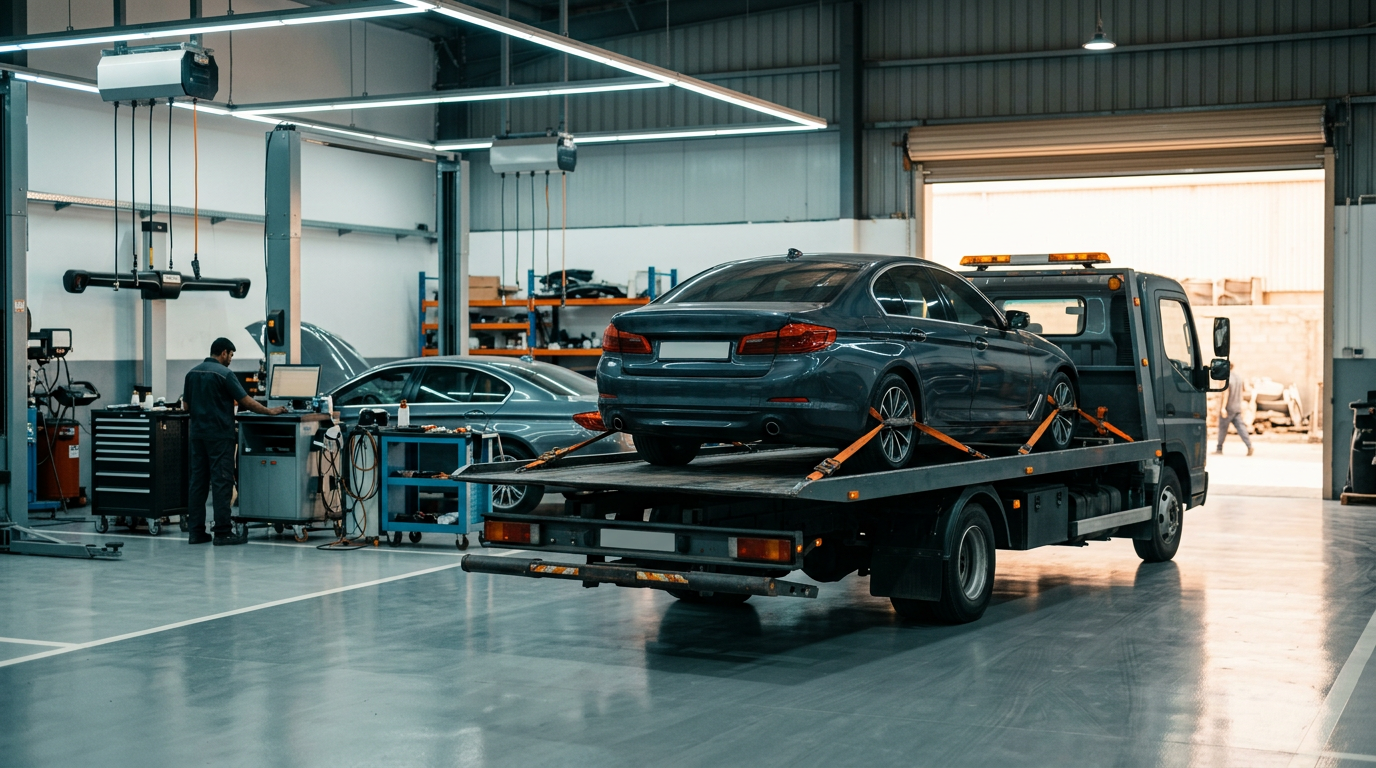
- Flatbed (slide-bed): The safest option for all-wheel-drive vehicles, luxury cars, sports cars, and EVs. The vehicle is winched onto a flat platform, with no wheels touching the road. This prevents damage to the transmission, drivetrain, or undercarriage.
- Wheel-lift tow truck: Suitable for front- or rear-wheel-drive vehicles. The tow truck lifts either the front or rear axle, leaving the other wheels on the road. Not recommended for AWD or 4WD vehicles.
- Heavy-duty recovery: For larger vehicles such as SUVs or vans, or for vehicles stuck in sand or off-road.
Professional recovery operators will secure your vehicle using wheel straps or chains, check that the parking brake is released (or engaged, depending on the towing method), and ensure the steering is unlocked. If your vehicle has electronic parking brakes or steering locks, the operator may need your assistance to override them—consult your owner's manual or the recovery technician.
Modern European vehicles and EVs often have specific towing points marked in the handbook. High-voltage battery systems in electric vehicles require trained handling to avoid damage or safety risks. Always inform the recovery service if you're driving an EV or hybrid.
Step 5: Choose Where Your Vehicle Goes
If you've called a private car recovery service, you can direct the tow truck to your preferred workshop. Independent specialists with experience in European marques—BMW, Mercedes-Benz, Audi, Porsche, Range Rover, and EV brands like Polestar—offer manufacturer-grade diagnostic equipment and can begin fault-finding as soon as the vehicle arrives.
If police coordinate the recovery, the vehicle may be taken to a police-approved yard or impound. You can usually arrange secondary transport to your chosen workshop within 24 hours, though this adds cost and delay. Whenever possible, use a private recovery service to maintain control over the destination.
Common repair needs after a Sheikh Zayed Road breakdown include engine services, battery replacement, electrical diagnostics, transmission repair, and tire services. A full-service independent workshop can handle all of these under one roof.
Step 6: Document the Breakdown for Insurance
If your breakdown involves a collision, even a minor one, or if another vehicle struck yours while stationary, document the scene:
- Photograph your vehicle from multiple angles, showing its position on the road and any damage.
- Capture the license plates of any other vehicles involved.
- Note the time, location, and weather conditions.
- Obtain a police report number if police attend the scene.
Even if there's no collision, keep a record of the breakdown: the fault description, the recovery company name, the tow destination, and any immediate repair estimates. This documentation supports insurance claims and helps establish a service history for future resale.
Step 7: Prevent the Next Breakdown
Many Sheikh Zayed Road breakdowns are preventable. The most common causes in Dubai include:
- Battery failure: Extreme heat accelerates battery degradation. A three-year-old battery in Dubai is often near the end of its life. Regular battery testing and replacement every 2–3 years prevents roadside failures.
- Overheating: Coolant leaks, failing water pumps, and clogged radiators are common in stop-start traffic and high ambient temperatures. Annual coolant system inspections catch problems early.
- Tire blowouts: Under-inflation, age-related cracking, and heat cause tire failures. Check pressures weekly and replace tires older than five years, regardless of tread depth.
- Fuel system issues: Running low on fuel can damage the fuel pump and lead to a breakdown. Keep the tank above a quarter full, especially in summer heat.
- Neglected maintenance: Skipping general maintenance intervals increases the risk of mechanical failure. Dubai's harsh conditions—heat, dust, and short trips—accelerate wear on engine oil, filters, belts, and hoses.
If your vehicle is over five years old or has covered more than 80,000 km, schedule a comprehensive inspection. Independent workshops in Al Quoz offer diagnostic services using the same scan tools as main dealers, at more accessible rates.
Typical Car Recovery Service Costs in Dubai
Car recovery service pricing in the Dubai market varies by distance, vehicle type, and time of day. The table below shows typical market ranges for common recovery scenarios. These are not JAD Garage prices—they reflect general market rates you might encounter when comparing providers.
| Recovery Scenario | Typical Market Range (AED) |
|---|---|
| Local tow (within 15 km) | 250 – 400 |
| Sheikh Zayed Road to Al Quoz | 300 – 500 |
| Flatbed recovery (luxury/sports car) | 400 – 700 |
| Long-distance tow (>30 km) | 500 – 1,000 |
| Emergency out-of-hours surcharge | +100 – 200 |
| Heavy-duty recovery (SUV/off-road) | 600 – 1,200 |
Roadside assistance packages bundled with insurance or manufacturer programmes often include one or two free recoveries per year, with distance limits (typically 50–100 km). If you drive a European or EV vehicle, confirm that your roadside assistance provider has experience with AWD systems, electronic parking brakes, and high-voltage battery safety.
When to Choose an Independent Workshop for Recovery
Independent specialists with years of experience providing towing and roadside assistance services offer several advantages over generic recovery contractors:
- Direct transport to a qualified repair facility: Your vehicle goes straight to a workshop equipped for car repair, eliminating the need for a second tow.
- Specialist knowledge: Technicians understand the towing requirements for luxury cars, sports cars, and supercars, as well as the unique needs of EVs and hybrids.
- Transparent pricing: You receive a clear breakdown of recovery and repair costs before work begins.
- Continuity of care: The same team that recovers your vehicle diagnoses and repairs it, reducing miscommunication and delays.
For fleet operators or businesses managing multiple vehicles, fleet services and corporate accounts streamline recovery and maintenance, with dedicated support and priority response times.
Final Checklist: What to Keep in Your Car
Prepare for a breakdown before it happens. Keep these items in your vehicle at all times:
- Fully charged mobile phone and car charger
- Contact numbers for your insurance roadside assistance and preferred workshop
- Bottled water (at least 2 litres per person in summer)
- Owner's manual with towing instructions
- Vehicle registration and insurance documents
- Sunshade or umbrella (for shade if you must wait outside in summer heat)
Do not carry a spare tire unless your vehicle came with one from the factory and you know how to use it safely. Modern run-flat tires and tire mobility kits are safer options than attempting a roadside tire change on Sheikh Zayed Road.
Related reading: Car Recovery in Abu Dhabi vs Dubai: Rules and Costs.
Need Recovery or Repair in Al Quoz?
JAD Garage in Al Quoz 4 offers expert diagnostics and repair for European and EV vehicles, with over 20 years of experience. Whether your car needs immediate attention after a breakdown or preventive maintenance, call +971 56 355 6113 or visit us Monday to Saturday, 09:00–19:00.
Frequently asked questions